
Clocks · Clock
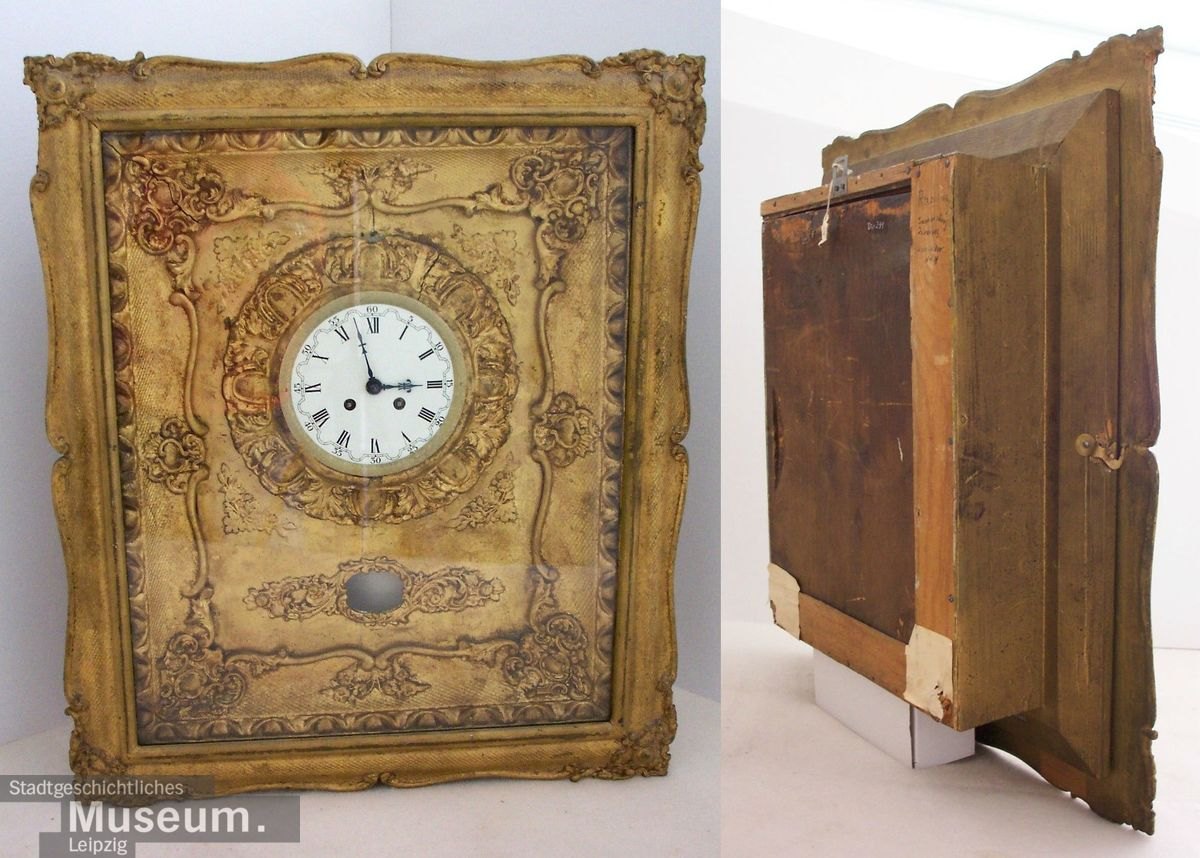
Clock, 1855–1865
- Maker / attribution
- Unrecorded in source
- Date
- 1855–1865
- Historical period
- Industrial Revolution (1850 – 1900)
- Country of origin
- Unrecorded in source
- Object type
- Clock
- Materials / technique
- Holz Gips Metall Emaillefarbe
- Dimensions
- Höhe: 53 cm
- Holding institution
- Museum of City History Leipzig
- Accession / object no.
- Div. 291(Inventarnummer) | UH000091
- Credit line
- Museum of City History Leipzig
- Catalogue title (original)
- Uhr (German)
View the source record ↗ (opens another website in a new tab)Suggest a correction
Record summary
Held and catalogued by Museum of City History Leipzig (object number Div. 291(Inventarnummer) | UH000091), this is a clock, dated 1855–1865. The Atlas places it in the Industrial Revolution period (1850 – 1900) of its Clocks collection. Materials and techniques recorded by the source: Holz Gips Metall Emaillefarbe. Recorded dimensions: Höhe: 53 cm. The record is illustrated with 1 photograph.
Assembled from the source record's structured fields. Dates and attributions are given as the source states them; where a field is missing the Atlas leaves it blank rather than estimating.
Catalogue description
Catalogue description from Museum of City History Leipzig
Pendeluhr im vergoldeten Rahmen, ähnlich einer kleinen Kaffeehausuhr, Ziffernblatt aus Emaille mit Stundenanzeige in römischen Ziffern (I - XII) und Minutenzahlen in arabischen Ziffern in fünfer Schritten (5 - 60) und zwei Aussparungen zum Aufziehen. Ziffernblatt ruht hervorgehoben auf einemrosettenartigem Ornamentrelief. Im unteren Teil des Rahmens runde Aussparung, durch die das Pendel zu sehen ist. Gesamter Rahmen reichhaltig mit reliefartigem Ornament versehen (Akanthus, floral, Rocaille). Uhrwerk ruht in einem dahinter liegendem Kasten, Deckel des Kastens läßt sich seitlich wegschieben, in einem Briefumschlag im unteren Teil des Kasten befindet sich das Pendel sowie der Schlüssel, an dem Die Visitenkarte des Uhrmachermeisters Jürgen Misschok befestigt ist. Auf der Rückseite befindet sich links Haken und Öse und auf der rechten Seite zwei Scharniere, dadurch kann der Rahmen mit Glas hochgeklappt werden. Ebenfalls auf der Rückseite am unteren Rahmenabschluss befindet sich ein aufgeklebter Zettel mit der Aufsschrift "Marianne Klüger/ Lehrerin/ Leipzig S 3/ Elisenstraße 139 II"
Shown in the original language of the source catalogue. An editor-reviewed English translation has not yet been published; we do not publish machine translations as authoritative text.
Historical context
Industrial Revolution (1850 – 1900)
American interchangeable-parts manufacture; railroad time standards; Swiss and German factory systems.
Factory production transformed the clock into an everyday object. American makers (Seth Thomas, Ansonia, Waterbury) and German factories (Junghans, Gustav Becker, Lenzkirch) sold millions of shelf, wall and alarm clocks worldwide; France produced standardised Paris movements and carriage clocks; electric time distribution began.
Read the period in the timelineMore clocks from this periodEarlier: Precision & Scientific Horology
Atlas type guide
Domestic clocks
A clock combines four systems: a source of power (falling weight, coiled spring, or later electricity), a gear train that divides time, an escapement and oscillator that regulate it (foliot, pendulum or balance), and an indicating system of dial and hands or a bell. Its history runs from the large iron weight-driven clocks of the late thirteenth century to Renaissance spring-driven table clocks, the pendulum revolution of 1656, the factory clocks of the nineteenth century and electric and quartz clocks of the twentieth.
Domestic clocks also reflect regional furniture and decorative traditions — English longcase and bracket clocks, French pendules, Viennese regulators, Black Forest and American shelf clocks — and therefore record changing tastes as much as technical progress.
What to look for
- How the clock is powered: weights, spring barrel, fusee, electric coil.
- The oscillator: foliot, short pendulum, long seconds pendulum or balance.
- Whether it strikes: hour only (count wheel) or hours and quarters (rack striking).
- The maker or retailer's name on dial and movement, and any factory trademarks.
- Signs of alteration — replaced dials, converted escapements, 'married' cases.
Dating clues
- Before 1656 clocks used foliots or balances; after, most domestic clocks have pendulums.
- Anchor escapements spread after c. 1670; minute hands became common at the same time.
- Factory production in America and Germany transformed prices after c. 1840.
General guidance written by the Atlas editors about this kind of object. It is not a statement about this particular piece; for that, rely on the source record above and on physical examination.
Related records
Clocks · 1830–1870
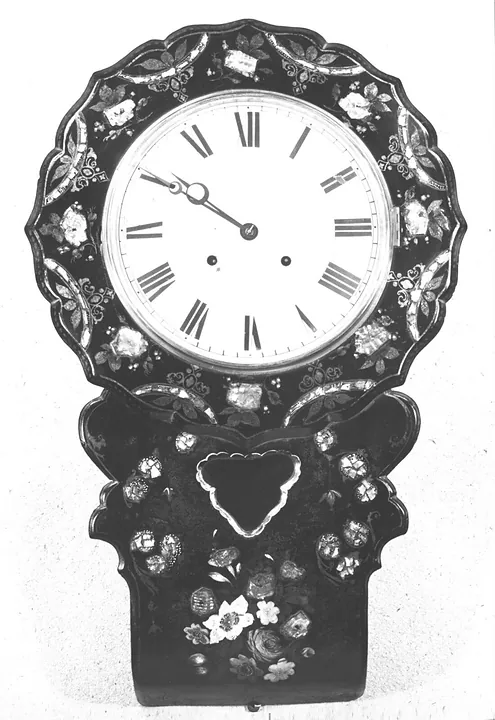
Wall clock in a papier mâché case with painted decoration. English, mid 19th century.
Victoria and Albert Museum, London
Clocks · 1840–1900
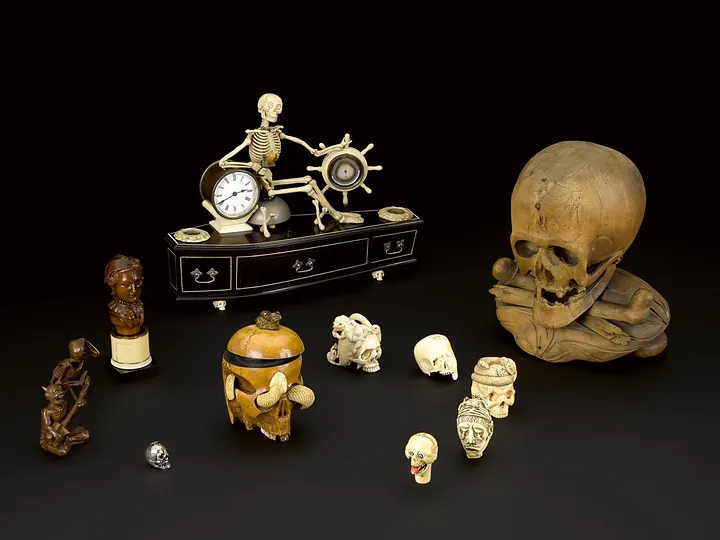
Alarm clock, mounted on model of coffin with skeleton, probably English, 1840–1900
Science Museum Group, London
Clocks · 1840–1880
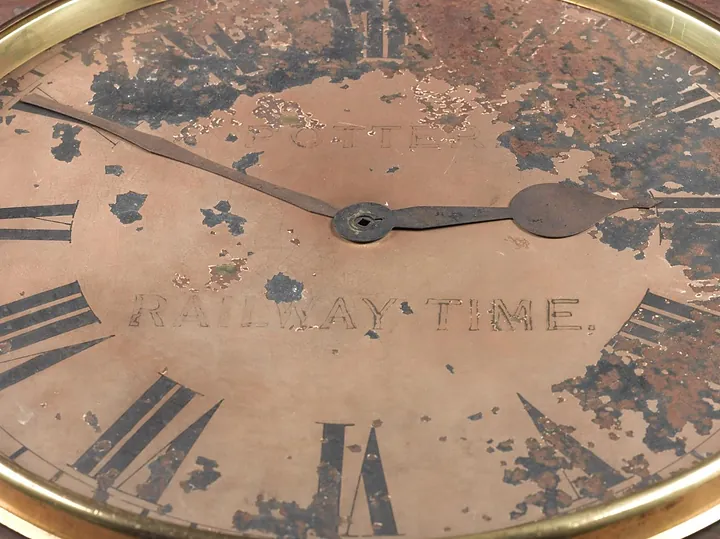
Clock dial marked "Potter, Railway Time" with two hands, unknown maker, British, 1840–1880
Science Museum Group, London
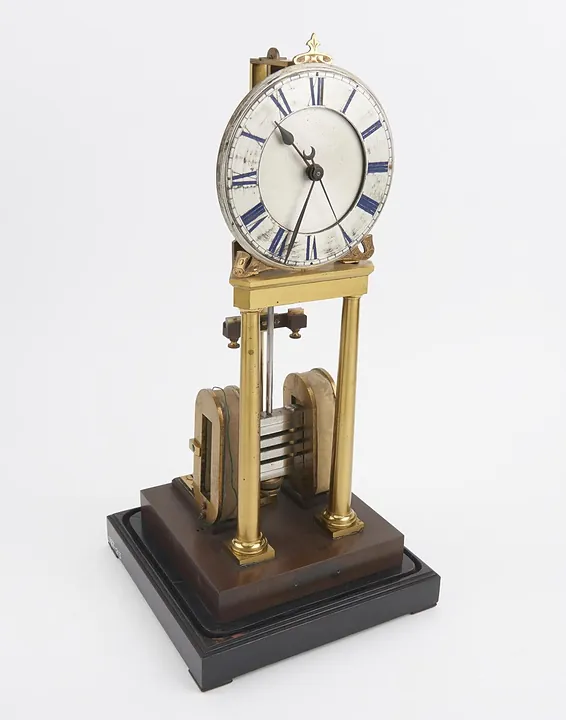
Clocks · 1840–1877
Electric clock of the Bain type
Science Museum Group, London
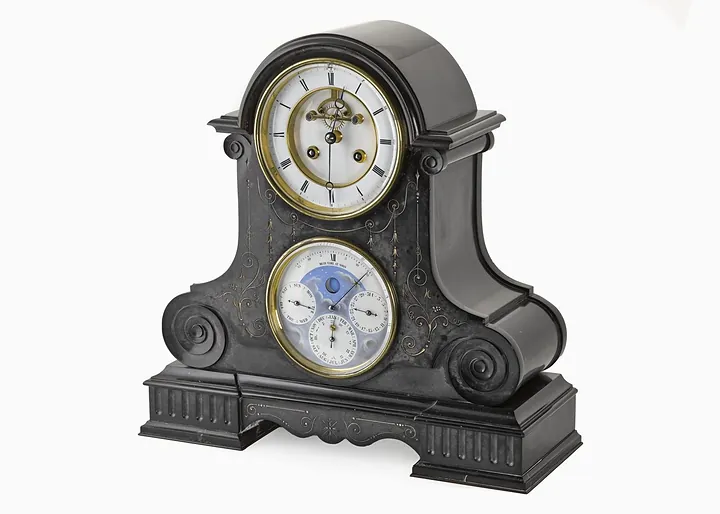
Clocks · 1840–1878
Mantel clock by A. Brocot, France, 1840–1878
Science Museum Group, London
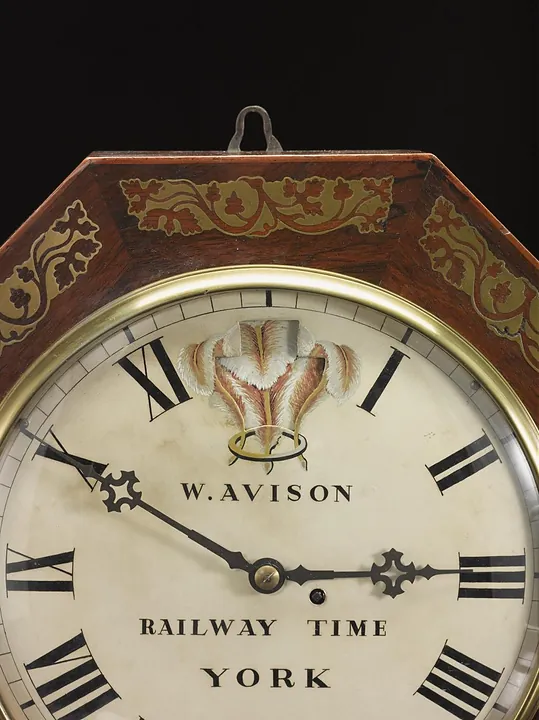
Clocks · 1840–1880
Wall Clock in octagonal case with Prince of Wales Feathers above makers name "W. Avison, Railway Time, York", made by William Avison, England, 1840–1880.
Science Museum Group, London
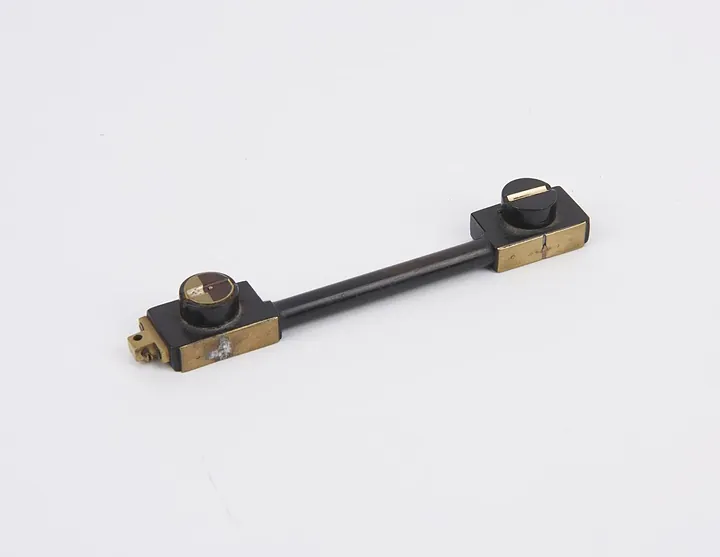
Clocks · 1841–1870
Contact bar from electric clock, unsigned, London, England, 1841–1870
Science Museum Group, London
Clocks · 1841–1870
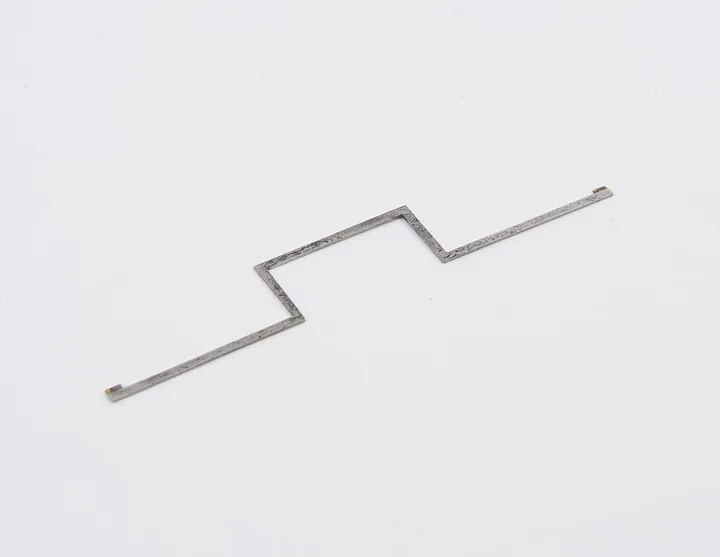
Contactor from electric clock, unsigned, London, England, 1841–1870
Science Museum Group, London