
Clocks · Clock
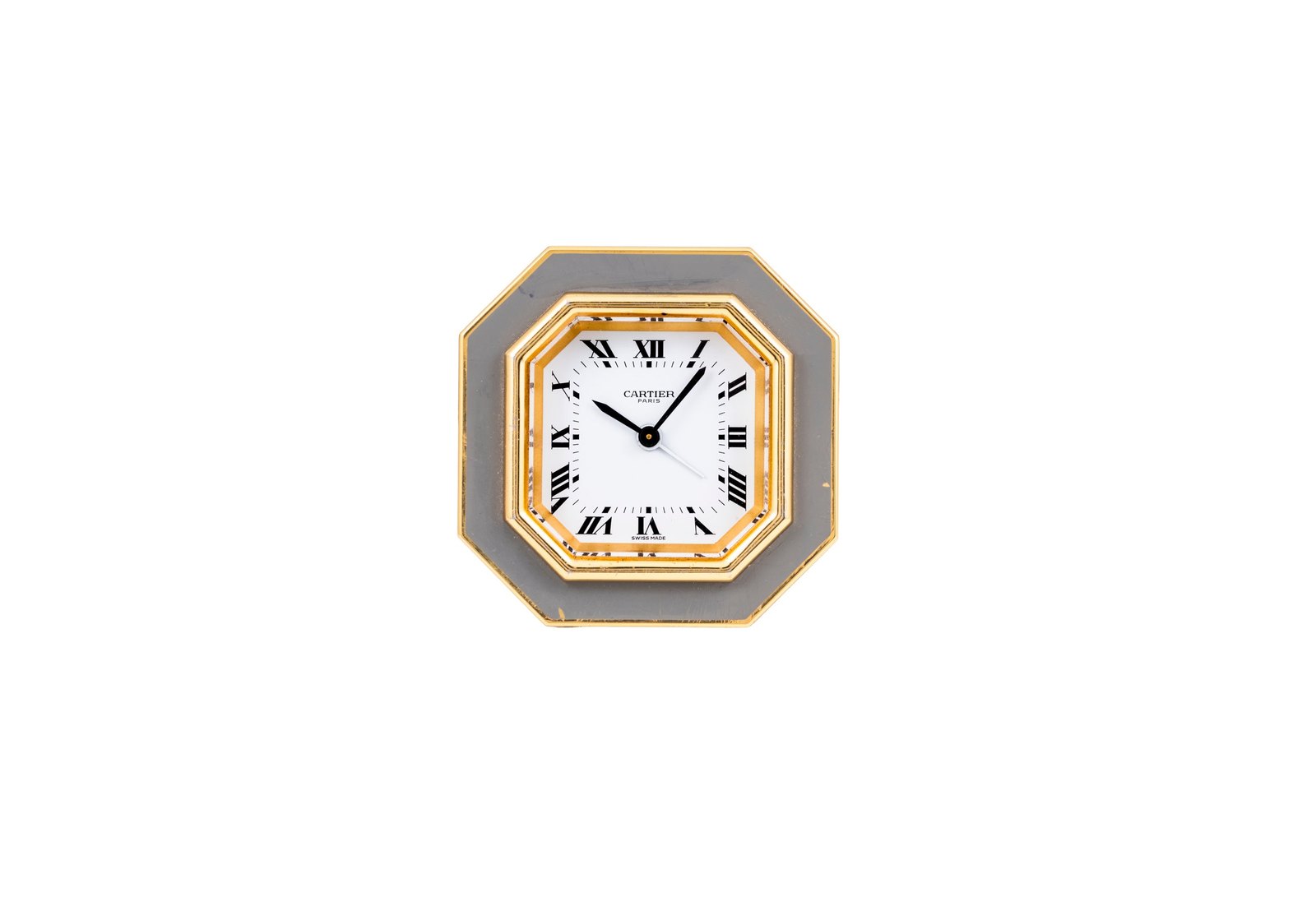
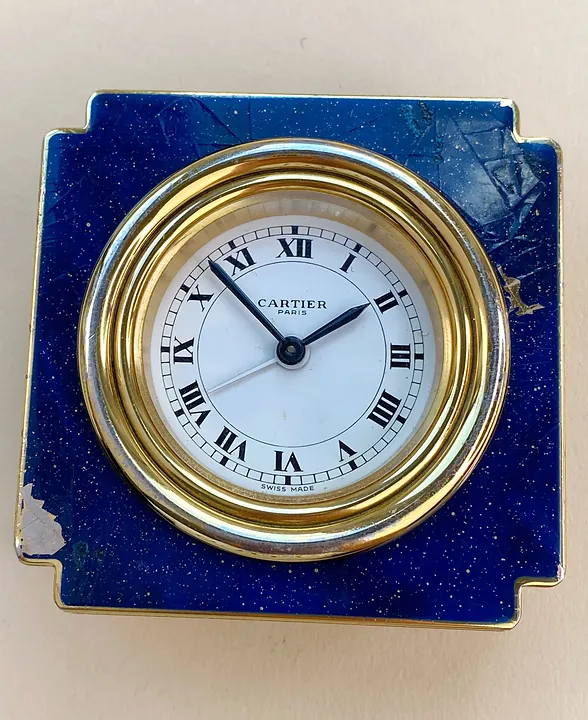
Cartier Alarm Clock
- Maker / attribution
- Cartier (maker)
- Date
- 1980s
- Historical period
- Quartz Revolution (1969 – 1990)
- Country of origin
- France
- Object type
- Clock
- Stock no.
- 39131074
- Credit line
- Dealer listing, Analog/Shift (39131074)
- Catalogue title (original)
- Cartier Alarm Clock (English)
View the source record (dealer listing) ↗ (opens another website in a new tab)Suggest a correction
Record summary
Catalogued by Analog/Shift (dealer), New York (stock number 39131074), this is a clock by Cartier, made in France, dated 1980s. The Atlas places it in the Quartz Revolution period (1969 – 1990) of its Clocks collection. The record is illustrated with 6 photographs.
Assembled from the source record's structured fields. Dates and attributions are given as the source states them; where a field is missing the Atlas leaves it blank rather than estimating.
Catalogue description
Dealer description — Analog/Shift
Sure, Analog:Shift is a business built around the love of watches — mostly mechanical watches. But, in essence, it’s our love for timepieces and timekeeping in general that are the common themes throughout the items we procure. And that includes the love of clocks in general: pocket watches, travel clocks, and more. After all, in the couple hundred years before the First World War, personal timekeeping was all about the pocket watch, and before that, it was larger clocks that were front and center, horologically. We still believe a good clock — such as a classic travel model from the 1920s or 1930s — has a place in the watch lover’s collection. Part of the Must de Cartier collection, this vintage alarm clock is a Swiss-made, mechanical beauty dating to the 1980s, a time when quartz-powered watches were all the rage. Housed in a 3” x 3” x 1 1/14” brass and grey lacquered case with an acrylic crystal, it features a gloss white dial with Roman indices, a blued steel ‘sword’ handset, and a white alarm indicator hand. Wound and set via cabochon crowns and key on the back, the clock can be propped up on a nightstand, desk, or dresser to loudly rouse you from your nightly slumber. A beautiful design object with just the right amount of patina, it also includes its red presentation Must de Cartier box and booklet. Could you use your phone to wake you up each morning? Sure. Would that be easier and more convenient? Yes. But if starting your day with a little analog charm resonates with you, then you know what to do...
Historical context
Quartz Revolution (1969 – 1990)
Seiko's Astron begins mass quartz timekeeping; traditional industries contract sharply.
Quartz movements and digital displays made accurate clocks cheap and ubiquitous after the early 1970s. LED and LCD clocks, clock radios and radio-controlled clocks appeared, while traditional mechanical clockmaking contracted sharply in Germany, France and Britain.
Read the period in the timelineMore clocks from this periodEarlier: Modern Mechanical Horology
Atlas type guide
Alarm clocks
Alarm work is among the oldest clock functions: monastic clocks woke monks for night prayers, and Renaissance table clocks often carried an alarm disc set by a pin. A separate spring or weight is released at the set time and drives a hammer against a bell. Some early alarms also lit a candle by striking a flint — the 'tinder pistol' alarm.
The cheap, mass-produced alarm clock arrived in the second half of the nineteenth century. American firms such as Seth Thomas and Westclox (the 'Big Ben' of 1910) and German makers such as Junghans and Kienzle made millions of drum-shaped alarms with pin-pallet escapements. Electric, quartz and digital alarm clocks followed in the twentieth century.
What to look for
- A separate alarm-setting dial or disc and an extra winding key.
- Twin bells on top (common after c. 1920) or a bell enclosed in the base.
- Pin-pallet escapements in inexpensive factory alarms.
- Trademarks and patent dates on dial or back.
Dating clues
- Renaissance alarm table clocks: sixteenth to seventeenth centuries.
- Drum alarm clocks: from the 1870s.
- Luminous dials with radium paint: c. 1910–1960.
General guidance written by the Atlas editors about this kind of object. It is not a statement about this particular piece; for that, rely on the source record above and on physical examination.
Related records
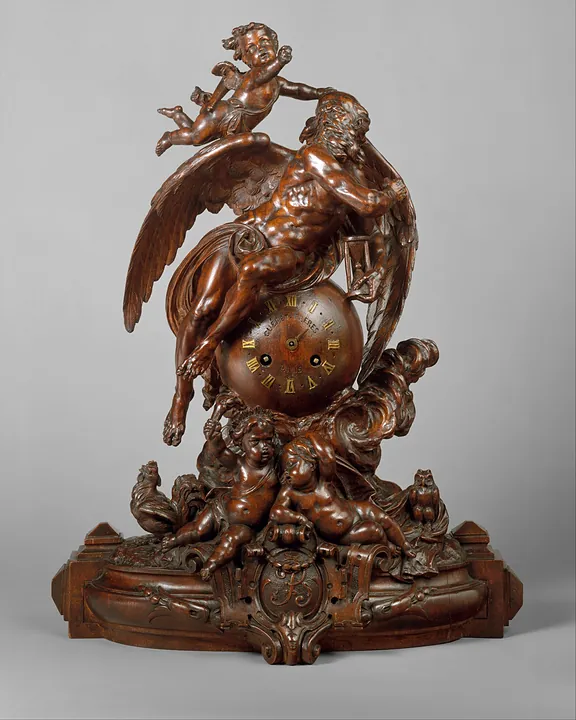
Clocks · 1863
Clock by Albert-Ernest Carrier-Belleuse, France, 1863
The Metropolitan Museum of Art, New York
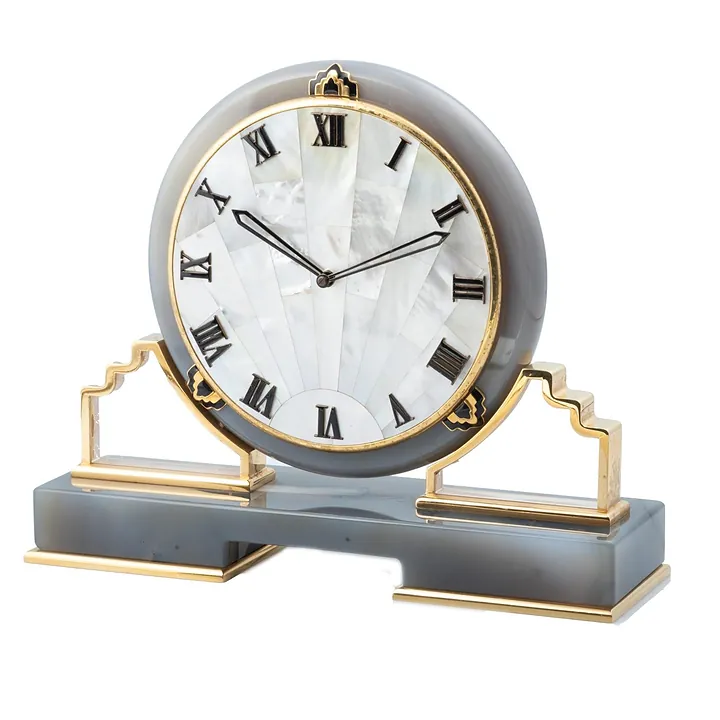
Clocks · c. 1980s
Cartier "art Deco", c. 1980s
Antiquorum auction archive, Geneva
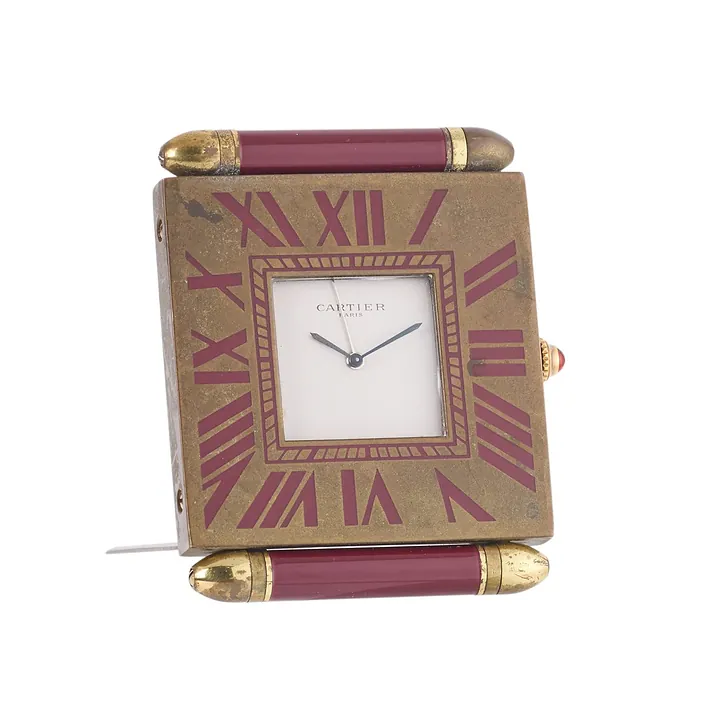
Clocks · c. 2000s
Cartier Desk Clock with Alarm, c. 2000s
Antiquorum auction archive, Geneva
Clocks · c. 2000s
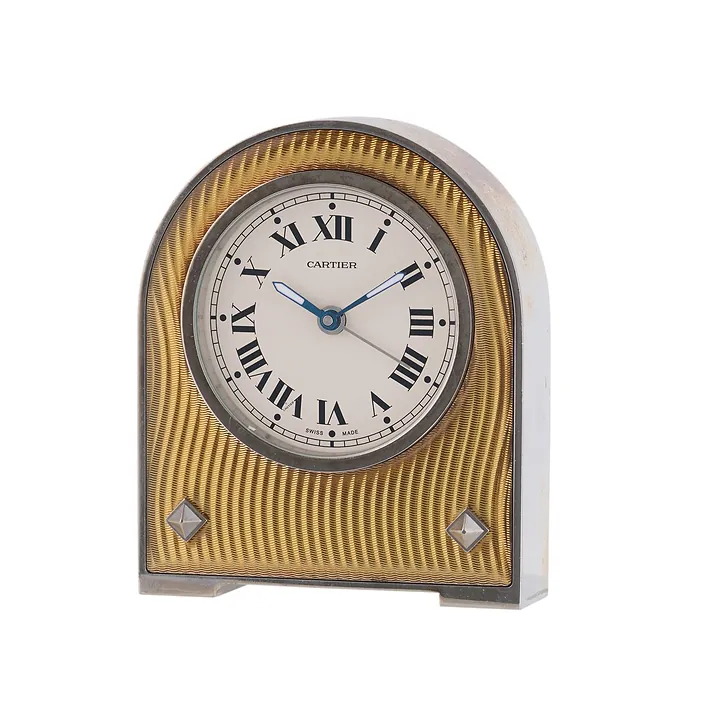
Cartier Lacquer Arched Desk Clock with Alarm, ref. W0100037, c. 2000s
Antiquorum auction archive, Geneva
Clocks · c. 1980s
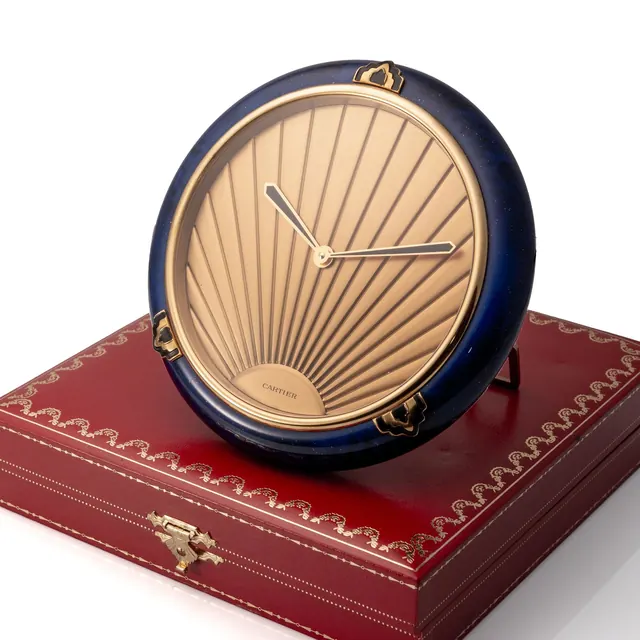
Cartier clock, Art Deco Clock Brass, circa 1980's
Antiquorum auction archive, Geneva
Clocks · 1980s
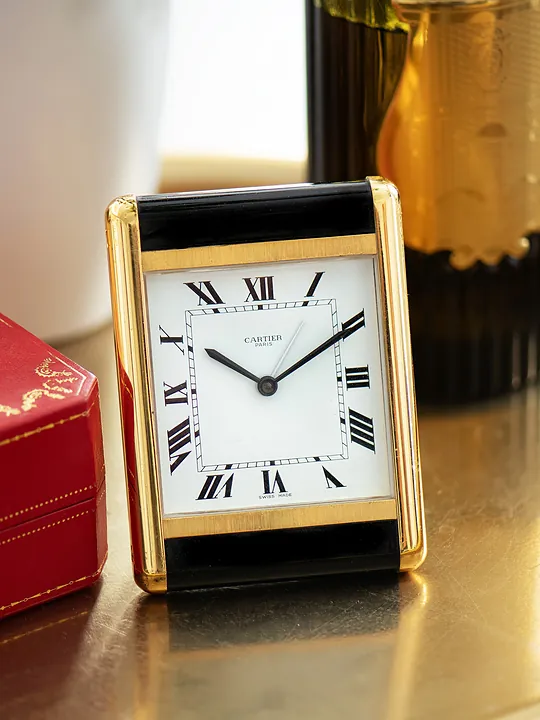
Cartier Tank Louis Travel Desk Alarm Clock (Ref. 7505), 1980s
Craft & Tailored (dealer), Los Angeles
Clocks · 1980
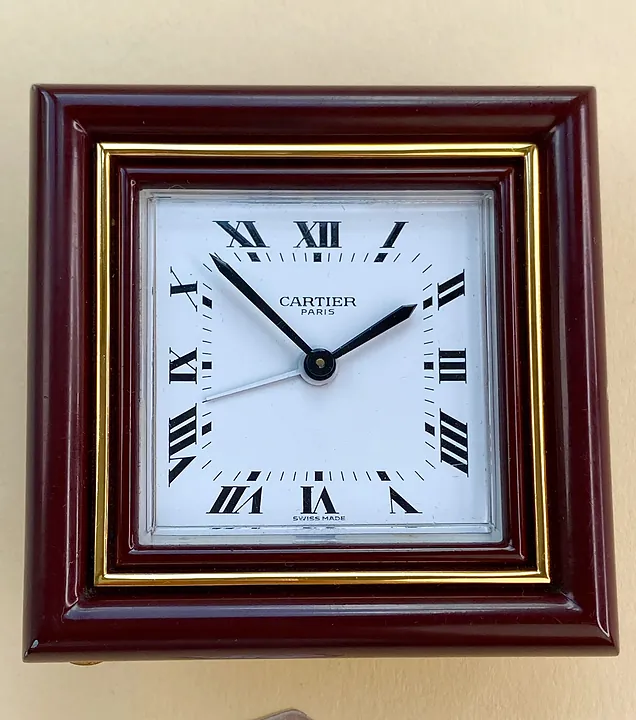
Cartier Table Clock Alarm Bordeaux Red, 1980
Vintage Portfolio (dealer), Vienna
Clocks · 1980
Cartier Table Clock Alarm Blue Lapis, 1980
Vintage Portfolio (dealer), Vienna