
Clocks · Carriage clock
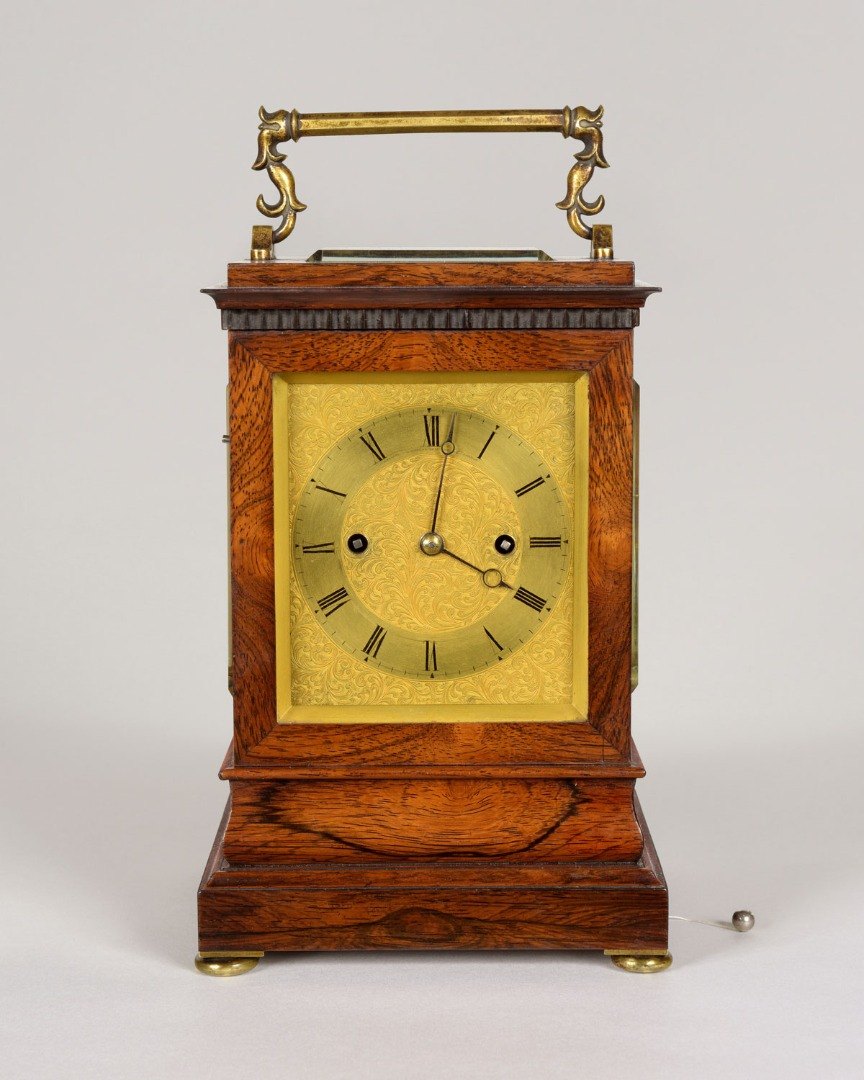
Carriage clock by Emanuel Brothers, 5 Hanover Square, London, c. 1840
- Maker / attribution
- Emanuel Brothers (maker)
- Date
- c. 1840
- Historical period
- Precision & Scientific Horology (1750 – 1850)
- Country of origin
- England
- Place
- 5 Hanover Square, London
- Object type
- Carriage clock
- Dimensions
- Height 27 cm
- Stock no.
- SKU 395
- Credit line
- Dealer listing, Howard Walwyn (SKU 395)
- Catalogue title (original)
- EMANUEL BROTHERS, A rare early 19th century rosewood travel clock (English)
View the source record (dealer listing) ↗ (opens another website in a new tab)Suggest a correction
Record summary
Catalogued by Howard Walwyn Fine Antique Clocks (dealer), London (stock number SKU 395), this is a carriage clock by Emanuel Brothers, made in 5 Hanover Square, London, England, dated c. 1840. The Atlas places it in the Precision & Scientific Horology period (1750 – 1850) of its Clocks collection. Recorded dimensions: Height 27 cm. The record is illustrated with 4 photographs.
Assembled from the source record's structured fields. Dates and attributions are given as the source states them; where a field is missing the Atlas leaves it blank rather than estimating.
Catalogue description
Dealer description — Howard Walwyn
A rare early 19 th century rosewood travel clock with soft/loud strike function. The rectangular case with facetted handle raised on scroll uprights over heavy glazed bevelled panels to the top and sides over an ogee moulded base on a plinth and brass button feet, the 3 ½ inch rectangular dial with Roman chapter ring signed between XI and I, within elaborately engraved foliate scrolls, with blued steel moon hands, the movement with substantial plates united by five pillars, with twin chain fusees, the gilt platform with heavy monometallic balance to an English-style lever escapement, the strike train sounding on a circular-section coiled steel gong mounted on steel and brass blocks raised on a steel support, the wooden hammer head with an inset section of felt to allow either ‘ forte ’ or ‘ piano ’ striking, the choice given by a selection lever to the left hand side of the case. Height : 10 in (27 cm) * The Emanuel Brothers were jewellers to Queen Victoria in 1839 and wholesale jewellers to Her Majesty and the Royal Family from 1840-43. Their stock included other luxury items, such as this clock. HW6137
Historical context
Precision & Scientific Horology (1750 – 1850)
Harrison solves longitude; Mudge invents the lever; Breguet's Paris workshop defines the modern watch.
The age of the deadbeat escapement, compensated pendulums and observatory regulators. Domestic clocks spread through the middle classes: English longcase and bracket clocks, French gilt-bronze mantel clocks, Viennese Biedermeier wall clocks, Black Forest painted-shield clocks, and the first American shelf clocks.
Read the period in the timelineMore clocks from this periodEarlier: Early Modern Horology
Atlas type guide
Carriage and travel clocks
The carriage clock is a portable spring clock with a balance-wheel escapement and a brass case with glass panels and a carrying handle. Abraham-Louis Breguet made early examples around 1800, and from the 1830s Paul Garnier and other French makers industrialised production, with the small towns of Saint-Nicolas-d'Aliermont and the Franche-Comté supplying movements for retailers worldwide.
Typical features include a platform escapement mounted horizontally on top of the movement (usually a lever, sometimes cylinder or Garnier's chaff-cutter), striking or repeating work, and alarms. English carriage clocks, generally larger and with fusees, were made by firms such as Frodsham and Dent. Travel clocks in folding leather cases became popular in the twentieth century.
What to look for
- A platform escapement visible through the top glass.
- Case styles: corniche, gorge, anglaise, obis or engraved cases.
- Repeat buttons on top and strike/silent levers.
- Stamps of movement makers (e.g. Drocourt, Jacot, Margaine, Richard & Co.) on the backplate.
Dating clues
- Early carriage clocks with Breguet or Garnier features: c. 1800–1850.
- Mass-produced French carriage clocks: c. 1850–1914.
- Folding travel clocks and alarm travel clocks: mostly 1920–1970.
General guidance written by the Atlas editors about this kind of object. It is not a statement about this particular piece; for that, rely on the source record above and on physical examination.
Related records
Clocks · 1740–1760
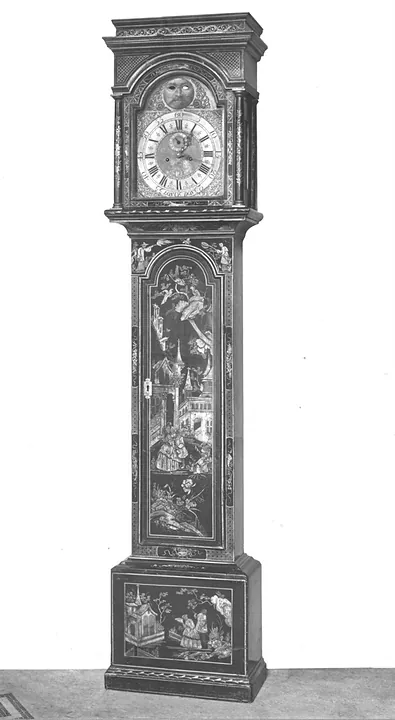
Longcase clock, English, 1740–1760, japanned wood, John Ellicott
Victoria and Albert Museum, London
Clocks · c.1750
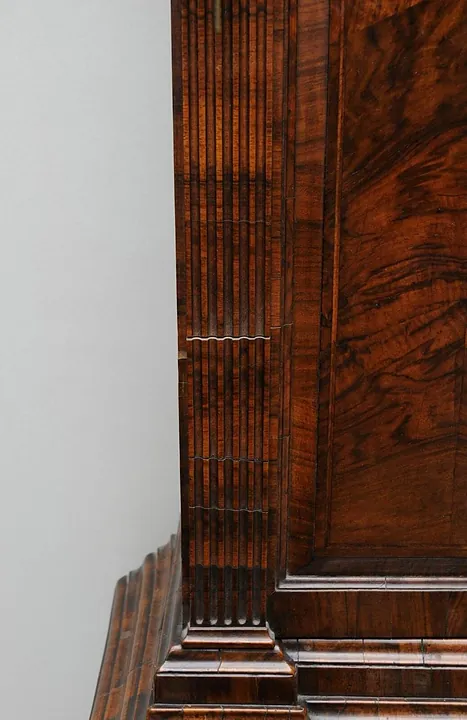
Long-case clock, English, ca. 1750, by Richard Peyton of Gloucester
Victoria and Albert Museum, London
Clocks · 1751
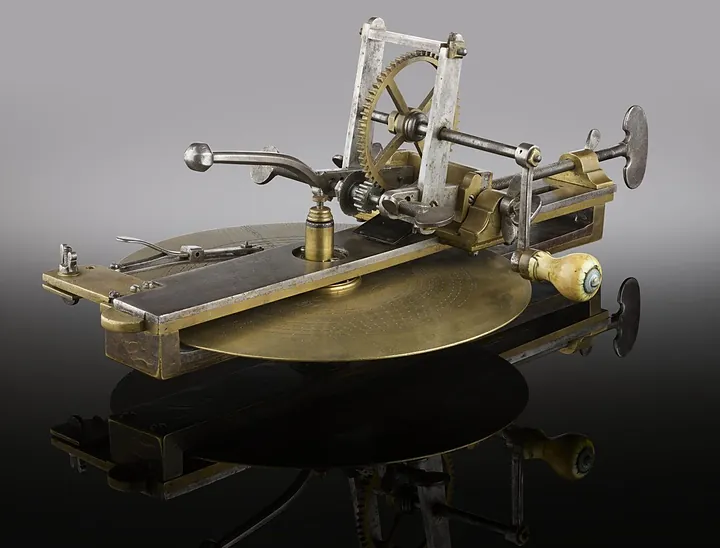
Large wheel engine, signed and dated "John Tipping, Whildon Green, 1751".
Science Museum Group, London
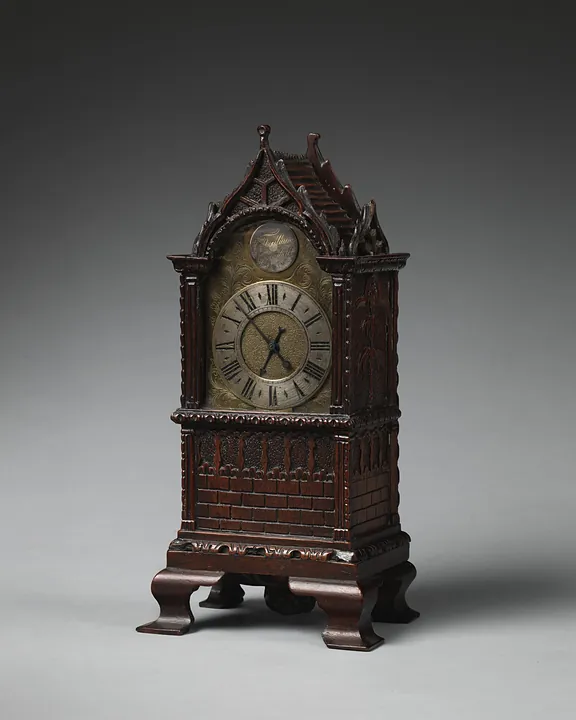
Clocks · 1755
Bracket clock by John Fordham, England, 1755
The Metropolitan Museum of Art, New York
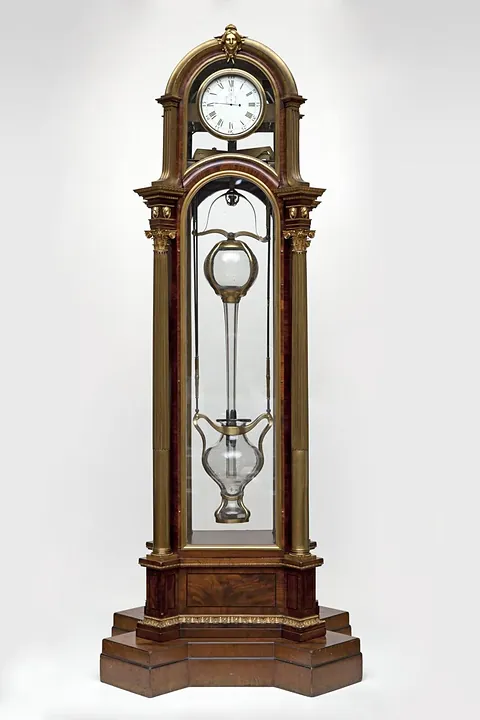
Clocks · c. 1760
Longcase clock by James Cox, England, c. 1760
Victoria and Albert Museum, London
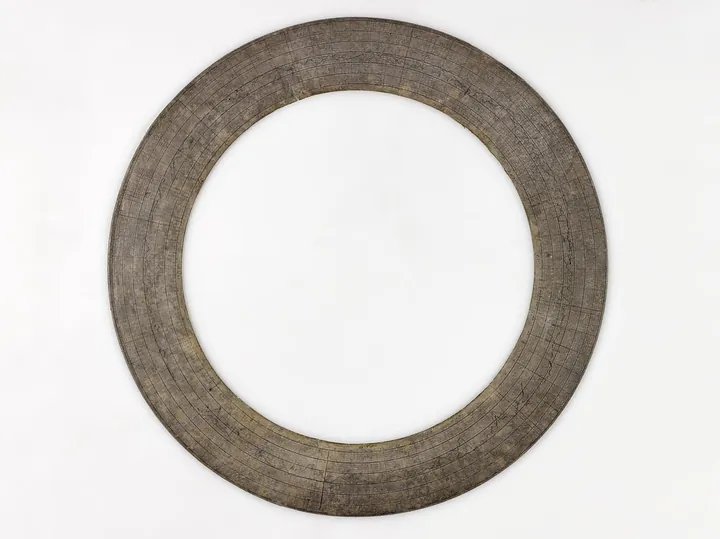
Clocks · 1766
Clock by Alexander Cumming, England, 1766
Science Museum Group, London
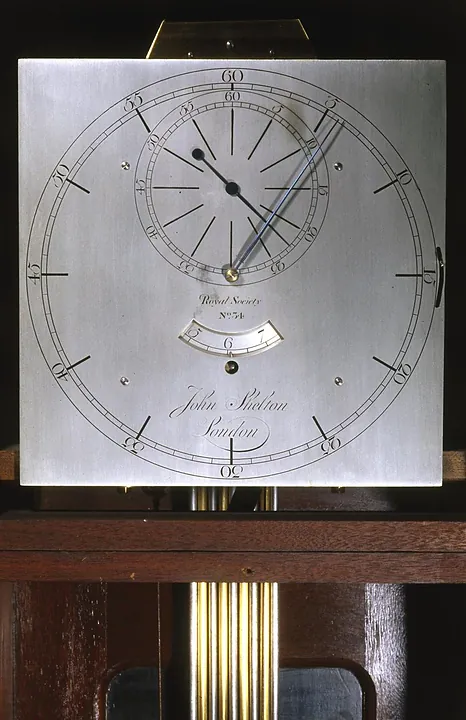
Clocks · 1768–1769
Regulator clock by John Shelton, England, 1768–1769
Science Museum Group, London
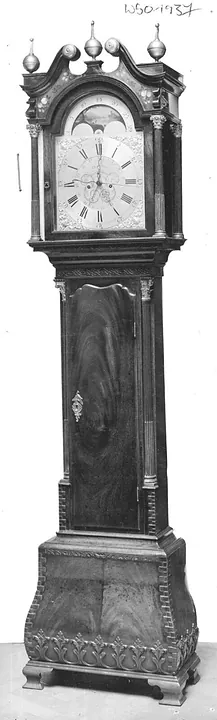
Clocks · c. 1775
Longcase clock, England, c. 1775
Victoria and Albert Museum, London