
Clocks · Carriage clock
Carriage clock by Drocourt à Paris, Paris, c. 1880
- Maker / attribution
- Drocourt à Paris (maker)
- Date
- c. 1880
- Historical period
- Industrial Revolution (1850 – 1900)
- Country of origin
- France
- Place
- Paris
- Object type
- Carriage clock
- Dimensions
- Height 21 cm
- Stock no.
- SKU 341
- Credit line
- Dealer listing, Howard Walwyn (SKU 341)
- Catalogue title (original)
- DROCOURT À PARIS, N° 17001. A rare giant gorge cased carriage clock (English)
View the source record (dealer listing) ↗ (opens another website in a new tab)Suggest a correction
Record summary
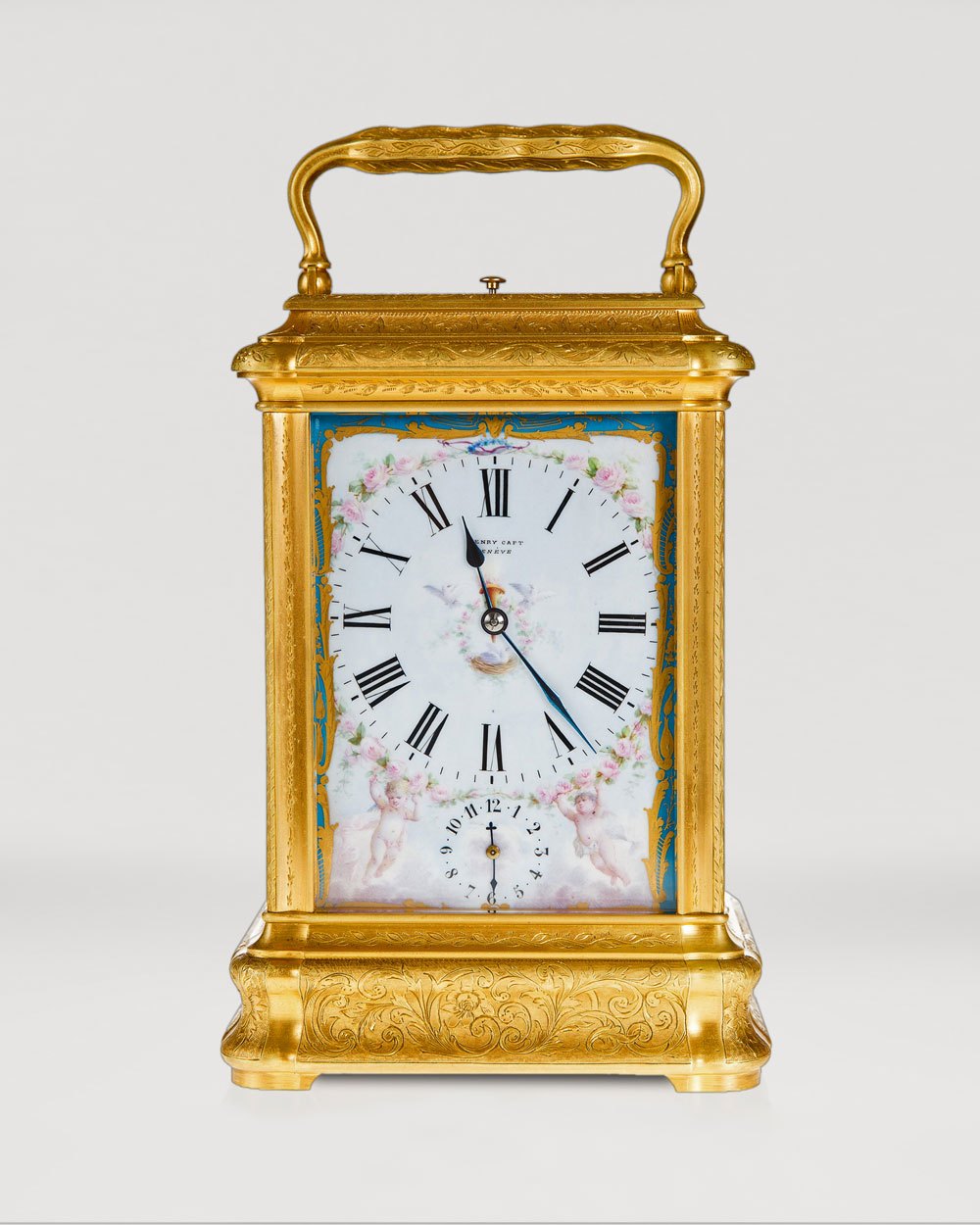
Catalogued by Howard Walwyn Fine Antique Clocks (dealer), London (stock number SKU 341), this is a carriage clock by Drocourt à Paris, made in Paris, France, dated c. 1880. The Atlas places it in the Industrial Revolution period (1850 – 1900) of its Clocks collection. Recorded dimensions: Height 21 cm. The record is illustrated with 6 photographs.
Assembled from the source record's structured fields. Dates and attributions are given as the source states them; where a field is missing the Atlas leaves it blank rather than estimating.
Catalogue description
Dealer description — Howard Walwyn
A rare giant gorge cased carriage clock of exceptional quality, the 8-day movement with hour strike on the hours and passing strike at half past the hour. It also has an alarm feature whose subsidiary dial is set below VI on the dial. The stunning engraved case has porcelain side panels depict angels, cherubs and angelic maidens within a celestial blue and gold border. The 4 inch main porcelain dial has a similar blue and gilt border and there are cherubs holding up a circular wreath of roses. The clock retains its three original tapering blued steel hands. Such giant carriage clocks were made in very small numbers and even fewer have survived. This clock was made for the English market and retailed in Switzerland. Height : 8 ¼ in (21 cm) Width : 5 ¾ in (14.5 cm) Depth : 4 ¼ in (11 cm) HW6167
Historical context
Industrial Revolution (1850 – 1900)
American interchangeable-parts manufacture; railroad time standards; Swiss and German factory systems.
Factory production transformed the clock into an everyday object. American makers (Seth Thomas, Ansonia, Waterbury) and German factories (Junghans, Gustav Becker, Lenzkirch) sold millions of shelf, wall and alarm clocks worldwide; France produced standardised Paris movements and carriage clocks; electric time distribution began.
Read the period in the timelineMore clocks from this periodEarlier: Precision & Scientific Horology
Atlas type guide
Carriage and travel clocks
The carriage clock is a portable spring clock with a balance-wheel escapement and a brass case with glass panels and a carrying handle. Abraham-Louis Breguet made early examples around 1800, and from the 1830s Paul Garnier and other French makers industrialised production, with the small towns of Saint-Nicolas-d'Aliermont and the Franche-Comté supplying movements for retailers worldwide.
Typical features include a platform escapement mounted horizontally on top of the movement (usually a lever, sometimes cylinder or Garnier's chaff-cutter), striking or repeating work, and alarms. English carriage clocks, generally larger and with fusees, were made by firms such as Frodsham and Dent. Travel clocks in folding leather cases became popular in the twentieth century.
What to look for
- A platform escapement visible through the top glass.
- Case styles: corniche, gorge, anglaise, obis or engraved cases.
- Repeat buttons on top and strike/silent levers.
- Stamps of movement makers (e.g. Drocourt, Jacot, Margaine, Richard & Co.) on the backplate.
Dating clues
- Early carriage clocks with Breguet or Garnier features: c. 1800–1850.
- Mass-produced French carriage clocks: c. 1850–1914.
- Folding travel clocks and alarm travel clocks: mostly 1920–1970.
General guidance written by the Atlas editors about this kind of object. It is not a statement about this particular piece; for that, rely on the source record above and on physical examination.
Read next:Detached lever escapement
Related records
Clocks · c. 1880
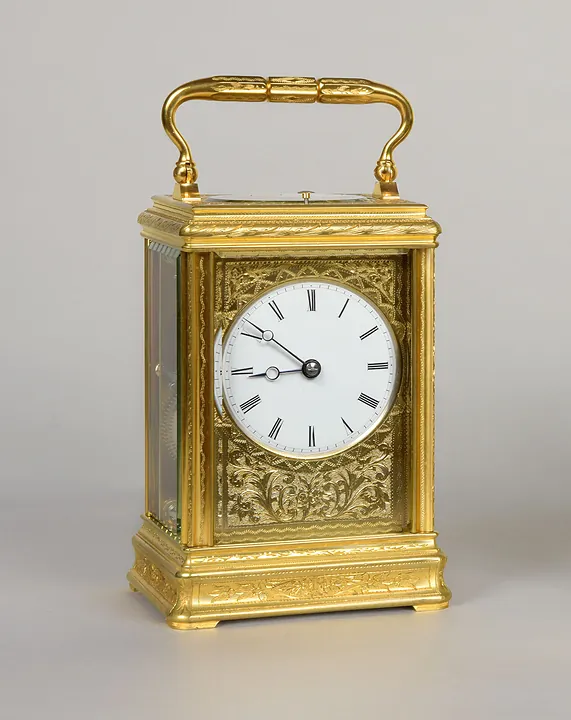
Carriage clock by Drocourt à Paris, Paris, c. 1880
Howard Walwyn Fine Antique Clocks (dealer), London
Clocks · 1er Janvier 1877
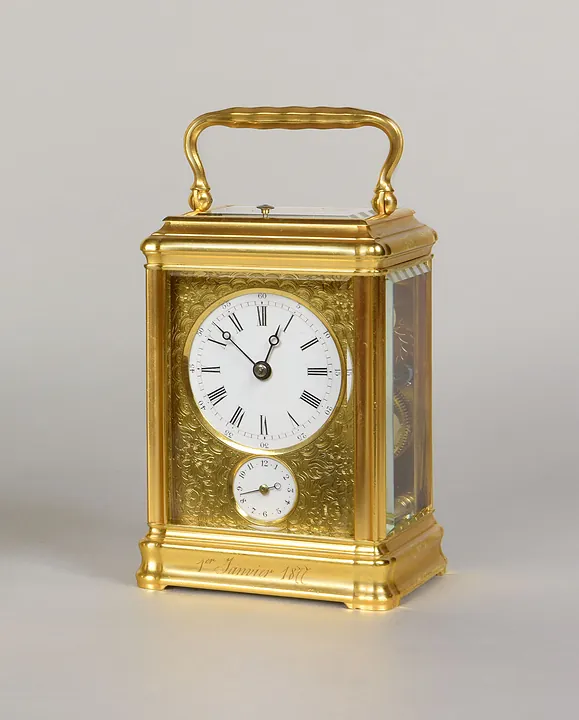
Carriage clock by Drocourt à Paris, Paris, 1er Janvier 1877
Howard Walwyn Fine Antique Clocks (dealer), London
Clocks · 1840–1878
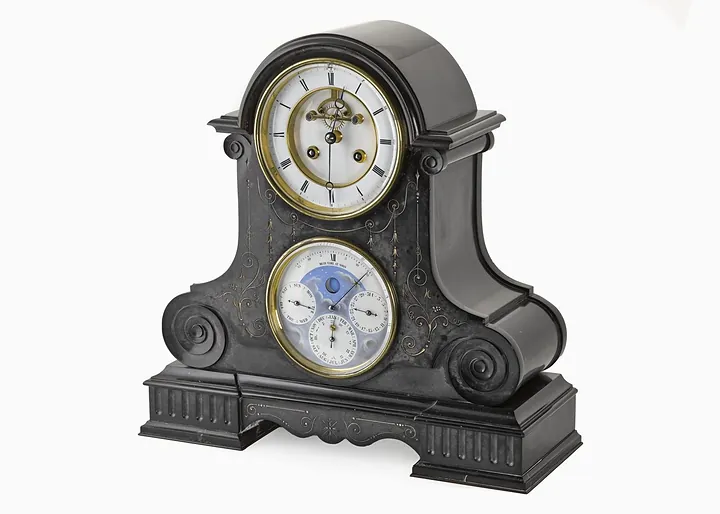
Mantel clock by A. Brocot, France, 1840–1878
Science Museum Group, London
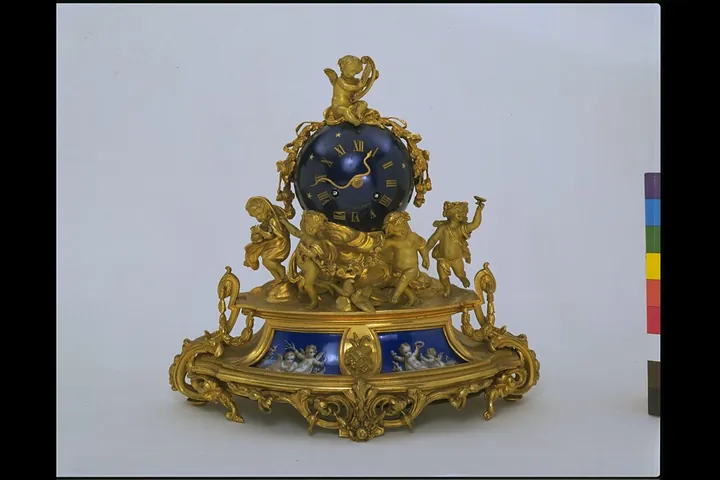
Clocks · c. 1855
Ormolu and enamel clock, Paris, ca.1855, made by Lévy Frères.
Victoria and Albert Museum, London
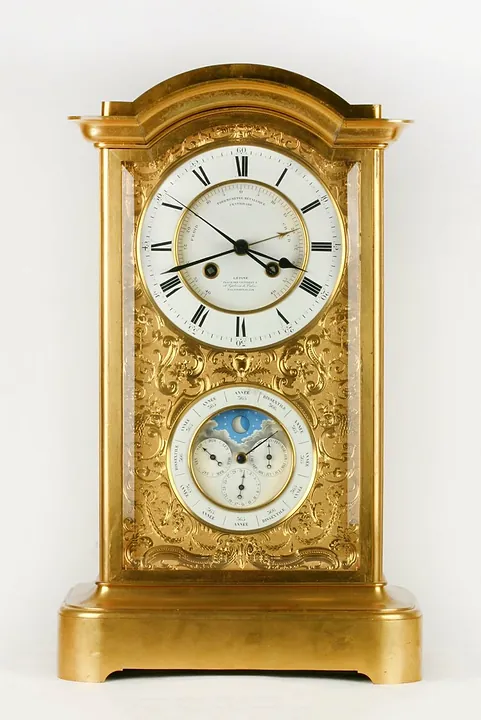
Clocks · c. 1850
Table clock, France, c. 1850
German Clock Museum
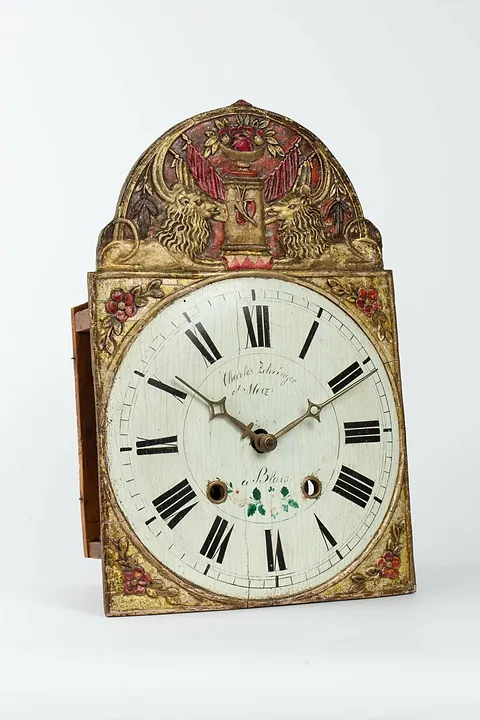
Clocks · c. 1850
Wall clock by Charles et Merz Zehringer, France, c. 1850
German Clock Museum
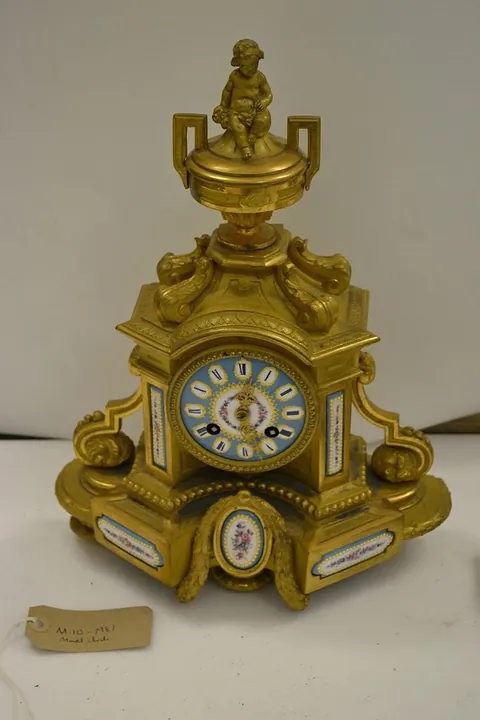
Clocks · c. 1860
Mantel clock, French, c. 1860
Victoria and Albert Museum, London
Clocks · c. 1860
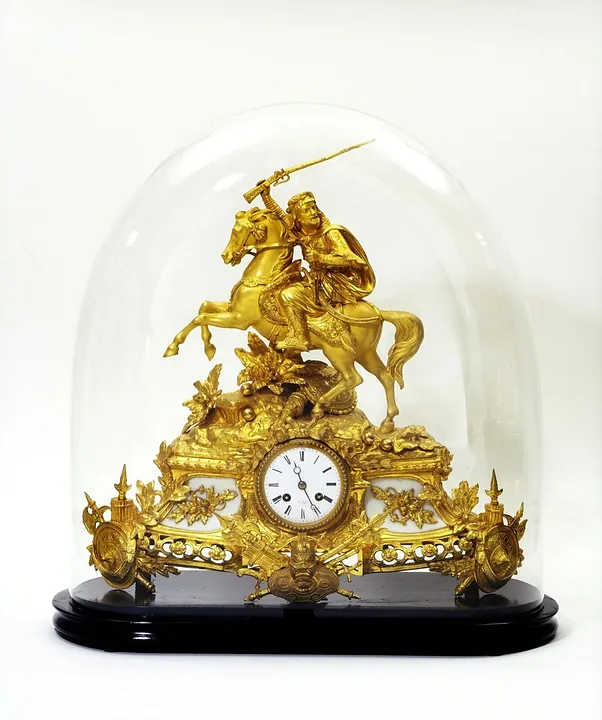
[*] French Clock under glass dome
Victoria and Albert Museum, London