
Instruments · Stopwatch
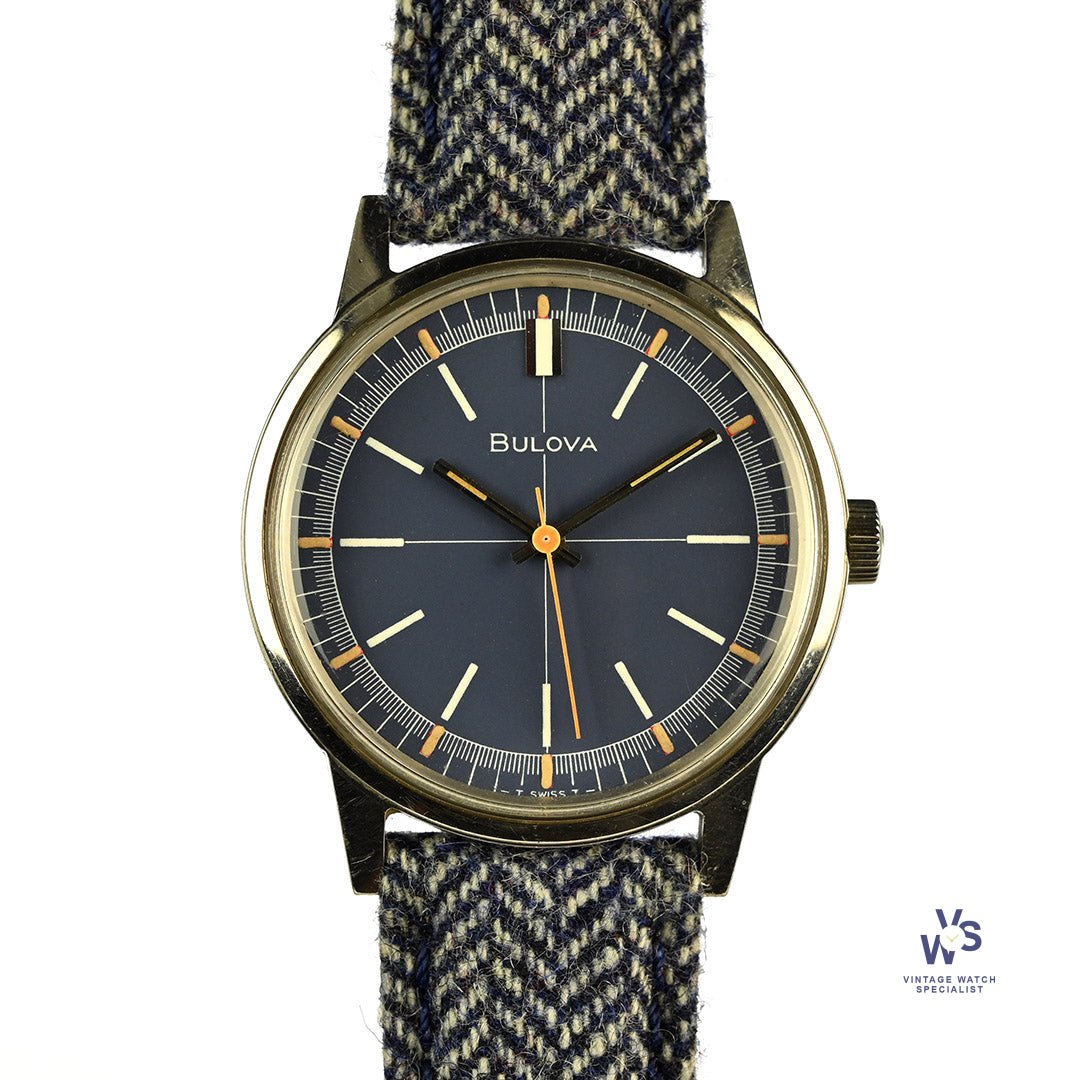
Bulova Sport Timer Watch, ref. 971, Blue Crosshair Dial, circa 1969
- Maker / attribution
- Bulova (maker)
- Date
- c. 1969
- Historical period
- Quartz Revolution (1969 – 1990)
- Country of origin
- United States
- Object type
- Stopwatch
- Dimensions
- Case 34 mm
- Stock no.
- vws2815
- Credit line
- Dealer listing, Vintage Watch Specialist (vws2815)
- Catalogue title (original)
- Bulova - Sport Timer Watch - Model Ref: 971 - Beautiful Blue Crosshair Dial - c.1969 (English)
View the source record (dealer listing) ↗ (opens another website in a new tab)Suggest a correction
Record summary
Catalogued by Vintage Watch Specialist (dealer), United Kingdom (stock number vws2815), this is a stopwatch by Bulova, made in United States, dated c. 1969. The Atlas places it in the Quartz Revolution period (1969 – 1990) of its Instruments collection. Recorded dimensions: Case 34 mm. The record is illustrated with 6 photographs.
Assembled from the source record's structured fields. Dates and attributions are given as the source states them; where a field is missing the Atlas leaves it blank rather than estimating.
Catalogue description
Dealer description — Vintage Watch Specialist
A Stunning Bulova Sport-Timer with a Fantastic and Rare Blue Cross-Hair Dial with Sporty Orange Accents, c.1969 Bulova is a New York based corporation making watches and clocks. It was founded and incorporated as the J. Bulova Company in 1875 by Joseph Bulova (1851-1936), an immigrant from Bohemia. It was reincorporated under the name Bulova Watch Company in 1923, and became part of the Loews Corporation in 1979. What’s On Offer Additional information Made from Case: Stainless Steel Dial: Blue Crystal: Acrylic Bracelet: Pin Buckle Strap Technical specifications Winding: Manual Movement Type: Mechanical Calibre: 11 ANC Jewels: 17 Waterproof: No Power reserve: Purchase details Condition: Excellent Model Reference: 971 Date of issue: c.1969 Dimensions Width (without crown): 34mm Lug width: 18mm Lug height: (lug to lug) 41mm Wrist size: Adjustable
Historical context
Quartz Revolution (1969 – 1990)
Seiko's Astron begins mass quartz timekeeping; traditional industries contract sharply.
Electronic timing replaced mechanical instruments in sport, industry and navigation.
Read the period in the timelineMore instruments from this periodEarlier: Modern Mechanical Horology
Atlas type guide
Timers, stopwatches, chronoscopes and time recorders
Instruments for measuring short intervals or recording when something happened form a large and practical branch of horology. Sports stopwatches and split-seconds timers, laboratory chronoscopes (such as Hipp's, which measured thousandths of a second for psychology and ballistics experiments), metronomes for music, watchmen's clocks that recorded patrol rounds, and the time recorders that clocked factory workers in and out all derive from clock and watch technology.
These objects matter historically because they show timekeeping leaving the observatory and the drawing room and entering industry, science and sport. Many were mass-produced, and their dials, scales and patents chart the rise of electrification and industrial management.
What to look for
- Scales graduated in fifths, tenths or hundredths of a second, or decimal minutes for industrial use.
- Start, stop and reset push-pieces; a second hand that can be stopped independently (split seconds).
- Recording devices: paper discs or tapes, printing mechanisms, keys or punches.
- Patent numbers and dates on the dial or case, which give a terminus post quem.
Dating clues
- Hipp chronoscopes were made from the 1840s into the twentieth century.
- Employee time recorders spread from the 1890s (Bundy, IBM, International Time Recording Co.).
- Quartz and electronic timers replaced mechanical stopwatches in sport from the 1970s.
General guidance written by the Atlas editors about this kind of object. It is not a statement about this particular piece; for that, rely on the source record above and on physical examination.
Read next:Flyback chronograph
Related records
Wristwatches · c. 1969
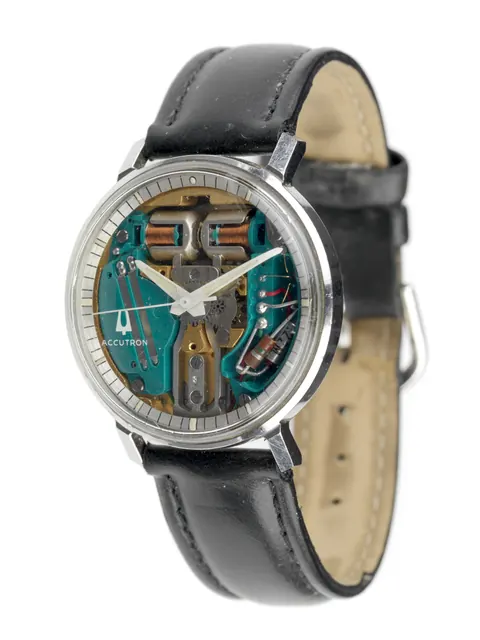
Bulova 'Accutron' tuning-fork wristwatch by Bulova
Royal Museums Greenwich
Wristwatches · c. 1965
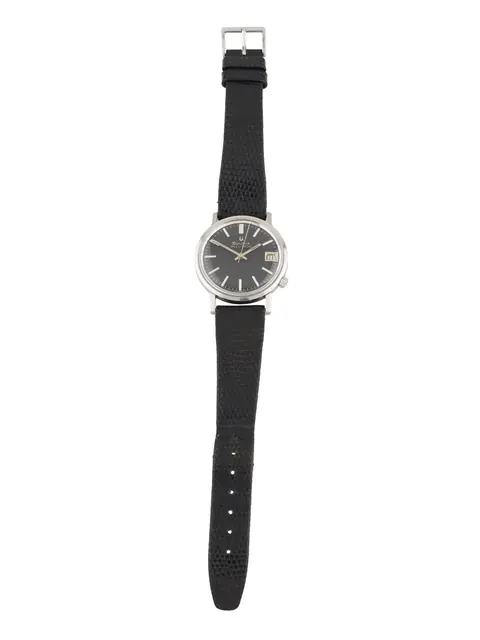
Wristwatch Accutron by Knud Geelmuyden Bull
Royal Museums Greenwich
Clocks · c. 1960s
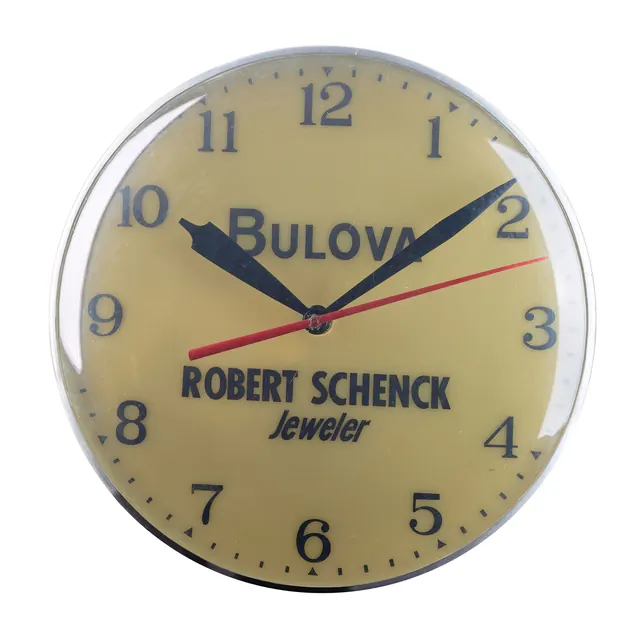
Bulova wall clock, Lighted Advertising Wall Clock for Robert Schenck Jeweler, circa 1960s
Antiquorum auction archive, Geneva
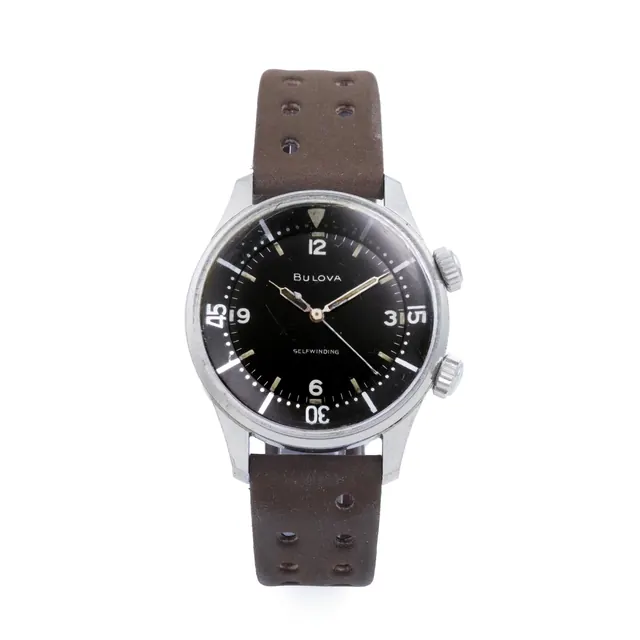
Wristwatches · 1963
Bulova wristwatch, ref. 314, Diver Super Compressor, 1963
Antiquorum auction archive, Geneva
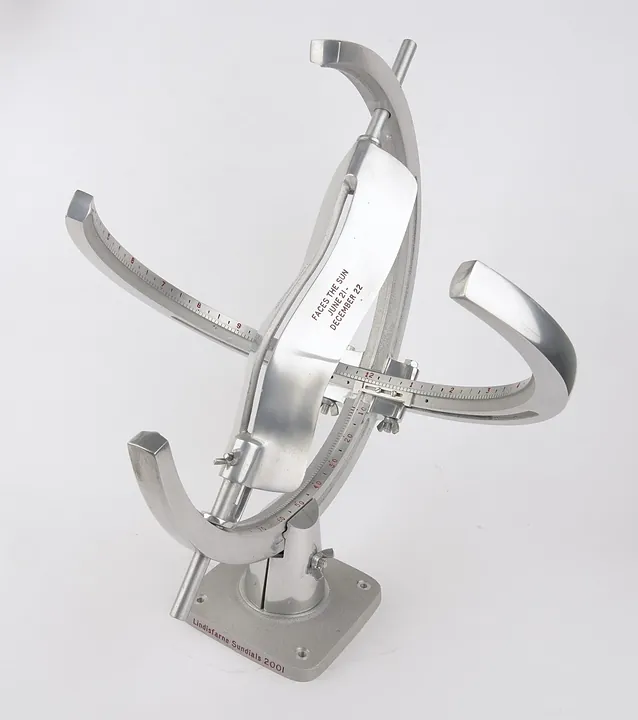
Instruments · 1959 (designed); 2001(made)
Sundial by Tony Moss and R. L. Schmoyer and Lindisfarne sundials, England, 1959 (designed); 2001(made)
Science Museum Group, London

Instruments · 1960–1979
Stopwatch / timer by Omega, 1960–1979
Science Museum Group, London

Instruments · 1960–1979
Stopwatch / timer by Omega, Switzerland, 1960–1979
Science Museum Group, London

Instruments · 1960–1979
Stopwatch by Omega, Swiss made, single-button type reading 0 - 60 seconds in fifths and 0 - 5 minutes in minutes on subsidiary dial, 1960-79.
Science Museum Group, London