
Wristwatches · Wristwatch
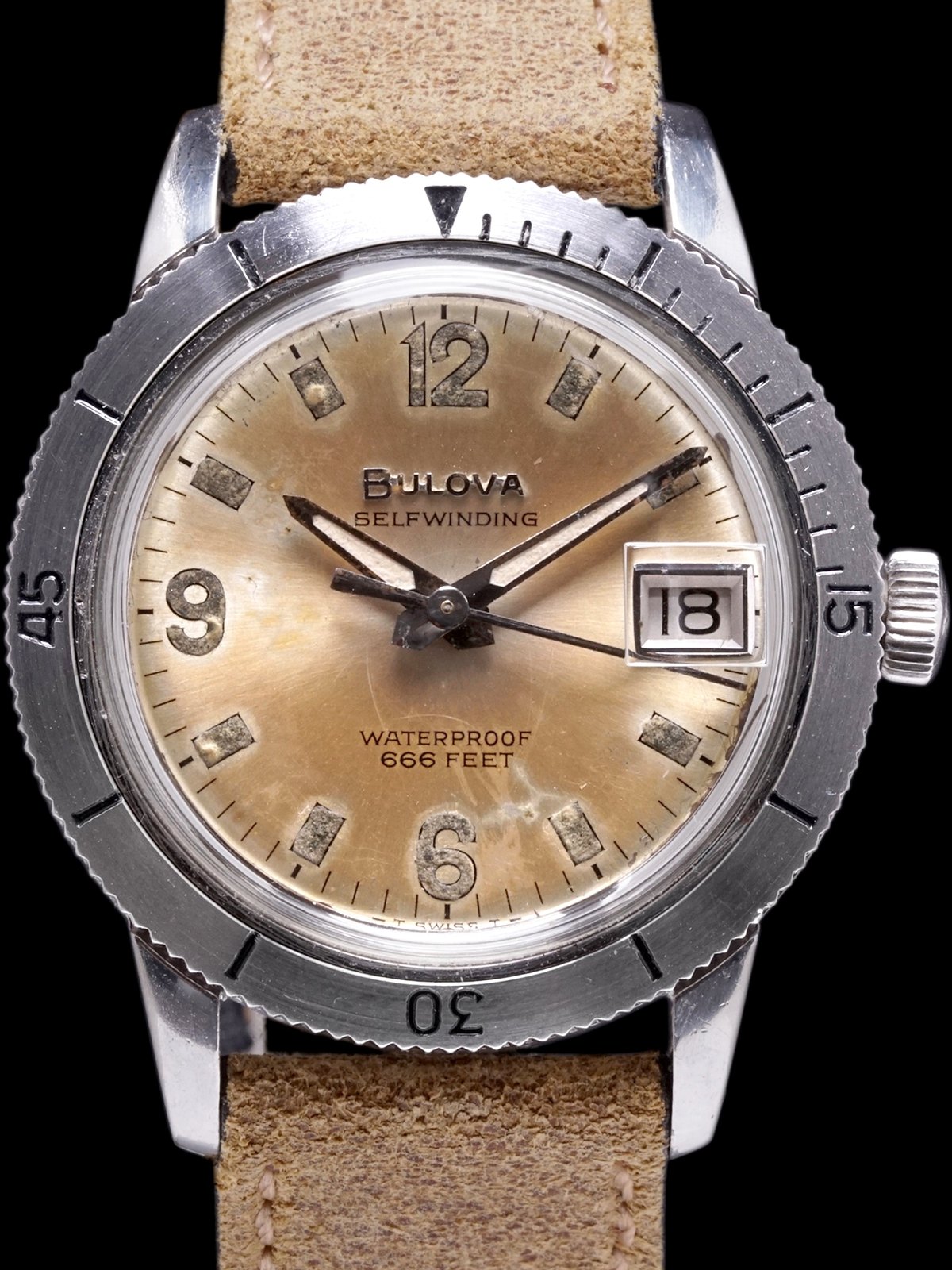
Bulova Snorkel Skindiver (Ref. 386-1) “666 Feet”, 1966
- Maker / attribution
- Bulova (maker)
- Date
- 1966
- Historical period
- Modern Mechanical Horology (1945 – 1969)
- Country of origin
- United States
- Object type
- Wristwatch
- Dimensions
- Case 36 mm
- Stock no.
- BLV3681-2
- Credit line
- Dealer listing, Craft & Tailored (BLV3681-2)
- Catalogue title (original)
- 1966 Bulova Snorkel Skindiver (Ref. 386-1) “666 Feet” (English)
View the source record (dealer listing) ↗ (opens another website in a new tab)Suggest a correction
Record summary
Catalogued by Craft & Tailored (dealer), Los Angeles (stock number BLV3681-2), this is a wristwatch by Bulova, made in United States, dated 1966. The Atlas places it in the Modern Mechanical Horology period (1945 – 1969) of its Wristwatches collection. Recorded dimensions: Case 36 mm. The record is illustrated with 6 photographs.
Assembled from the source record's structured fields. Dates and attributions are given as the source states them; where a field is missing the Atlas leaves it blank rather than estimating.
Catalogue description
Dealer description — Craft & Tailored
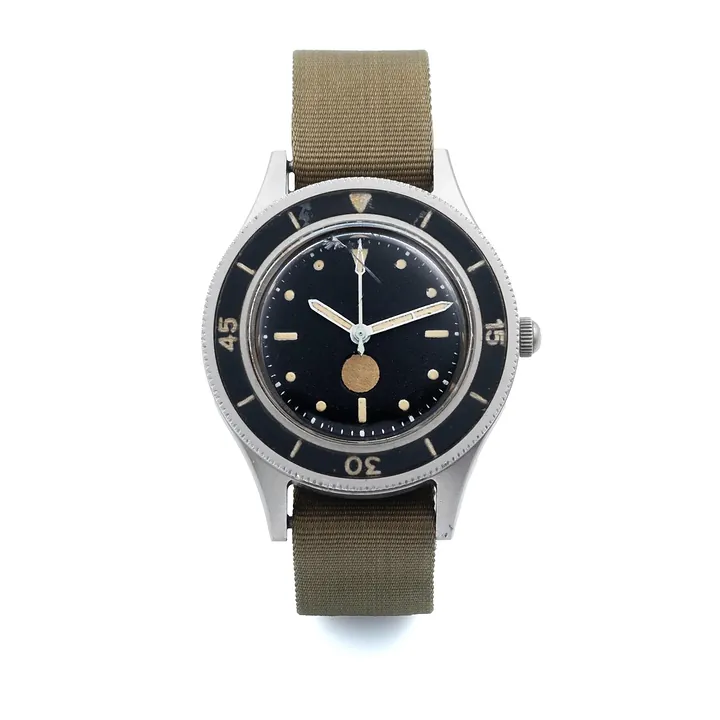
The vintage Bulova obsession in the watch community is very real and here to stay! The unique and funky watches that Bulova made from the 60s-80s are always a cause for conversation. Ranging from colorful diving chronographs to eccentric electric watches like the famous Accutron. This 1966 Bulova Snorkel ref. 386-1 skin diver has all of the elements we love about the mid to early "Golden Era" divers. Not only has it aged to reflect a beautiful patina, but it's also a devilishly attractive watch, hosting an occult-inspired depth rating of 666 feet. SPECS Stock # BLV3681-2 Brand Bulova Style Snorkel Model 368- 1 Serial M6 Size Men's Material SS Dial Silver "Aged" Millimeters 36mm Bracelet 2pc Handmade Leather Strap CASE & BRACELET The excellent case retains symmetrical and strong lugs that exhibit some honest signs of use. The bi-directional ratcheting bezel is in superb condition. The "Bulova" signed crown is original to the watch. The case back retains all of its original factory markings in crisp condition. The watch will come supplied on a 2pc handmade leather strap. DIAL & HANDS The original silver dial has taken on a gorgeous golden patina and exhibits honest and appropriate signs of age and wear. The tritium lume plots have aged to a sandy coloration as well and exhibit some darker spots in the patina, under U.V. light inspection there is consistent degradation throughout the lume. The original hands have been professionally restored with tritium and accent the watch nicely. ACCESSORIES None. The watch was recently serviced and is functioning and keeping time perfectly, previous service history is unknown.
Historical context
Modern Mechanical Horology (1945 – 1969)
Tool watches for divers, pilots and astronauts; electric watches anticipate the electronic age.
The classic era of the mechanical wristwatch: dive watches, chronographs for motor racing and space flight, GMT watches for jet travel, slim dress watches, automatic calendars, and the rise of Japanese manufacturers alongside Swiss, American, German and Soviet industries.
Read the period in the timelineMore wristwatches from this periodEarlier: Golden Age of Mechanical Watchmaking
Atlas type guide
Dive and water-resistant watches
Keeping water and dust out of a wristwatch was a long-standing challenge. Rolex's screw-down Oyster case (1926) and Omega's Marine (1932) were landmarks; in the early 1950s Blancpain's Fifty Fathoms and Rolex's Submariner defined the professional dive watch with rotating bezels for timing dives, luminous dials and high water resistance. The ISO 6425 standard (1982) later codified what a 'diver's watch' must do.
Dive watches became icons of post-war design and exploration, and their evolution — helium escape valves, ceramic bezels, saturation-diving depth ratings — records the history of underwater work.
What to look for
- Unidirectional or bidirectional rotating bezel with minute markings.
- Screw-down crown and case back; depth rating printed on the dial.
- Luminous hands and markers (radium before c. 1960, tritium c. 1960–1998, then Super-LumiNova).
- Reference numbers on the case between the lugs or inside the back.
Dating clues
- Screw-down Oyster cases: from 1926.
- Professional dive watches: from 1953.
- Tritium 'T' marks on dials: c. 1960–1998.
General guidance written by the Atlas editors about this kind of object. It is not a statement about this particular piece; for that, rely on the source record above and on physical examination.
Related records
Wristwatches · c. 1969
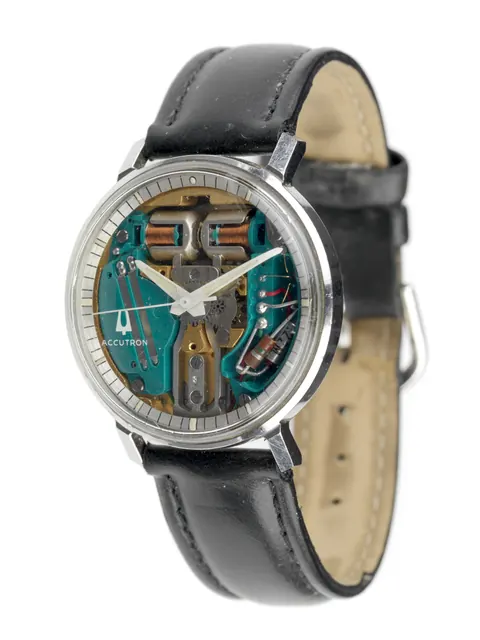
Bulova 'Accutron' tuning-fork wristwatch by Bulova
Royal Museums Greenwich
Wristwatches · c. 1965
Wristwatch Accutron by Knud Geelmuyden Bull
Royal Museums Greenwich
Clocks · c. 1960s
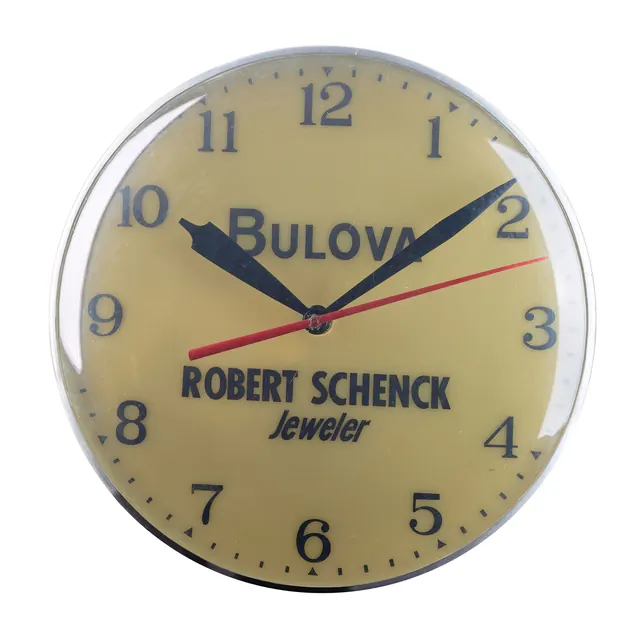
Bulova wall clock, Lighted Advertising Wall Clock for Robert Schenck Jeweler, circa 1960s
Antiquorum auction archive, Geneva
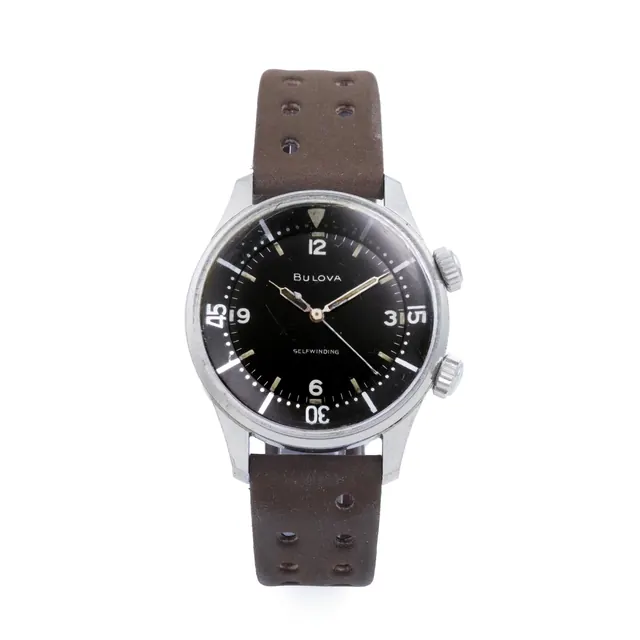
Wristwatches · 1963
Bulova wristwatch, ref. 314, Diver Super Compressor, 1963
Antiquorum auction archive, Geneva
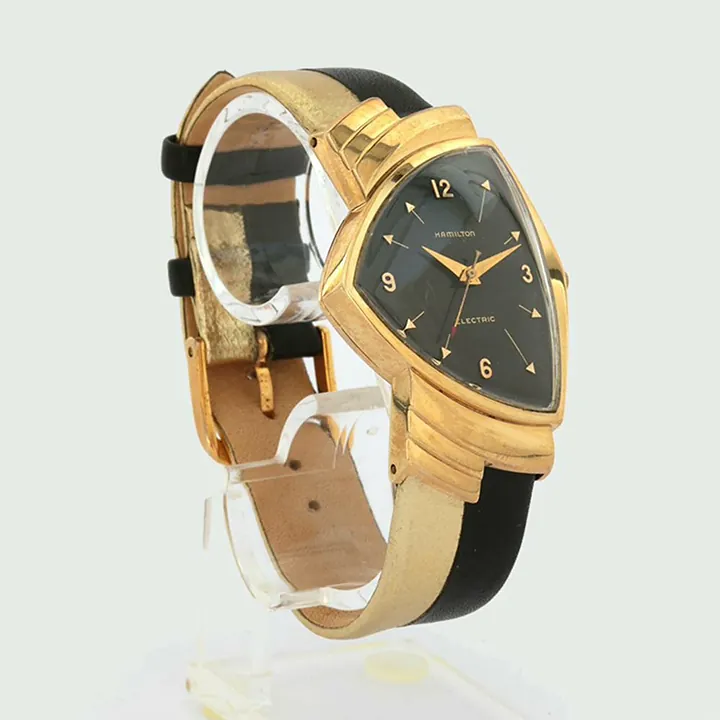
Wristwatches · c. 1957
Wristwatch by Richard H. Arbib, United States, c. 1957
German Clock Museum
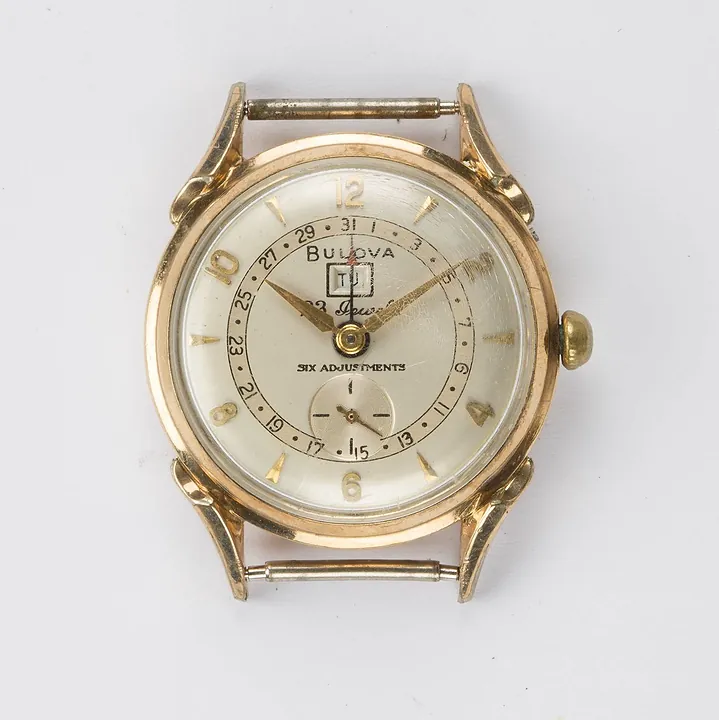
Wristwatches · 1959
Wristwatch by Josef Bulova, United States, 1959
German Clock Museum
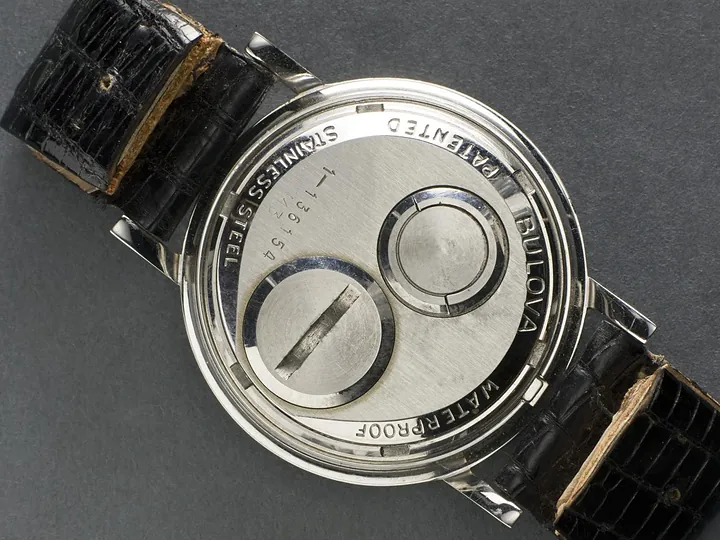
Wristwatches · 1960–1963
Bulova Accutron tuning-fork wristwatch on a demonstration stand, designed by Max Hetzel, United States, 1960–1963
Science Museum Group, London
Wristwatches · 1964
Tornek-Rayville wristwatch, ref. TR 900, 1964
Antiquorum auction archive, Geneva