
Wristwatches · Wristwatch
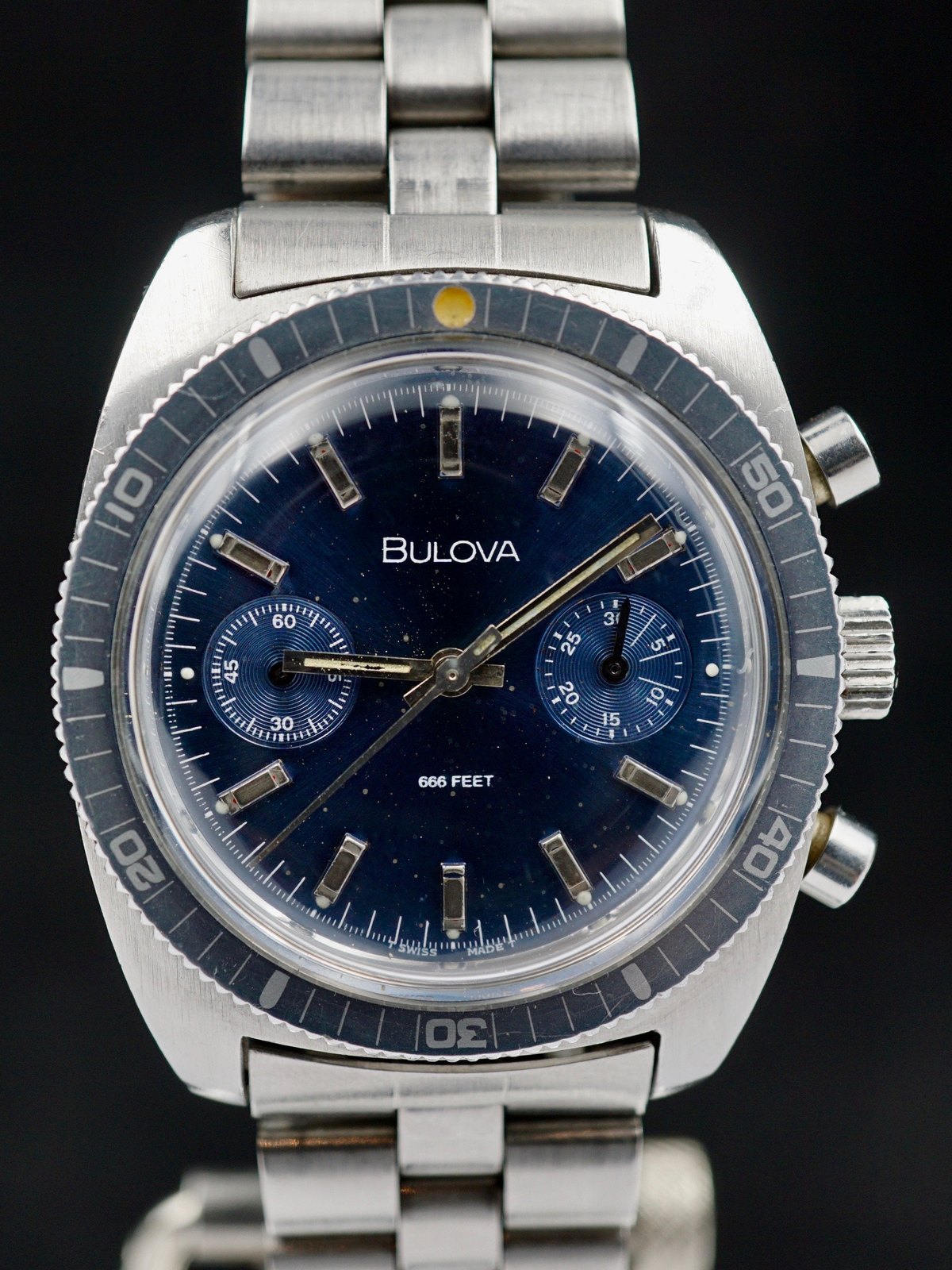
Bulova Deep Sea Divers Chronograph, 1971
- Maker / attribution
- Bulova (maker)
- Date
- 1971
- Historical period
- Quartz Revolution (1969 – 1990)
- Country of origin
- United States
- Object type
- Wristwatch
- Dimensions
- Case 38 mm
- Stock no.
- BVDPSCH71
- Credit line
- Dealer listing, Craft & Tailored (BVDPSCH71)
- Catalogue title (original)
- 1971 Bulova Deep Sea Divers Chronograph (English)
View the source record (dealer listing) ↗ (opens another website in a new tab)Suggest a correction
Record summary
Catalogued by Craft & Tailored (dealer), Los Angeles (stock number BVDPSCH71), this is a wristwatch by Bulova, made in United States, dated 1971. The Atlas places it in the Quartz Revolution period (1969 – 1990) of its Wristwatches collection. Recorded dimensions: Case 38 mm. The record is illustrated with 6 photographs.
Assembled from the source record's structured fields. Dates and attributions are given as the source states them; where a field is missing the Atlas leaves it blank rather than estimating.
Catalogue description
Dealer description — Craft & Tailored
For those who follow us already you might know that we have a soft spot for nice faded inserts and golden lume on tool watches. We also like that Bulova in the late 60's and 70's signed the dials with a depth rating of 666 ft for a little extra added voodoo so to speak! The watch features a manual Valjoux 7733 movement, an outstanding blue dial in very good condition and to complete the look it fits on its original olded stainless steel Bulova bracelet. The deep blue dial of this Bulova Deep Sea Diver Chronographs is absolutely stunning. The blue dial paired with the nicely mate and faded bezel provided fr a contrasting and striking look. SPECS Stock # BVDPSCH71 Brand Bulova Style Diver Chronograph Model Deep Sea Serial N1 Size Men's Material SS Dial Blue Millimeters 38mm Bracelet Bulova SS Bracelet CASE & BRACELET The case of this Bulova is in original unpolished condition showing very little wear from use. The bezel remains in excellent condition with the top marker matching the dial lume perfectly and showing minor lume loss. DIAL & HANDS The deep blue dial of this Bulova Deep Sea Diver Chronographs is absolutely stunning. The blue dial paired with the nicely mate and faded bezel provided fr a contrasting and striking look.The lume of this dial has taken on a beautiful deep eggshell patina that is even throughout. The tritium lume dots remain in wonderful and intact condition with a slight bit of lume degradation located within the hour hand. The lacquer of the dial is showing some bubbling which is very common of glossy dials of this era. ACCESSORIES None. The watch is running at spec and is in perfect working condition.
Historical context
Quartz Revolution (1969 – 1990)
Seiko's Astron begins mass quartz timekeeping; traditional industries contract sharply.
Quartz and digital watches transformed the market after 1969. Swiss employment collapsed, Japanese and Hong Kong production soared, and the Swatch (1983) helped the Swiss industry recover; mechanical watches survived as luxury goods.
Read the period in the timelineMore wristwatches from this periodEarlier: Modern Mechanical Horology
Atlas type guide
Chronographs and split-seconds watches
A chronograph is a watch with an additional seconds hand that can be started, stopped and returned to zero independently of the timekeeping. Louis Moinet built an early example in 1816 and Nicolas Rieussec a recording 'chronographe' in 1821; Adolphe Nicole's heart-shaped reset cam (patented 1862) made the modern return-to-zero possible. Split-seconds (rattrapante) chronographs add a second hand that can be stopped for intermediate times; flyback chronographs restart instantly.
Chronographs were essential tools for doctors (pulsometer scales), artillery (telemeter), engineers and sport. In wristwatches, Valjoux, Venus, Lemania and later the automatic chronographs of 1969 (Zenith El Primero, the Chronomatic Calibre 11 group and Seiko 6139) are milestones.
What to look for
- Push-pieces on the case band or a single button in the crown (monopusher).
- Subsidiary registers for minutes and hours; tachymeter, telemeter or pulsometer scales.
- Column wheel versus cam control visible in the movement.
- Calibre markings of specialist makers (Valjoux, Lemania, Venus, Landeron).
Dating clues
- Pocket chronographs with heart cam reset: after 1862.
- Wrist chronographs: from c. 1910; two-button designs from the 1930s.
- Automatic chronographs: from 1969.
General guidance written by the Atlas editors about this kind of object. It is not a statement about this particular piece; for that, rely on the source record above and on physical examination.
Read next:Flyback chronographChronograph
Related records
Wristwatches · c. 1969
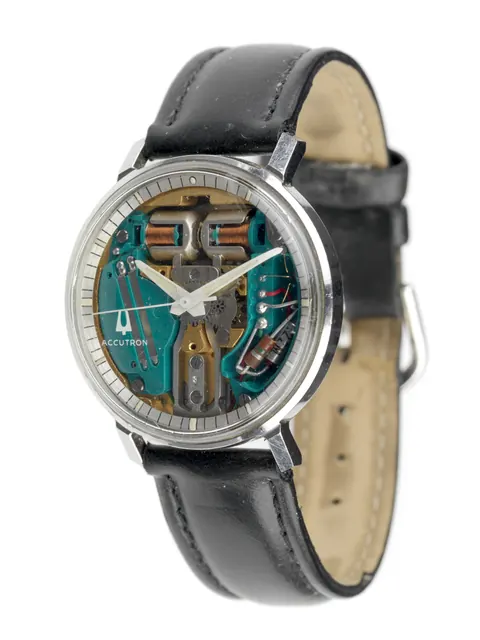
Bulova 'Accutron' tuning-fork wristwatch by Bulova
Royal Museums Greenwich
Wristwatches · c. 1965
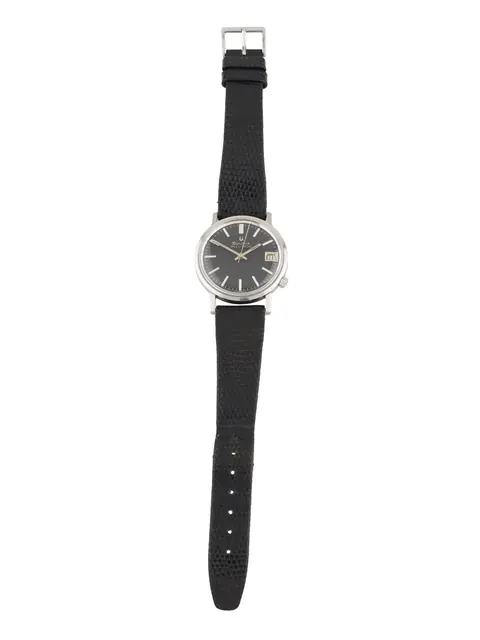
Wristwatch Accutron by Knud Geelmuyden Bull
Royal Museums Greenwich
Clocks · c. 1960s
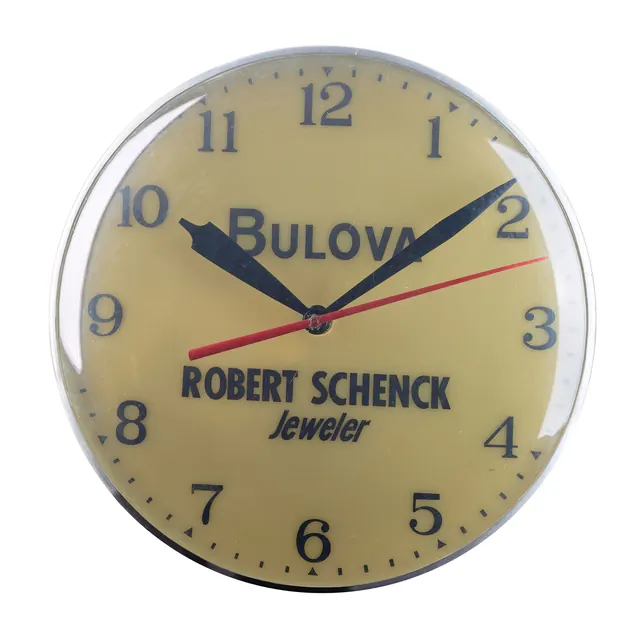
Bulova wall clock, Lighted Advertising Wall Clock for Robert Schenck Jeweler, circa 1960s
Antiquorum auction archive, Geneva
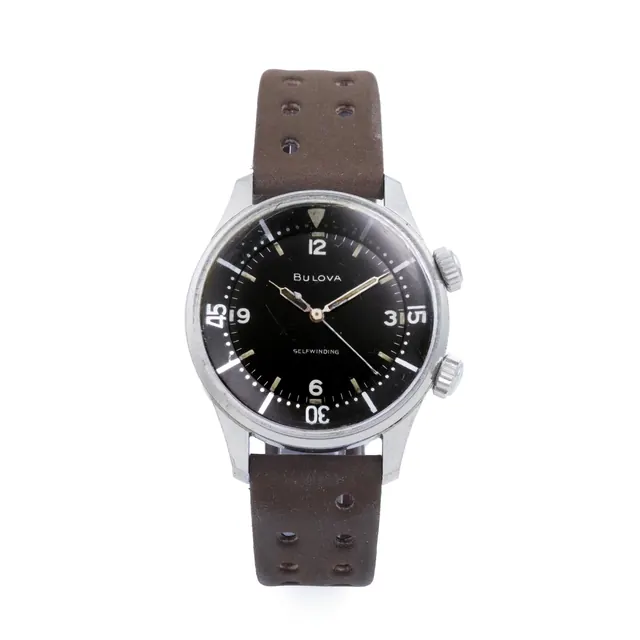
Wristwatches · 1963
Bulova wristwatch, ref. 314, Diver Super Compressor, 1963
Antiquorum auction archive, Geneva
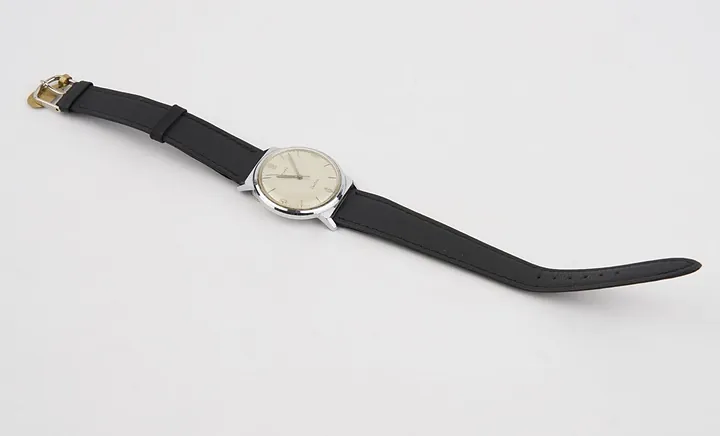
Wristwatches · 1949–1992
Timex `Electric' wristwatch, with electrically operated balance wheel mechanism, United States, 1949–1992
Science Museum Group, London
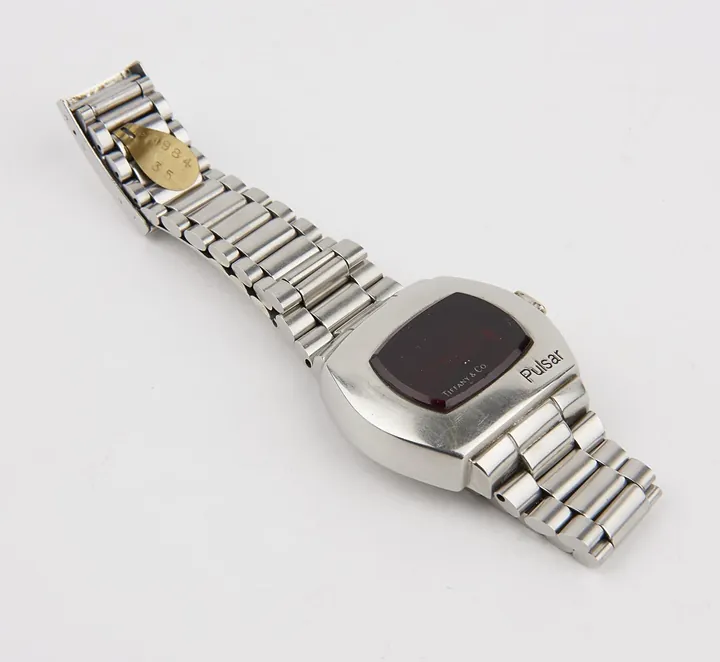
Wristwatches · 1972
Wristwatch by Hamilton Watch Company and Electro-Data Inc, United States, 1972
Science Museum Group, London
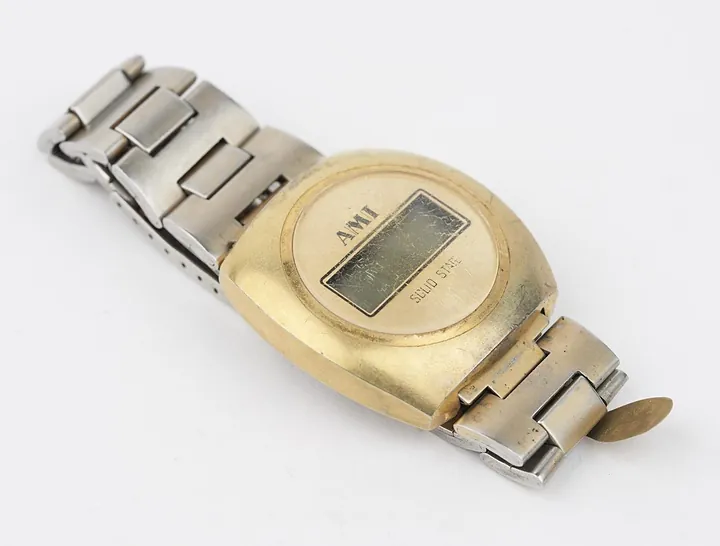
Wristwatches · 1973–1974
Quartz watch with liquid crystal digital display, made by American Microsystems Inc. (AMI) . 1973/74
Science Museum Group, London
Wristwatches · c. 1973
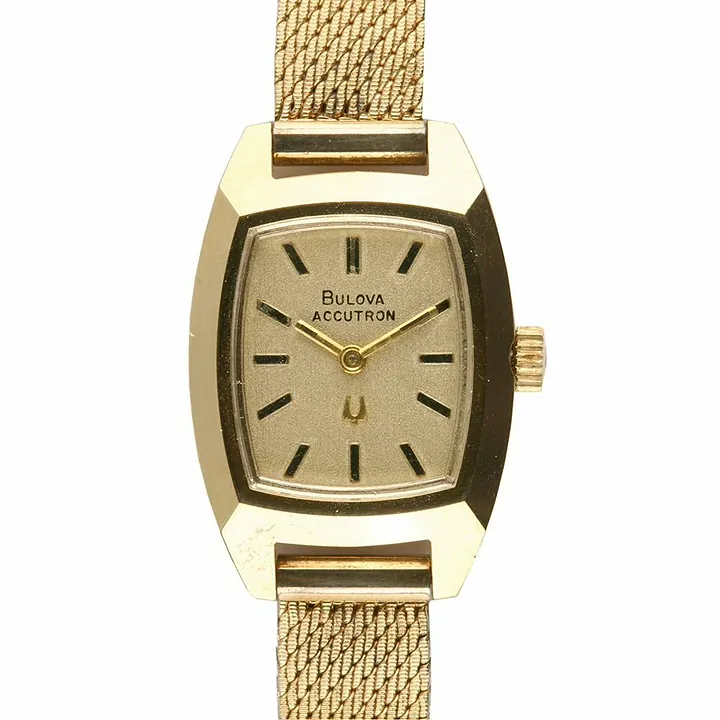
Wristwatch by Josef Bulova, United States, c. 1973
German Clock Museum