
Clocks · Carriage clock
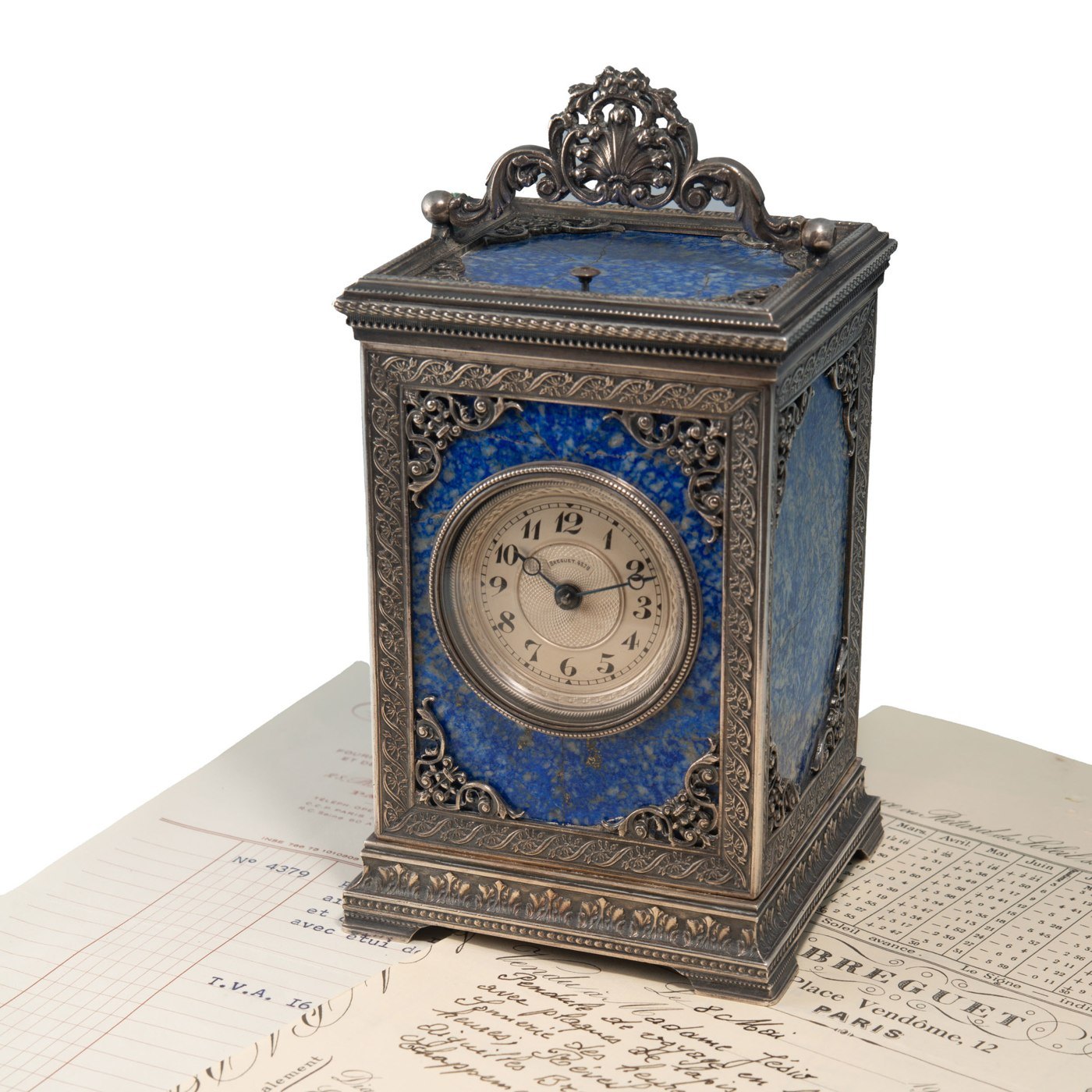
Breguet Carriage Clock
- Maker / attribution
- Breguet (source attribution)
- Date
- 1924
- Historical period
- Golden Age of Mechanical Watchmaking (1900 – 1945)
- Country of origin
- France
- Object type
- Carriage clock
- Materials / technique
- Silvered bronze and lapis-lazuli
- Dimensions
- 85 x 140 x 78 mm
- Holding institution
- Antiquorum
- Accession / object no.
- 269
- Credit line
- Antiquorum
- Catalogue title (original)
- BREGUET, FRANCE, CARRIAGE CLOCK, EIGHT-DAY GOING CARRIAGE-CLOCK, HOUR AND HALF-HOUR STRIKING, HOUR-REPEATER, ALARM; SILVERED BRONZE AND LAPIS-LAZULI (English)
View the source record ↗ (opens another website in a new tab)Suggest a correction
Record summary
Held and catalogued by Antiquorum (object number 269), this is a carriage clock attributed to Breguet, made in France, dated 1924. The Atlas places it in the Golden Age of Mechanical Watchmaking period (1900 – 1945) of its Clocks collection. Materials and techniques recorded by the source: Silvered bronze and lapis-lazuli. Recorded dimensions: 85 x 140 x 78 mm. The record is illustrated with 1 photograph.
Assembled from the source record's structured fields. Dates and attributions are given as the source states them; where a field is missing the Atlas leaves it blank rather than estimating.
Catalogue description
Original object description
Constructed in France in 1924, this eight-day carriage clock is encased in an upright rectangular silvered-bronze housing with chiselled detailing, inset lapis-lazuli slabs across the top and sides, and an articulated top handle. The engine-turned silver dial displays floating Breguet numerals, blued steel hands, and a secondary alarm dial set at 6 o'clock. Driven by double barrels, the hand-wound 85 by 55 mm movement (ébauche number 7 554) incorporates a platform escapement with a straight-line lever, a poising-screw-compensated balance, a flat hairspring, and a polished steel index regulator. It sounds the hours and half-hours, sounds the hours on command via a top repeat button, and operates an alarm using a rear hammer striking the primary coiled gong. Archival documentation records its sale by Breguet in Paris to Mrs. Jésio on 8 May 1924 for 2,200 Francs, a later transfer to S. O. Stromberg on 7 June 1968 for 2,500 Francs, and Breguet Certificate of Authenticity No. 3 774 issued on 15 December 1982. A brass winding key stamped No. 394 / 2 is present.
Inscriptions & marks
4379
Historical context
Golden Age of Mechanical Watchmaking (1900 – 1945)
The wristwatch displaces the pocket watch; waterproof cases, self-winding and grand complications.
Between 1900 and 1945 clocks were electrified: master-clock systems ran factories and offices, synchronous mains clocks entered homes, and the Shortt free-pendulum clock set new standards of accuracy before the first quartz clocks (1927). Art Deco design reshaped mantel and table clocks.
Read the period in the timelineMore clocks from this periodEarlier: Industrial Revolution
Atlas type guide
Carriage and travel clocks
The carriage clock is a portable spring clock with a balance-wheel escapement and a brass case with glass panels and a carrying handle. Abraham-Louis Breguet made early examples around 1800, and from the 1830s Paul Garnier and other French makers industrialised production, with the small towns of Saint-Nicolas-d'Aliermont and the Franche-Comté supplying movements for retailers worldwide.
Typical features include a platform escapement mounted horizontally on top of the movement (usually a lever, sometimes cylinder or Garnier's chaff-cutter), striking or repeating work, and alarms. English carriage clocks, generally larger and with fusees, were made by firms such as Frodsham and Dent. Travel clocks in folding leather cases became popular in the twentieth century.
What to look for
- A platform escapement visible through the top glass.
- Case styles: corniche, gorge, anglaise, obis or engraved cases.
- Repeat buttons on top and strike/silent levers.
- Stamps of movement makers (e.g. Drocourt, Jacot, Margaine, Richard & Co.) on the backplate.
Dating clues
- Early carriage clocks with Breguet or Garnier features: c. 1800–1850.
- Mass-produced French carriage clocks: c. 1850–1914.
- Folding travel clocks and alarm travel clocks: mostly 1920–1970.
General guidance written by the Atlas editors about this kind of object. It is not a statement about this particular piece; for that, rely on the source record above and on physical examination.
Read next:Detached lever escapement
Related records
Pocket Watches · 1700–1799
Pocket watch by Breguet, Belgium, 1700–1799
Royal Institute for Cultural Heritage
Pocket Watches · 1700–1799
Pocket watch by Breguet, France, 1700–1799
Fashion Museum of Antwerp
Pocket Watches · c. 1790
Breguet Love Letter, c. 1790
Antiquorum auction archive, Geneva
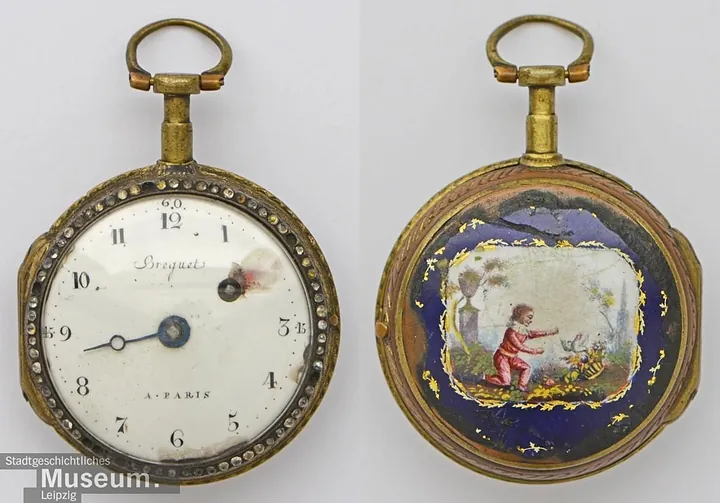
Pocket Watches · 1790
Pocket watch possibly by Breguet, France, 1790
Museum of City History Leipzig
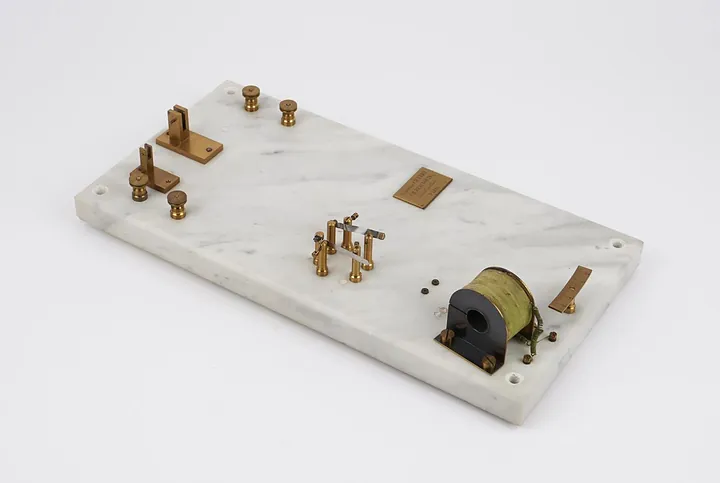
Clocks · 1902–1912
Fery's selfwound clock, with subsidiary pendulum for making contact, by Prof. Charles Fery and C. Beaudouin, Paris, France, 1902–1912.
Science Museum Group, London
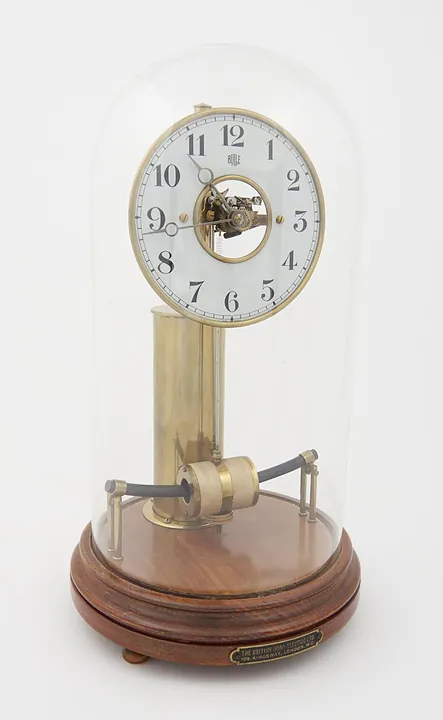
Clocks · 1915–1925
Type A 'Bulle' electric clock, no.6160, with glass shade, made in France but sold by British Horo-Electric Ltd., 109 Kingsway, London, WC, England, 1915–1925.
Science Museum Group, London
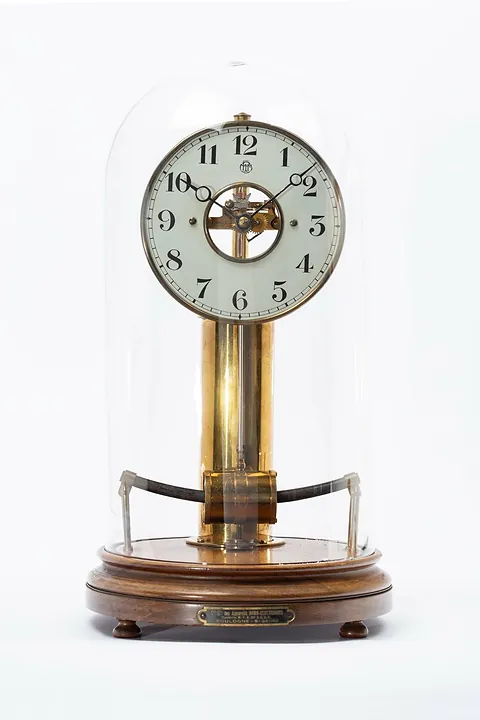
Clocks · c. 1921
Table clock by Compagnie Générale des Appareils Horo-Electriques, France, c. 1921
German Clock Museum
Clocks · 1930–1939
Clock by Societe Meridionale D'Industrie, France, 1930–1939
Science Museum Group, London