
Wristwatches · Wristwatch
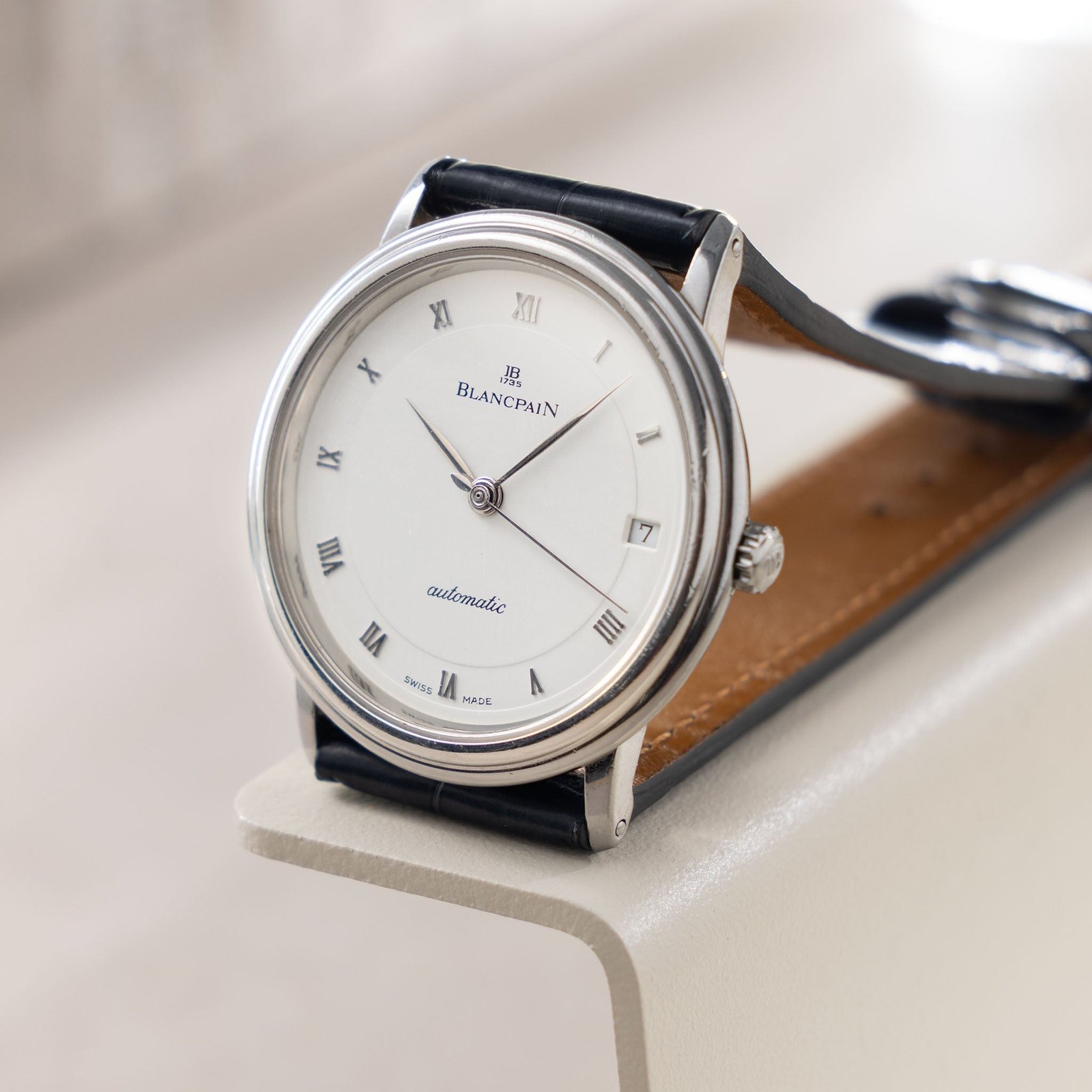
Blancpain Automatic Villeret Ultra-slim Dresswatch white dial ref. B0021 1127 55, 1990s
- Maker / attribution
- Blancpain (maker)
- Date
- 1990s
- Historical period
- Mechanical Renaissance (1990 – 2010)
- Country of origin
- Switzerland
- Object type
- Wristwatch
- Dimensions
- Case 33.5 mm
- Stock no.
- w-3413
- Credit line
- Dealer listing, Bulang & Sons (w-3413)
- Catalogue title (original)
- Blancpain Automatic Villeret Ultra-slim Dresswatch white dial ref. B0021 1127 55 (English)
View the source record (dealer listing) ↗ (opens another website in a new tab)Suggest a correction
Record summary
Catalogued by Bulang & Sons (dealer), Copenhagen (stock number w-3413), this is a wristwatch by Blancpain, made in Switzerland, dated 1990s. The Atlas places it in the Mechanical Renaissance period (1990 – 2010) of its Wristwatches collection. Recorded dimensions: Case 33.5 mm. The record is illustrated with 6 photographs.
Assembled from the source record's structured fields. Dates and attributions are given as the source states them; where a field is missing the Atlas leaves it blank rather than estimating.
Catalogue description
Dealer description — Bulang & Sons
Blancpain was founded in 1735 by Jehan-Jacques Blancpain in Villeret, Switzerland, making it one of the oldest existing watch brands in the world. Interestingly enough, Blancpain refused to produce—and still refuses to produce—quartz-driven watches, even during the 1970s when nearly 40 percent of Swiss watchmakers went bankrupt during the “Quartz Crisis.” At the time, they proudly used the slogan: “Since 1735, there has never been a quartz Blancpain watch. And there never will be.” Best known for their Fifty Fathoms dive watches and high-quality movements, Blancpain also produces a line of elegant, thin time-only watches: the Villeret line, named after the village where the brand was founded. This charming steel example measures 33.5mm and features a subtle step around the bezel, a small setting crown, and comes fitted with a lovely Bulang and Sons leather strap paired with an original Blancpain steel pin buckle. The glossy white dial has a slight pie-pan step, applied Roman numerals, no lume, a date window, and elegant glossy hands. Powering the watch is the ultra-thin automatic Blancpain Caliber 1195 , that has been fully serviced by our watchmaker an is good for up coming years. Looking for something a little under the radar, but all class? We'd love to discuss this watch in more detail with you. Get in touch, and let’s work something out! Specifications: Blancpain Villeret Dresswatch ref B0021 1127 55 33.5mm steel case Serial 39x, dating to the 1990s White glossy dial with date and applied Roman numerals Blancpain automatic movement Pictured Bulang and sons leather strap with steel Blancpain pin buckle Fully serviced by our watchmaker
Historical context
Mechanical Renaissance (1990 – 2010)
Mechanical watches return as cultural objects; independent watchmaking flourishes.
Mechanical watches returned as cultural and luxury objects. Complications, tourbillons and new materials proliferated; independent watchmakers such as George Daniels, F.P. Journe and Philippe Dufour revived artisanal watchmaking; collecting vintage watches became a major field.
Read the period in the timelineMore wristwatches from this periodEarlier: Quartz Revolution
Atlas type guide
Automatic (self-winding) watches
Self-winding watches use the wearer's motion to wind the mainspring. Abraham-Louis Perrelet and Breguet made 'perpétuelle' pocket watches with oscillating weights in the late eighteenth century, but the principle only became practical in the wristwatch. John Harwood patented a bumper automatic in 1923; Rolex's Perpetual rotor (1931) winding in one direction, and later bidirectional rotors (Eterna, Felsa Bidynator), established the modern form. Micro-rotors (Universal Genève, Buren) and peripheral rotors made automatic watches thinner.
What to look for
- A semicircular rotor turning 360° over the movement, or a 'bumper' weight that rebounds between springs.
- 'Automatic', 'Perpetual' or 'Self-winding' on the dial.
- A sealed screw-back case, since automatic watches are wound less often by the crown.
Dating clues
- Bumper automatics: 1923–c. 1955.
- Full rotors: from 1931 (Rolex); widespread after c. 1950.
- Micro-rotors: from 1954–1958.
General guidance written by the Atlas editors about this kind of object. It is not a statement about this particular piece; for that, rely on the source record above and on physical examination.
Related records
Clocks · c. 2010
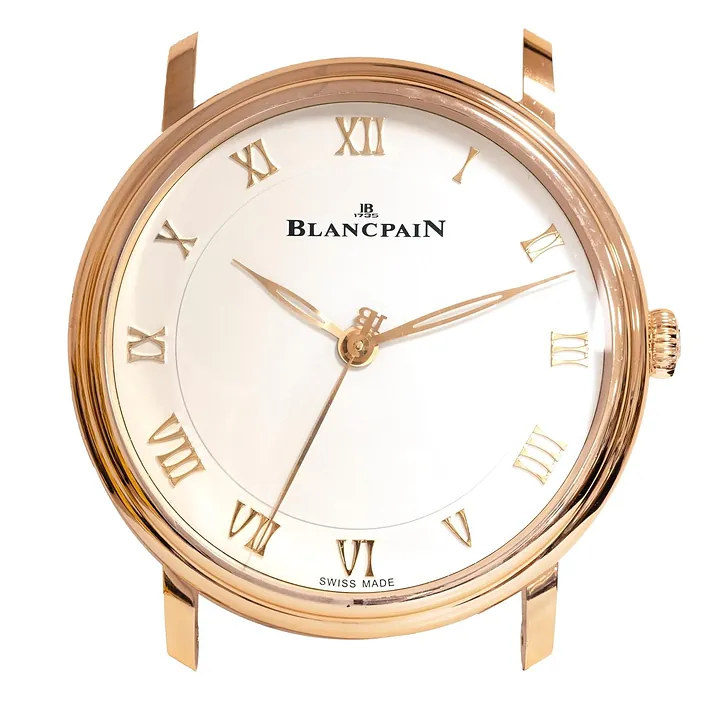
Blancpain clock, c. 2010
Antiquorum auction archive, Geneva
Wristwatches · c. 1930
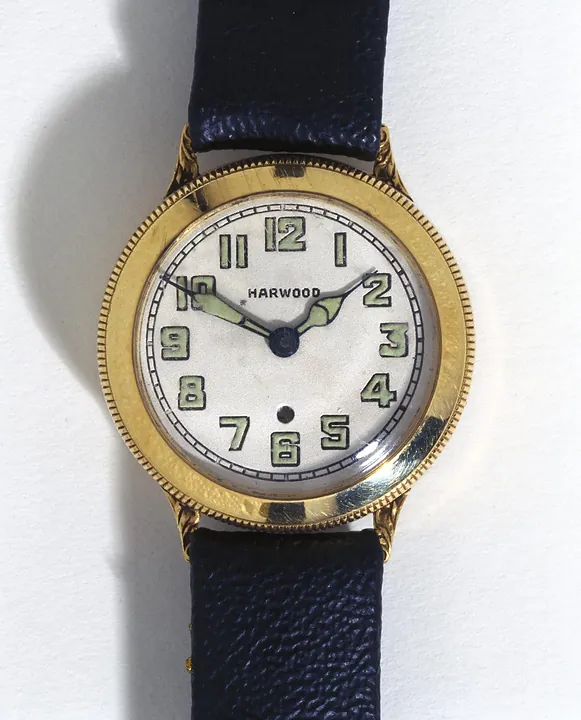
Wristwatch by J. Harwood and Son and Blancpain, Switzerland, c. 1930
Science Museum Group, London
Wristwatches · c. 1930
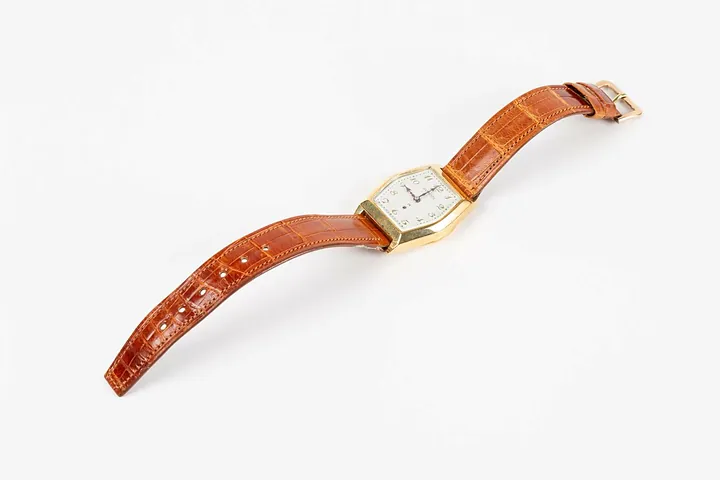
Wristwatch by Harwood (Société Centrale de la Montre Sans Remontoir), Switzerland, c. 1930 (no. 58042)
German Clock Museum
Wristwatches · c. 1932
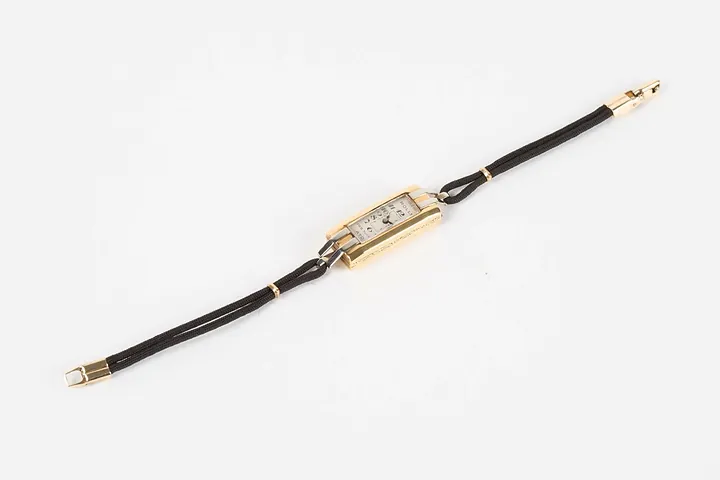
Wristwatch by Blancpain, Switzerland, c. 1932
German Clock Museum

Wristwatches · 2008
Wristwatch by Breitling?, 2008
Museum Rotterdam

Wristwatches · c. 1990s
Audemars Piguet Bamboo, c. 1990s
Antiquorum auction archive, Geneva

Wristwatches · c. 1990
Audemars Piguet Huitieme Perpetual Calendar, ref. 25696PT, c. 1990
Antiquorum auction archive, Geneva

Wristwatches · c. 1990
Breitling Chronomat, ref. b13050.1, c. 1990
Antiquorum auction archive, Geneva