
Clocks · Cuckoo clock
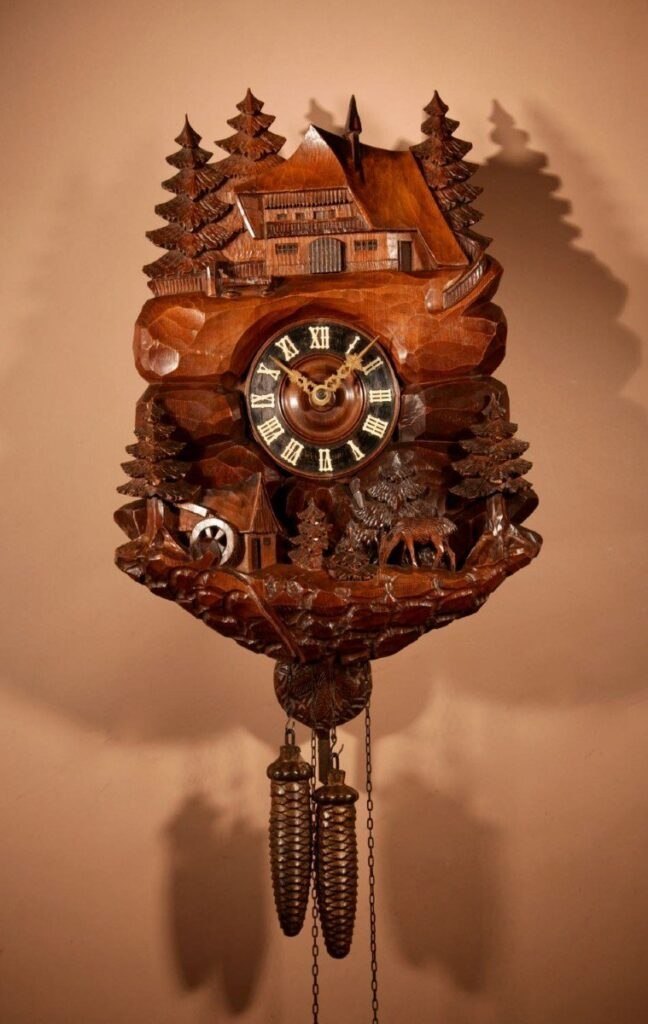
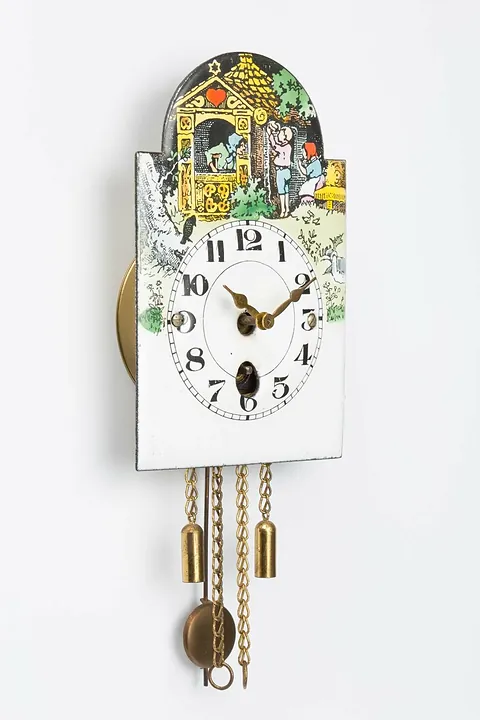
Black Forest Cuckoo Clock, circa 1900
- Maker / attribution
- Unrecorded in source
- Date
- c. 1900
- Historical period
- Golden Age of Mechanical Watchmaking (1900 – 1945)
- Country of origin
- Germany
- Object type
- Cuckoo clock
- Holding institution
- Koos Limburg Jnr
- Accession / object no.
- black-forest-cuckoo-clock-circa-1900-5cc737b578
- Credit line
- Koos Limburg Jnr
- Catalogue title (original)
- Black Forest Cuckoo Clock - Trésors (English)
View the source record ↗ (opens another website in a new tab)Suggest a correction
Record summary
Held and catalogued by Koos Limburg Jnr (object number black-forest-cuckoo-clock-circa-1900-5cc737b578), this is a cuckoo clock, made in Germany, dated c. 1900. The Atlas places it in the Golden Age of Mechanical Watchmaking period (1900 – 1945) of its Clocks collection. The record is illustrated with 1 photograph.
Assembled from the source record's structured fields. Dates and attributions are given as the source states them; where a field is missing the Atlas leaves it blank rather than estimating.
Catalogue description
Original object description
Attributed to Germany circa 1900, this Black Forest cuckoo clock features a dark timber case reported to be carved by hand from two solid pieces of wood, exhibiting visible tool marks. The carved facade illustrates an alpine chalet with windows and a balcony amidst evergreen trees, above an understory scene depicting a grazing deer and a mill wheel. Below the housing hang a carved wooden pendulum alongside two chain-suspended, gilded cast-iron pine-cone weights. A central dial holds pierced brass hands and applied white Roman numerals. The brass movement cycles every half hour, triggering an articulated wooden cuckoo to emerge through a shuttered upper opening while opening its beak and calling. The case lacks maker signatures, caliber markings, and timber species identification, and vendor claims of mechanical running order and complete cleaning are uncorroborated.
Historical context
Golden Age of Mechanical Watchmaking (1900 – 1945)
The wristwatch displaces the pocket watch; waterproof cases, self-winding and grand complications.
Between 1900 and 1945 clocks were electrified: master-clock systems ran factories and offices, synchronous mains clocks entered homes, and the Shortt free-pendulum clock set new standards of accuracy before the first quartz clocks (1927). Art Deco design reshaped mantel and table clocks.
Read the period in the timelineMore clocks from this periodEarlier: Industrial Revolution
Atlas type guide
Black Forest and cuckoo clocks
Clockmaking spread through the Black Forest in south-west Germany in the late seventeenth century as a winter occupation for farming families. Early clocks had wooden plates and wheels and a foliot ('Waaguhr') or short pendulum, with a painted wooden shield dial; pedlars (Uhrenträger) carried them across Europe. The cuckoo clock, which imitates the bird's call with two small bellows-driven pipes, appeared in the mid-eighteenth century.
The industry was organised around Furtwangen, Triberg, Schwenningen and Lenzkirch. The Furtwangen clockmaking school (1850) introduced the railway-house cuckoo clock design, and from the late nineteenth century factories such as Junghans, Kienzle and Hamburg-Amerikanische Uhrenfabrik produced clocks by the million. The German Clock Museum in Furtwangen preserves the region's history.
What to look for
- Wooden plates and wheels (earlier) versus brass movements (later).
- Painted shield dials (Lackschilduhr) with floral or figurative decoration.
- Cuckoo bellows and pipes, the carved 'railway house' or hunting-scene case.
- Trademarks and movement stamps of Black Forest factories.
Dating clues
- Wooden-wheeled foliot clocks: c. 1680–1750.
- Painted shield clocks: c. 1780–1880.
- Railway-house cuckoo clocks: after 1850; carved hunting-style cases after c. 1860.
General guidance written by the Atlas editors about this kind of object. It is not a statement about this particular piece; for that, rely on the source record above and on physical examination.
Read next:FoliotAnchor (recoil) escapement
Related records
Clocks · c. 1900
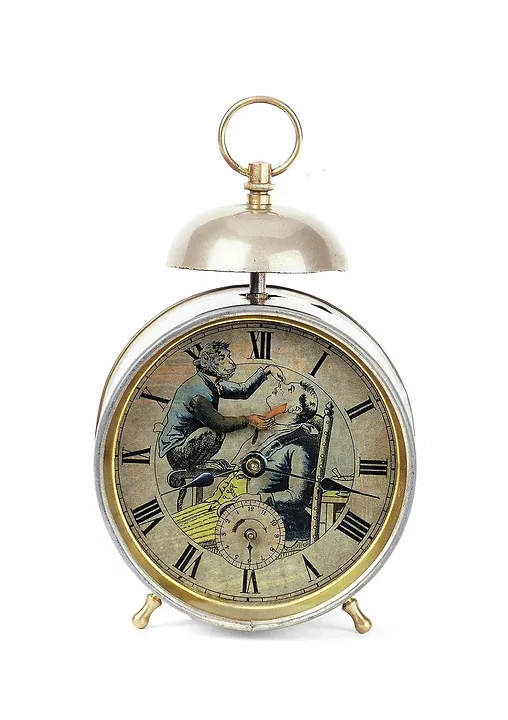
Alarm clock by Union Clock Company, Germany, c. 1900
German Clock Museum
Clocks · 1900
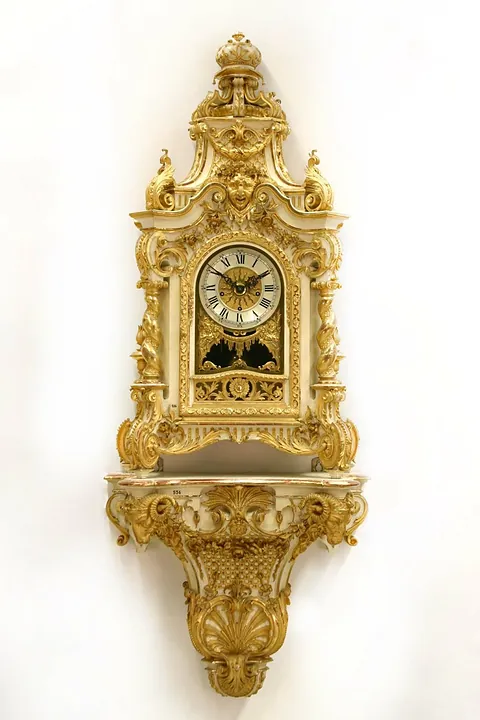
Clock by Josef Münzer, Germany, 1900
German Clock Museum
Clocks · c. 1900
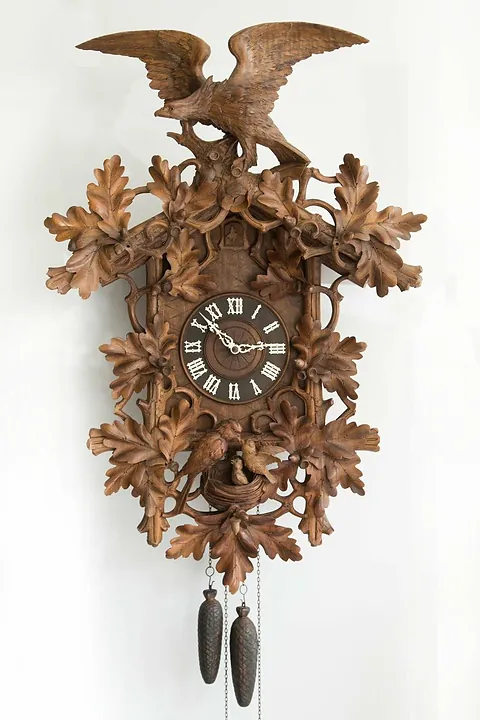
Cuckoo / black forest clock by Gebr. Lehnis, Germany, c. 1900
German Clock Museum
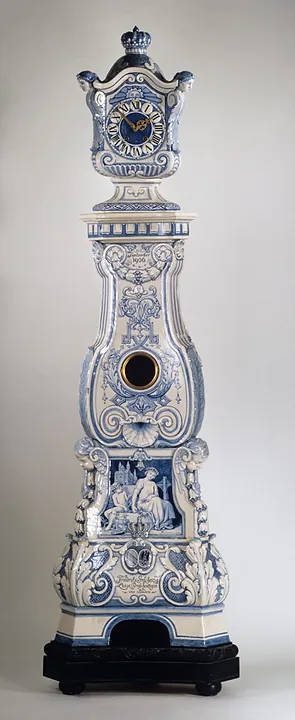
Clocks · 1900–1999
Longcase clock by Staatliche Majolika-Manufaktur Karlsruhe, Germany, 1900–1999
Badisches Landesmuseum Karlsruhe
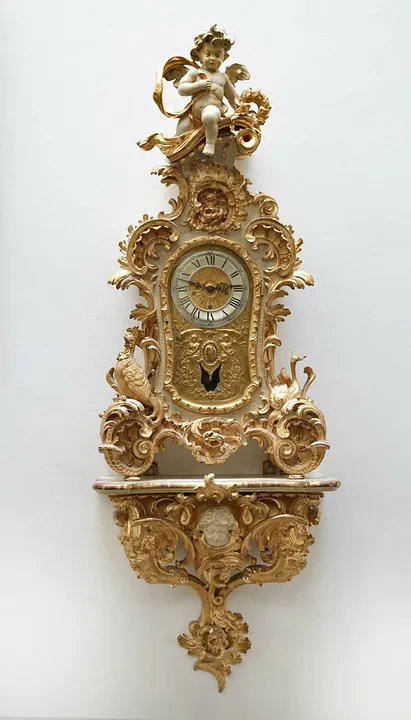
Clocks · c. 1900
Mantel clock by A. G. für Uhrenfabrikation Lenzkirch, Germany, c. 1900
German Clock Museum
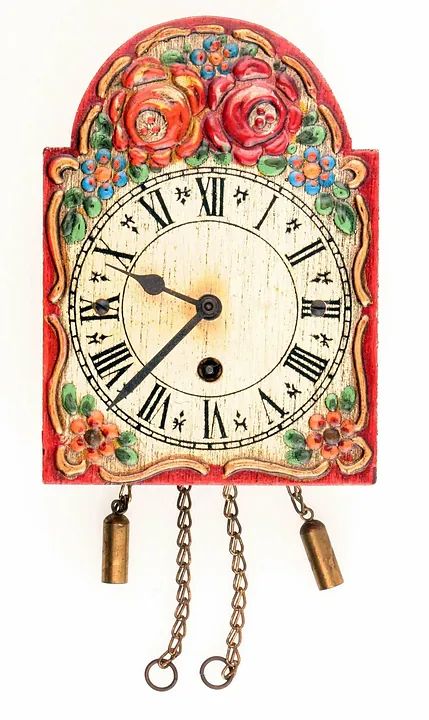
Clocks · 1900–1999
Mantel clock by Wintermantel & Co., Germany, 1900–1999 (no. 56059)
German Clock Museum
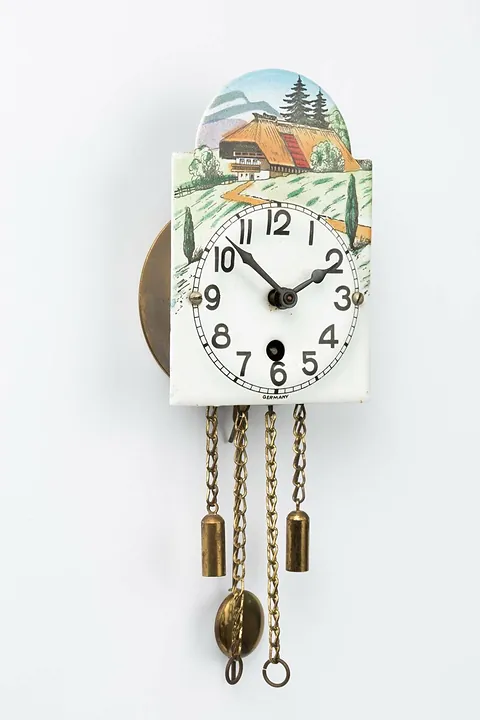
Clocks · 1900–1999
Mantel clock by Wintermantel & Co., Germany, 1900–1999 (no. 56060)
German Clock Museum
Clocks · 1900–1999
Mantel clock by Wintermantel & Co., Germany, 1900–1999 (no. 56061)
German Clock Museum