
Wristwatches · Wristwatch
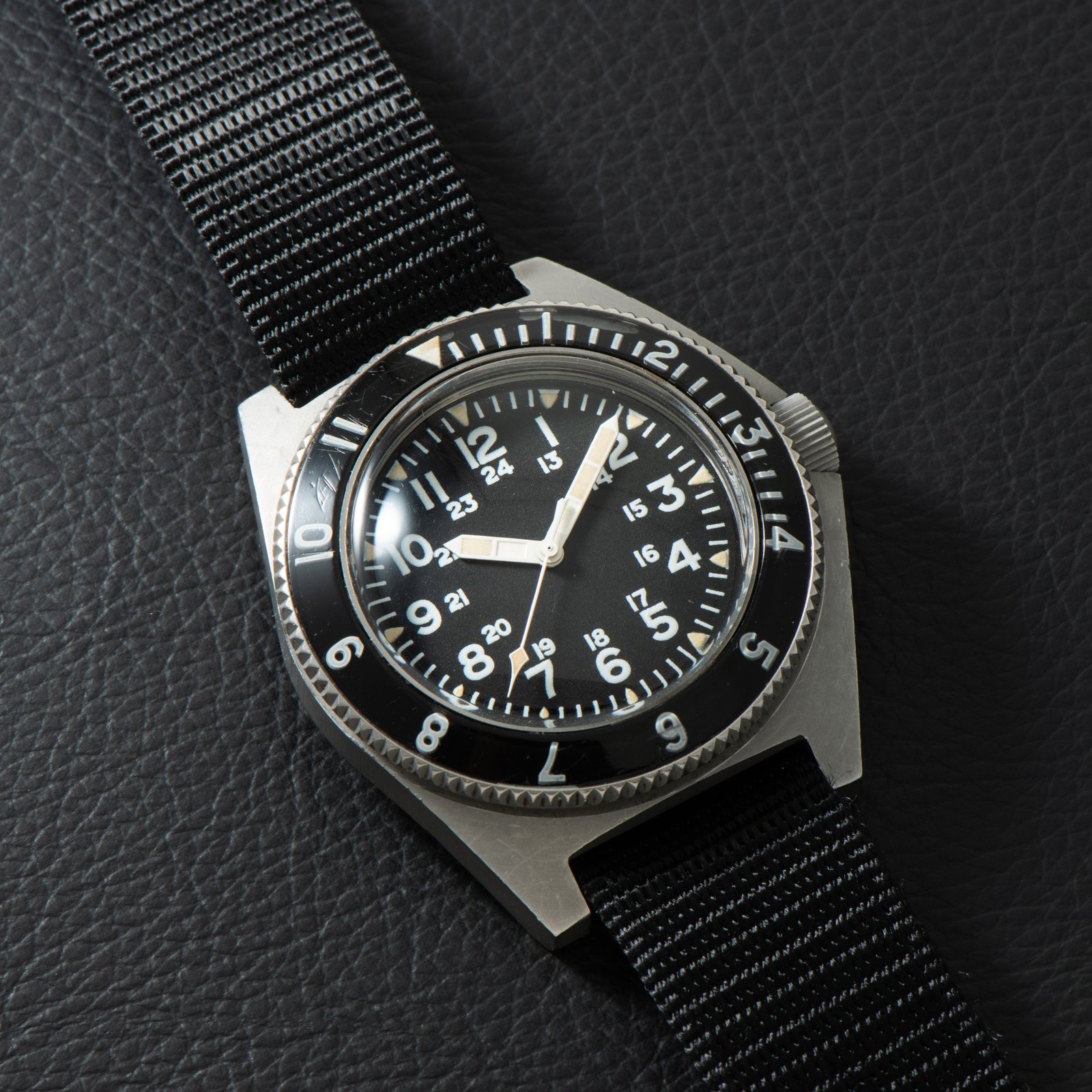
Benrus Type II Class A, 1976
- Maker / attribution
- Benrus (maker)
- Date
- 1976
- Historical period
- Quartz Revolution (1969 – 1990)
- Country of origin
- United States
- Object type
- Wristwatch
- Dimensions
- Case 43 mm
- Stock no.
- 40993385
- Credit line
- Dealer listing, Analog/Shift (40993385)
- Catalogue title (original)
- Benrus Type II Class A (English)
View the source record (dealer listing) ↗ (opens another website in a new tab)Suggest a correction
Record summary
Catalogued by Analog/Shift (dealer), New York (stock number 40993385), this is a wristwatch by Benrus, made in United States, dated 1976. The Atlas places it in the Quartz Revolution period (1969 – 1990) of its Wristwatches collection. Recorded dimensions: Case 43 mm. The record is illustrated with 6 photographs.
Assembled from the source record's structured fields. Dates and attributions are given as the source states them; where a field is missing the Atlas leaves it blank rather than estimating.
Catalogue description
Dealer description — Analog/Shift
Few military-issued watches have earned the cult status of the Benrus Type II. Developed to meet the exacting MIL-W-50717 specification issued by the U.S. government in the early 1970s, it was purpose-built for America's most demanding military personnel, including Navy SEALs, Army Special Forces, and other elite units operating in some of the harshest environments imaginable. Following its success supplying field and pilot's watches throughout the Vietnam War, Benrus was selected to manufacture the Type I and Type II—two purpose-built dive watches sharing the same rugged 43mm asymmetrical parkerized steel case, automatic movement, fixed-bar construction, and 1,200-foot depth rating. While the sterile-dial Type I has become the more widely recognized design, the Type II's highly legible Arabic-numeral dial with 24-hour military time offers even greater at-a-glance readability, making it a favorite among service members in the field. Produced in relatively small numbers, the Type II Class A represents the highest military specification assigned to the series. Its matte, non-reflective finish, bidirectional bezel, oversized crown, and uncompromising functionality embody everything a true military tool watch should be. Every design decision served a purpose, with nothing added for decoration and nothing included that wasn't mission critical. Dating to 1976, this example represents one of the last generations of American-made mechanical military watches issued before quartz technology reshaped military procurement. More than fifty years later, the Benrus Type II remains one of the purest expressions of functional watchmaking ever created—a genuine military instrument whose influence can still be seen in modern tool watches today. Scarce, historically significant, and remarkably wearable, it stands among the most desirable vintage military watches available to collectors.
Historical context
Quartz Revolution (1969 – 1990)
Seiko's Astron begins mass quartz timekeeping; traditional industries contract sharply.
Quartz and digital watches transformed the market after 1969. Swiss employment collapsed, Japanese and Hong Kong production soared, and the Swatch (1983) helped the Swiss industry recover; mechanical watches survived as luxury goods.
Read the period in the timelineMore wristwatches from this periodEarlier: Modern Mechanical Horology
Atlas type guide
Wristwatches
Bracelet watches were worn by women from the early nineteenth century — Breguet made one for Caroline Murat, Queen of Naples, in 1810–12 — but the wristwatch only became a man's instrument with military use and aviation in the early twentieth century. Between the World Wars it overtook the pocket watch; the 1920s and 1930s brought rectangular Art Deco cases, water-resistant cases and the first automatic winding systems.
After 1945 the wristwatch became a carrier of identity — dress watches, sports and dive watches, chronographs, calendars — produced by Swiss, American, Japanese, German, Soviet and Chinese industries. The quartz revolution after 1969 and the mechanical renaissance since the 1990s, including the rise of independent watchmakers, complete the story.
What to look for
- The reference number (between the lugs or inside the case back) and serial number, the starting point for dating.
- The calibre: its maker and number are often stamped under the dial or on the bridge.
- Originality of dial, hands and crown — refinished ('redial') dials are common.
- Case material marks: 18K/750, 14K/585, stainless steel, gold-filled, plated.
Dating clues
- Wire-lug cases: before c. 1925.
- Water-resistant screw-down cases: from 1926.
- Quartz movements: from 1969; sapphire crystals widespread after c. 1980.
General guidance written by the Atlas editors about this kind of object. It is not a statement about this particular piece; for that, rely on the source record above and on physical examination.
Related records
Wristwatches · c. 1960
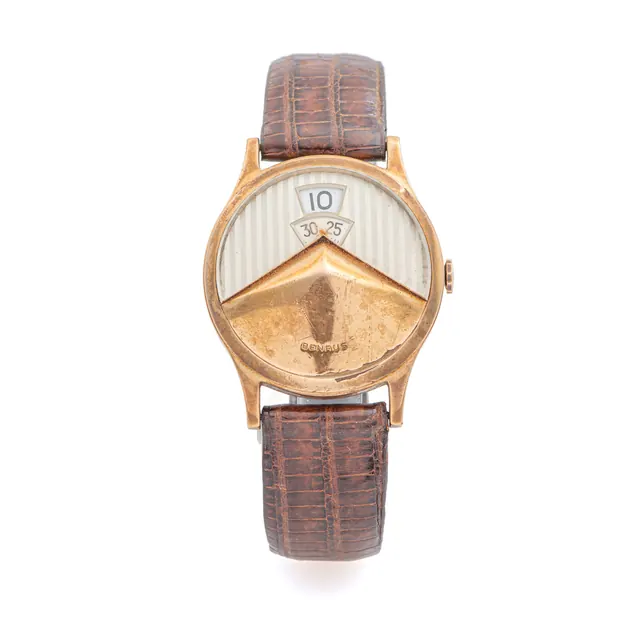
Benrus wristwatch, Dial-O-Rama Digital Jump Hour, circa 1960
Antiquorum auction archive, Geneva
Wristwatches · 1970s
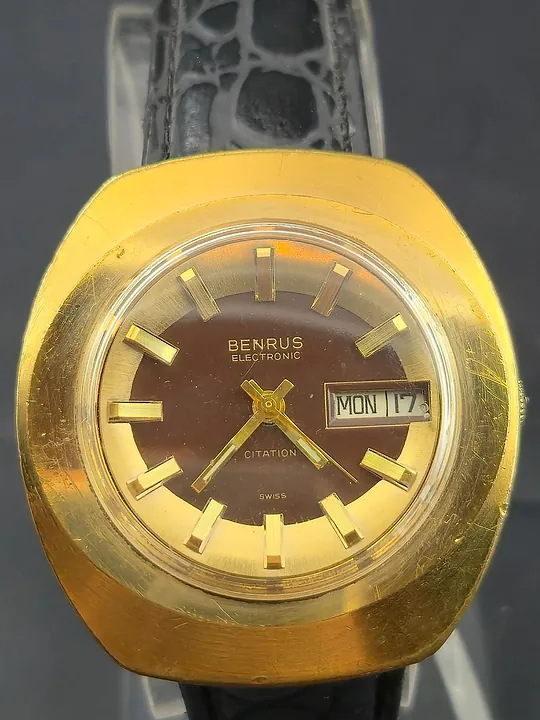
1970s Benrus Citation Electronic HS19 7J Day-Date Wristwatch, Gold-Tone Case, New Battery, Running
LiveAuctioneers auction archive
Wristwatches · 1950s
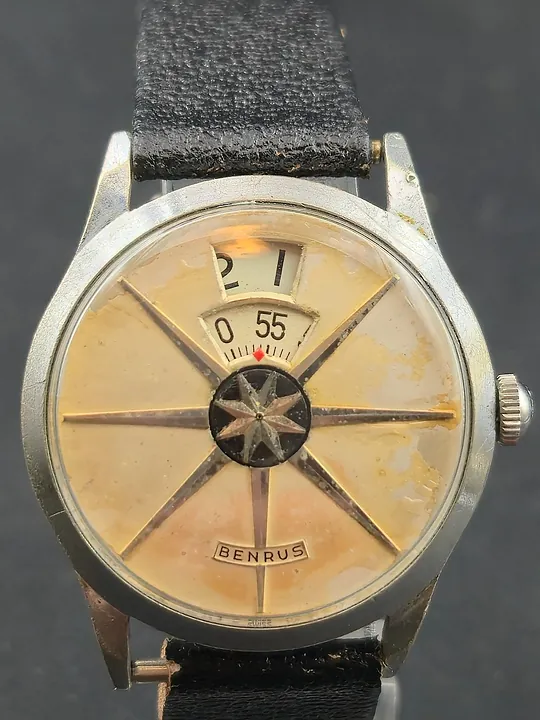
1950s Benrus “Dial-O-Rama” Jump Hour 17J Manual Wind Watch, 33 mm – Runs
LiveAuctioneers auction archive
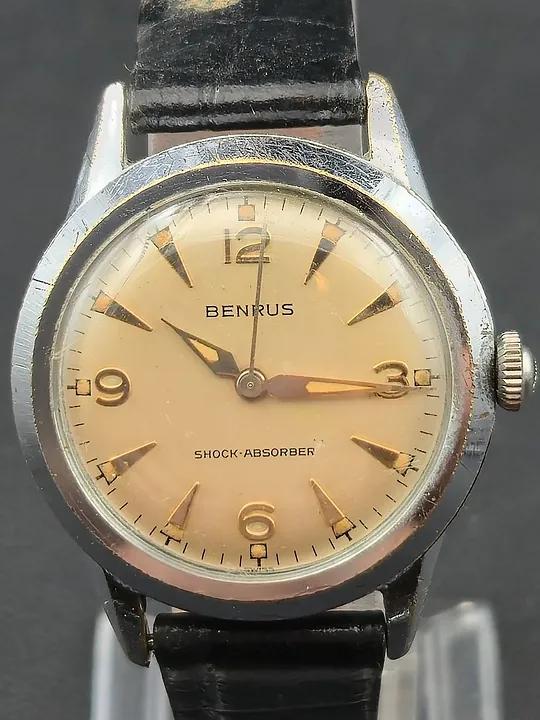
Wristwatches · 1940s
1940s Benrus Shock Absorber 17J U.S. Zone Germany 32mm Runs
LiveAuctioneers auction archive
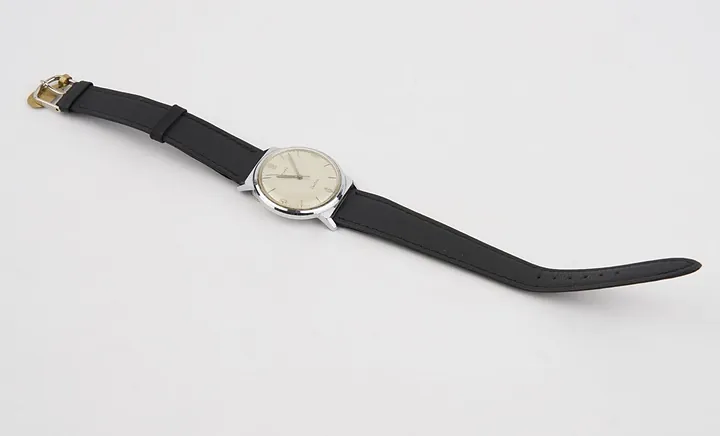
Wristwatches · 1949–1992
Timex `Electric' wristwatch, with electrically operated balance wheel mechanism, United States, 1949–1992
Science Museum Group, London
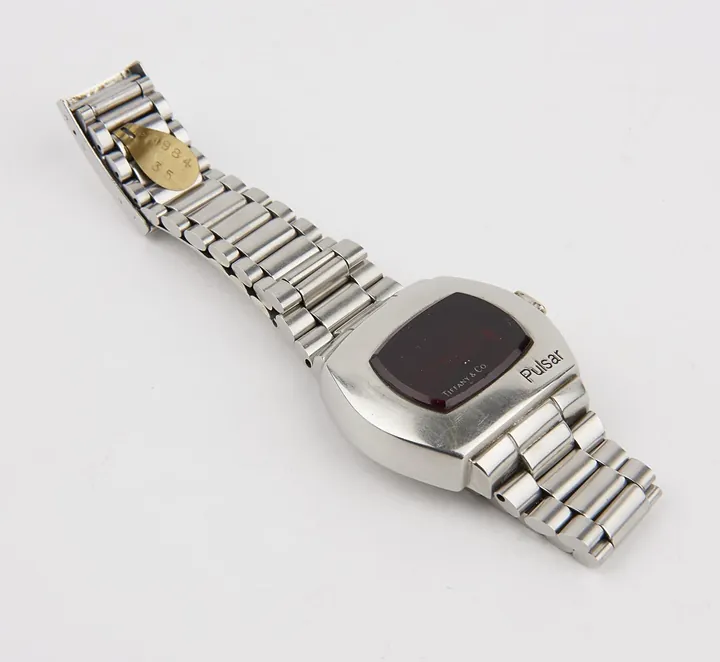
Wristwatches · 1972
Wristwatch by Hamilton Watch Company and Electro-Data Inc, United States, 1972
Science Museum Group, London
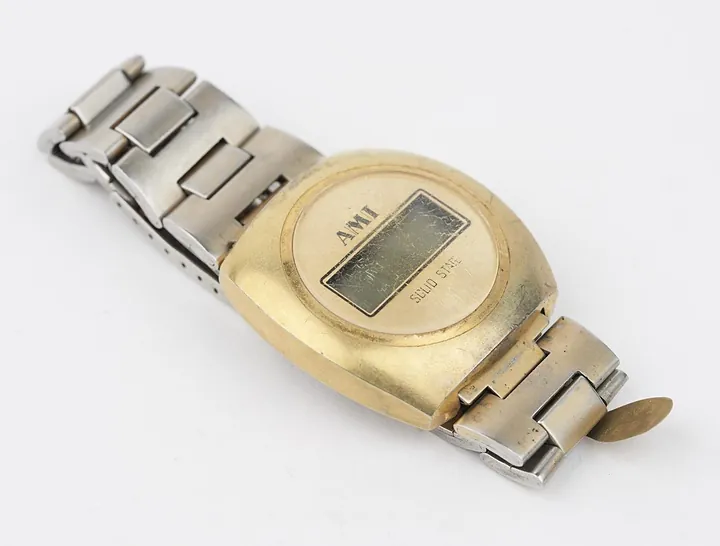
Wristwatches · 1973–1974
Quartz watch with liquid crystal digital display, made by American Microsystems Inc. (AMI) . 1973/74
Science Museum Group, London
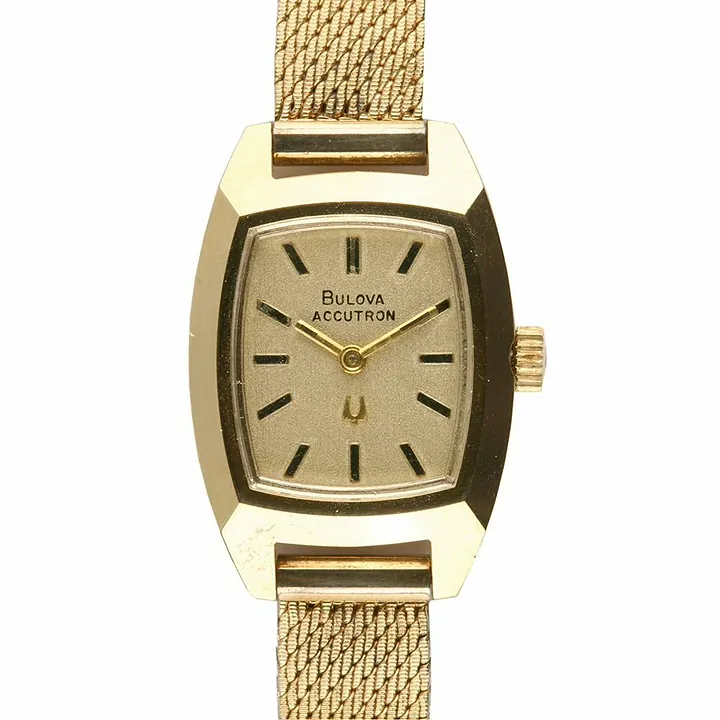
Wristwatches · c. 1973
Wristwatch by Josef Bulova, United States, c. 1973
German Clock Museum