
Pocket Watches · Pocket watch
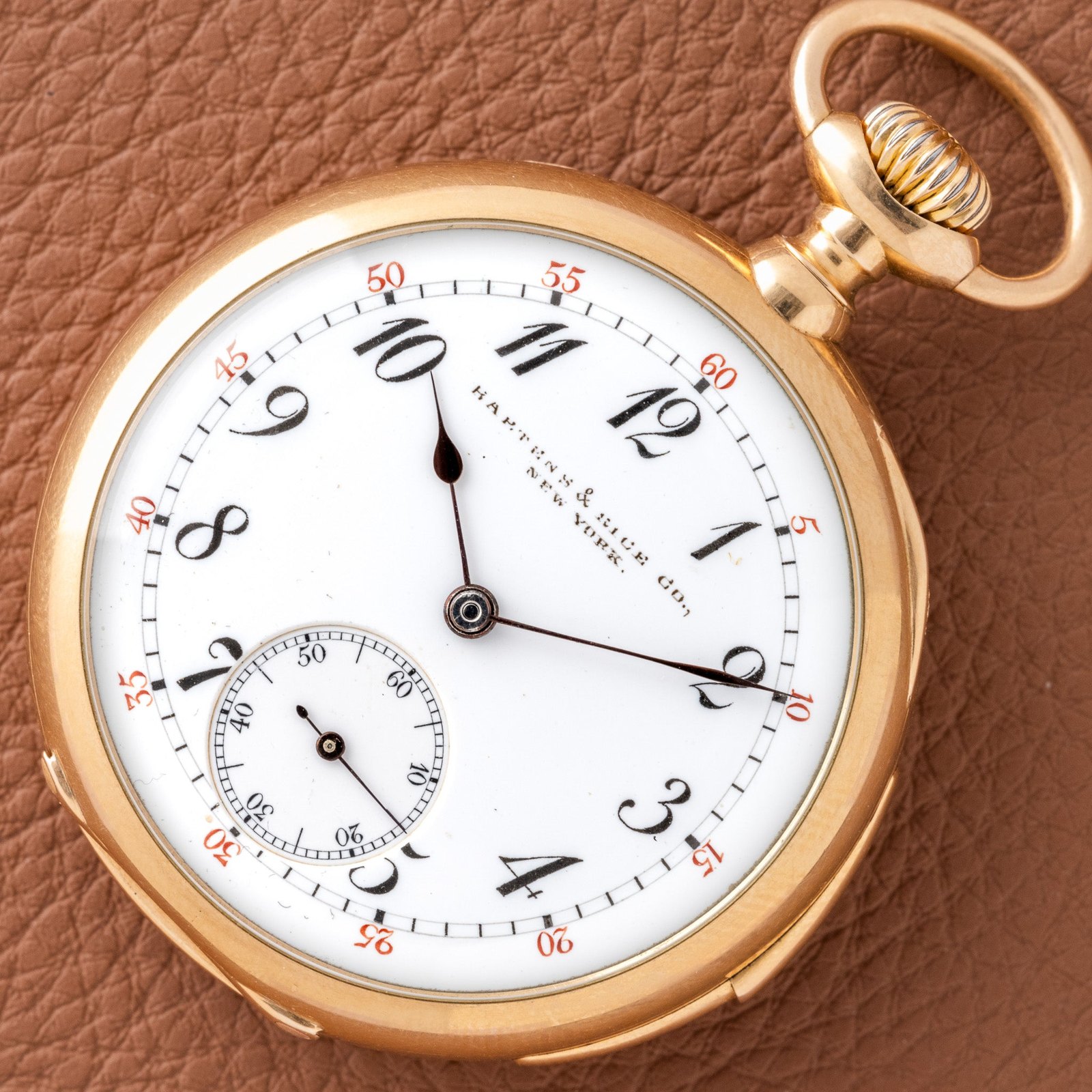
Bartens and Rice Co. New York 18k Minute Repeater Pocket Watch, 1800s
- Maker / attribution
- Bartens and Rice (maker)
- Date
- 1800s
- Historical period
- Precision & Scientific Horology (1750 – 1850)
- Country of origin
- United States
- Object type
- Pocket watch
- Dimensions
- Case 50 mm
- Stock no.
- Product 8315870412983
- Credit line
- Dealer listing, Huntington Company (product 8315870412983)
- Catalogue title (original)
- 1800s Bartens and Rice Co. New York 18k Minute Repeater Pocket Watch (English)
View the source record (dealer listing) ↗ (opens another website in a new tab)Suggest a correction
Record summary
Catalogued by Huntington Company (dealer) (stock number Product 8315870412983), this is a pocket watch by Bartens and Rice, made in United States, dated 1800s. The Atlas places it in the Precision & Scientific Horology period (1750 – 1850) of its Pocket Watches collection. Recorded dimensions: Case 50 mm. The record is illustrated with 6 photographs.
Assembled from the source record's structured fields. Dates and attributions are given as the source states them; where a field is missing the Atlas leaves it blank rather than estimating.
Catalogue description
Dealer description — Huntington Company
History and Significance Bartens & Rice Co. of New York operated as an importer and retailer of high grade Swiss complications during the late 19th and early 20th centuries, a period when American firms often commissioned movements from top Swiss workshops and cased them in precious metals for the U.S. market. Minute repeaters represented the pinnacle of portable horology at the time, requiring extensive hand fitting and adjustment to reliably strike the hours, quarters, and minutes on demand. This example features an 18k gold hunter case and a fully mechanical minute repeater movement with traditional steel gongs. The movement architecture and finishing are consistent with high quality Swiss ébauches supplied to American retailers during this era, with attention paid to symmetry, polished steel components, and jeweling throughout. Pocket watches of this caliber were produced in very limited numbers and intended for a small audience that valued technical sophistication as much as precious materials. Writer’s Thoughts Minute repeaters from this period are increasingly difficult to find in honest condition, especially housed in solid gold cases that have survived without excessive polishing or damage. This piece presents as a serious collector’s watch, more about mechanical and historical importance than novelty. It is the kind of object that rewards slow inspection and appreciation of the amount of work that went into its construction. Our Promise Every watch is thoroughly vetted, carefully described with complete transparency, and guaranteed authentic. Each piece is offered in honest condition, ensuring collectors receive a timepiece that reflects both originality and integrity. Specifications Brand: Bartens & Rice Co. Model: Minute Repeater Pocket Watch Year: circa late 1800s Case Material: 18k yellow gold Case Size: Approximately 50 mm Movement: Manual wind minute repeater Dial: White enamel with Arabic numerals and subsidiary seconds Condition Case: 18k gold case shows visible surface wear and light scratching consistent with age and use. Case proportions remain intact with no evidence of structural issues. Crystal: Glass crystal shows light surface wear consistent with age. Dial: Enamel dial remains attractive with age-related wear. Printing and numerals are still legible and well defined. Hands: Original hands show age-appropriate wear with no obvious replacements. Movement: Movement is complete and well preserved, with visible patina consistent with age. Minute repeater components are intact and fully functional.
Historical context
Precision & Scientific Horology (1750 – 1850)
Harrison solves longitude; Mudge invents the lever; Breguet's Paris workshop defines the modern watch.
From 1750 to 1850 the watch became a precision instrument. Mudge's lever escapement, the cylinder escapement, Lépine's thin bar calibre, Breguet's innovations (overcoil, tourbillon, perpétuelle) and the pocket chronometer of Arnold and Earnshaw all date from this period, while verge watches remained common in cheaper production.
Read the period in the timelineMore pocket watches from this periodEarlier: Early Modern Horology
Atlas type guide
Repeating watches
Before electric light, telling the time in the dark was a real problem. Repeating watches strike the time on demand when a slide or push-piece is operated: quarter repeaters sound hours and quarters, minute repeaters hours, quarters and minutes. Edward Barlow and Daniel Quare disputed the invention in London in the 1680s. Early repeaters struck on a bell inside the case; Abraham-Louis Breguet introduced the gong (a coiled steel wire) around 1780, allowing thinner watches.
Repeaters require a separate train with racks, snails and a governor to control the striking speed, and are among the most demanding complications to make and adjust. Swiss makers of the Vallée de Joux specialised in repeating ébauches in the nineteenth century.
What to look for
- A slide on the case band or a push-piece through the pendant.
- Gongs encircling the movement (after c. 1780) or a bell in the case (earlier); pierced case for sound.
- The racks, snails and governor visible under the dial or on the movement.
- Terms such as 'Minutes', 'Quarts' or 'Répétition' on the dial or cuvette.
Dating clues
- Bell-striking quarter repeaters: c. 1690–1800.
- Gong repeaters and dumb repeaters (striking on the case): after c. 1780.
- Minute repeaters became more common after c. 1830 with Vallée de Joux ébauches.
General guidance written by the Atlas editors about this kind of object. It is not a statement about this particular piece; for that, rely on the source record above and on physical examination.
Read next:Minute repeater
Related records
Pocket Watches · 1797/98
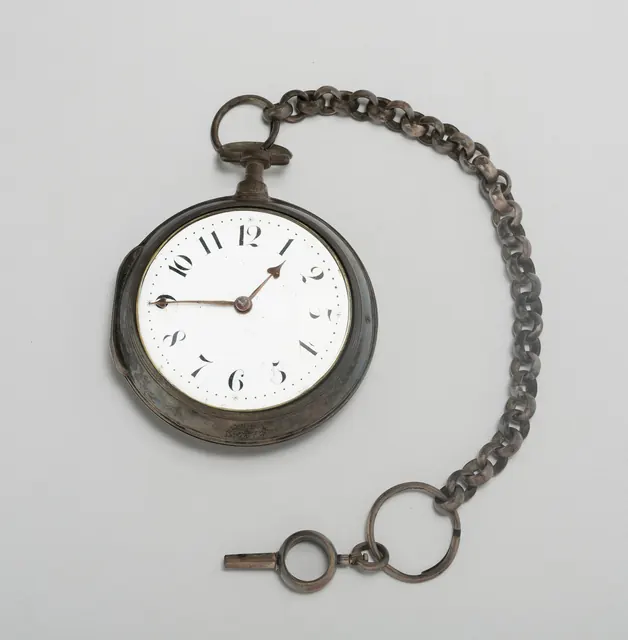
Watch by James Simpson, United States, 1797/98
Art Institute of Chicago
Pocket Watches · c. 1830
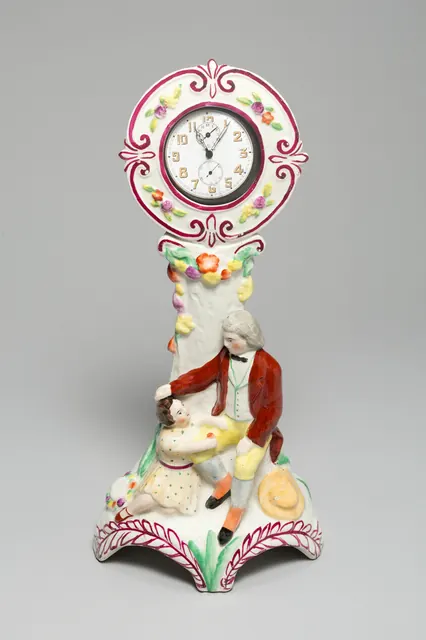
Watch and Stand
Art Institute of Chicago
Pocket Watches · 19th century
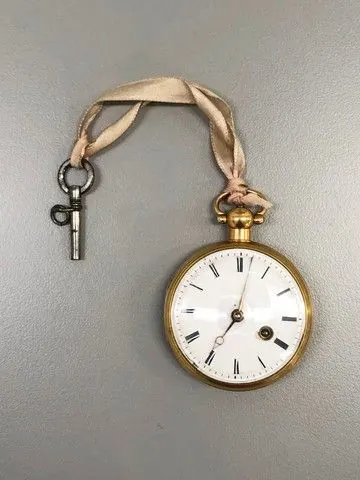
Pocket watch, United States, 19th century
Yale University Art Gallery, New Haven
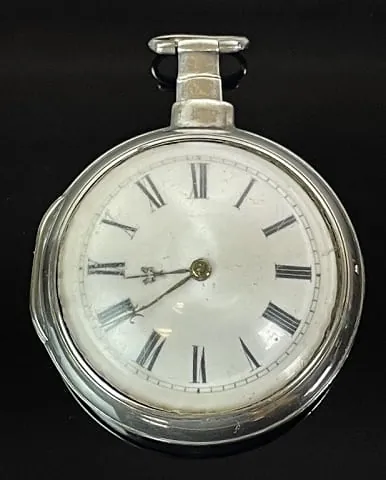
Pocket Watches · c. 1795
C 1806 American Fusee Pocket Watch, McFarlane, c. 1795
LiveAuctioneers auction archive
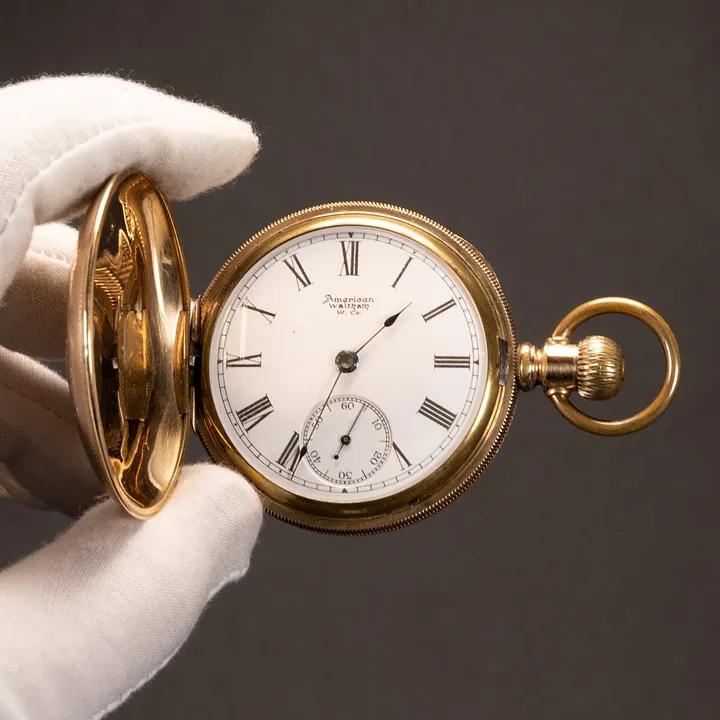
Pocket Watches · c. 1800s
Waltham Micrometric Regulator Gold Pocket Watch Hunter Case, c. 1800s
LiveAuctioneers auction archive
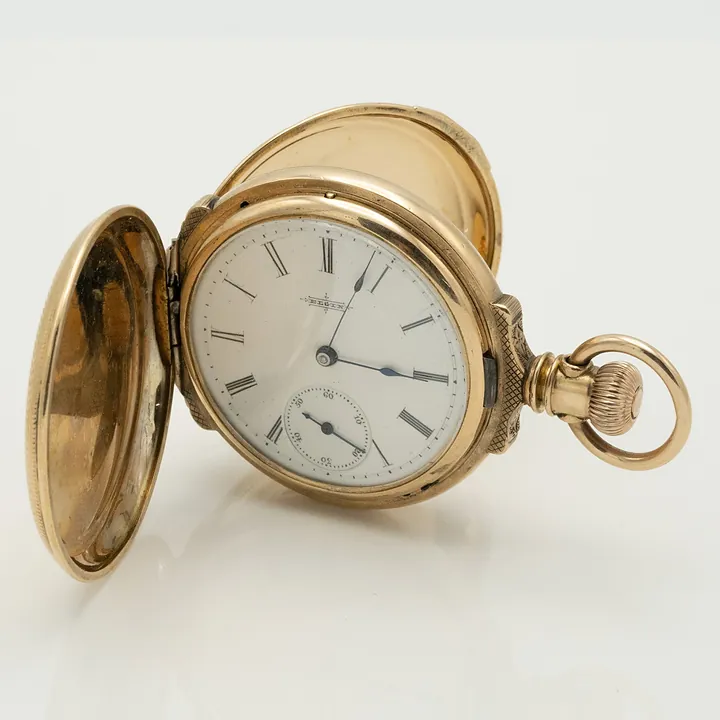
Pocket Watches · 1800s
Elgin Gold Pocket Watch Hunter Case, 1800s
LiveAuctioneers auction archive
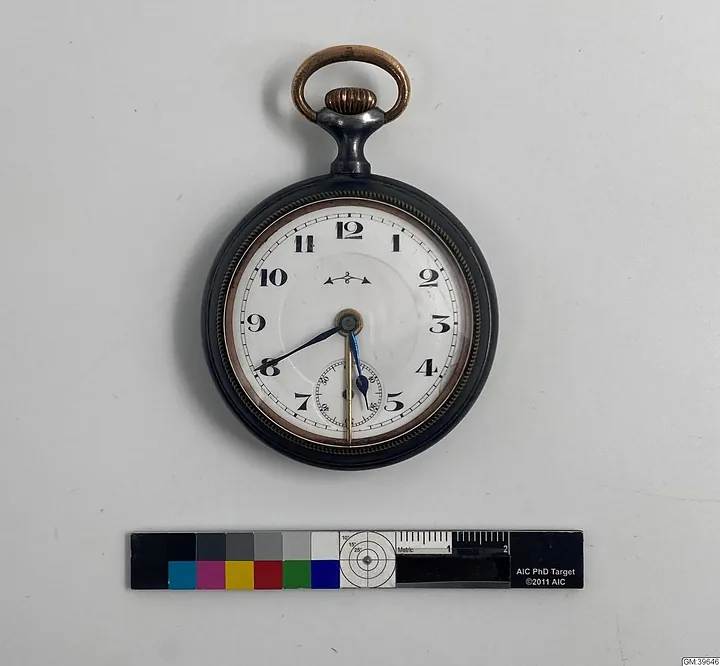
Pocket Watches · 1800–1899
Alarm pocket watch by Eterna w, Gothenburg, 1800–1899
Museum of Gothenburg
Pocket Watches · 1820
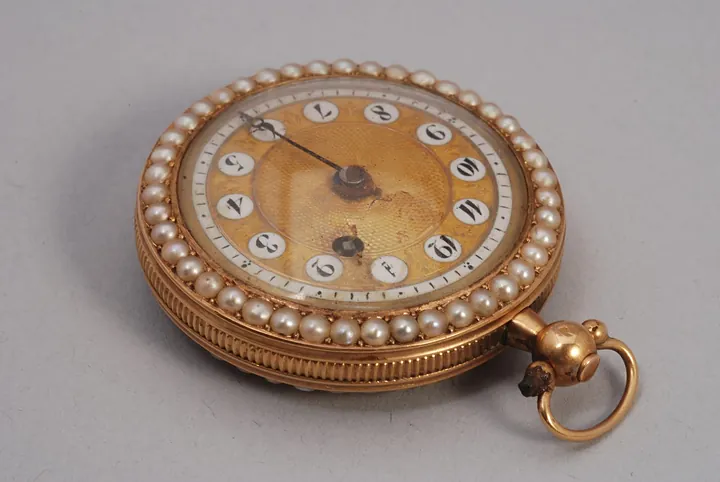
Pocket watch by Chevalier & Cochet, 1820
Museum Rotterdam