
Wristwatches · Wristwatch
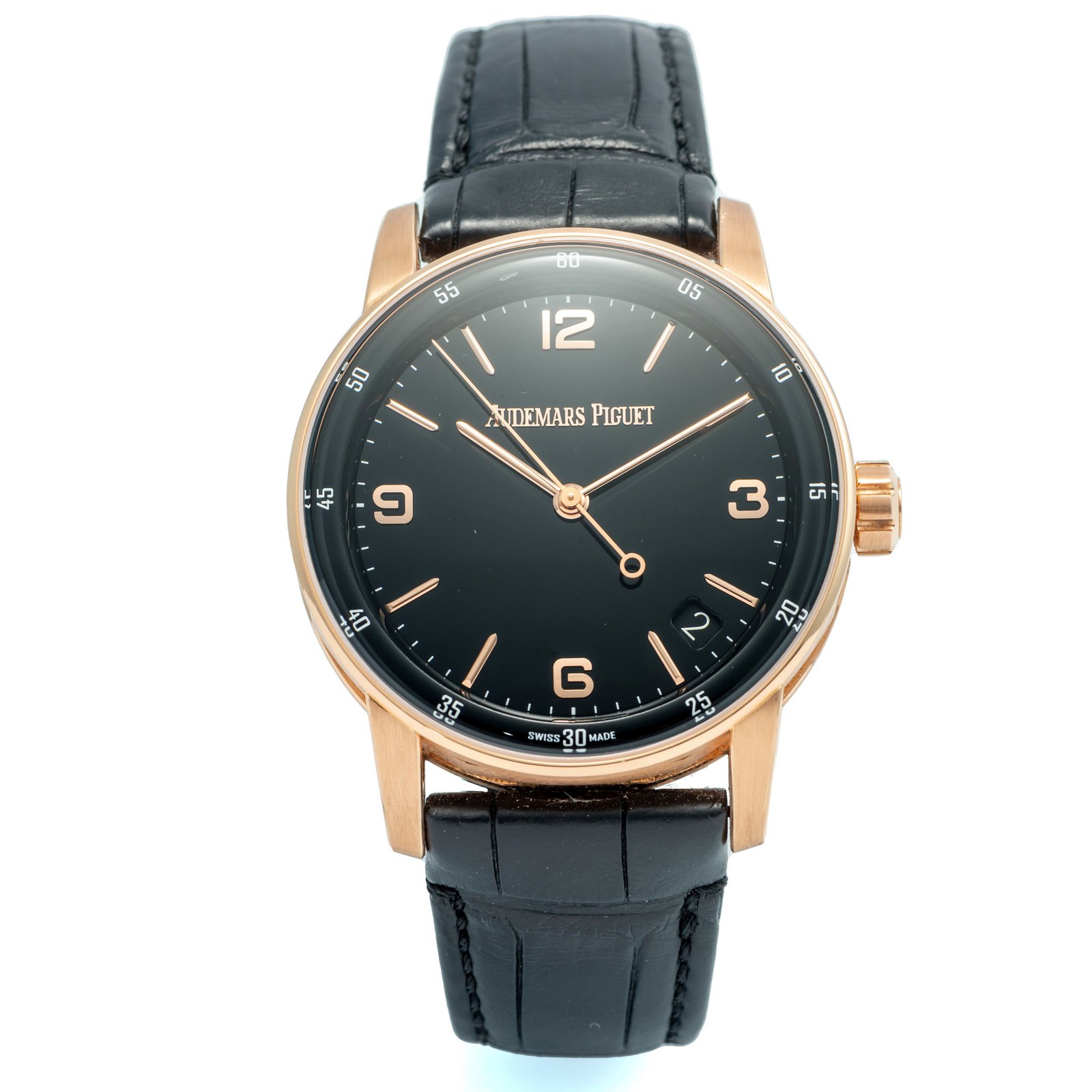
Audemars Piguet wristwatch, ref. 15210, Self-Winding Centre-Seconds, circa 2020
- Maker / attribution
- Audemars Piguet (brand / maker)
- Date
- c. 2020
- Historical period
- Contemporary Horology (2010 – Present)
- Country of origin
- Switzerland
- Object type
- Wristwatch
- Materials / technique
- 18k pink gold
- Dimensions
- diameter 41 mm; height 49.5 mm
- Auction house
- Antiquorum auction archive, Geneva
- Lot
- Lot 354-9
- Credit line
- Auction lot record: LOT 9, Hong Kong,September 28, 2022
- Catalogue title (original)
- AUDEMARS PIGUET REF. 15210, SELF-WINDING, CENTRE-SECONDS, DATE; (English)
View the source record (auction lot) ↗ (opens another website in a new tab)Suggest a correction
Record summary
Catalogued by Antiquorum auction archive, Geneva (lot Lot 354-9), this is a wristwatch by Audemars Piguet, made in Switzerland, dated c. 2020. The Atlas places it in the Contemporary Horology period (2010 – Present) of its Wristwatches collection. Materials and techniques recorded by the source: 18k pink gold. Recorded dimensions: diameter 41 mm; height 49.5 mm. The record is illustrated with 4 photographs.
Assembled from the source record's structured fields. Dates and attributions are given as the source states them; where a field is missing the Atlas leaves it blank rather than estimating.
Catalogue description
Antiquorum catalogue description
A very fine, 18K pink gold, self-winding, round and octagonal-shaped, gentleman's wristwatch, water-resistant with sapphire-crystal case-back screwed by five screws, black lacquered dial with centre-seconds and date.
Lot specifications (Antiquorum)
Model: "Code 11.59"; Reference: 15210OR.OO.A002KB.01; Movement No.: AU8577; Case No.: K67072; Material: 18K pink gold; Bracelet: black leather AP strap; Buckle: 18K pink gold AP buckle; Caliber: 4302, 32 jewels; Diameter: 41 mm.; Height: 49.5 mm.; Weight: 110.5 gr. (approx.); Signature: dial, case and movement; Accessories: original fitted box and outer box, warranty, instructions booklet, invoice
Inscriptions & marks
dial, case and movement
Historical context
Contemporary Horology (2010 – Present)
Silicon components, connected watches, optical-lattice research clocks and a thriving independent scene.
Smartwatches became the world's best-selling watches, while mechanical watchmaking focuses on craft, innovation (silicon components, new escapements) and independent makers.
Read the period in the timelineMore wristwatches from this periodEarlier: Mechanical Renaissance
Atlas type guide
Automatic (self-winding) watches
Self-winding watches use the wearer's motion to wind the mainspring. Abraham-Louis Perrelet and Breguet made 'perpétuelle' pocket watches with oscillating weights in the late eighteenth century, but the principle only became practical in the wristwatch. John Harwood patented a bumper automatic in 1923; Rolex's Perpetual rotor (1931) winding in one direction, and later bidirectional rotors (Eterna, Felsa Bidynator), established the modern form. Micro-rotors (Universal Genève, Buren) and peripheral rotors made automatic watches thinner.
What to look for
- A semicircular rotor turning 360° over the movement, or a 'bumper' weight that rebounds between springs.
- 'Automatic', 'Perpetual' or 'Self-winding' on the dial.
- A sealed screw-back case, since automatic watches are wound less often by the crown.
Dating clues
- Bumper automatics: 1923–c. 1955.
- Full rotors: from 1931 (Rolex); widespread after c. 1950.
- Micro-rotors: from 1954–1958.
General guidance written by the Atlas editors about this kind of object. It is not a statement about this particular piece; for that, rely on the source record above and on physical examination.
Related records
Clocks · c. 1990s
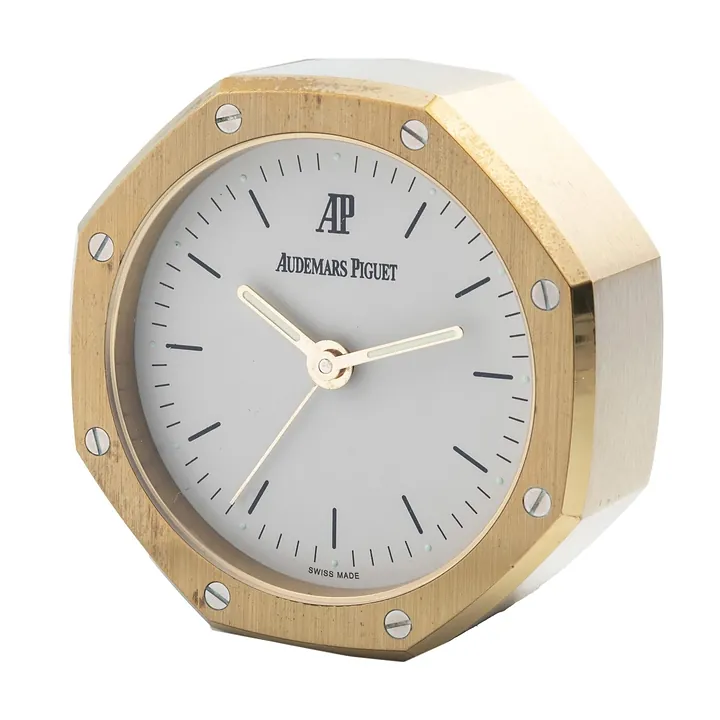
Audemars Piguet Royal Oak, c. 1990s
Antiquorum auction archive, Geneva
Pocket Watches · c. 1960
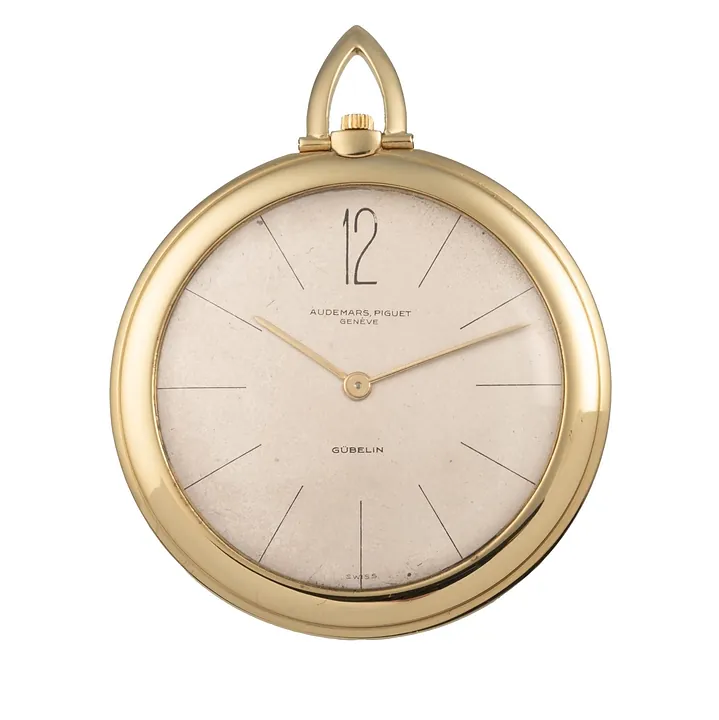
Audemars Piguet ''couteau'', c. 1960
Antiquorum auction archive, Geneva
Pocket Watches · originally sold in November 1961 (per the lot record)
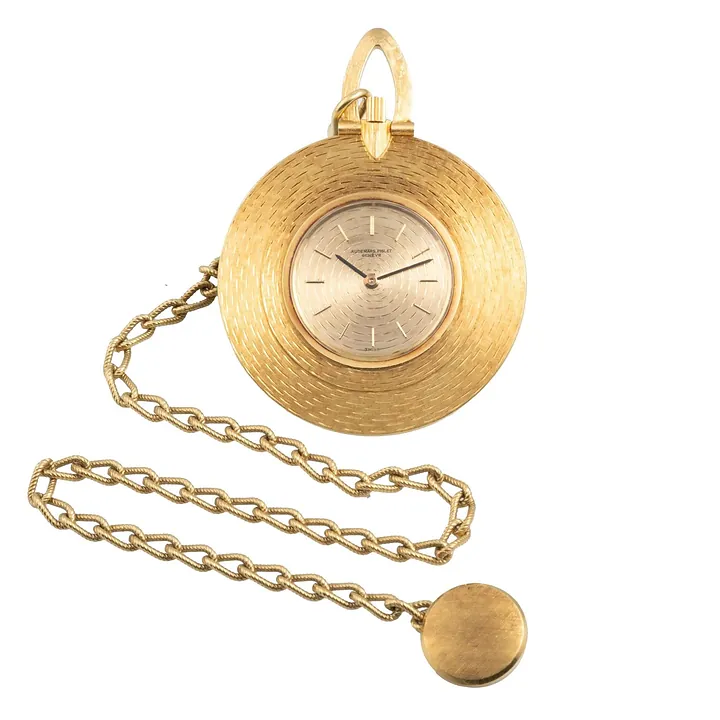
Audemars Piguet "extra Plate", ref. 5633 BA, originally sold in November 1961
Antiquorum auction archive, Geneva
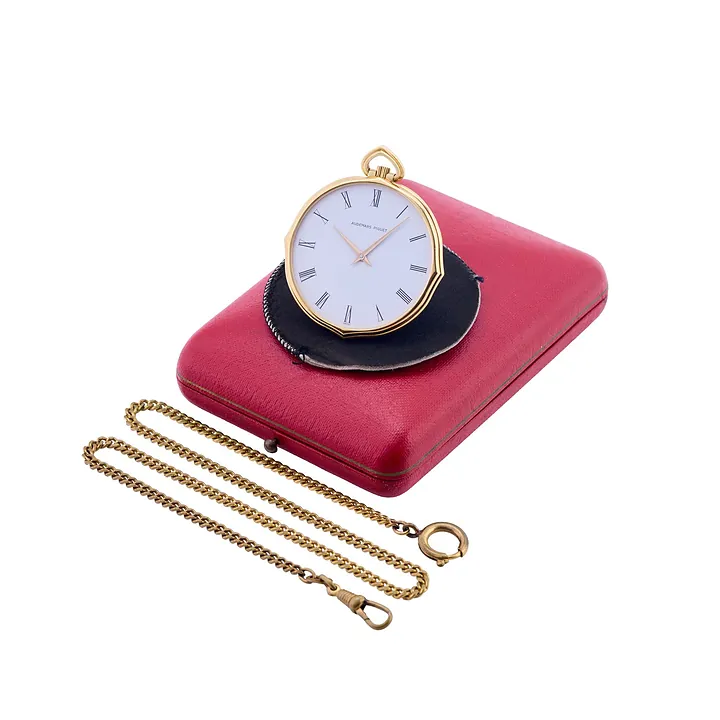
Pocket Watches · c. 1980
Audemars Piguet pocket watch, c. 1980
Antiquorum auction archive, Geneva

Wristwatches · c. 2010s
Breguet Type XXI, ref. 3810, c. 2010s (Antiquorum Lot 381-24)
Antiquorum auction archive, Geneva

Wristwatches · c. 2010s
Breguet Type XXI, ref. 3810, c. 2010s (Antiquorum Lot 386-229)
Antiquorum auction archive, Geneva

Wristwatches · Sold in September 2010
Breitling Cosmonaute, ref. A 22322, Sold in September 2010
Antiquorum auction archive, Geneva

Wristwatches · c. 2010
Corum Bubble Chrono, ref. 396.150.20, c. 2010
Antiquorum auction archive, Geneva