
Pocket Watches · Pocket watch
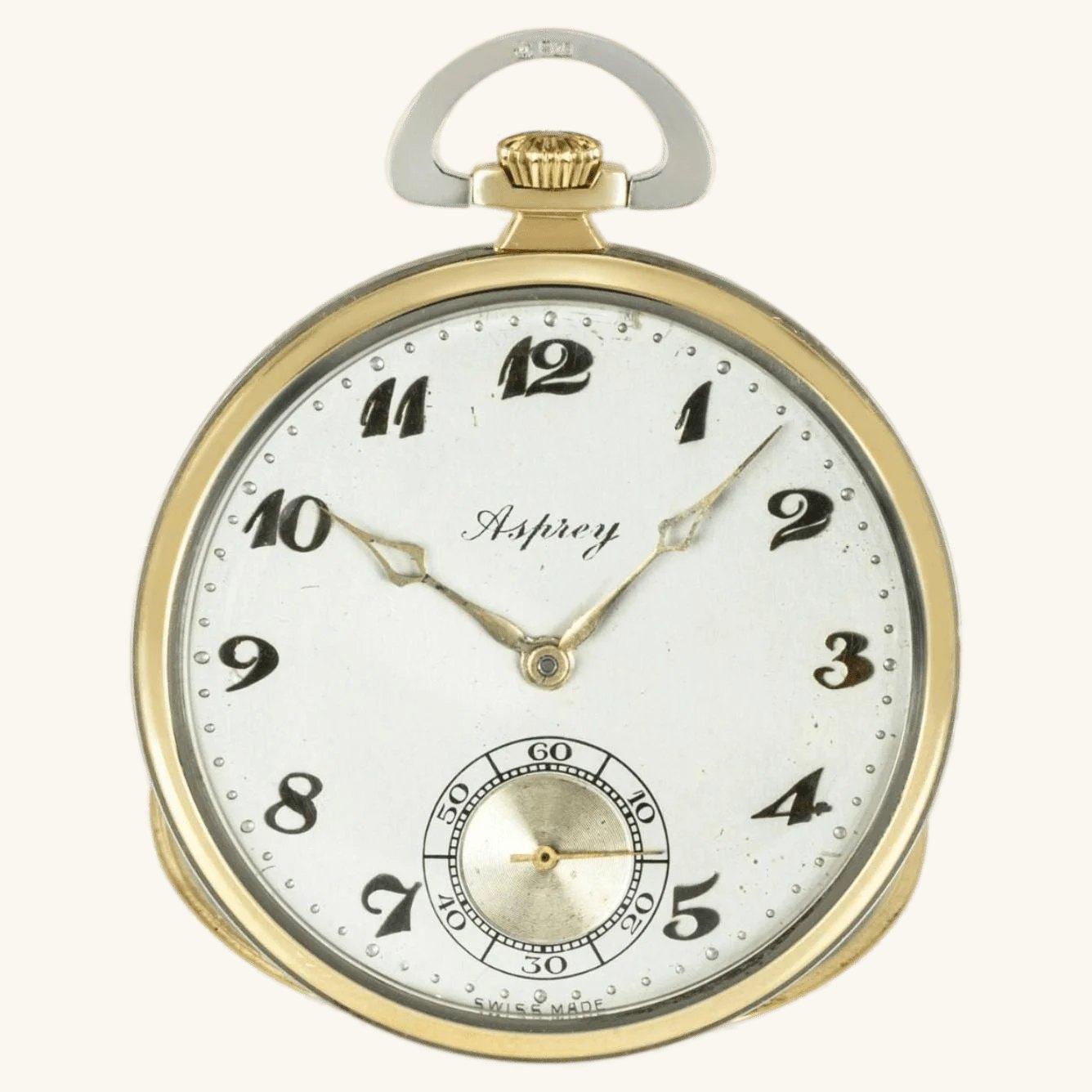
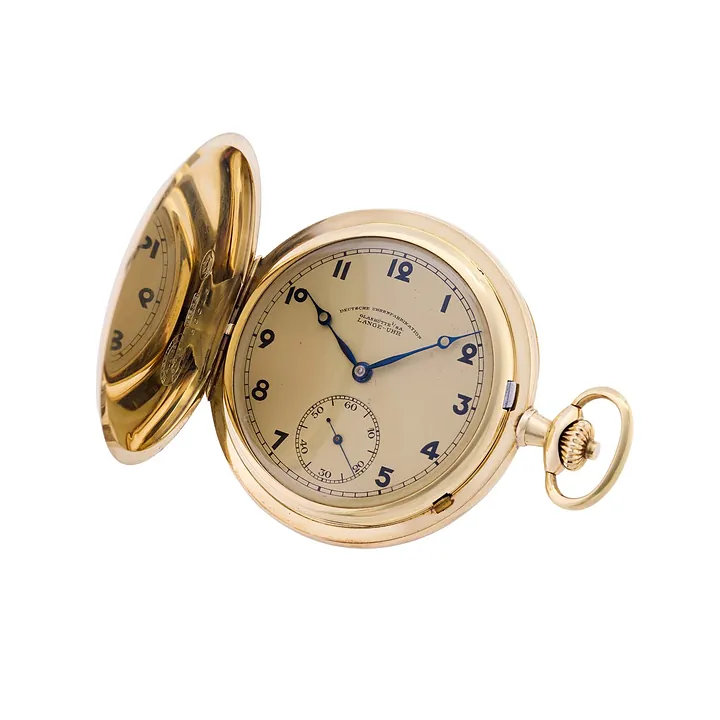
Asprey 18CT Two Gold Art Deco Dress Pocket Watch, c. 1920s
- Maker / attribution
- Unrecorded in source
- Date
- c. 1920s
- Historical period
- Golden Age of Mechanical Watchmaking (1900 – 1945)
- Country of origin
- Unrecorded in source
- Object type
- Pocket watch
- Materials / technique
- gold
- Dealer
- WatchMuseum.org shop
- Stock no.
- Product 2866
- Credit line
- Dealer listing, WatchMuseum.org shop (product 2866)
- Catalogue title (original)
- Asprey 18CT Two Gold Art Deco Dress Pocket Watch (English)
View the source record (dealer listing) ↗ (opens another website in a new tab)Suggest a correction
Record summary
Catalogued by WatchMuseum.org shop (stock number Product 2866), this is a pocket watch, dated c. 1920s. The Atlas places it in the Golden Age of Mechanical Watchmaking period (1900 – 1945) of its Pocket Watches collection. Materials and techniques recorded by the source: gold. The record is illustrated with 5 photographs.
Assembled from the source record's structured fields. Dates and attributions are given as the source states them; where a field is missing the Atlas leaves it blank rather than estimating.
Catalogue description
Dealer description — WatchMuseum.org shop
The Asprey 18CT Two Gold Art Deco Dress Pocket Watch from the 1920s is a masterpiece that encapsulates the elegance and sophistication of the Art Deco era. This exquisite timepiece, retailed by the prestigious Asprey, features a silver satin-finished dial adorned with raised gold Arabic numerals and an engine-turned subsidiary seconds dial, complemented by original cathedral-style hands and a gilt metal seconds hand. The watch’s 18ct case is a harmonious blend of two-tone gold, with a plain yellow gold back that opens to reveal a meticulously crafted Swiss keyless lever movement. This movement is fully jeweled with a nickel finish and includes an unusual regulation for slow-fast settings and a compensation balance, showcasing the precision and innovation of Swiss watchmaking. Measuring 42 mm in diameter, this round pocket watch not only boasts impeccable craftsmanship but also comes with its original presentation box, enhancing its charm and collectible value. Originating from England and manufactured in the 1920s, this piece remains in excellent condition, making it a timeless addition to any discerning collector’s ensemble. This stunning pocket watch is a prime example of 1920s Art Deco style and was retailed by Asprey. The silver satin finished dial features raised gold Arabic numerals and an engine turned subsidiary seconds dial with original cathedral-style hands and a gilt metal seconds hand. The elegant 18ct case is two-tone gold with a plain yellow gold back that opens to reveal the Swiss keyless lever movement, which is fully jeweled with a nickel finish. It also has an unusual regulation for slow fast set and a compensation balance. This pocket watch comes with its original presentation box, adding to its overall charm and elegance. Creator: Asprey Case Material: 18k Gold,White Gold,Yellow Gold Case Shape: Round Case Dimensions: Diameter: 42 mm (1.66 in) Style: Art Deco Place of Origin: England Period: 1920-1929 Date of Manufacture: 1920s Condition: Excellent. In original box.
Historical context
Golden Age of Mechanical Watchmaking (1900 – 1945)
The wristwatch displaces the pocket watch; waterproof cases, self-winding and grand complications.
The pocket watch reached technical maturity and then began to give way to the wristwatch after the First World War. Complicated watches for collectors such as Henry Graves Jr. and James Ward Packard, railroad watches, and slim Art Deco dress watches are characteristic.
Read the period in the timelineMore pocket watches from this periodEarlier: Industrial Revolution
Atlas type guide
Pocket watches
The pocket watch was the dominant personal timekeeper from the late seventeenth century until the First World War. Its development tracks the history of the escapement: verge watches with fusees until the late eighteenth century; Thomas Mudge's lever escapement (c. 1755) and the cylinder escapement popularised by George Graham and later by Swiss makers; and the Swiss and English lever watches of the nineteenth century. Lépine's bar-bridge calibre and keyless winding made watches thinner and easier to use.
Industrialisation transformed the trade: American factories such as Waltham (from 1850) and Elgin produced interchangeable parts by machine, and Swiss makers responded with their own mechanisation after the 1876 Philadelphia Exhibition. By 1900 a reliable watch was affordable to millions; the finest makers continued to produce complications and precision watches.
What to look for
- The escapement: verge (crown wheel), cylinder, duplex, English or Swiss lever.
- Key winding (a square arbor in dial or back) or keyless crown winding.
- Signatures and serial numbers on the movement, dial and inside case back.
- Hallmarks, case maker's marks and gold or silver standards stamped in the case.
- Dial material: enamel, silver, gold, later printed metal.
Dating clues
- Verge watches dominate before c. 1800; cylinder watches c. 1770–1900; lever watches after c. 1820.
- Keyless winding: increasingly common after c. 1860.
- Manufacturer serial number lists exist for Waltham, Elgin, Longines, Omega, Patek Philippe and others.
General guidance written by the Atlas editors about this kind of object. It is not a statement about this particular piece; for that, rely on the source record above and on physical examination.
Read next:Verge escapementDetached lever escapementFuseeIdentification Centre
Related records
Pocket Watches · 1900–1999
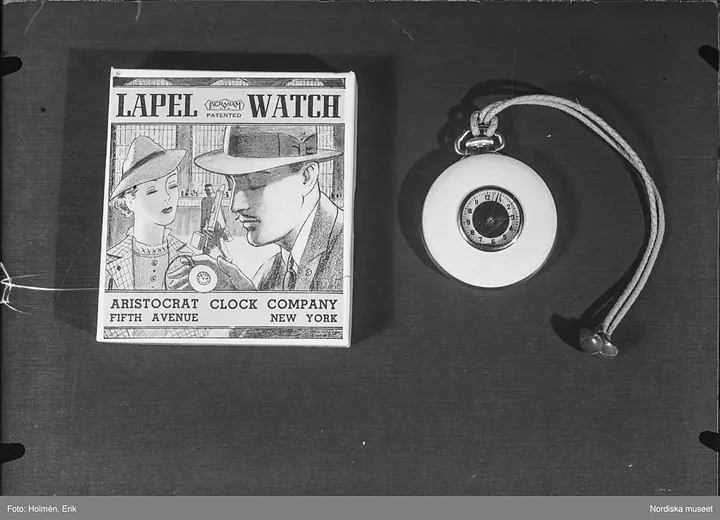
Lapel watch by Erik Holmén, 1900–1999
Nordic Museum Foundation
Pocket Watches · 1873–1930
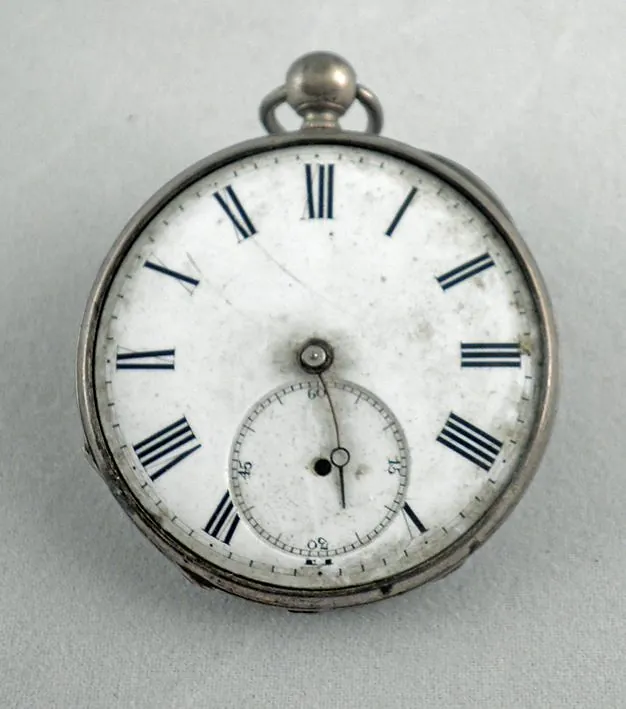
Pocket watch, Lilla Malma socken, 1873–1930
Sörmland Museum
Pocket Watches · 1880–1920
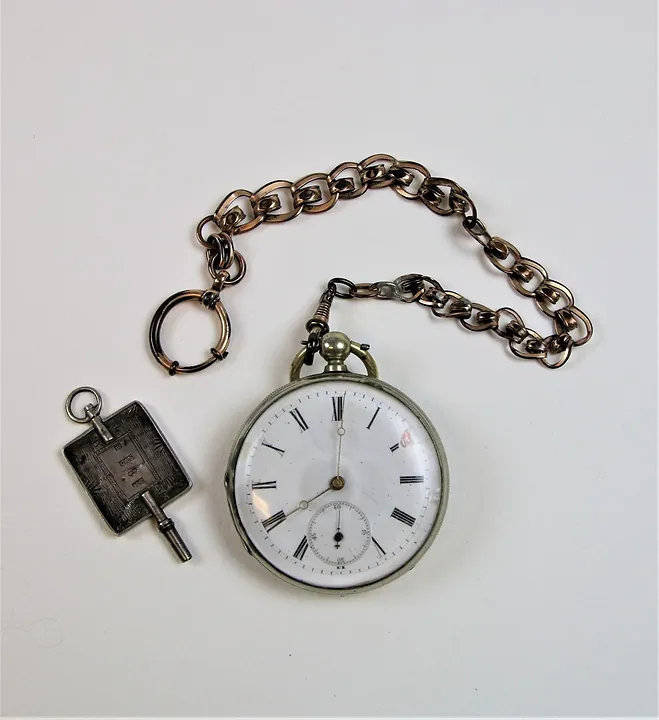
Pocket watch, Sweden, 1880–1920
Sörmland Museum
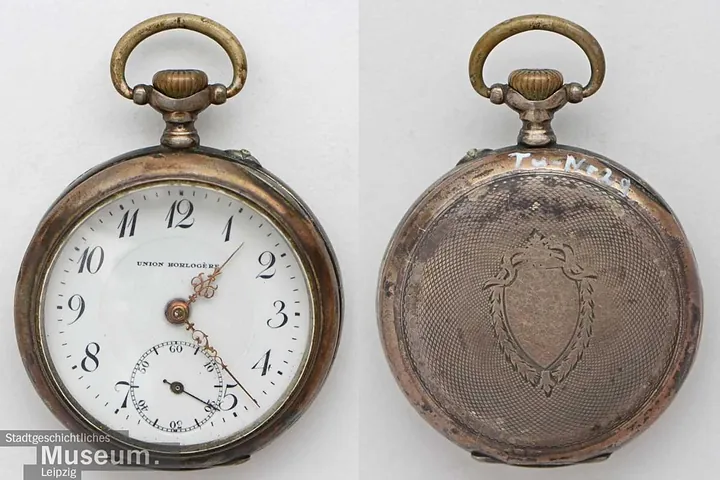
Pocket Watches · 1890–1910
Pocket watch by Union Horlogère, France, 1890–1910
Museum of City History Leipzig
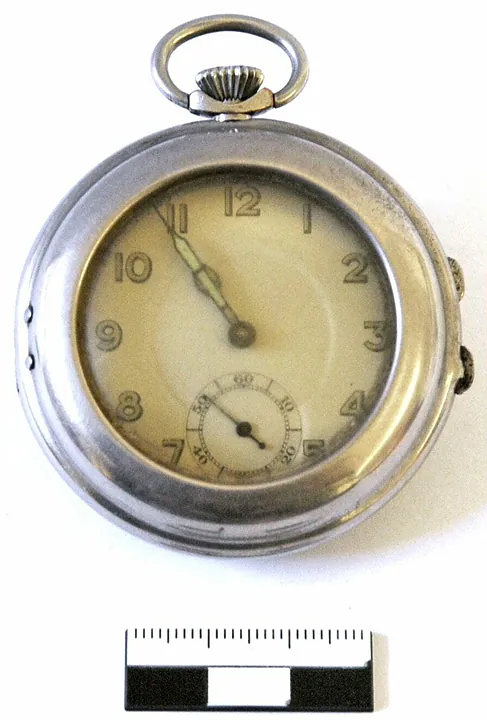
Pocket Watches · 1891–1945
Pocket watch, Germany, 1891–1945
Montanhistorisches Dokumentationszentrum
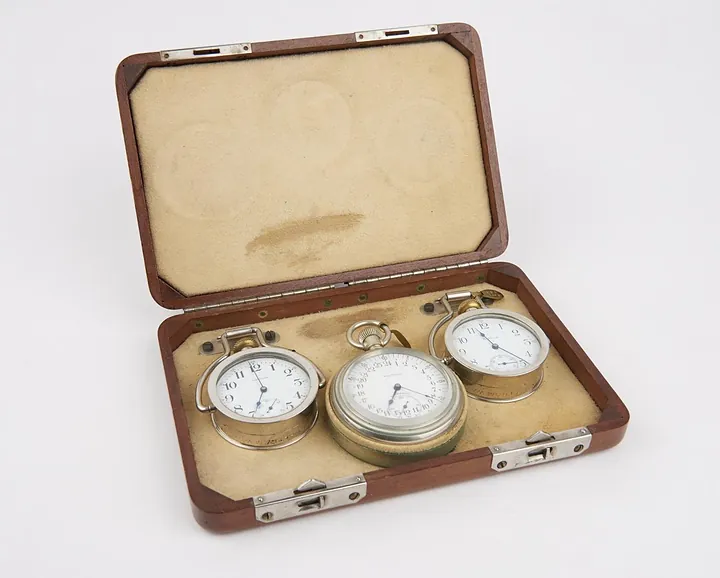
Pocket Watches · c. 1900
Pocket watch by American Waltham Watch Company, United States, c. 1900
Science Museum Group, London
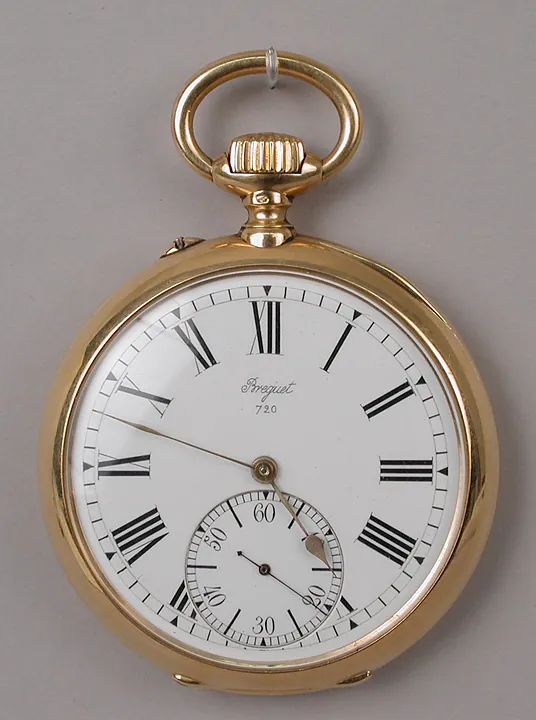
Pocket Watches · c. 1900
Pocket watch by Firm of Breguet et Fils, France, c. 1900
The Metropolitan Museum of Art, New York
Pocket Watches · c. 1900
A.Lange & Söhne pocket watch, c. 1900
Antiquorum auction archive, Geneva