
Clocks · Longcase clock
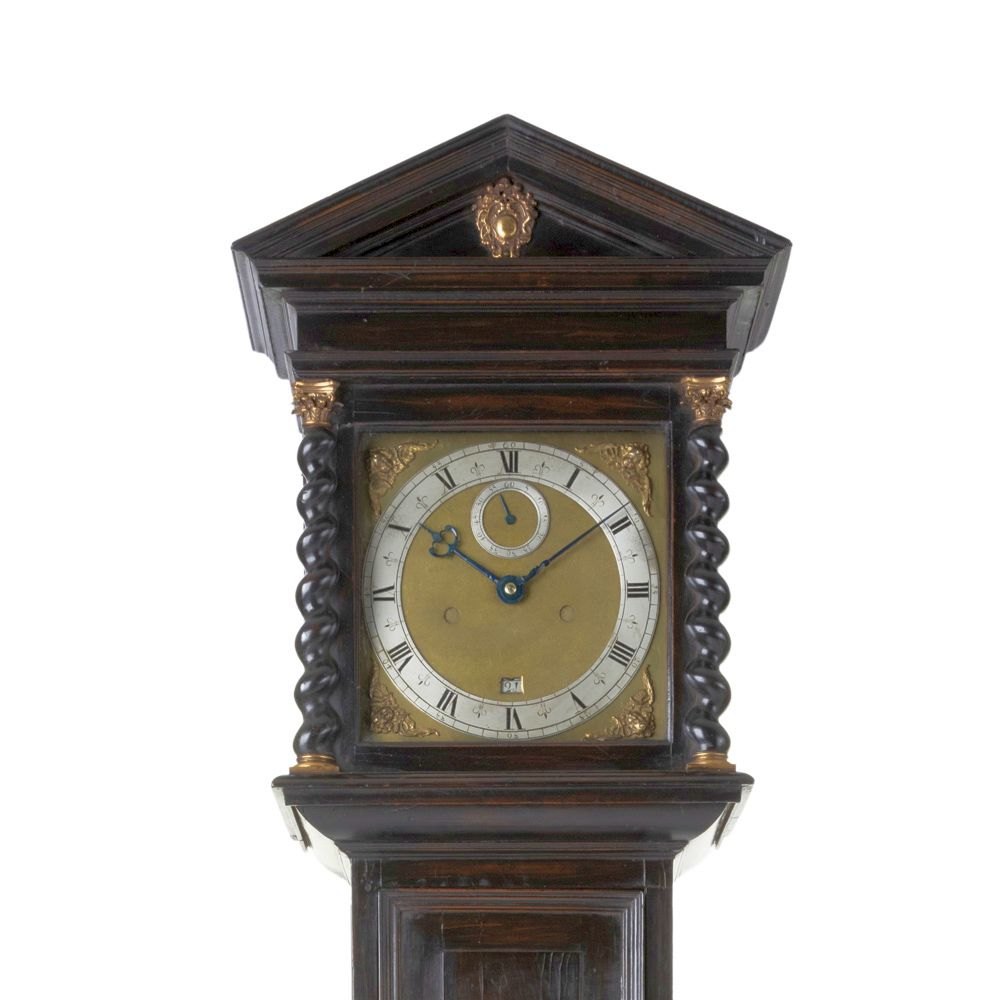
Architectural longcase clock by Henry Jones
- Maker / attribution
- Henry Jones (maker)
- Date
- c. 1675
- Historical period
- Early Modern Horology (1600 – 1750)
- Country of origin
- Unrecorded in source
- Object type
- Longcase clock
- Dimensions
- Height 196 cm
- Stock no.
- Product 3285
- Credit line
- Dealer listing, The Antique Clock Company (product 3285)
- Catalogue title (original)
- RARE & ELEGANT ARCHITECTURAL LONGCASE CLOCK – HENRY JONES (English)
View the source record (dealer listing) ↗ (opens another website in a new tab)Suggest a correction
Record summary
Catalogued by The Antique Clock Company (dealer), Dorset (stock number Product 3285), this is a longcase clock by Henry Jones, dated c. 1675. The Atlas places it in the Early Modern Horology period (1600 – 1750) of its Clocks collection. Recorded dimensions: Height 196 cm. The record is illustrated with 5 photographs.
Assembled from the source record's structured fields. Dates and attributions are given as the source states them; where a field is missing the Atlas leaves it blank rather than estimating.
Catalogue description
Dealer description — The Antique Clock Company
This rare 17th-century longcase clock, designed in an architectural style attributed to John Webb (1611-1672), exemplifies the refinement of the era. Encased in slender ebony veneer, it features a hood originally designed to rise, now converted to a sliding mechanism for convenience. Fine ebony mouldings trace the lines of the case, while a gilt-brass cartouche sits prominently on the tympanum. Gilt-brass Corinthian capitals support the plain frieze, with three-quarter tapered ebony columns at the front and quarter columns at the rear, all extending upwards to meet the entablature. The hood gracefully rests on a convex throat molding, above a full-width rectangular trunk door adorned with triple panel molding and matching side panels, giving the piece an impressive architectural presence. The base is elegantly anchored on four turned bun feet. The sublimly small 9-inch square gilt-brass dial, signed Henry Jones Londini, displays a slender silvered chapter ring with trident half-hour markers, Arabic numerals within the minute track, and finely sculpted blued-steel hands. Its matted centre includes a seconds ring and shuttered winding holes, framed by winged cherub head spandrels at each corner. Crafted with four dial feet, the dial captures a blend of functionality and beauty. The clock houses a two-train, eight-day movement held by five finned baluster pillars. The going train features a traditional pivoted anchor escapement with a pendulum crutch, while the bolt-and-shutter provides maintaining power, and the strike train is regulated by an external countwheel. The movement strikes on a large bell situated above the movement, and the entire setup is held securely onto the original seatboard. Henry Jones was an esteemed clockmaker who trained under Edward East, gaining independence from the Clockmakers’ Company in 1663. His career began during an optimistic period in London, yet he endured significant challenges as both the Great Plague of 1665 and the Great Fire of 1666 reshaped the city, leaving many clockmakers with devastated workshops. Despite these hardships, Jones persevered, creating exceptional timepieces, like this clock from around 1675. While his designs were more traditional than some contemporaries, Jones remains celebrated for his reliable craftsmanship, which reflects the resilience and mastery needed to thrive in such turbulent times. Height: 77″ or 196 cm
Provenance
Private collection, UK
Historical context
Early Modern Horology (1600 – 1750)
Huygens' pendulum and balance spring transform accuracy; English makers develop the anchor and deadbeat escapements.
Huygens's pendulum (1656–57) improved clock accuracy from about a quarter of an hour to under a minute a day. The anchor escapement (c. 1670) and the long seconds pendulum created the longcase clock; London makers such as Fromanteel, Knibb, Tompion and Quare led European clockmaking, and French makers created the Boulle pendule.
Read the period in the timelineMore clocks from this periodEarlier: Renaissance Horology
Atlas type guide
Longcase (tall-case or grandfather) clocks
The longcase clock was born from two seventeenth-century innovations: Christiaan Huygens's pendulum (1656–57) and the anchor escapement (c. 1670). A long seconds pendulum, nearly a metre long, swings with a small arc, and enclosing it together with the driving weights in a tall wooden case protected the mechanism and created a new piece of furniture. London makers such as Ahasuerus Fromanteel, Thomas Tompion and Joseph Knibb set the pattern.
By the eighteenth century longcase clocks were made throughout Britain, the Netherlands, Scandinavia (the Swedish Mora clock), France (the Comtoise from the Franche-Comté), Germany and colonial America. Eight-day movements with two weights became standard in better clocks; thirty-hour clocks with one weight and a rope or chain were cheaper alternatives.
What to look for
- Winding holes in the dial: two (eight-day, going and striking) or none (thirty-hour, pulled up by a chain).
- Brass dials with applied chapter rings (earlier) versus painted iron 'white' dials (after c. 1770 in Britain).
- Moon-phase arches, date apertures, seconds dials and maker's name on the dial.
- Case woods and style: ebonised, walnut marquetry, lacquer, oak or mahogany; regional styles from London, Lancashire, Scotland or America.
- Whether the movement and dial match the case — 'marriages' are common.
Dating clues
- Square brass dials suggest c. 1670–1720; arched brass dials c. 1715–1790.
- Painted (white) dials were made by Birmingham dial-makers from about 1772.
- Comtoise clocks with repoussé pendulums are mostly nineteenth century.
General guidance written by the Atlas editors about this kind of object. It is not a statement about this particular piece; for that, rely on the source record above and on physical examination.
Read next:Deadbeat escapementAnchor escapement
Related records
Clocks · c.1700
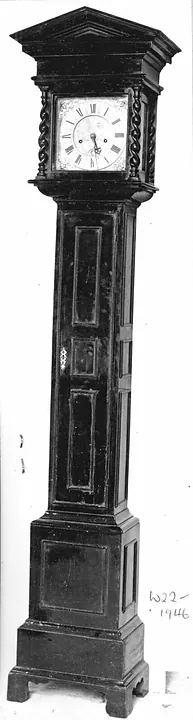
Long case clock, inscribed ‘Henricus Jones Londini Fecit’, possibly early 20th century copy, oak casework with ebonized varnish
Victoria and Albert Museum, London
Pocket Watches · c. 1665
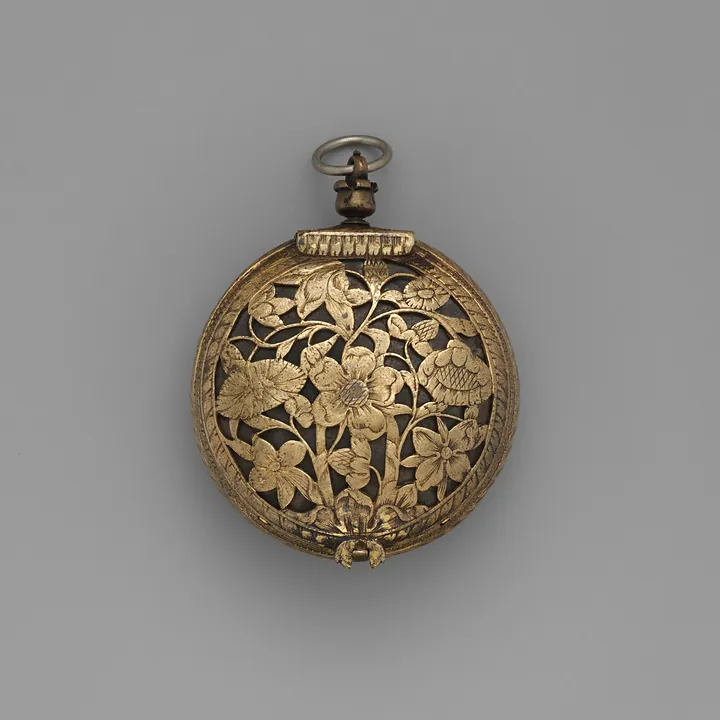
Watch by Henry Jones, England, c. 1665
The Metropolitan Museum of Art, New York
Clocks · Early 17th century
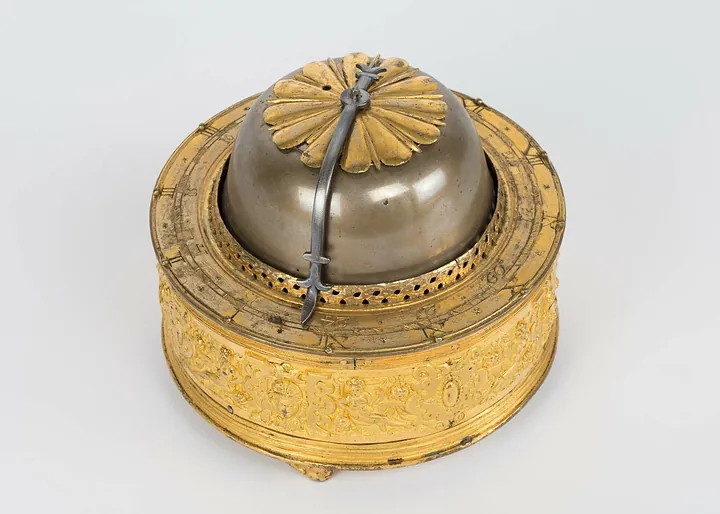
Table clock, probably Denmark, early 17th century
German Clock Museum
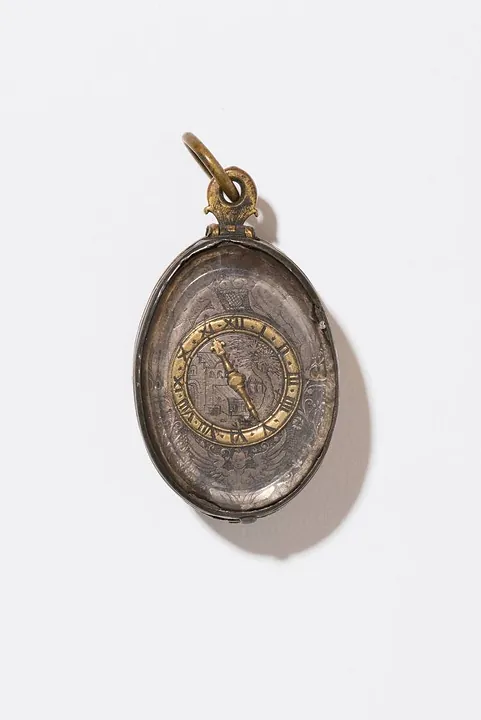
Clocks · 1590–1610
Clock, France, 1590–1610
MAK – Museum of Applied Arts
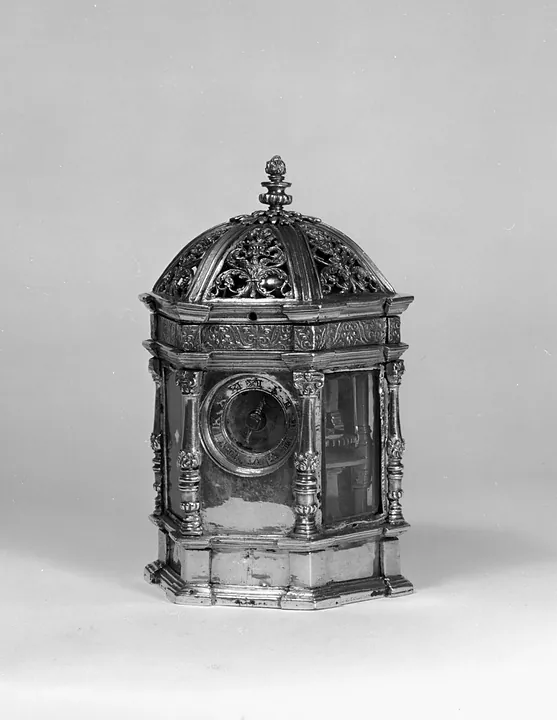
Clocks · c. 1600
Table Clock, sheet brass, engraved, pierced and gilt, Paris, ca.1600, signed 'B(?) Pichard, à Paris'
Victoria and Albert Museum, London
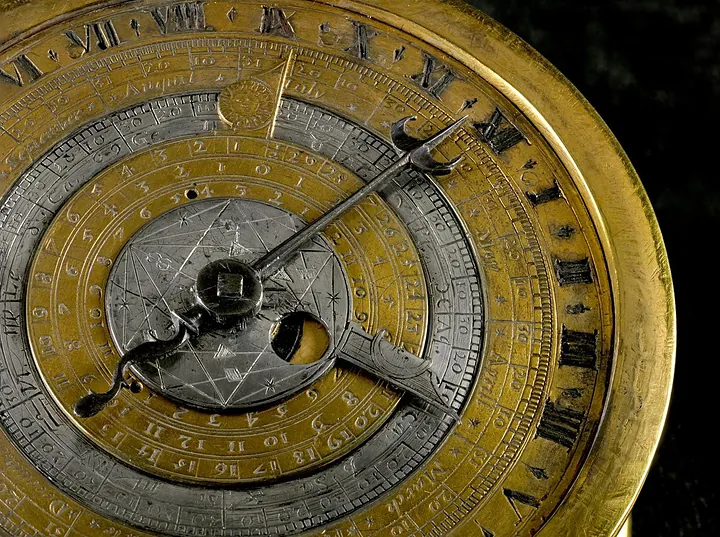
Clocks · 1598–1603
Circular table-clock with calendrical and lunar indications made by Nicholas Vallin in London between 1598 and 1603.
Science Museum Group, London
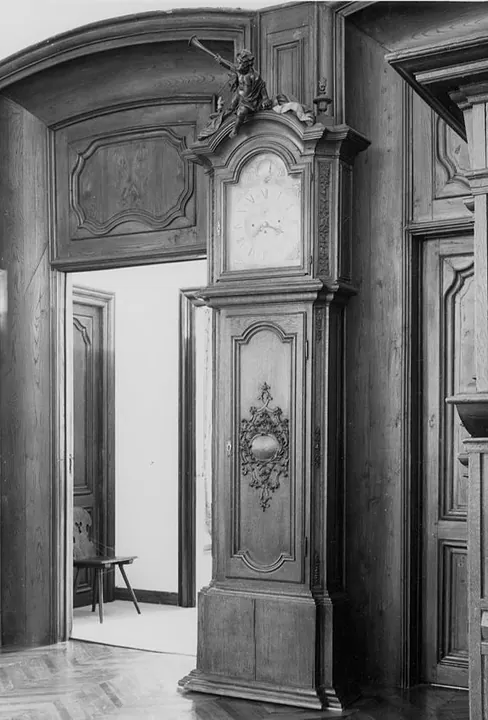
Clocks · 1600–1699
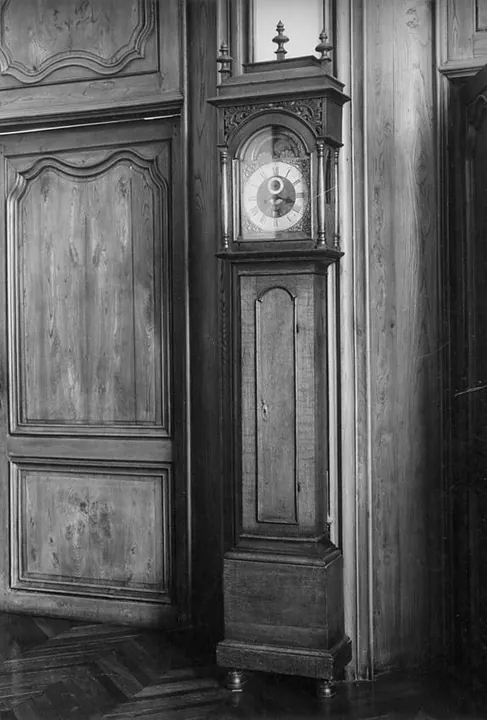
Clock by Joannes Volcker, Belgium, 1600–1699 (no. AP_10156031)
Royal Institute for Cultural Heritage
Clocks · 1600–1699
Clock by Joannes Volcker, Belgium, 1600–1699 (no. AP_10156032)
Royal Institute for Cultural Heritage