
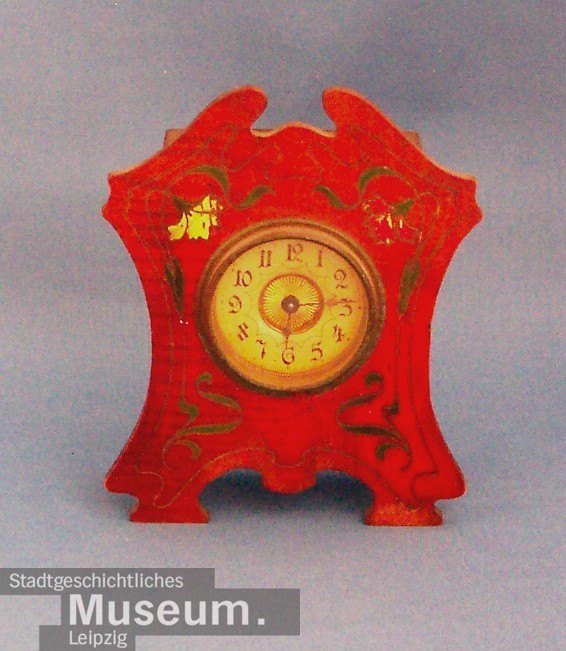
Clocks · Alarm clock
Alarm clock, 1895–1905
- Maker / attribution
- Unrecorded in source
- Date
- 1895–1905
- Historical period
- Golden Age of Mechanical Watchmaking (1900 – 1945)
- Country of origin
- Unrecorded in source
- Object type
- Alarm clock
- Materials / technique
- Holz Metall Glas Kupfer
- Dimensions
- Höhe: 22,5 cm
- Holding institution
- Museum of City History Leipzig
- Accession / object no.
- V/442/2004(Inventarnummer) | Z0004397
- Credit line
- Museum of City History Leipzig
- Catalogue title (original)
- Wecker (German)
View the source record ↗ (opens another website in a new tab)Suggest a correction
Record summary
Held and catalogued by Museum of City History Leipzig (object number V/442/2004(Inventarnummer) | Z0004397), this is an alarm clock, dated 1895–1905. The Atlas places it in the Golden Age of Mechanical Watchmaking period (1900 – 1945) of its Clocks collection. Materials and techniques recorded by the source: Holz Metall Glas Kupfer. Recorded dimensions: Höhe: 22,5 cm. The record is illustrated with 1 photograph.
Assembled from the source record's structured fields. Dates and attributions are given as the source states them; where a field is missing the Atlas leaves it blank rather than estimating.
Catalogue description
Catalogue description from Museum of City History Leipzig
Wecker in Holzgehäuse, geschwungene Form auf zwei Füßen, oberer Abschluß mutet wie ein gesprengter Giebel an. Mit 2 floralen Darstellung (Nelken mit Blattranken), diese farbig in grün, rot und gelb. Auf der Rückseite angefügt ein Holzkasten mit zwei Füßen der das Uhr- und Weckwerk birgt, verschlossen mit einer aufgenagelten Metallplatte in der Öffnungen für die Schlüssel zum Aufziehen belassen wurden. Auf der Rückseite auch die Einstellung der Uhrzeit und der Weckzeit möglich. Ziffernblatt cremefarben mit schwarzen Zahlen "1- 12", in der Mitte goldfarben reliefierte Aussparung und die Achse der zwei Zeiger. Abdeckung des Uhrwerkes mit rundem Glasaufsatz, dieser ist eine Halterung aus Kupfer eingebunden. Auf der Unterseite des Holzkastens eine Glocke und Klöppel.
Shown in the original language of the source catalogue. An editor-reviewed English translation has not yet been published; we do not publish machine translations as authoritative text.
Historical context
Golden Age of Mechanical Watchmaking (1900 – 1945)
The wristwatch displaces the pocket watch; waterproof cases, self-winding and grand complications.
Between 1900 and 1945 clocks were electrified: master-clock systems ran factories and offices, synchronous mains clocks entered homes, and the Shortt free-pendulum clock set new standards of accuracy before the first quartz clocks (1927). Art Deco design reshaped mantel and table clocks.
Read the period in the timelineMore clocks from this periodEarlier: Industrial Revolution
Atlas type guide
Alarm clocks
Alarm work is among the oldest clock functions: monastic clocks woke monks for night prayers, and Renaissance table clocks often carried an alarm disc set by a pin. A separate spring or weight is released at the set time and drives a hammer against a bell. Some early alarms also lit a candle by striking a flint — the 'tinder pistol' alarm.
The cheap, mass-produced alarm clock arrived in the second half of the nineteenth century. American firms such as Seth Thomas and Westclox (the 'Big Ben' of 1910) and German makers such as Junghans and Kienzle made millions of drum-shaped alarms with pin-pallet escapements. Electric, quartz and digital alarm clocks followed in the twentieth century.
What to look for
- A separate alarm-setting dial or disc and an extra winding key.
- Twin bells on top (common after c. 1920) or a bell enclosed in the base.
- Pin-pallet escapements in inexpensive factory alarms.
- Trademarks and patent dates on dial or back.
Dating clues
- Renaissance alarm table clocks: sixteenth to seventeenth centuries.
- Drum alarm clocks: from the 1870s.
- Luminous dials with radium paint: c. 1910–1960.
General guidance written by the Atlas editors about this kind of object. It is not a statement about this particular piece; for that, rely on the source record above and on physical examination.
Related records
Clocks · 1890–1930
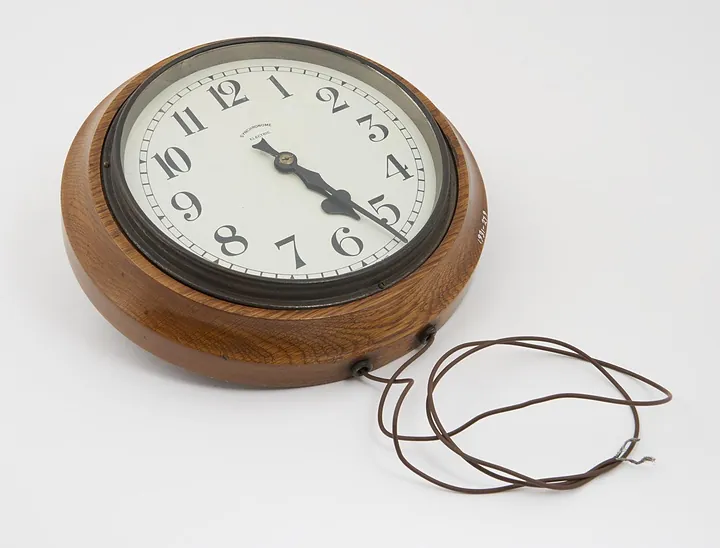
Clock with 8-inch impulse dial, by the Synchronome Company Limited, England, 1890–1930.
Science Museum Group, London
Clocks · c.1900
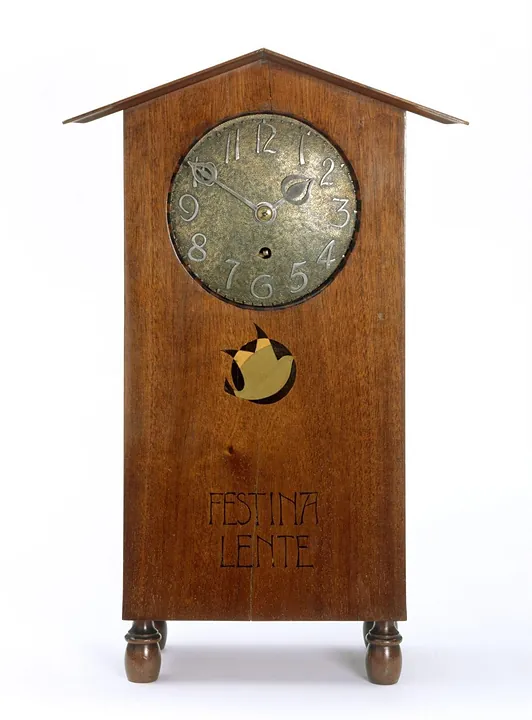
Clock by Mackay Hugh Baillie Scott, Bedfordshire, c.1900
Victoria and Albert Museum, London
Clocks · c. 1900
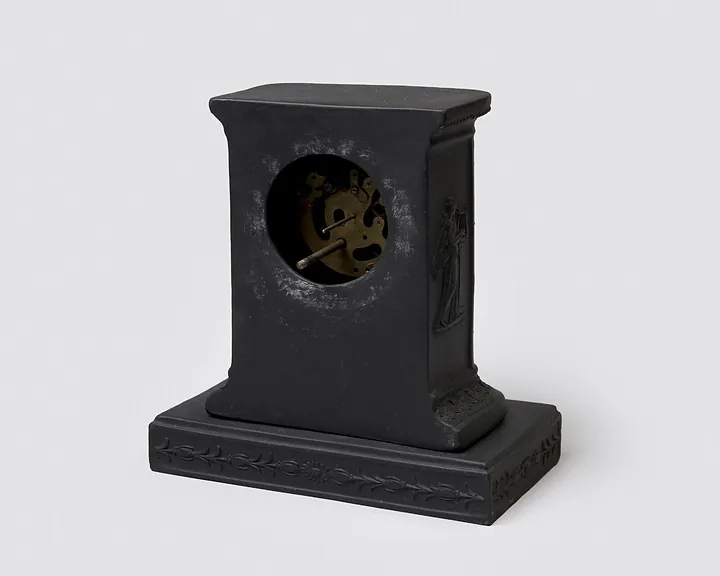
Clock, black basalt, brass, Josiah Wedgwood and Sons, Etruria, c. 1900
Victoria and Albert Museum, London
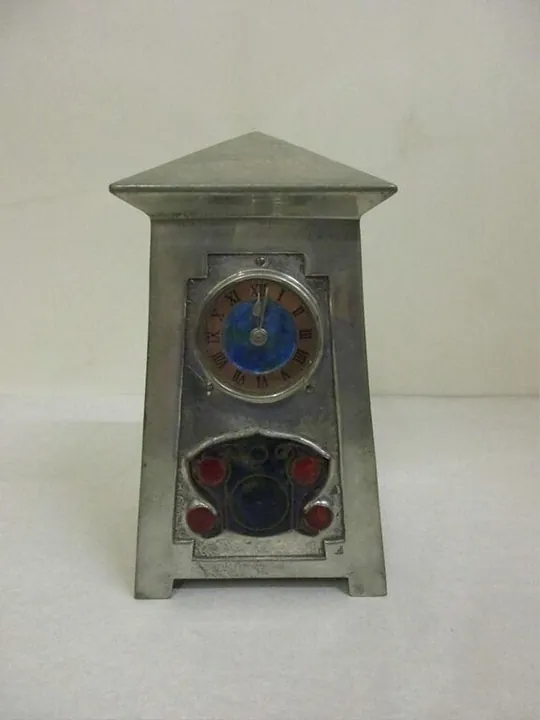
Clocks · c.1903-1904
Clock, pewter, made for Liberty& Co., England. 1903-4.
Victoria and Albert Museum, London
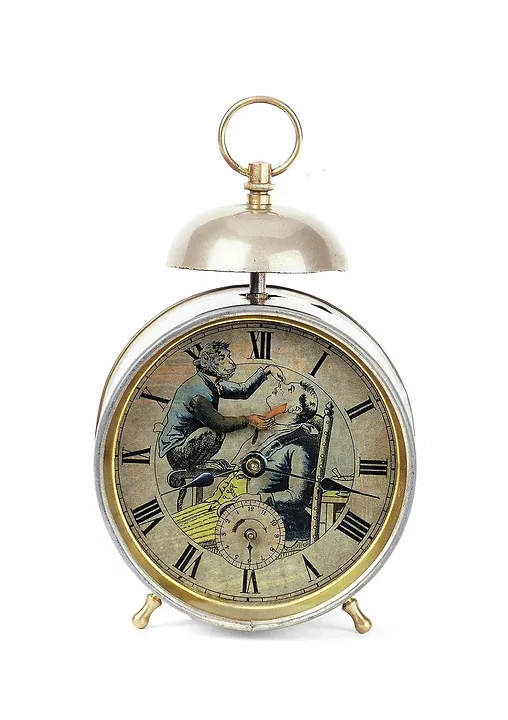
Clocks · c. 1900
Alarm clock by Union Clock Company, Germany, c. 1900
German Clock Museum
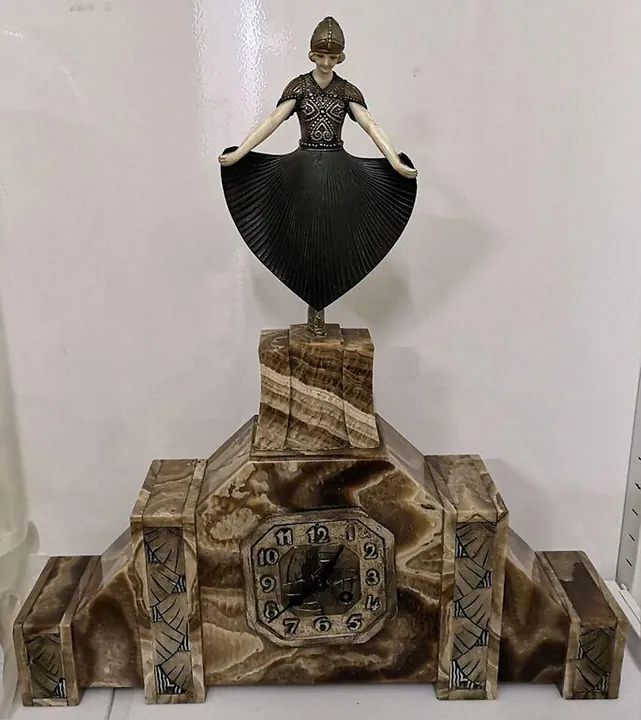
Clocks · 20th century
Base Metal, 20th c. Bronze, marble and ivory clock by Chiparus
Victoria and Albert Museum, London
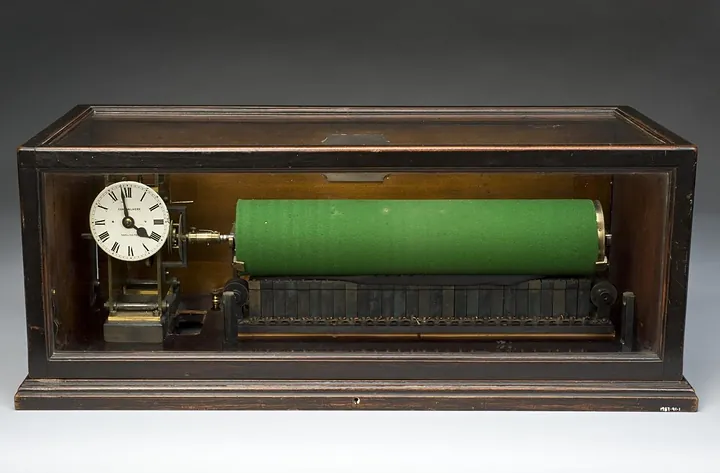
Clocks · 1900–1939
Clock by Cox-Walkers of Darlington, England, 1900–1939
Science Museum Group, London
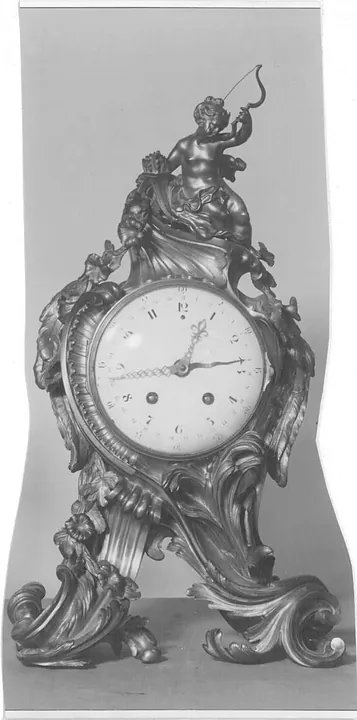
Clocks · 1900–1999
Clock by Französisch (Schule), 1900–1999
Fine Arts Museum Vienna