
Wristwatches · Wristwatch
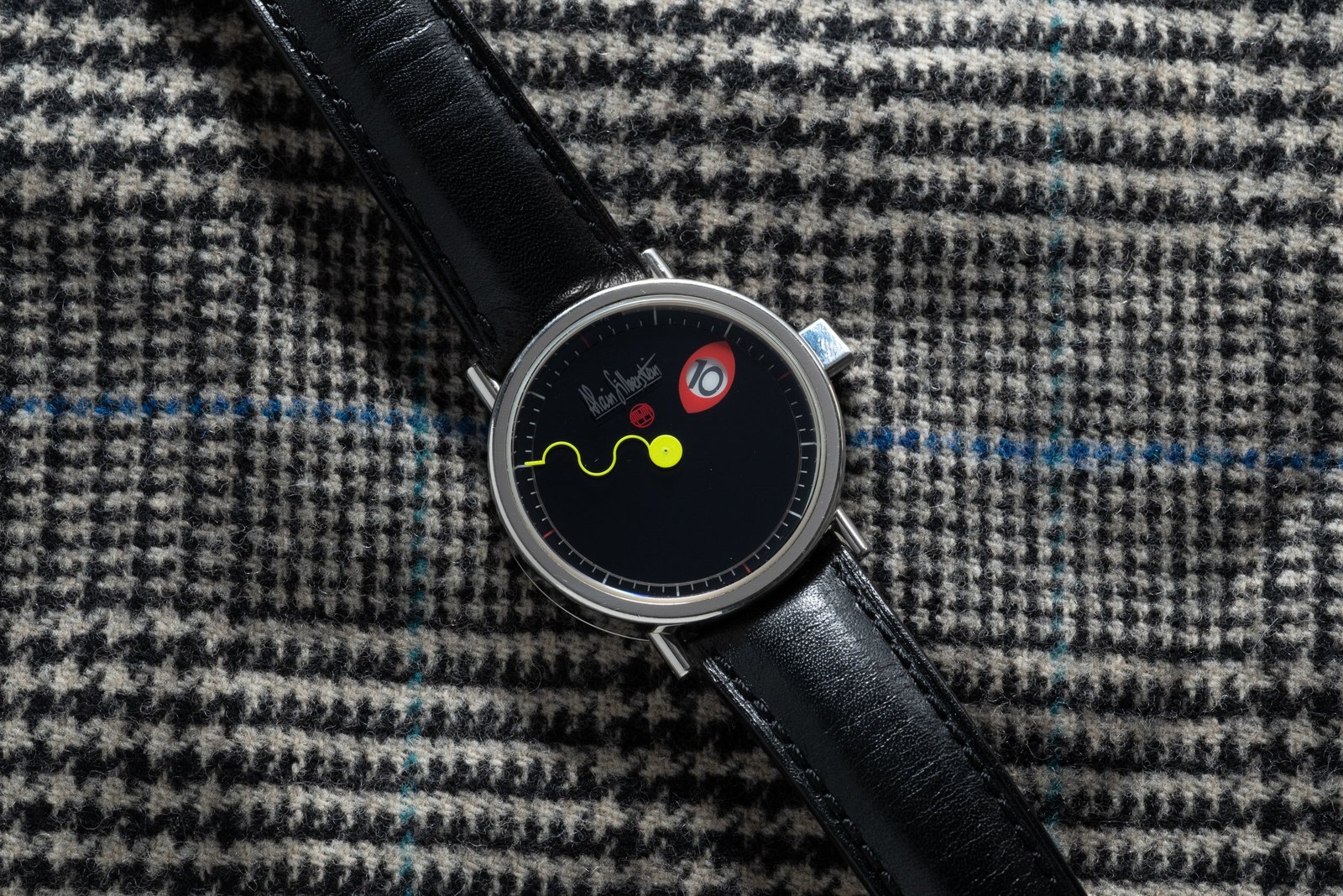
Alain Silberstein Cyclope, c. 1993
- Maker / attribution
- Alain Silberstein (maker)
- Date
- c. 1993
- Historical period
- Mechanical Renaissance (1990 – 2010)
- Country of origin
- Unrecorded in source
- Object type
- Wristwatch
- Dimensions
- Case 38 mm
- Stock no.
- 40991659
- Credit line
- Dealer listing, Analog/Shift (40991659)
- Catalogue title (original)
- Alain Silberstein Cyclope (English)
View the source record (dealer listing) ↗ (opens another website in a new tab)Suggest a correction
Record summary
Catalogued by Analog/Shift (dealer), New York (stock number 40991659), this is a wristwatch by Alain Silberstein, dated c. 1993. The Atlas places it in the Mechanical Renaissance period (1990 – 2010) of its Wristwatches collection. Recorded dimensions: Case 38 mm. The record is illustrated with 6 photographs.
Assembled from the source record's structured fields. Dates and attributions are given as the source states them; where a field is missing the Atlas leaves it blank rather than estimating.
Catalogue description
Dealer description — Analog/Shift
In the late 1980s, the renaissance of mechanical watchmaking was already underway — but it was a very traditional renaissance, generally speaking. Brands such as Blancpain, Breguet, and Vacheron Constantin were playing it safe by revamping classic designs — think smaller case sizes, coin-edge bezels, Breguet hands and indices, etc. But one Frenchman - ex-interior designer Alain Silberstein - was thinking very, very differently about things... Silberstein melded his love of the Bauhaus, the Memphis design movement, and artists such as Picasso, Kandiksy, and Miro in a colorful fresh take on mechanical watchmaking. His idiosyncratic and highly original designs stood out — way out — in a sea of same-same, traditional-looking wares. It could be said he was very much ahead of the times - as his signature style is just beginning to get wide-spread attention from collectors today, 30 some-odd years later! This particular model, a Cyclope, dates from roughly 1993. Housed in a round 38mm stainless steel case with stubby lugs, a sapphire crystal, and a wildly stylized, triangular winding crown with white enamel inlay, it features a matte black dial disc with red ‘cyclopse’ date indicator and a rotating jump-hour disc beneath; an outer black chapter ring; and a florescent yellow ‘squiggle’ minute hand. With its mix of sedate background elements and bright pops of color, it speaks volumes about the imagination of its namesake designer. Powered by a modified ETA 2824 automatic movement and paired to a signed, black calf leather strap with a stylized stainless steel pin buckle, this wonderfully unique timepiece comes complete with all its factory goodies. Irreverent and fun, it’s a watch that simply begs for wrist time!
Historical context
Mechanical Renaissance (1990 – 2010)
Mechanical watches return as cultural objects; independent watchmaking flourishes.
Mechanical watches returned as cultural and luxury objects. Complications, tourbillons and new materials proliferated; independent watchmakers such as George Daniels, F.P. Journe and Philippe Dufour revived artisanal watchmaking; collecting vintage watches became a major field.
Read the period in the timelineMore wristwatches from this periodEarlier: Quartz Revolution
Atlas type guide
Wristwatches
Bracelet watches were worn by women from the early nineteenth century — Breguet made one for Caroline Murat, Queen of Naples, in 1810–12 — but the wristwatch only became a man's instrument with military use and aviation in the early twentieth century. Between the World Wars it overtook the pocket watch; the 1920s and 1930s brought rectangular Art Deco cases, water-resistant cases and the first automatic winding systems.
After 1945 the wristwatch became a carrier of identity — dress watches, sports and dive watches, chronographs, calendars — produced by Swiss, American, Japanese, German, Soviet and Chinese industries. The quartz revolution after 1969 and the mechanical renaissance since the 1990s, including the rise of independent watchmakers, complete the story.
What to look for
- The reference number (between the lugs or inside the case back) and serial number, the starting point for dating.
- The calibre: its maker and number are often stamped under the dial or on the bridge.
- Originality of dial, hands and crown — refinished ('redial') dials are common.
- Case material marks: 18K/750, 14K/585, stainless steel, gold-filled, plated.
Dating clues
- Wire-lug cases: before c. 1925.
- Water-resistant screw-down cases: from 1926.
- Quartz movements: from 1969; sapphire crystals widespread after c. 1980.
General guidance written by the Atlas editors about this kind of object. It is not a statement about this particular piece; for that, rely on the source record above and on physical examination.
Related records
Wristwatches · c. 1990s
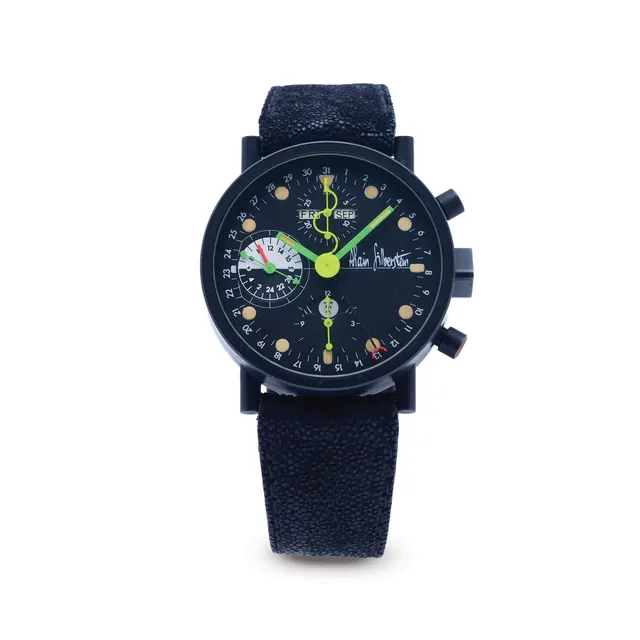
Alain Silberstein wristwatch, Krono 1 Triple Calendar, circa 1990s
Antiquorum auction archive, Geneva
Wristwatches · c. late 1990s
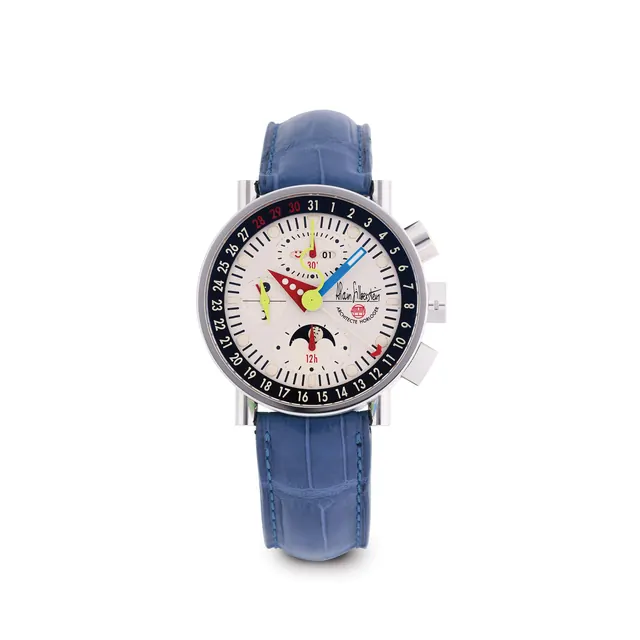
Alain Silberstein wristwatch, Krono Bauhaus 2 Limited Edition of 999 Pieces, circa late 1990s
Antiquorum auction archive, Geneva
Wristwatches · c. 1990s
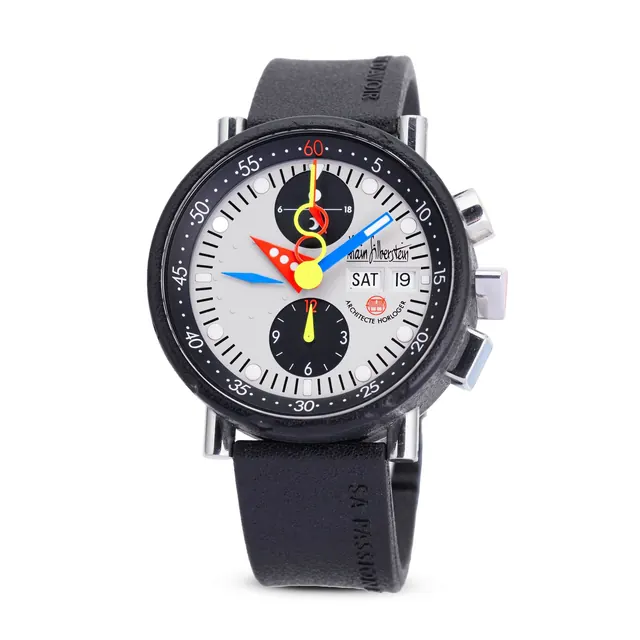
Alain Silberstein wristwatch, Krono Bauhaus made in A Limited Edition of 999 Pieces, circa 1990s
Antiquorum auction archive, Geneva
Wristwatches · 1990s
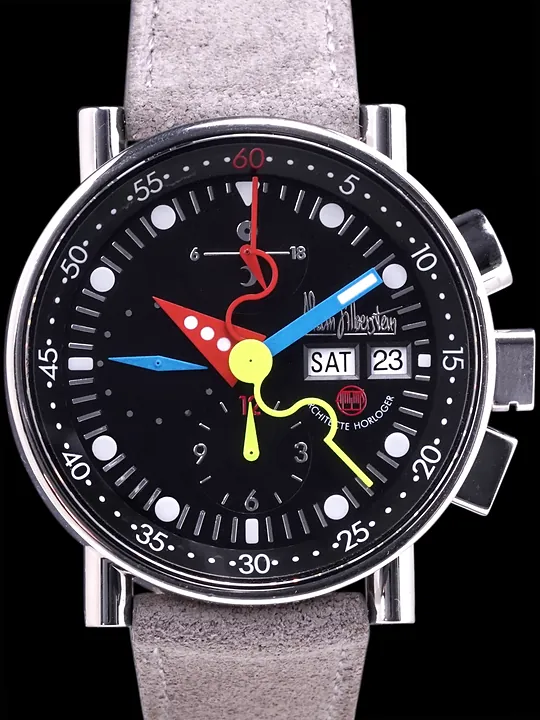
Alain Silberstein Krono Bauhaus "Cal. 5100", 1990s
Craft & Tailored (dealer), Los Angeles
Wristwatches · 1999
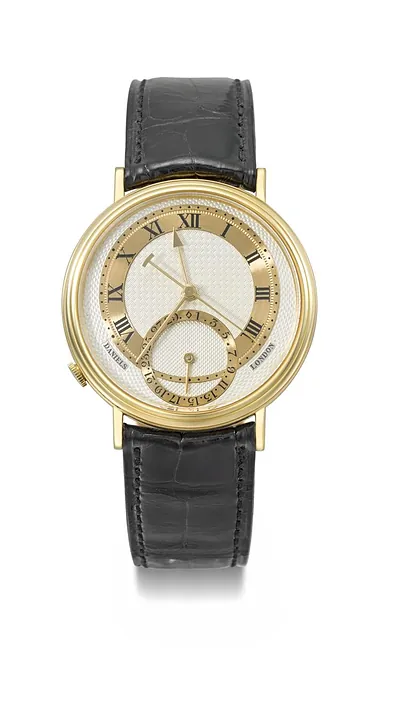
'Millennium' co-axial wristwatch by George Daniels and Omega, England, 1999
Science Museum Group, London

Wristwatches · 2008
Wristwatch by Breitling?, 2008
Museum Rotterdam
Wristwatches · 2008
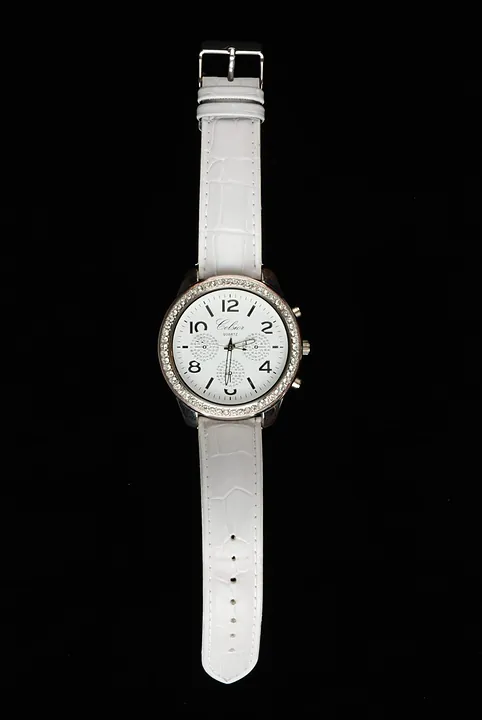
Wristwatch by Celsior Quartz, 2008
Museum Rotterdam
Wristwatches · 2008
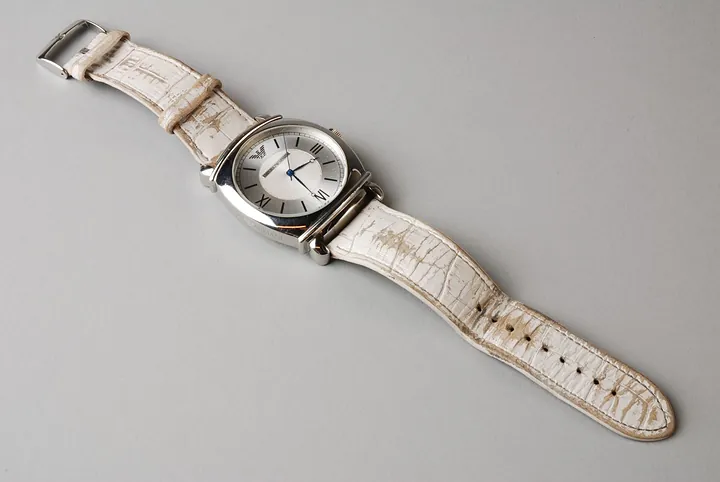
Wristwatch possibly by Emporio Armani, 2008
Museum Rotterdam