
Wristwatches · Wristwatch
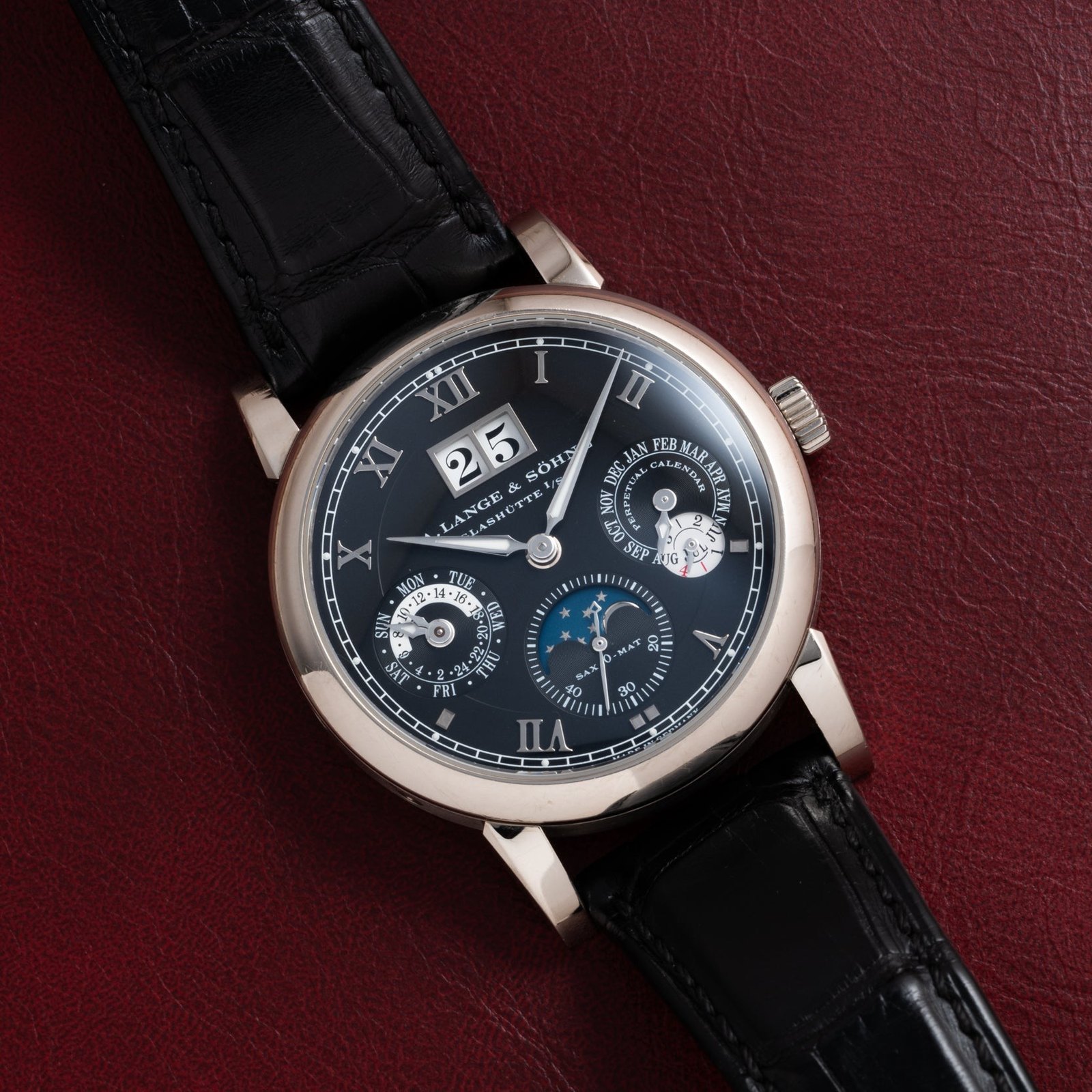
A. Lange & Söhne Langematik Perpetual Calendar, c. 2015
- Maker / attribution
- A. Lange & Söhne (maker)
- Date
- c. 2015
- Historical period
- Contemporary Horology (2010 – Present)
- Country of origin
- Germany
- Object type
- Wristwatch
- Dimensions
- Case 38.5 mm
- Stock no.
- 40991590
- Credit line
- Dealer listing, Analog/Shift (40991590)
- Catalogue title (original)
- A. Lange & Söhne Langematik Perpetual Calendar (English)
View the source record (dealer listing) ↗ (opens another website in a new tab)Suggest a correction
Record summary
Catalogued by Analog/Shift (dealer), New York (stock number 40991590), this is a wristwatch by A. Lange & Söhne, made in Germany, dated c. 2015. The Atlas places it in the Contemporary Horology period (2010 – Present) of its Wristwatches collection. Recorded dimensions: Case 38.5 mm. The record is illustrated with 6 photographs.
Assembled from the source record's structured fields. Dates and attributions are given as the source states them; where a field is missing the Atlas leaves it blank rather than estimating.
Catalogue description
Dealer description — Analog/Shift
Born in 1815, Ferdinand Adolph Lange received a rigorous education at the hands of nurses and governesses. At 15 he became a student at the Saxon Technical school in Dresden. Next, he pursued training under Johann Christian Friedrich Gutkaes, Sr, royal clockmaker to the King of Saxony. In 1846 he and his brother-in-law formed A. Lange & Söhne , today one of the best watchmaking marques in the world. Lange’s use of precision tools and instruments allowed the manufacture to attain a level of precision that was heretofore unknown. After his death in 1878, his sons Richard and Emil would carry on his legacy. However, the Soviet occupation of East Germany at the end of the Second World War saw an end to A. Lange & Söhne. Following Reunification in the 1990s, the manufacture made its triumphant return. At the helm of the company was another Lange, Ferdinand’s great-grandson Walter. The Lange 1815 Chronograph, Grand Lange 1 and the Datograph Double Split are among the gems in the brand’s catalog. But like many other established brands, there are certain, overlooked diamonds in the rough. Maybe it’s because it was simply ahead of its time, or because its strong character was a diversion from the typical Lange aesthetic, but the A. Lange & Söhne Langematik Perpetual Calendar took some time to sink in. Nowadays, it's a certified classic. Introduced in 2001, the the Langematik Perpetual was first made available in platinum and yellow gold cases. This particular Langematik Perpetual, however, dates to circa 2015 and features a 38.5mm white gold case with a sapphire crystal, a signed crown, a polished bezel, and three recessed corrector pushers for individual function adjustments. The satin black dial features an array of familiar Saxonia design cues, including a set of applied ‘Roman’ indices, a ‘digital’ date display at 12 o’clock, a moonphase aperture and running seconds display at 6 o’clock, and a pair of perpetual calendar subsidiary registers with a matching, luminous ‘lance’ handset. Ftted to a signed black alligator strap with a signed, white gold deployant clasp, it packs Lange's ingenious, automatic Calibre L922.1 movement within — which is thankfully visible through a sapphire display caseback. If you’re looking for a horological work of art, a technical marvel, and an ultra-functional machine, then you’ve come to the right place!
Historical context
Contemporary Horology (2010 – Present)
Silicon components, connected watches, optical-lattice research clocks and a thriving independent scene.
Smartwatches became the world's best-selling watches, while mechanical watchmaking focuses on craft, innovation (silicon components, new escapements) and independent makers.
Read the period in the timelineMore wristwatches from this periodEarlier: Mechanical Renaissance
Atlas type guide
Calendar, moon-phase and perpetual calendar watches
Calendar complications range from a simple date to the perpetual calendar, which automatically allows for months of different lengths and leap years until 2100. Pocket watches with perpetual calendars were made in the eighteenth and nineteenth centuries; Patek Philippe made the first perpetual calendar wristwatch in 1925, and series production followed in 1941. The annual calendar (Patek Philippe, 1996) needs correction only once a year.
Moon-phase displays use a disc with two moons and 59 teeth advanced daily, approximating the 29.5-day lunation; more precise trains reduce the error to one day in over a century.
What to look for
- Apertures or subsidiary dials for day, date, month and leap year.
- Moon disc under a 'bosom' shaped aperture.
- Recessed correctors on the case band for setting the calendar.
Dating clues
- Triple-date wristwatches: popular c. 1940–1955.
- Perpetual calendar wristwatches: from 1925 (unique) and 1941 (series).
General guidance written by the Atlas editors about this kind of object. It is not a statement about this particular piece; for that, rely on the source record above and on physical examination.
Related records
Movements & Components · 1900
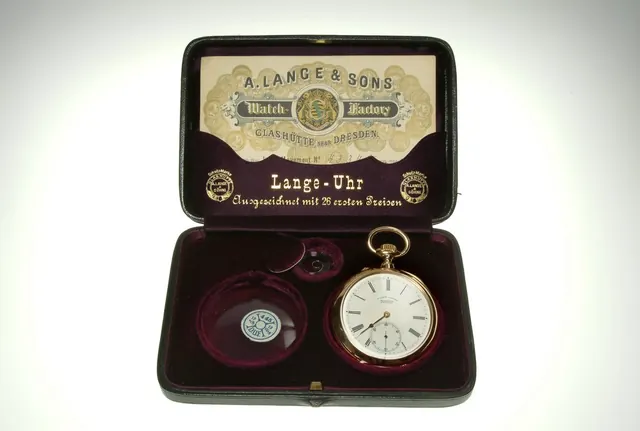
Pocket watch by A. Lange & Söhne, Germany, 1900
Kulturstiftung Sachsen-Anhalt - Museum Schloss Neuenburg
Pocket Watches · c. 1941
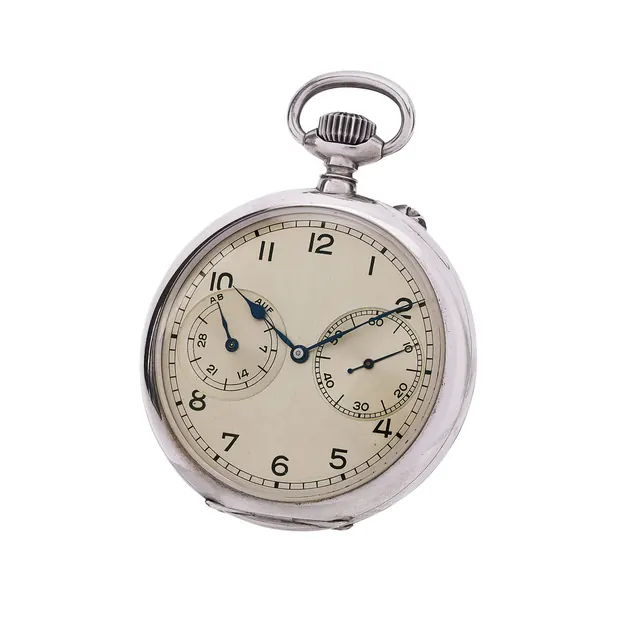
A. Lange & Söhne pocket watch, Observation Pocket Watch, circa 1941
Antiquorum auction archive, Geneva
Pocket Watches · c. 1946
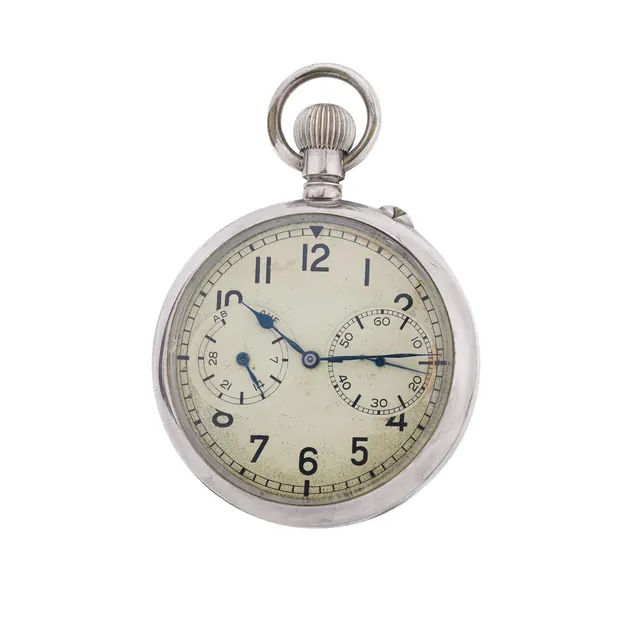
A. Lange & Söhne pocket watch, Military Observation Pocket Watch, circa 1946
Antiquorum auction archive, Geneva
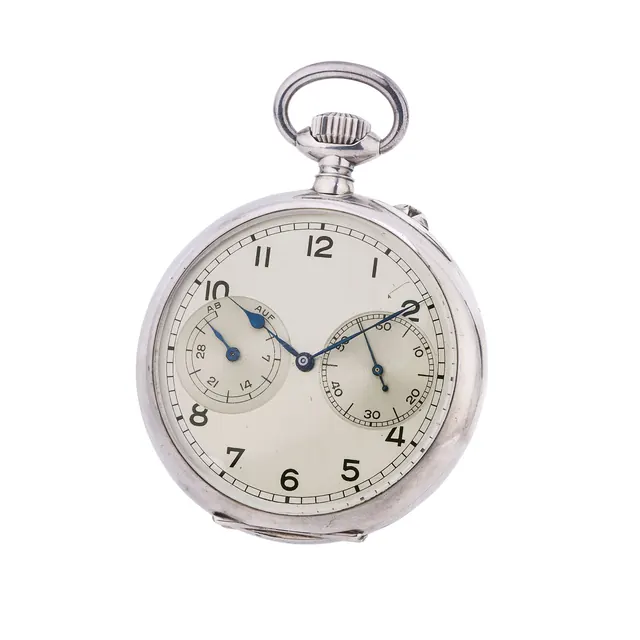
Pocket Watches · c. 1942
A. Lange & Söhne pocket watch, Military Observation Pocket Watch, circa 1942
Antiquorum auction archive, Geneva
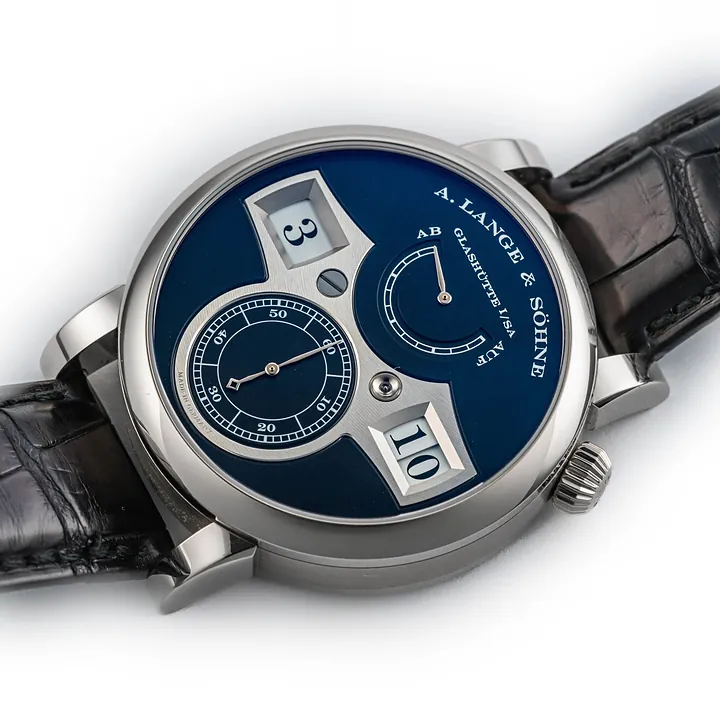
Wristwatches · c. 2018
A.Lange & Söhne Zeitwerk, ref. 140.029, c. 2018
Antiquorum auction archive, Geneva
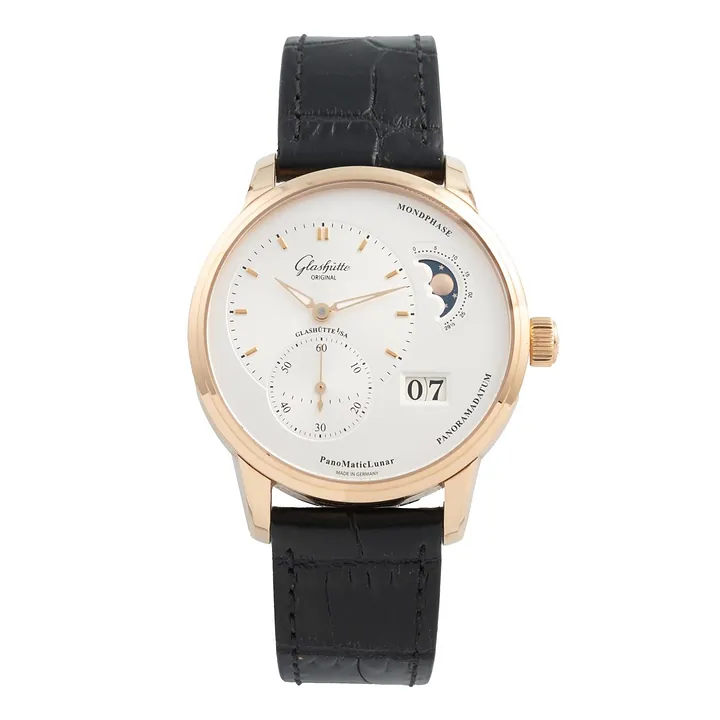
Wristwatches · originally sold in April 2022 (per the lot record)
Glashã¼tte Original Panomaticlunar, ref. 1-90-02-45-35-04, originally sold in April 2022
Antiquorum auction archive, Geneva
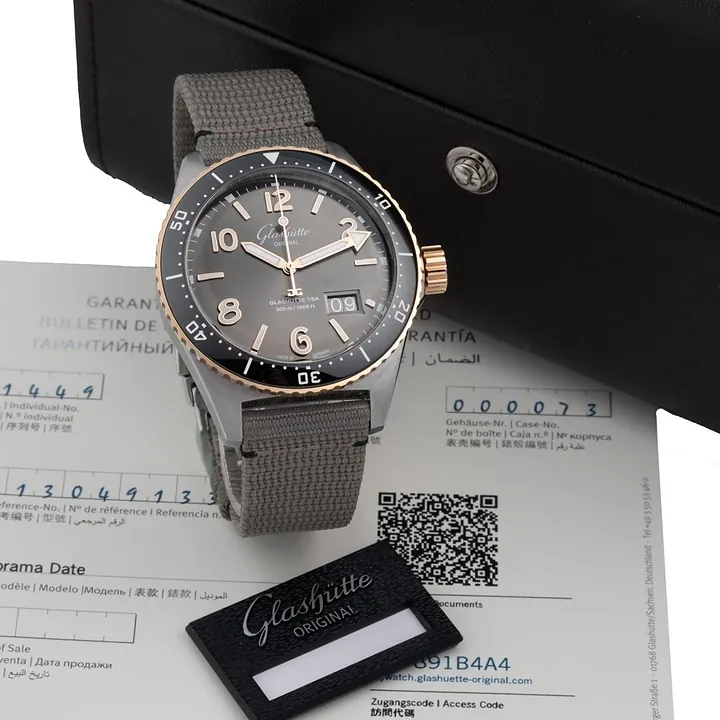
Wristwatches · c. 2022
Glashütte Original Seaq Panorama Date, ref. 1-36-13-04-91-33, c. 2022
Antiquorum auction archive, Geneva
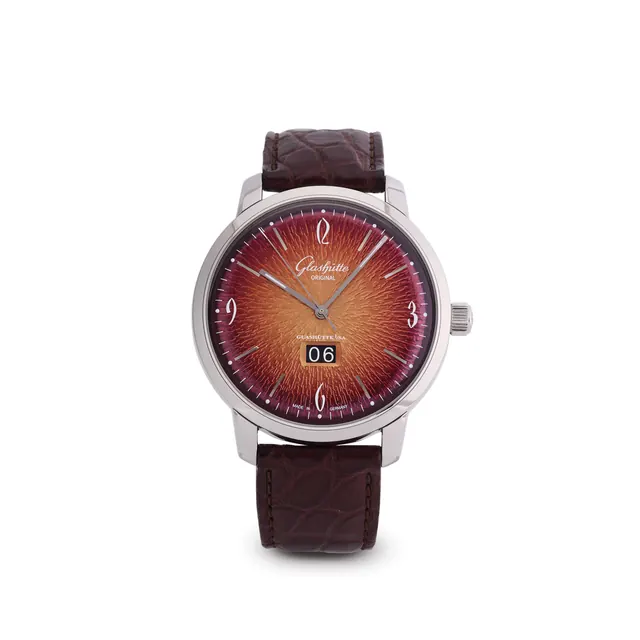
Wristwatches · originally sold in December 2021 (per the lot record)
Glashütte Original wristwatch, ref. W23947090204, Sixities Panorama Date Annual Edition, originally sold in December 2021 (per the lot record)
Antiquorum auction archive, Geneva