
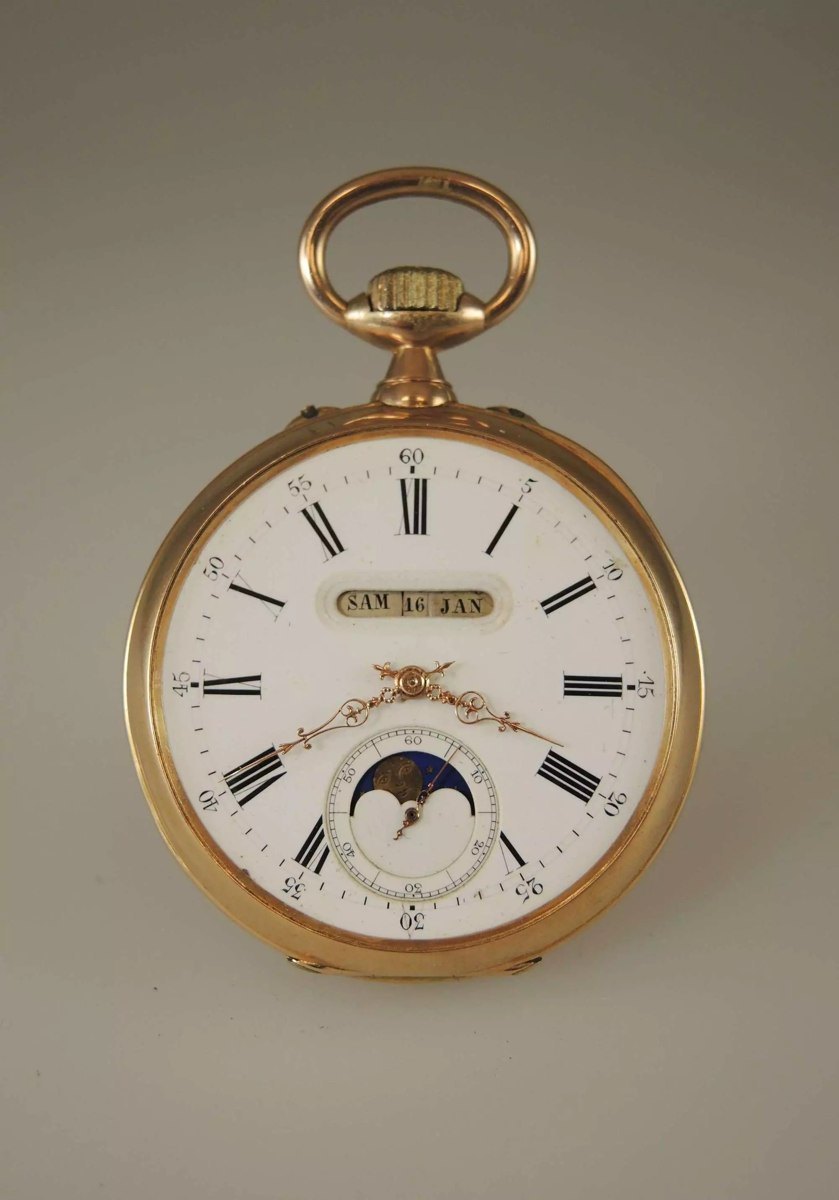
Pocket Watches · Triple calendar moon-phase pocket watch
18K Gold Moon-Phase Calendar Pocket Watch
- Maker / attribution
- Unrecorded in source
- Date
- c. 1890
- Historical period
- Industrial Revolution (1850 – 1900)
- Country of origin
- Switzerland
- Object type
- Triple calendar moon-phase pocket watch
- Materials / technique
- 18K pink gold
- Dimensions
- 50 mm wide x 17 mm deep
- Holding institution
- Atlam Watches
- Accession / object no.
- 5.14 (AB-58135)
- Credit line
- Atlam Watches
- Catalogue title (original)
- 18K gold moon-phase calendar pocket watch c1890 in Antique Pocket Watches (English)
View the source record ↗ (opens another website in a new tab)Suggest a correction
Record summary
Held and catalogued by Atlam Watches (object number 5.14 (AB-58135)), this is a triple calendar moon-phase pocket watch, made in Switzerland, dated c. 1890. The Atlas places it in the Industrial Revolution period (1850 – 1900) of its Pocket Watches collection. Materials and techniques recorded by the source: 18K pink gold. Recorded dimensions: 50 mm wide x 17 mm deep. The record is illustrated with 1 photograph.
Assembled from the source record's structured fields. Dates and attributions are given as the source states them; where a field is missing the Atlas leaves it blank rather than estimating.
Catalogue description
Original object description
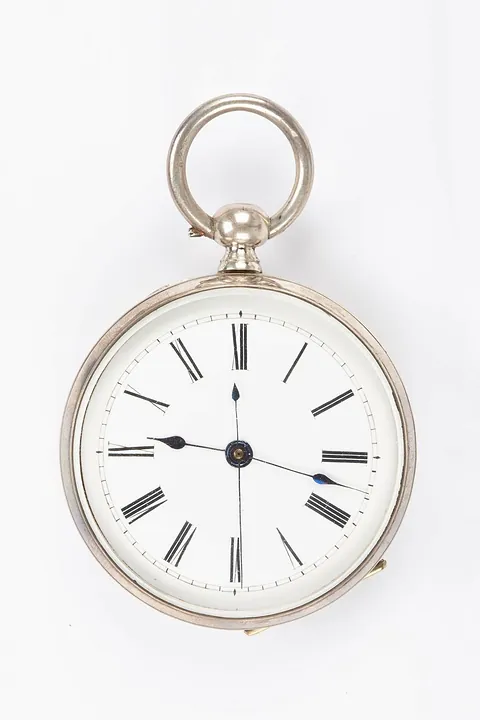
Originating from Switzerland circa 1890, this open-face pocket watch is cased in 18K pink gold, measuring 50 mm in diameter and 17 mm thick. The exterior structure includes an oval suspension bow, a top-mounted winding crown, a hinged bezel, an outer rear cover contoured around the winding stem, and an internal hinged cuvette, all fronted by a mineral glass crystal. An elongated central window across the white enamel dial reveals French-language triple calendar discs, surrounded by black Roman numerals, an outer five-minute interval track, and pierced gilt filigree hands. The day and date indications cycle every 24 hours automatically or adjust via case-side pushpins; manual pin adjustment is required for the month disc as well as the 6 o'clock gold and blued steel lunar phase complication. Power is supplied by an unsigned 15-jewel gilt bridge movement using a lever escapement, stem winding, pin setting, a brushed steel lever bridge cap, and wolf-tooth winding wheels secured by trios of screws. The watch and its documentation lack maker signatures.
Historical context
Industrial Revolution (1850 – 1900)
American interchangeable-parts manufacture; railroad time standards; Swiss and German factory systems.
Machine production with interchangeable parts, pioneered by Waltham (1850s) and adopted by Elgin, Longines, Omega and others, made reliable lever watches widely affordable. Keyless winding became standard, railroad watch standards were introduced (1890s), and Swiss and American industries competed globally.
Read the period in the timelineMore pocket watches from this periodEarlier: Precision & Scientific Horology
Atlas type guide
Calendar, moon-phase and perpetual calendar watches
Calendar complications range from a simple date to the perpetual calendar, which automatically allows for months of different lengths and leap years until 2100. Pocket watches with perpetual calendars were made in the eighteenth and nineteenth centuries; Patek Philippe made the first perpetual calendar wristwatch in 1925, and series production followed in 1941. The annual calendar (Patek Philippe, 1996) needs correction only once a year.
Moon-phase displays use a disc with two moons and 59 teeth advanced daily, approximating the 29.5-day lunation; more precise trains reduce the error to one day in over a century.
What to look for
- Apertures or subsidiary dials for day, date, month and leap year.
- Moon disc under a 'bosom' shaped aperture.
- Recessed correctors on the case band for setting the calendar.
Dating clues
- Triple-date wristwatches: popular c. 1940–1955.
- Perpetual calendar wristwatches: from 1925 (unique) and 1941 (series).
General guidance written by the Atlas editors about this kind of object. It is not a statement about this particular piece; for that, rely on the source record above and on physical examination.
Related records
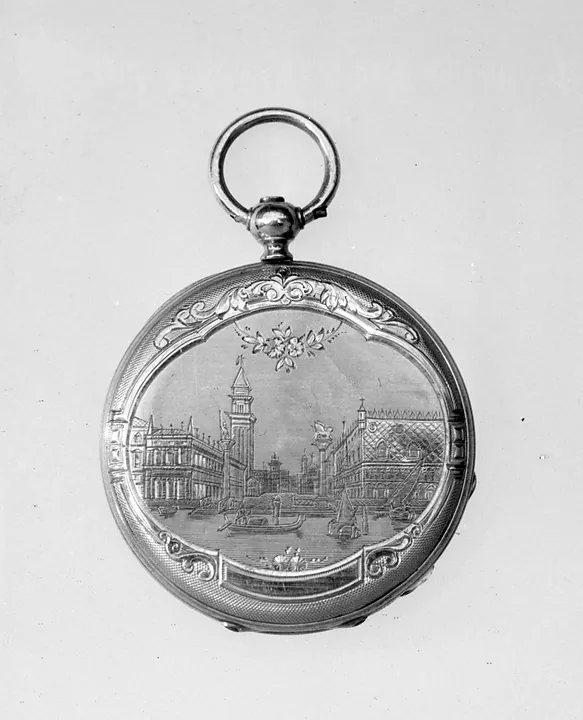
Pocket Watches · c. 1850
Watch by Eugène Bornand, Switzerland, c. 1850
The Metropolitan Museum of Art, New York
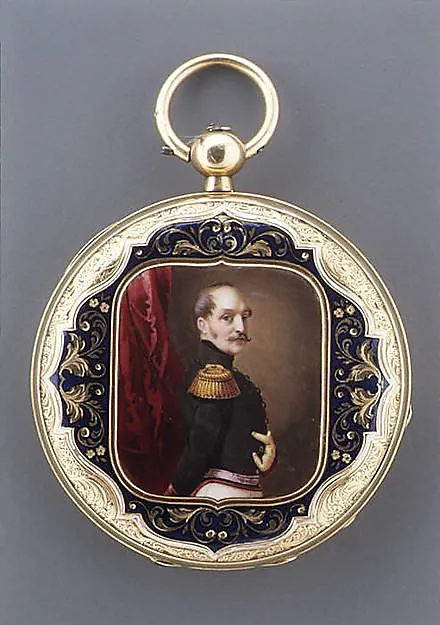
Pocket Watches · probably c. 1850–55
Watch by Firm of Perret & Cie, Switzerland, probably c. 1850–55
The Metropolitan Museum of Art, New York
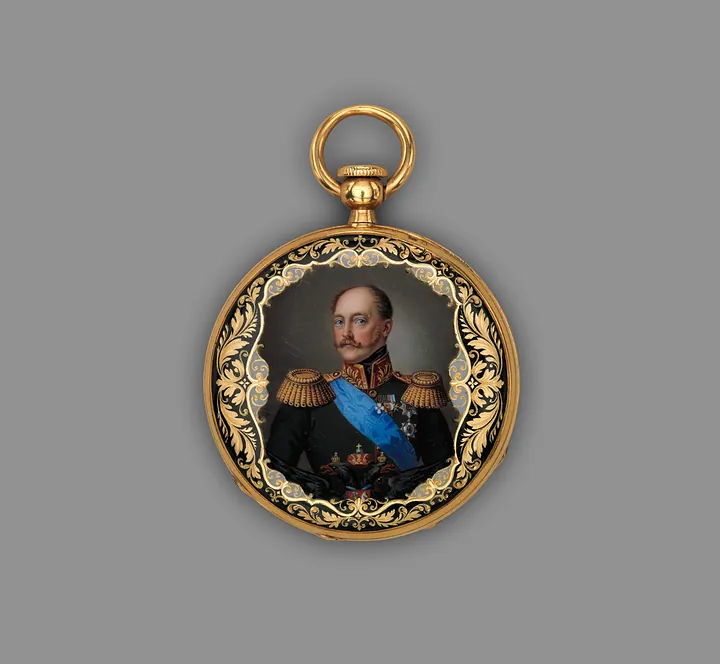
Pocket Watches · c. 1850–55
Watch by François Czapek, c. 1850–55
The Metropolitan Museum of Art, New York
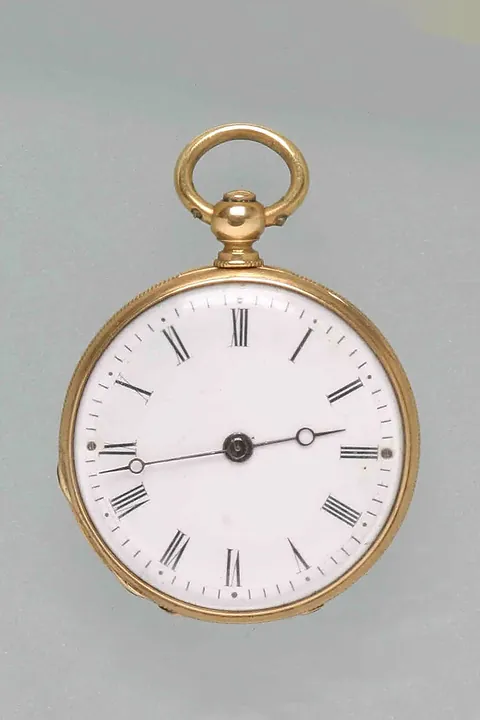
Pocket Watches · c. 1850
Pocket watch by D Bachelard et Fils, Switzerland, c. 1850
German Clock Museum
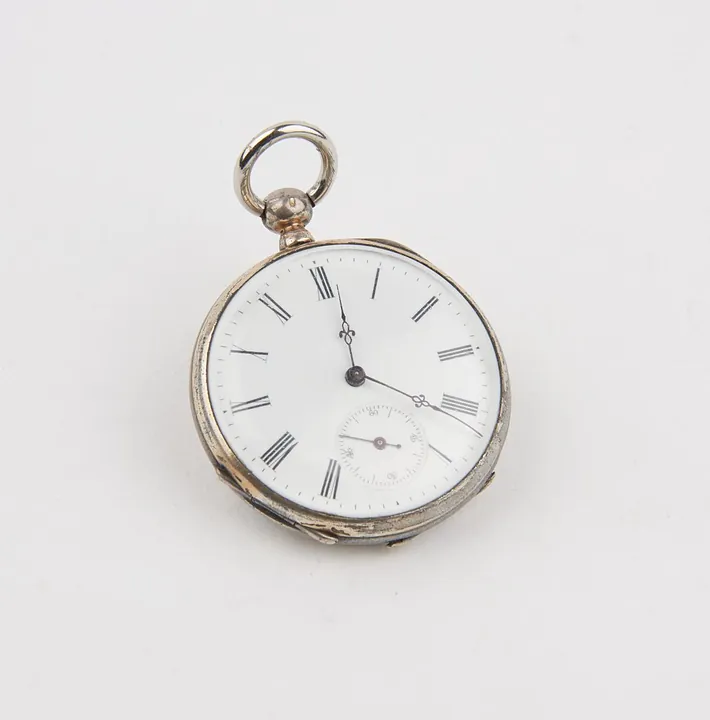
Pocket Watches · 1850–1899
Pocket watch by GT, Switzerland, 1850–1899
Science Museum Group, London
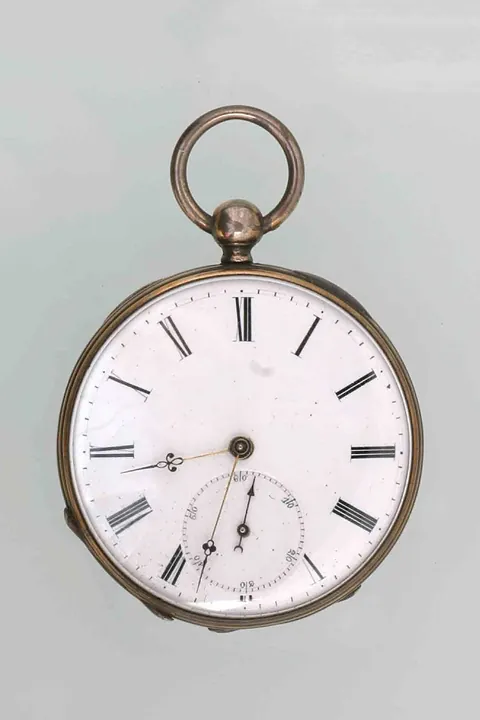
Pocket Watches · c. 1850
Pocket watch by Perret et Cie., Switzerland, c. 1850
German Clock Museum
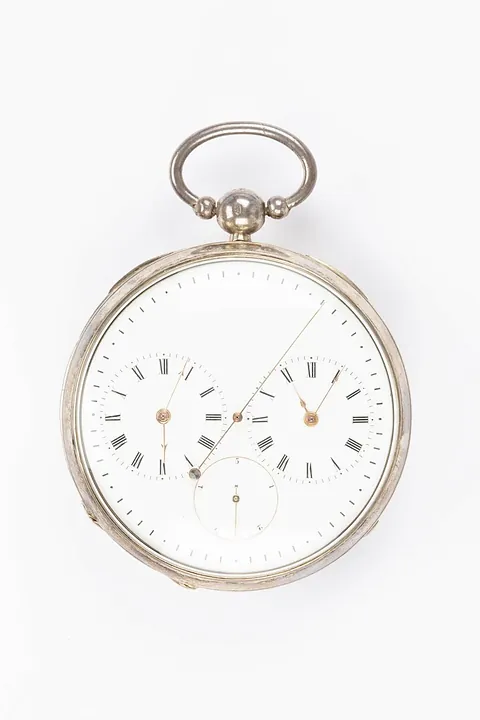
Pocket Watches · c. 1850
Pocket watch, probably Switzerland, c. 1850 (no. 58079)
German Clock Museum
Pocket Watches · c. 1850
Pocket watch, Switzerland, c. 1850 (no. 58081)
German Clock Museum