
Calibre record · Manual-wind
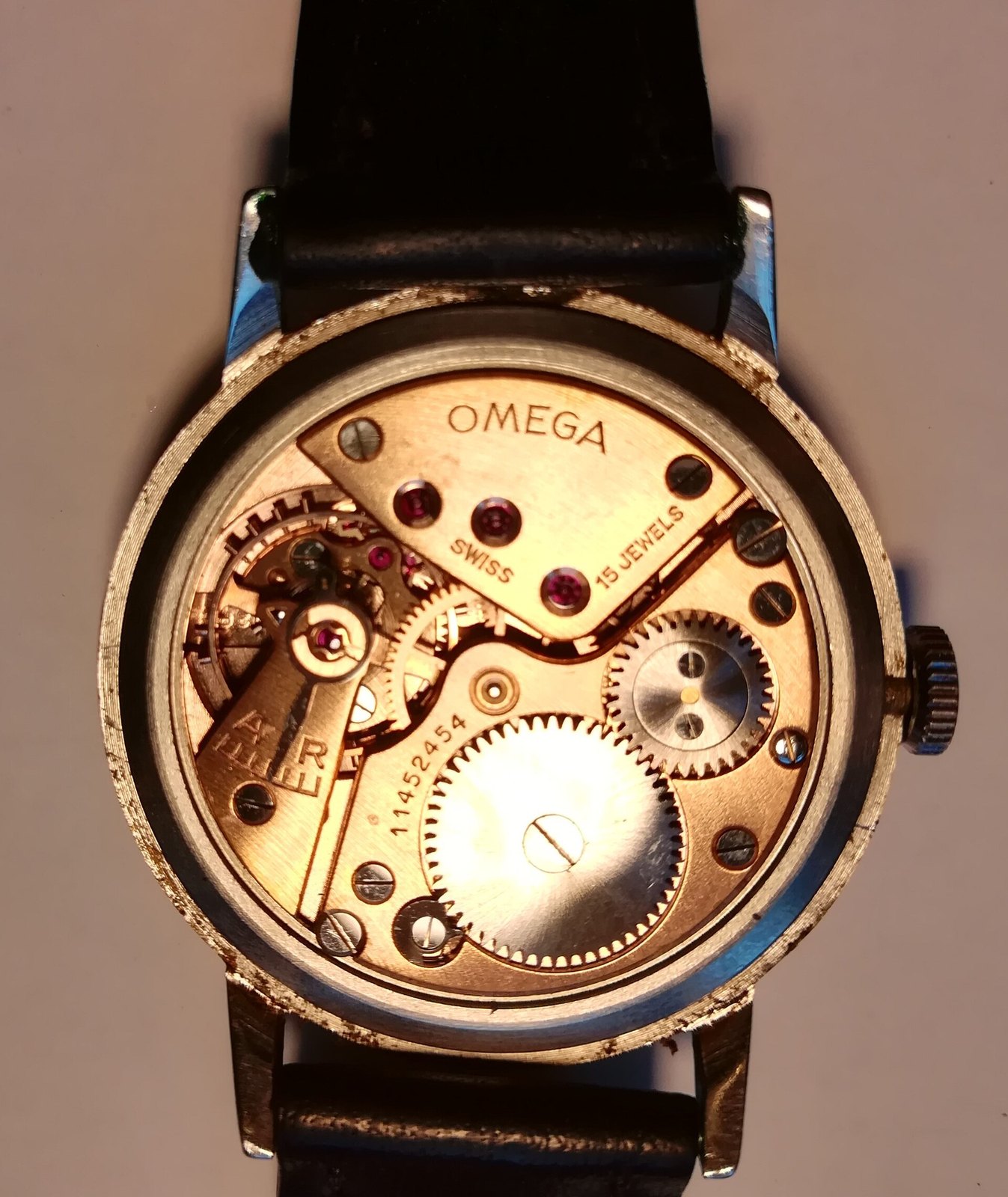
Omega calibre 30T2
The robust 30 mm hand-wound calibre of February 1939 that began Omega's '30 mm' family — about three million movements by 1963 — and powered many Second World War service watches.
- Manufacturer
- Omega
- Type
- Manual-wind
- Winding
- Manual
- Production
- 1939–1963 (with its successors)
- Country
- Switzerland
- Diameter
- 30 mm (13 lignes)
- Height
- Undocumented here
- Jewels
- 15 (17 on some versions)
- Frequency
- 18,000 vph (2.5 Hz)
- Power reserve
- c. 44 h
- Oscillator / escapement
- Detached lever escapement
- Complications
- Small seconds (centre-seconds version 30T2 SC)
Figures are those commonly published for the standard version; individual versions and grades differ. “Undocumented here” means the value has not yet been confirmed for this record.
How it is built
A plain, generously sized hand-wound movement: Omega scaled the components to the full 30 mm rather than shrinking a pocket-watch design, which gave large wheels and bearings that are easy to service and stand up to rough use.
Small seconds at 6 o'clock in the standard version; a centre-seconds version, the 30T2 SC, appeared in 1940. Versions with 'PC' have shock protection (pare-chocs) and 'AM' marks antimagnetic construction.
History
The name describes the calibre: 30 is the diameter in millimetres and T2 the type. A centre-seconds version (30T2 SC) followed in 1940, and from 1941 shock-protected and antimagnetic versions were marked PC AM (PC for pare-chocs). In 1949 Omega gave the family three-digit numbers — the 26x series for small seconds and 28x for centre seconds — and renewed it type by type until the T6 of 1961.
Watches fitted with it
- Omega dress watches of 1939 and the 1940s
- Omega 'WWW' British army watches of 1945, one of the 'Dirty Dozen' makers
The numbers explained
- 18,000 vibrations per hour means the balance makes 5 beats (ticks) every second — 2.5 complete back-and-forth oscillations, or 2.5 Hz.
- A sweeping seconds hand therefore advances in 5 small steps per second.
- That is 432,000 beats a day. A watch that gains one second a day is out by about 1 part in 86,400 — roughly 11.6 parts per million.
- Faster balances resist knocks and changes of position better but wear their pivots and need fresh oil sooner.
Convert beat rates and daily error with the Atlas tools · See a balance and escapement in the lab
How to recognise it
- Omega signature with '30T2' on the movement and the 15 or 17 jewels stated on the plate; markings such as PC, AM or SC give the version.
- After 1949 the same movements carry three-digit numbers: 260 or 261 for small seconds, 280s for centre seconds.
- In military watches, a broad arrow and service numbers on the case back alongside the Omega signature.
For collectors
Thirty-millimetre Omegas are among the most affordable good vintage watches, so dial condition decides the value: many have been refinished. In military watches, check that case, dial and movement belong together.
Versions and derivatives
| Calibre | Difference |
|---|---|
| 30T2 SC | Centre seconds, from 1940. |
| 30T2 PC AM / 260 | Shock-protected and antimagnetic, from 1941; numbered 260 from 1949 (261 with 17 jewels). |
Compared with related calibres
| Calibre | Type | Frequency | Jewels | Power reserve | Diameter | Production |
|---|---|---|---|---|---|---|
| Omega calibre 30T2 | Manual-wind | 18,000 vph (2.5 Hz) | 15 (17 on some versions) | c. 44 h | 30 mm (13 lignes) | 1939–1963 (with its successors) |
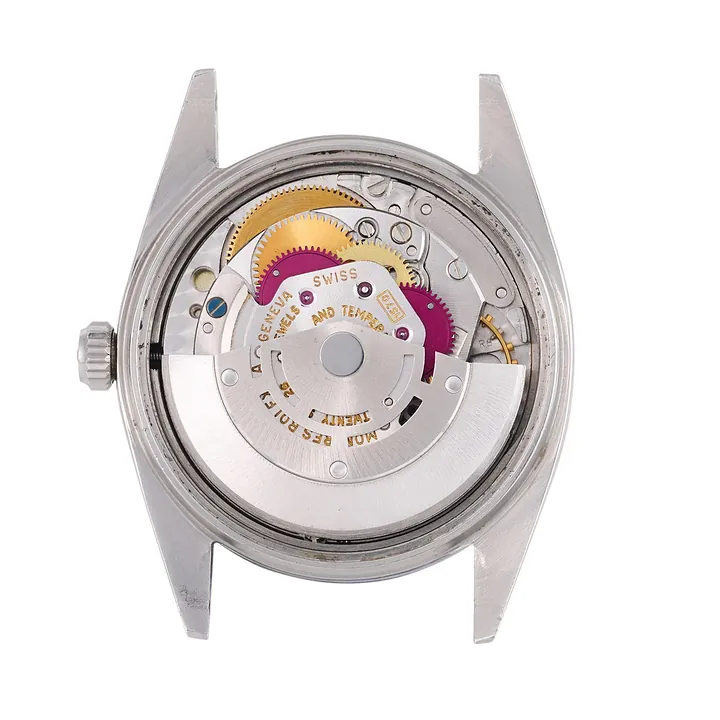
| Rolex calibre 1570 | Automatic | 19,800 vph (2.75 Hz) | 26 | c. 48 h | 28.5 mm (12½ lignes) | 1965–c. 1977 |
| Peseux / ETA 7001 | Manual-wind (thin) | 21,600 vph (3 Hz) | 17 | c. 42 h | 23.3 mm (10½ lignes) | 1970s–present |
Mechanisms in this calibre
Related calibres
Related records in the catalogue
Records whose titles name this calibre or a model family that used it. Earlier or later examples of a model may contain a different calibre, so check each record's description for the movement actually fitted.
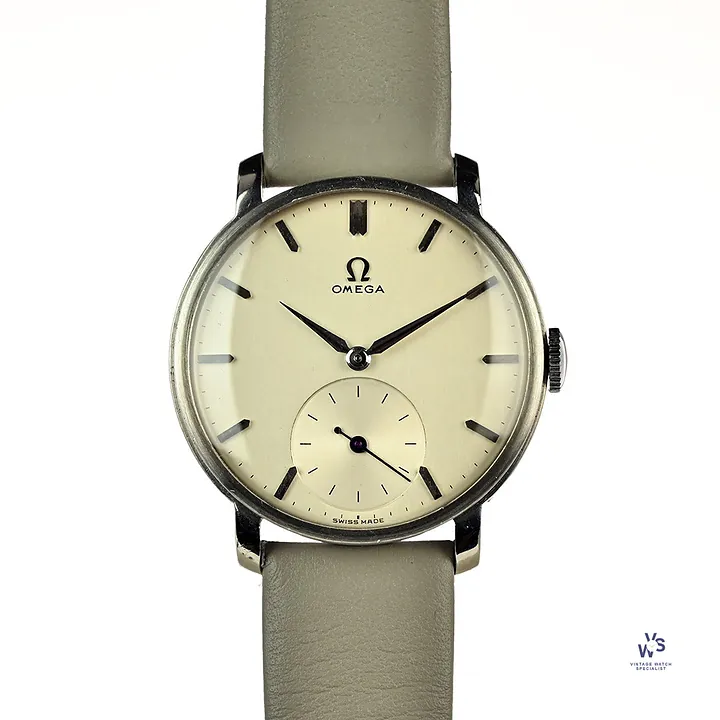
Wristwatches · c. 1939
Omega 'Big Eye', Steel Dress Watch with Calibre 30T2 Movement, circa 1939
Vintage Watch Specialist (dealer), United Kingdom
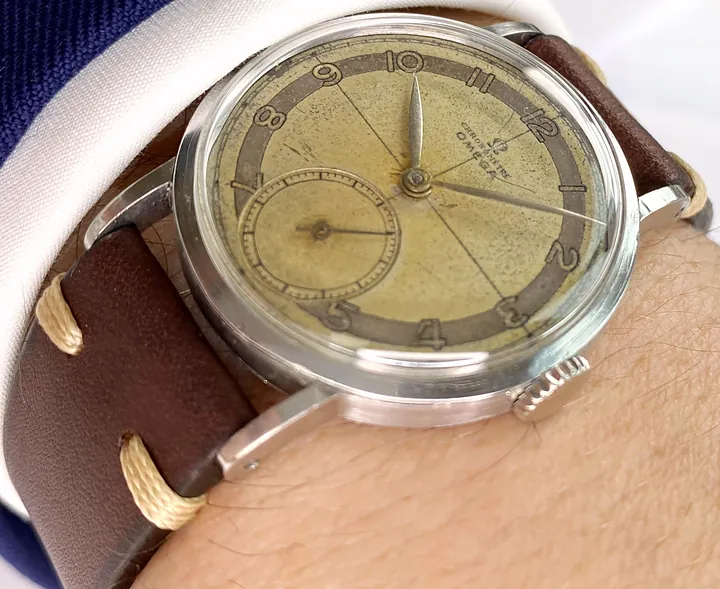
Wristwatches · 1940–1945
Omega 30T2 RG Art Deco Chronometer Chronometre Steel, 1940–1945
Vintage Portfolio (dealer), Vienna
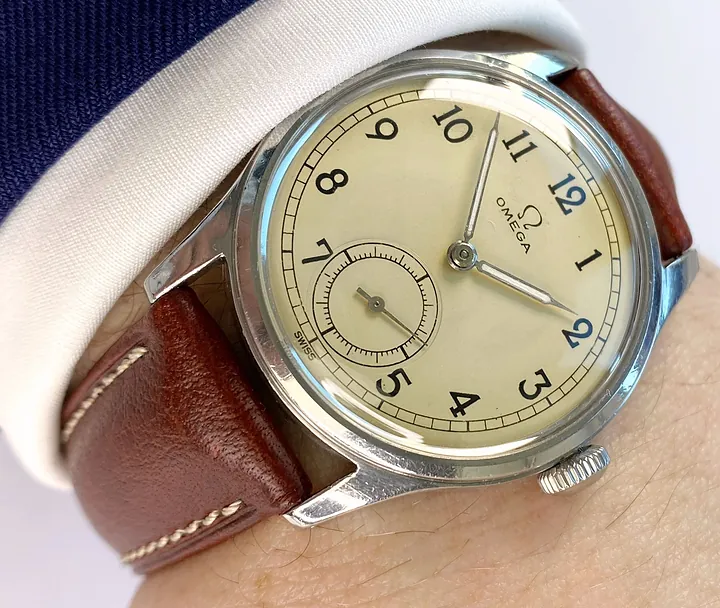
Wristwatches · 1942–1946
Omega Steel 30T2 Rail Track Dial, ref. 2383, 1942–1946
Vintage Portfolio (dealer), Vienna
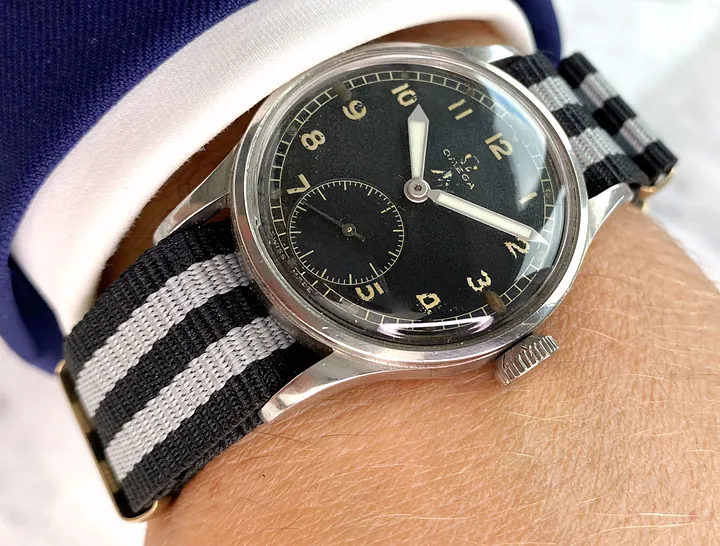
Wristwatches · 1942–1946
Omega Dirty Dozen Military RAF 30T2 WWW, 1942–1946
Vintage Portfolio (dealer), Vienna
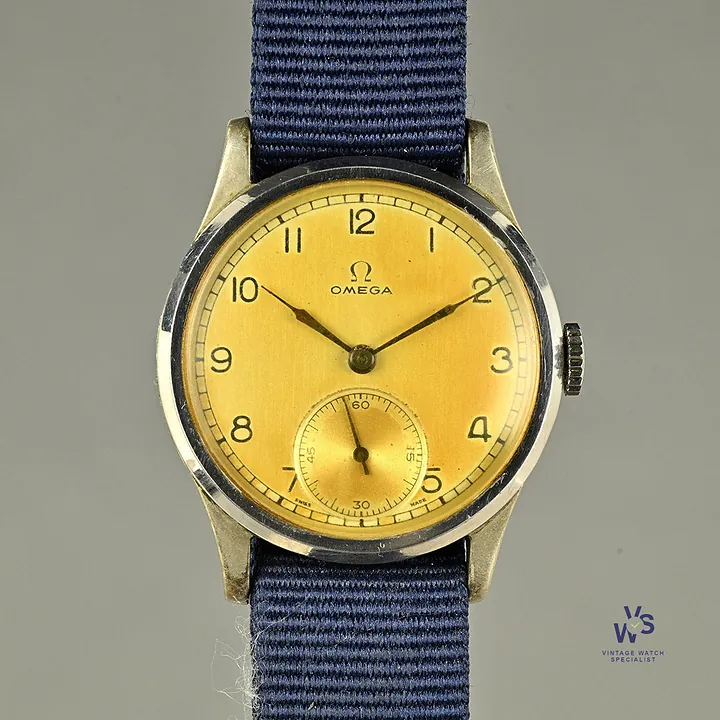
Wristwatches · c. 1944
Omega Calibre 30T2 Sub Seconds Wristwatch, Dennison Case, circa 1944
Vintage Watch Specialist (dealer), United Kingdom
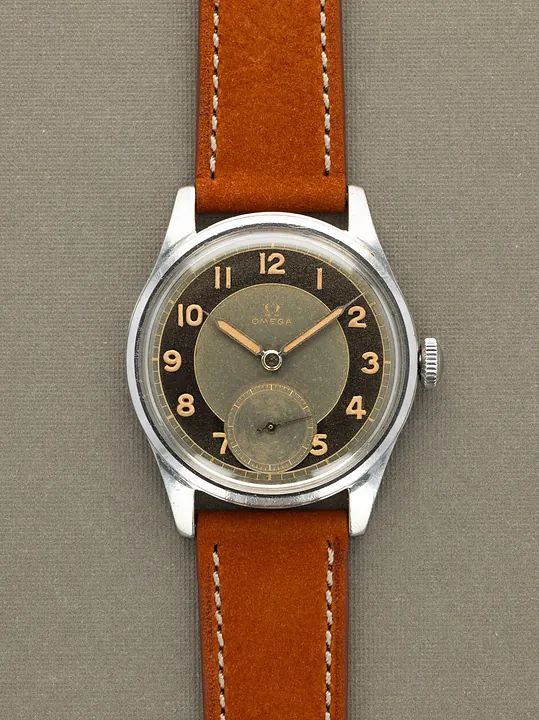
Wristwatches · c. 1944
Omega '30T2' ref. 2383-6, Multi-Tone Sector Dial, c. 1944
Oliver & Clarke (dealer), United Kingdom
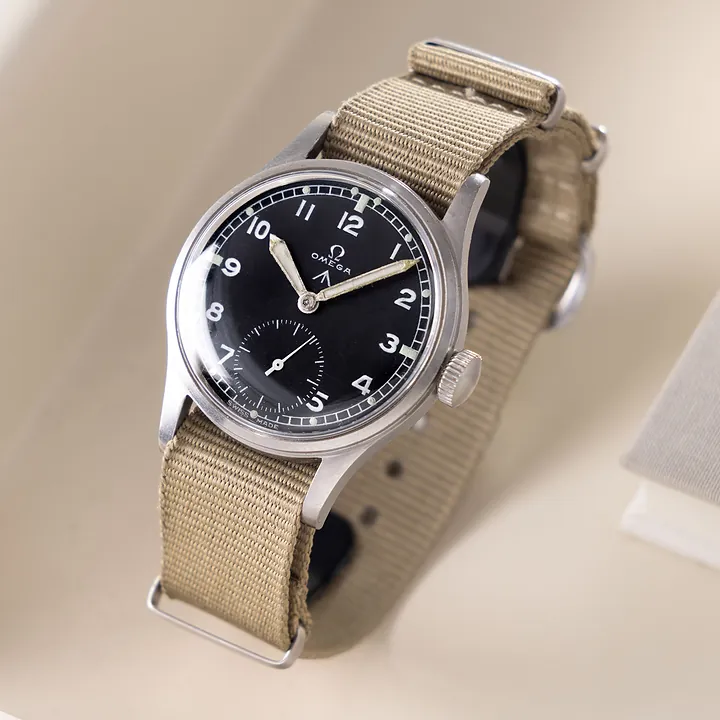
Wristwatches · 1940s
Omega "Dirty Dozen" WWW Issued Military Watch, 1940s
Bulang & Sons (dealer), Copenhagen
Wristwatches · c. 1944
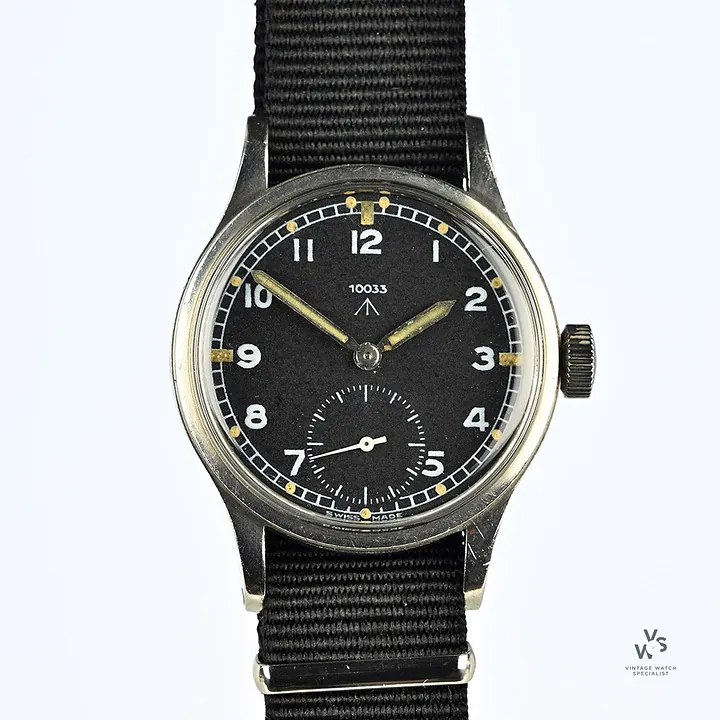
Omega Dirty Dozen With (Non Radium) NATO Numbered Dial, circa 1944
Vintage Watch Specialist (dealer), United Kingdom