
Horological History · Historical feature
The First Watches: Spring-Driven Timekeepers in Nuremberg, Augsburg, Blois and Beyond, 1480–1675
Before the balance spring, a watch was a small iron or brass machine that told the hour to within a quarter of an hour on a good day. Who made the first ones, what the 'Nuremberg egg' really was, and how the early centres of the craft can be recognised in museum collections.
Atlas Editorial · · 9 min read
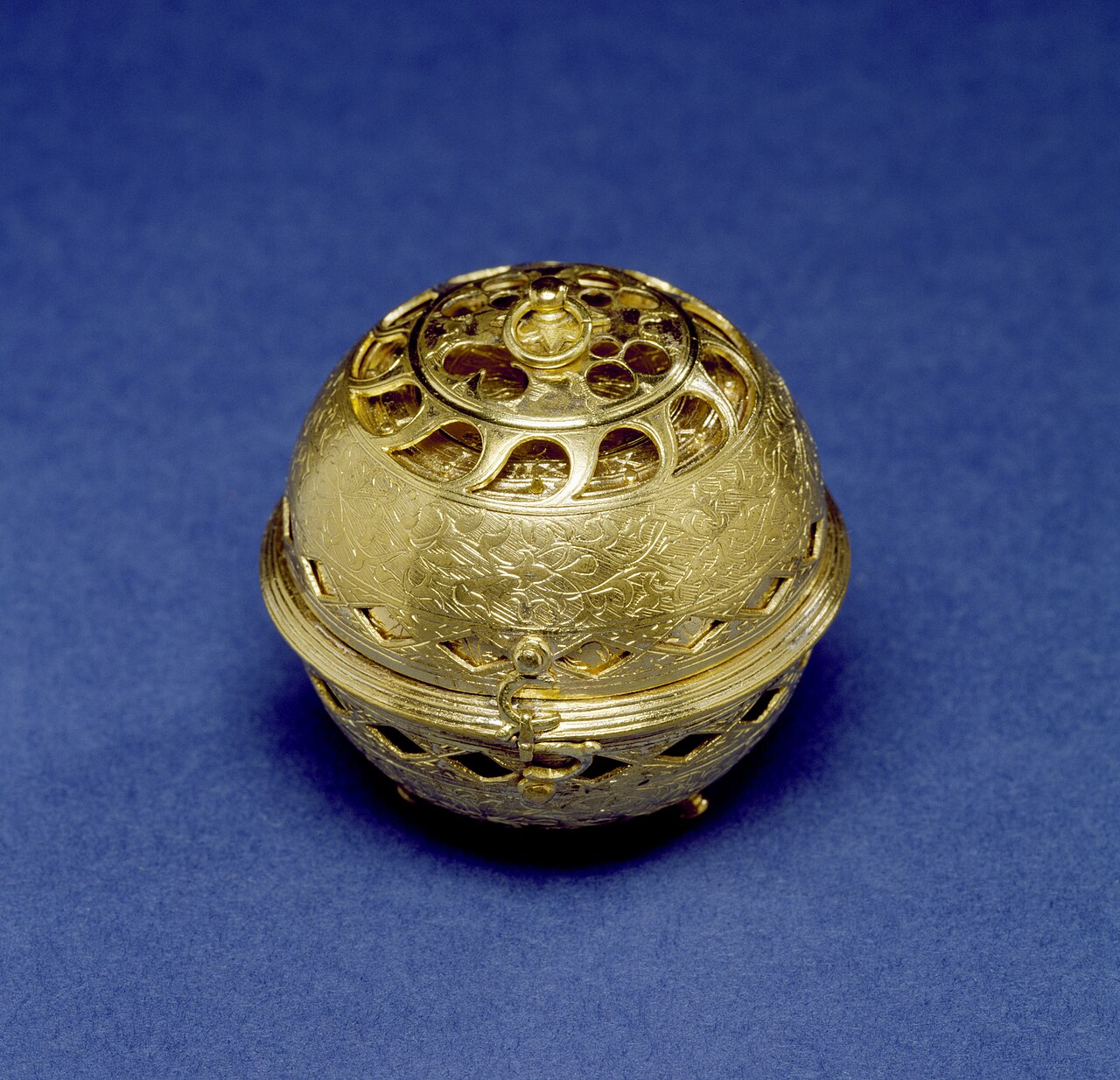
Philipp Melanchthon · Public domain · source (opens another website in a new tab)
A watch is a clock small enough to carry, and that requires two things a medieval tower clock did not have: a source of power that works in any position, and a mechanism small enough to fit in the hand. The first was the coiled steel mainspring, the second the patient miniaturisation of the wheel train and the verge escapement. Both came together in the fifteenth and early sixteenth centuries, in the workshops of locksmiths and clockmakers in southern Germany, northern Italy, France and the Low Countries.
This feature traces the first two centuries of the watch, up to the invention of the balance spring in the 1670s, which changed the instrument so completely that historians treat it as the end of an era. It draws on the catalogue's 120-odd pocket watches from before 1660 and its Renaissance table clocks, many of them photographed from several sides by the museums that hold them.
The spring takes over from the weight
Weight-driven clocks need a long, unobstructed drop and must stay upright. A spring, wound tight in a drum, can drive a clock anywhere — on a table, on a ship, in a pocket. Spring-driven clocks appear in the fifteenth century: a chamber clock associated with the Burgundian court of Philip the Good, usually dated around 1430 and now in the Germanisches Nationalmuseum in Nuremberg, is often cited as the oldest surviving example, although its dating and history have been debated. Drawings of spring-driven mechanisms with a fusee — the cone-shaped pulley that evens out the spring's pull — survive from later in the same century.
The difficulty with a spring is that it pulls hard when fully wound and weakly when nearly run down. With a verge escapement and a foliot or balance that had no natural period of its own, this change in force translated directly into a change in rate. Two solutions appeared. The fusee, used in France, England and the Low Countries, winds a chain or gut line from the spring barrel onto a spiral cone, so that the spring acts on a small radius when strong and a large one when weak. The stackfreed, characteristic of German watches, uses a curved cam and a stiff spring to brake the mainspring when it is strongest and help it when it is weakest. The stackfreed was cheaper and more compact but less effective, and it disappeared in the first half of the seventeenth century.
| Fusee | Stackfreed | |
|---|---|---|
| Principle | Variable lever: the chain unwinds from a cone of changing radius | Friction and assistance from a spring pressing on a cam |
| Typical region | France, England, Low Countries; later universal | Southern Germany (Nuremberg, Augsburg) |
| Effectiveness | Good; remained in precision watches into the 20th century | Moderate; wasted much of the mainspring's power |
| Period | 15th century onwards | 16th to early 17th century |
| How to spot it | Cone with a spiral groove, chain or gut line | Kidney-shaped cam on a wheel, with a curved spring roller |
Peter Henlein and the 'Nuremberg egg'
The name most often attached to the invention of the watch is that of Peter Henlein, a Nuremberg locksmith who died in 1542. The main evidence is a passage by the humanist Johannes Cochlaeus in a work printed around 1511–12, praising Henlein for making small iron clocks with many wheels that ran for forty hours and could be carried in a purse or at the breast. That is good evidence that Henlein made portable spring-driven timekeepers early in the century. It is not evidence that he invented them, and other makers in Italy and elsewhere were making small spring-driven clocks at the same time.
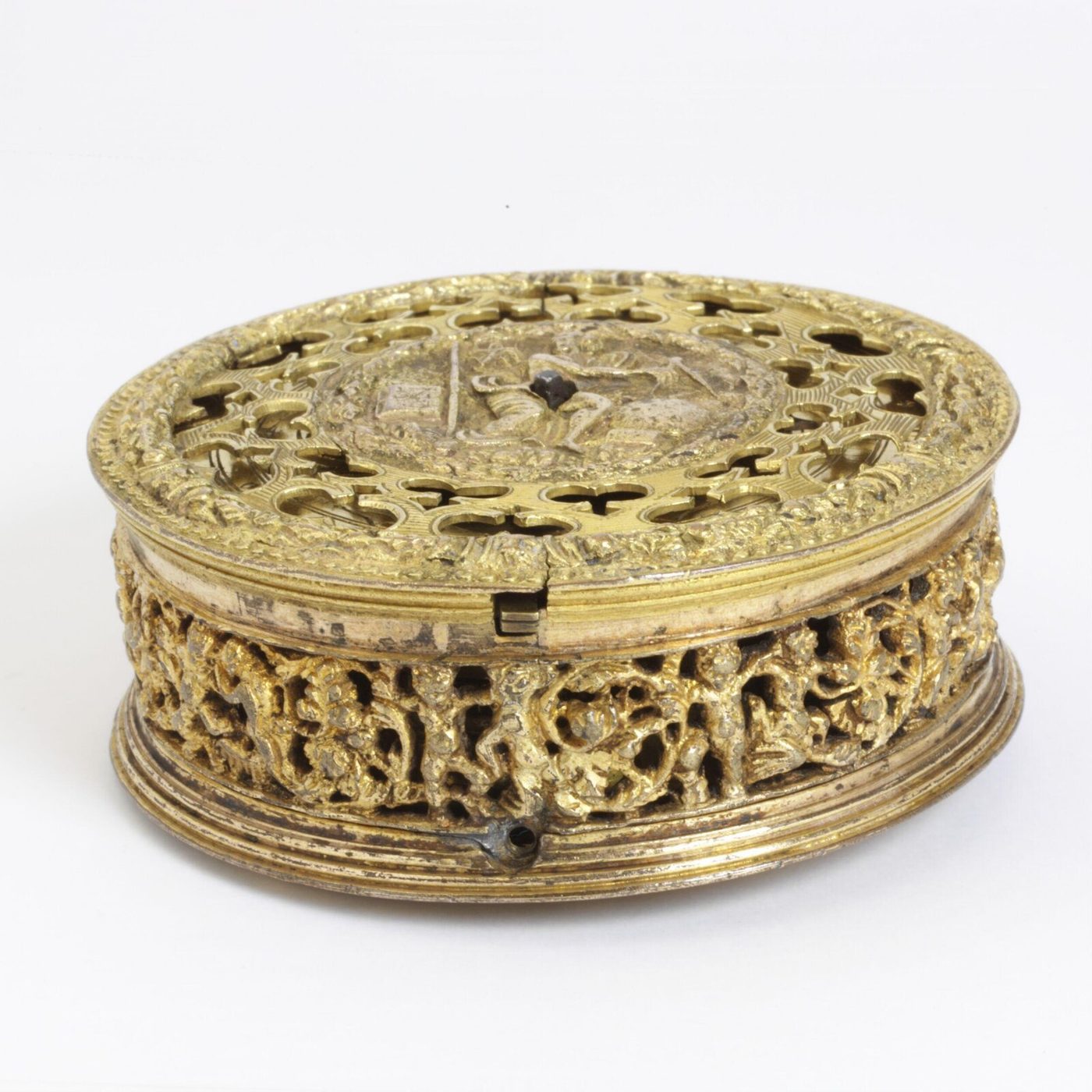
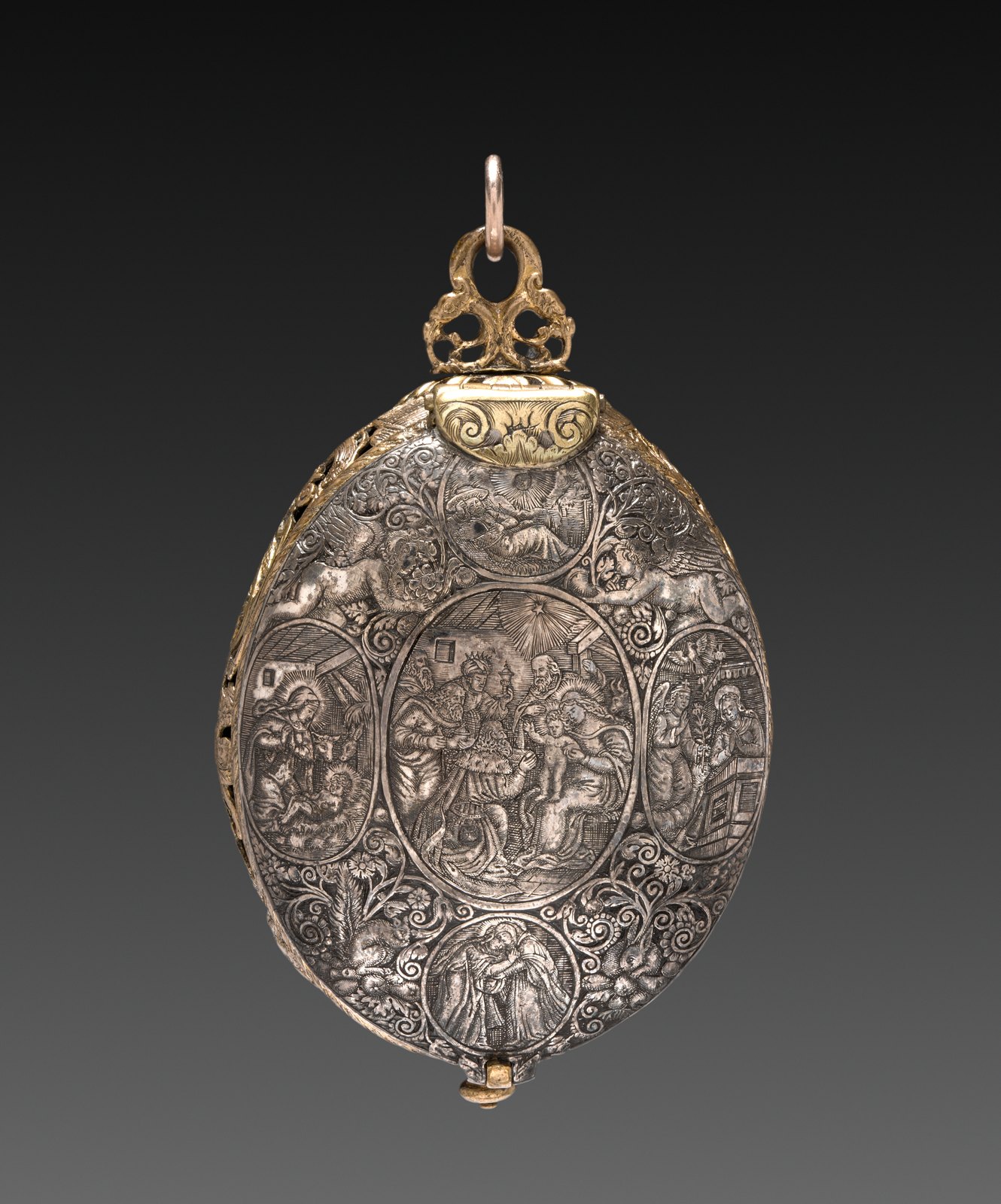
The phrase 'Nuremberg egg' is also less reliable than it sounds. Early German watches were mostly drum-shaped or spherical; oval cases became common only later in the sixteenth century. The word 'egg' is often explained as a misreading of the German Ührlein ('little clock') as Eierlein ('little egg'), an explanation that is itself widely repeated rather than securely documented. Nineteenth-century civic pride in Nuremberg turned Henlein into a national hero, complete with statues and novels, and much of the popular story dates from then.
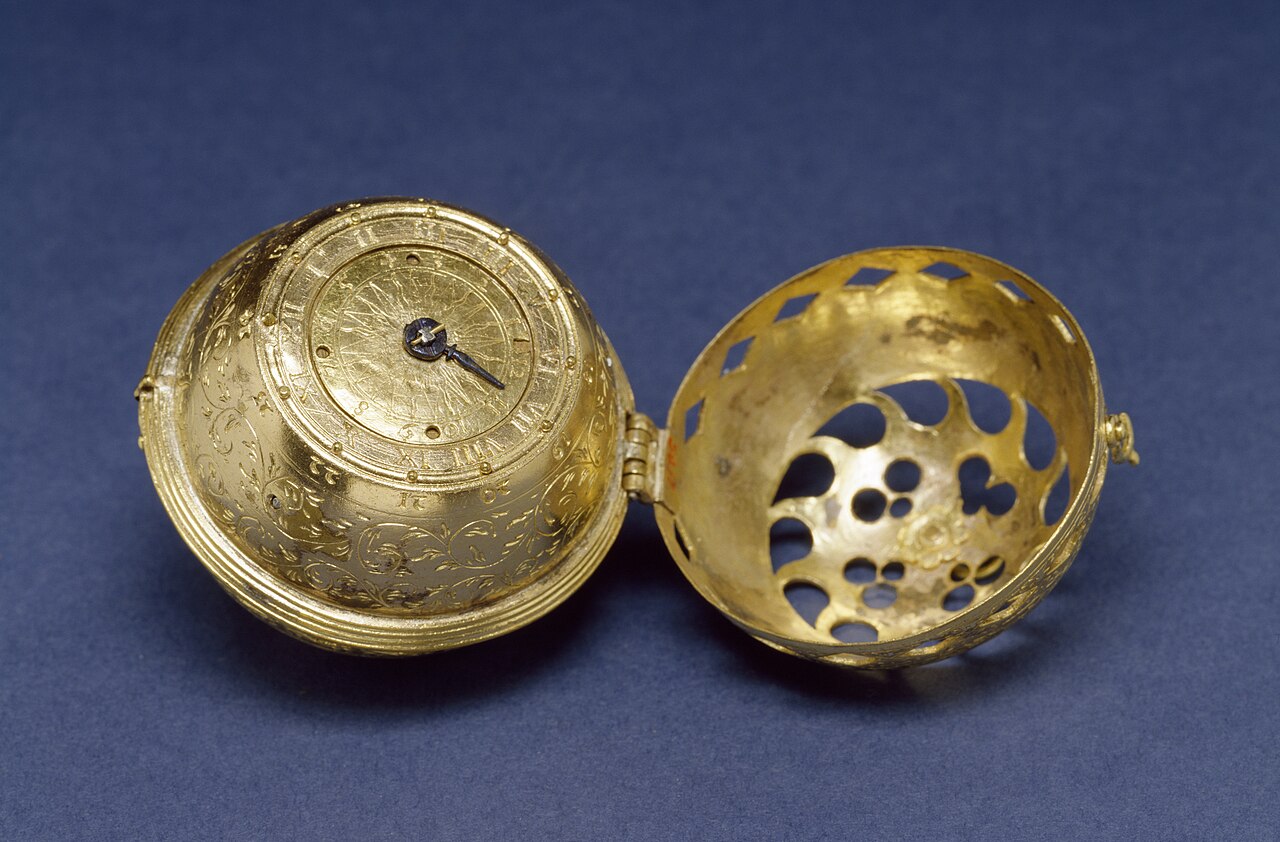
One of the earliest securely dated watches is the spherical table watch in the Walters Art Museum in Baltimore, engraved with the date 1530 and the name of the reformer Philipp Melanchthon, to whom it may have been presented. It is a small gilt-brass ball with an hour dial, and its spring-driven movement is German work — an object that shows how quickly the portable timekeeper became a prestigious gift.
How an early watch worked
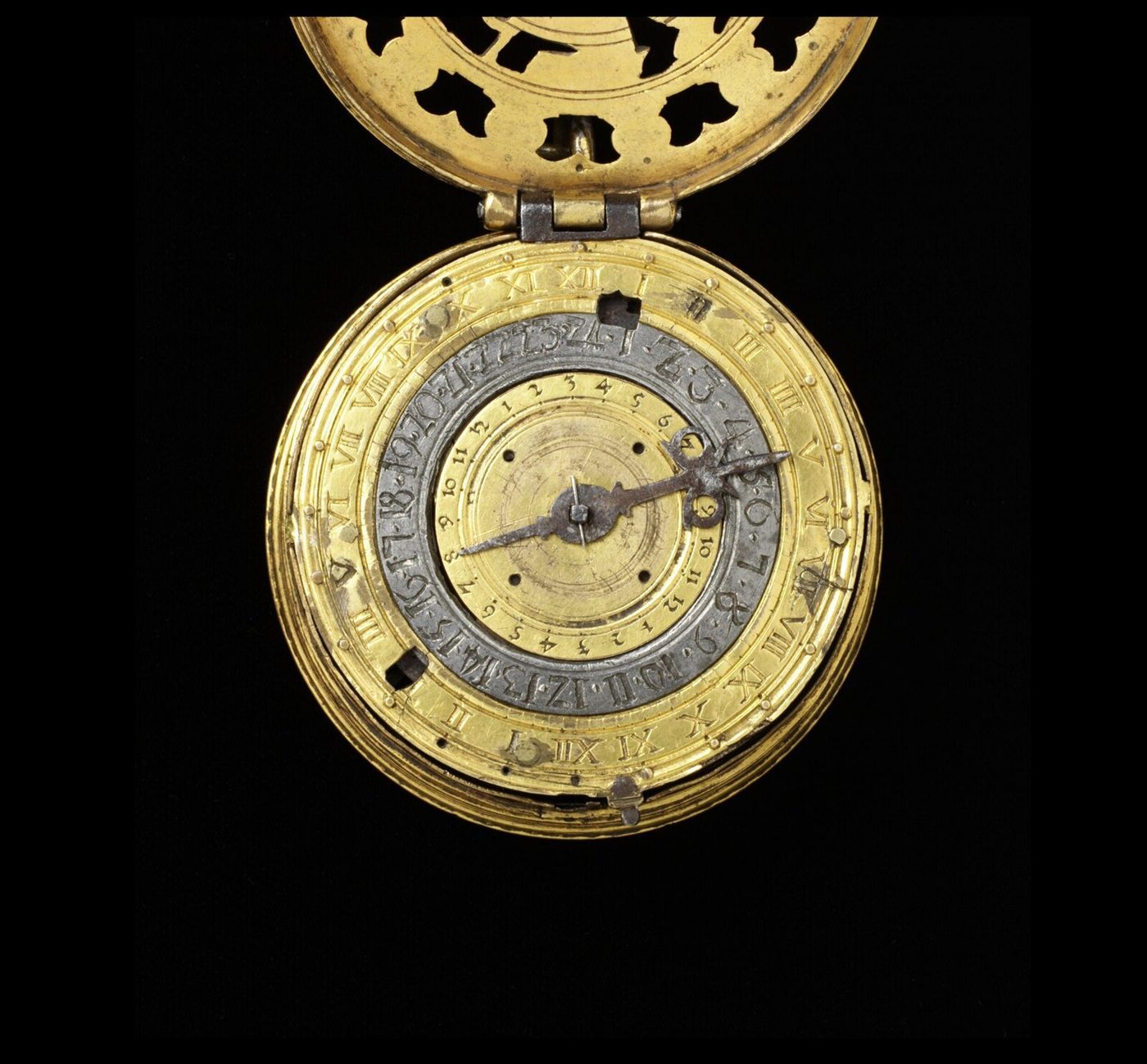
Inside the case, the movement of a sixteenth-century watch was built between two plates held apart by pillars, much as later watches would be. Early movements were often of iron or steel; brass took over in the second half of the century. The mainspring drove a short train of wheels to a verge escapement, whose crown wheel rocked a small balance — sometimes a simple bar with weights, more often a wheel. Because the balance had no spring to give it a natural rhythm, its rate depended heavily on the driving force and the state of the oil, and errors of a quarter of an hour or more a day seem to have been common. Most early watches therefore have only an hour hand, and many have small knobs at the hours so that the time could be felt in the dark.
- Single hour hand: minute hands appear on a few precision clocks from the late sixteenth century, but only became normal on watches after the balance spring.
- Touch pins: raised knobs at each hour, sometimes with a longer one at twelve, for reading the time by touch.
- Pierced covers: many cases have pierced lids so that the striking or alarm could be heard; some early watches strike the hours or carry an alarm.
- Catgut and chain: fusees used gut lines before fine steel chains became common in the seventeenth century.
- Signatures: early movements are often unsigned or carry only initials or a punch mark; full signatures on the backplate became usual later.
The centres of the craft
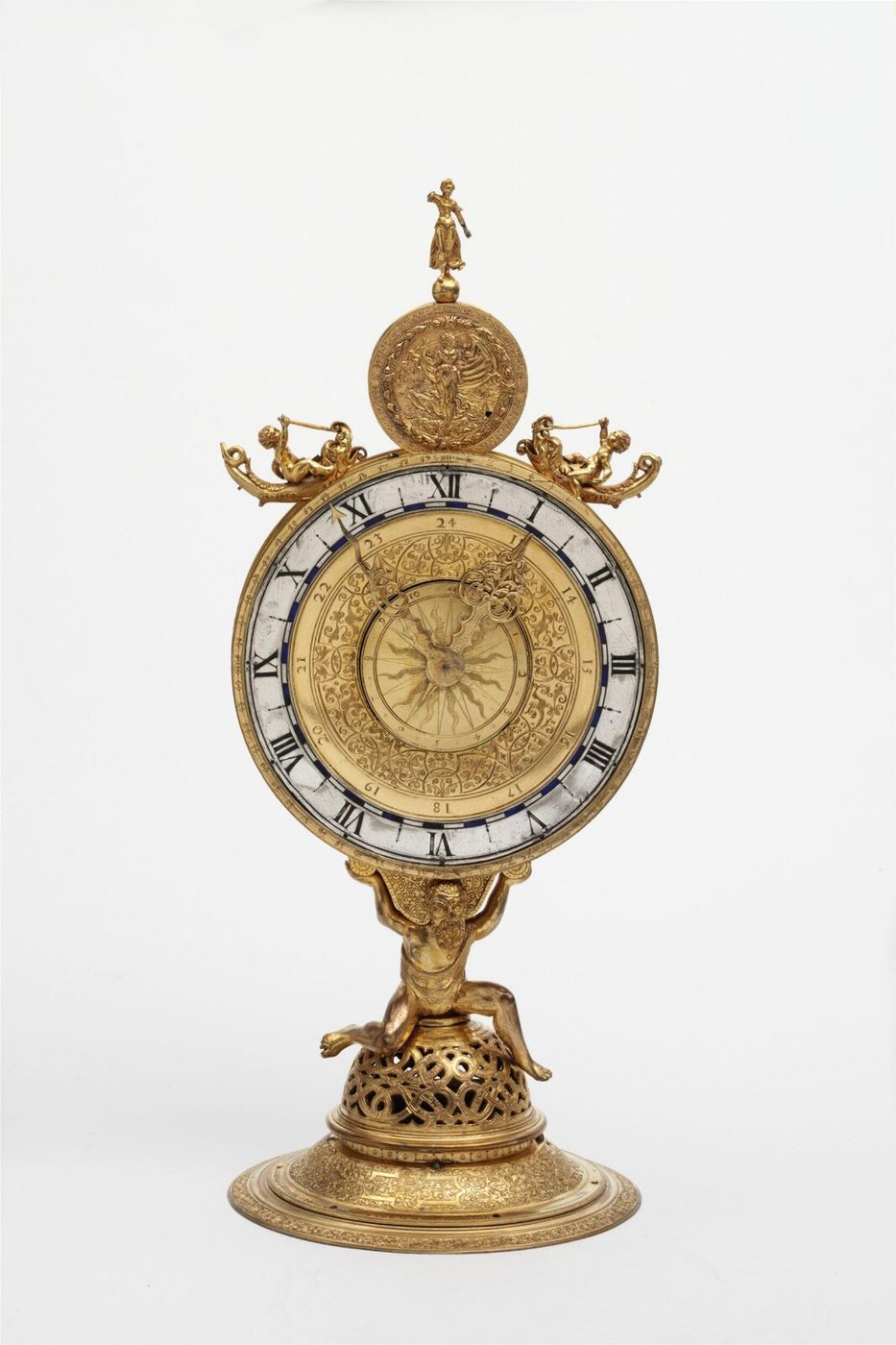
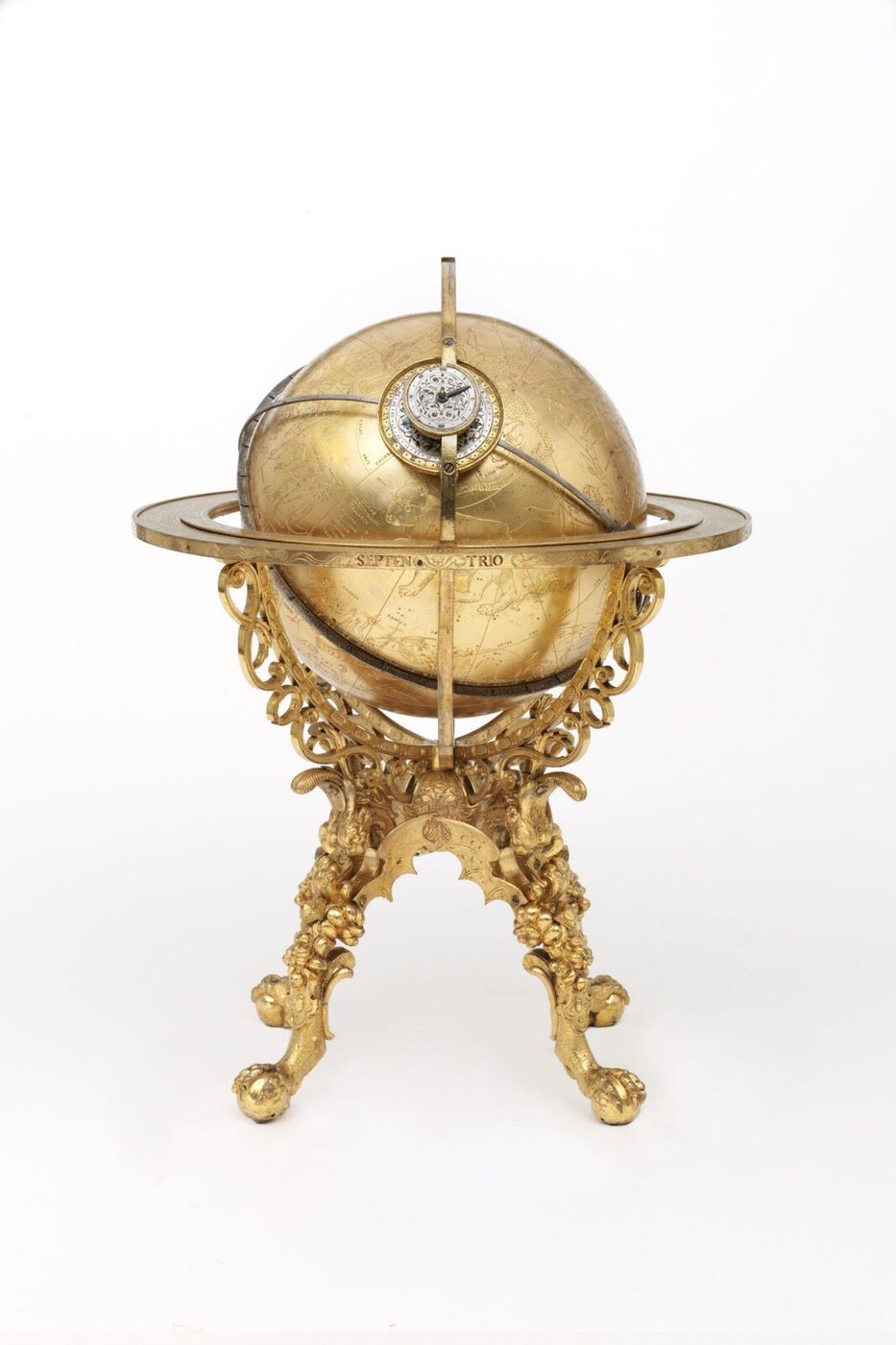
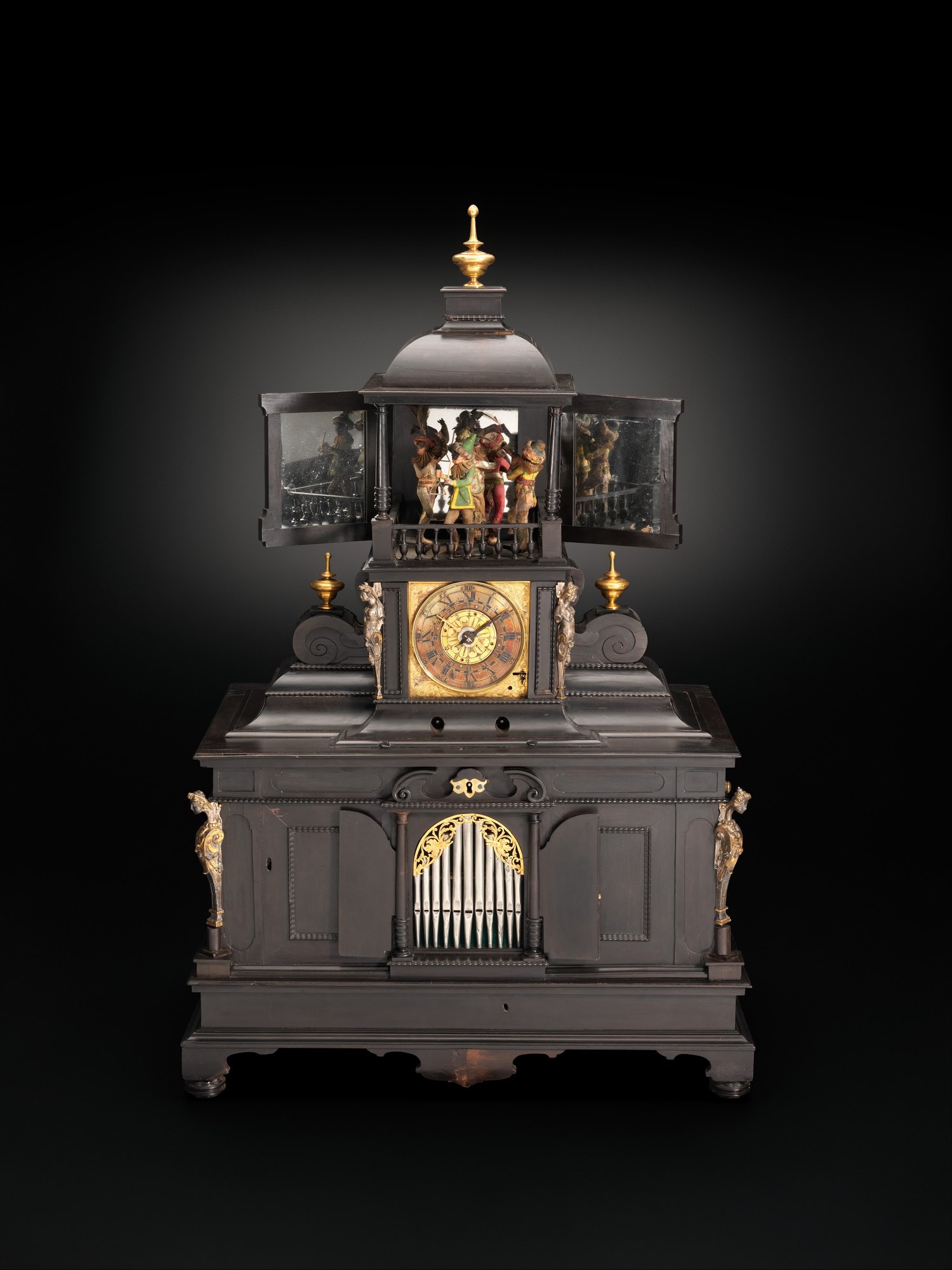
Early watchmaking grew out of locksmithing and metalwork, and it flourished where skilled metalworkers, wealthy patrons and trade routes met. In southern Germany, Nuremberg and Augsburg dominated the sixteenth century, and Augsburg in particular became famous for elaborate table clocks, automata and astronomical clocks in gilt-brass cases decorated by goldsmiths and enamellers. In France, Blois — a residence of the royal court — and Paris became leading centres; Blois was also where the Toutin family developed painted enamel on gold around 1630, which transformed watch-case decoration. In the Low Countries, Antwerp and Brussels; in Italy, Milan; in Switzerland, Geneva, where Calvinist restrictions on jewellery in the mid-sixteenth century are traditionally said to have pushed goldsmiths into watchmaking, and where a watchmakers' guild was founded in 1601.
| Centre | Main period | Characteristic work |
|---|---|---|
| Nuremberg | Early 16th century onward | Early portable clocks and drum watches; iron movements; stackfreed |
| Augsburg | Mid-16th to 17th century | Table clocks, automata, astronomical and 'tower' clocks with rich gilt cases |
| Prague | Late 16th–early 17th century | Court instruments for Rudolf II: Jost Bürgi, Erasmus Habermel |
| Blois and Paris | Later 16th–17th century | Fine French watches; oval cases; painted enamel from c. 1630 |
| Geneva | Late 16th century onward | Watchmaking linked to goldsmithing; guild from 1601 |
| London | Late 16th century onward | Growing trade, many immigrant makers; Clockmakers' Company chartered 1631 |
Prague and the pursuit of precision
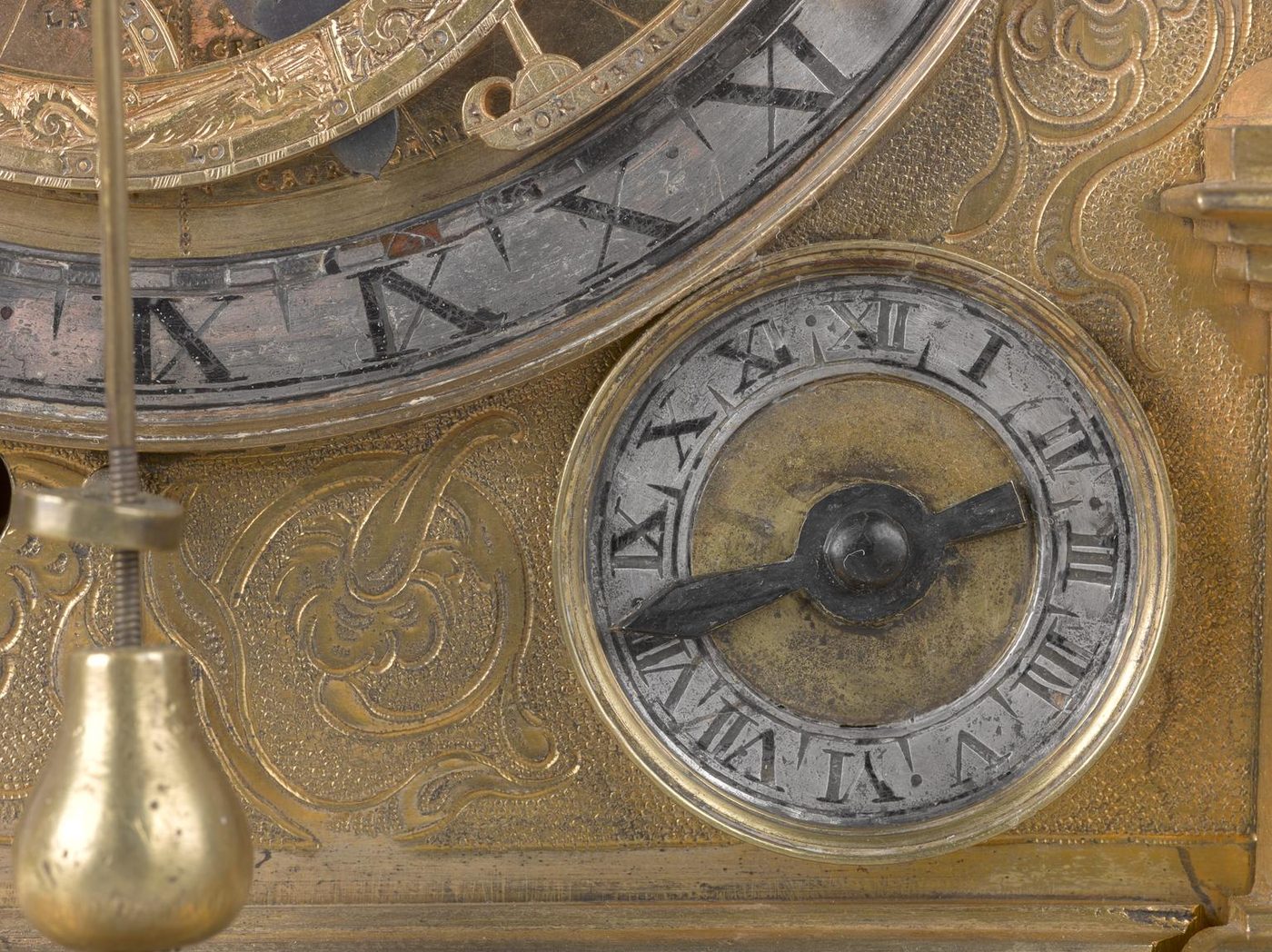
At the court of Emperor Rudolf II in Prague around 1600, the Swiss-born clockmaker and mathematician Jost Bürgi made clocks of a precision unusual for the time, using a cross-beat escapement and a remontoire to even out the driving force, and some of his clocks show minutes and even seconds. His work, and that of the instrument maker Erasmus Habermel, belongs to the world of astronomy as much as to that of horology: these were instruments for observers such as Tycho Brahe and Johannes Kepler, not everyday watches. Bürgi's innovations showed what careful mechanics could achieve, but they did not solve the basic problem of the unregulated balance.
Form watches, fashion and fakes
By the late sixteenth century the watch was as much jewellery as instrument. Cases took the shape of crosses, books, flowers, shells, animals and skulls; crystal cases displayed the movement; enamel, engraving and gem-setting turned watches into status objects worn on chains or ribbons. These 'form watches' are among the most attractive objects of the period — and among the most often faked. Skull watches in particular were copied in large numbers in the nineteenth century, sometimes with romantic attributions to famous owners, and many 'Renaissance' watches combine an old movement with a later case, or the reverse.
The end of the beginning
In the 1670s the situation changed abruptly. Christiaan Huygens and Robert Hooke both claimed the idea of attaching a fine spiral spring to the balance, giving it a natural period of oscillation in the way the pendulum, which Huygens had applied to clocks in 1656–57, had done for clocks. A watch with a balance spring could keep time to within a few minutes a day, and the minute hand became worthwhile. Within a generation, makers in London, Paris and Blois — Thomas Tompion among them — were building a new kind of watch, and the drum watches, stackfreeds and single-handed dials of the sixteenth century became antiques.
The first watches were poor timekeepers by any later standard. Their importance lies elsewhere: in the mastery of small-scale metalwork they demanded, in the trades and guilds they created, and in the idea — novel in 1500 — that a person might carry the time with them. The catalogue's early pocket watches, table clocks and form watches make it possible to follow that idea from its first tentative appearance to the eve of the precision age.
Sources & further reading
- History of the Hour: Clocks and Modern Temporal Orders — Gerhard Dohrn-van Rossum, University of Chicago Press, 1996 (German original 1992).
- Revolution in Time: Clocks and the Making of the Modern World — David S. Landes, Harvard University Press, 1983.
- Clocks — David Thompson, British Museum Press (London), 2004.
- Old Clocks and Watches and Their Makers — F. J. Britten, B. T. Batsford (London), 1899 (first edition).
- Watchmakers and Clockmakers of the World — G. H. Baillie, N.A.G. Press (London), 1929 (first edition).
- Dictionnaire des horlogers français — Tardy (Henri Lengellé), Tardy (Paris), 1971–1972.