
International Horology · Historical feature
Time for the Sultan: European Clocks and Watches in the Ottoman World
Diplomatic gifts, Genevan workshops in Galata, London export houses and mosque timekeepers: how mechanical time was traded, adapted and used between Europe and the Ottoman Empire.
Atlas Editorial · · 7 min read
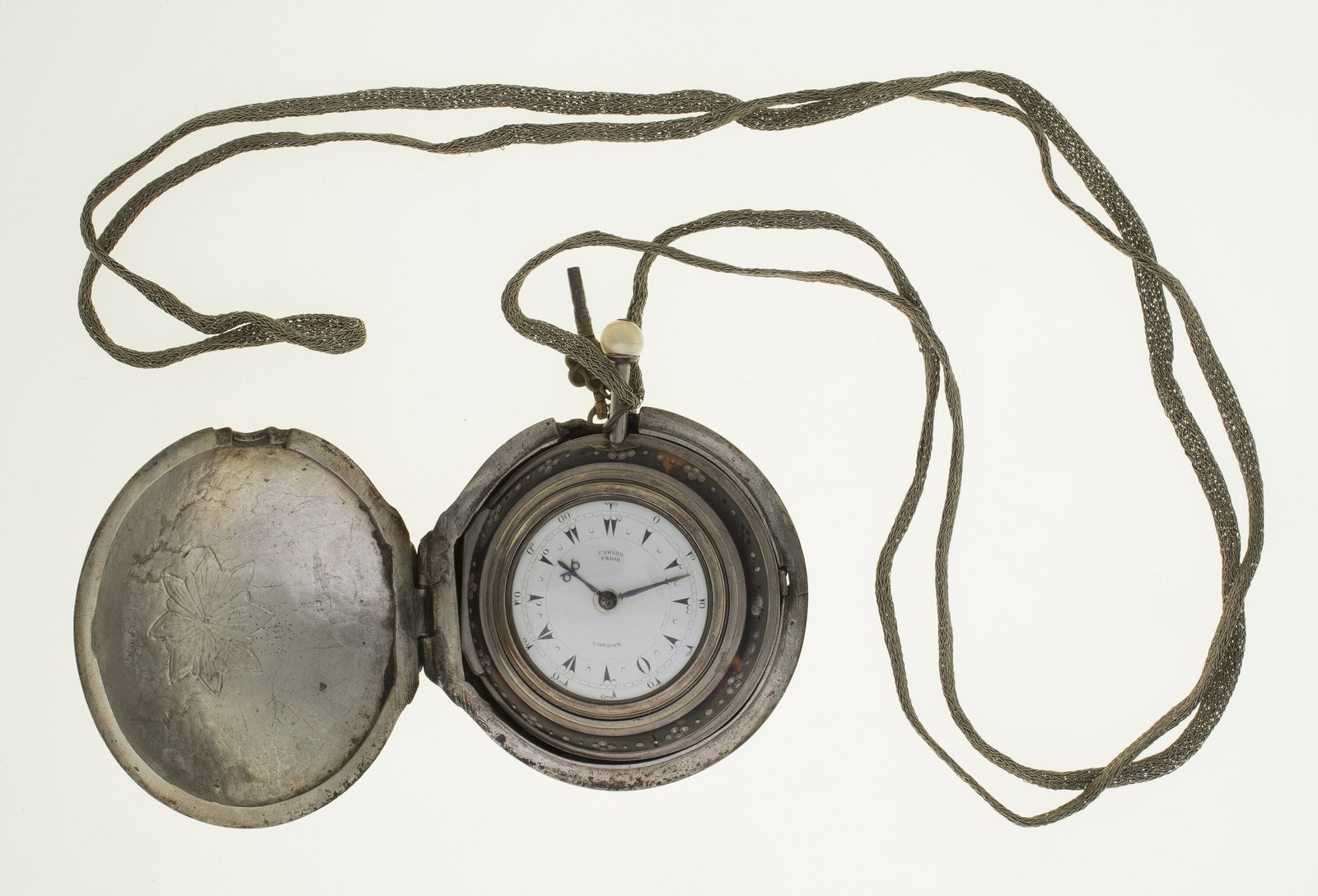
Museums Victoria, Melbourne · CC BY — permission review · source (opens another website in a new tab)
Look through the cases of any large collection of 18th-century English watches and you will find a group that seems slightly out of place: dials with Eastern Arabic numerals, sometimes several silver, tortoiseshell or shagreen outer cases nested one inside another, and old-fashioned verge escapements long after London had moved on. These are watches made for the Ottoman market. They are the most visible survivors of a trade in timekeepers between Europe and the Ottoman Empire that lasted more than three centuries.
The story is often told from the European side, as a matter of exports. But the Ottoman world had its own sophisticated traditions of timekeeping, astronomy and mechanical ingenuity, and it shaped the objects that European makers produced for it. This feature traces that relationship, from Habsburg diplomatic gifts to the clock towers of the late empire.
Timekeeping in the Ottoman world
Islamic societies had strong reasons to measure time precisely: the five daily prayers are set by the position of the Sun, and the beginning of months and festivals by the Moon. Astronomers known as muwaqqits (Turkish muvakkit) were attached to mosques to determine prayer times, using sundials, astrolabes, quadrants and tables. In Ottoman cities, small buildings called muvakkithane — 'timekeeper's houses' — were built in mosque precincts from the 15th century onwards, and many more in the 18th and 19th centuries. Mechanical clocks were added to their instruments once they became available.
Ottoman scholars also studied mechanical clocks directly. Taqī al-Dīn Muḥammad ibn Maʿrūf, who later directed the short-lived observatory in Istanbul (founded 1577), wrote a treatise on the construction of mechanical clocks in the 1550s, describing weight- and spring-driven clocks with striking and alarm work. He used clocks for astronomical observation and discussed the European clocks reaching the Ottoman court.
Gifts and tribute: clocks as diplomacy
In the 16th century European mechanical clocks were among the most prestigious objects a ruler could give. Under the peace agreements between the Habsburgs and the Ottomans from the 1540s, the Habsburg court paid an annual 'gift' to the Sultan, and clocks — especially elaborate automaton clocks made in Augsburg — were a regular part of it. Ambassadors' reports and Habsburg accounts record the commissioning, shipping and presentation of these objects, and the care taken to send clockmakers who could set them up and repair them.
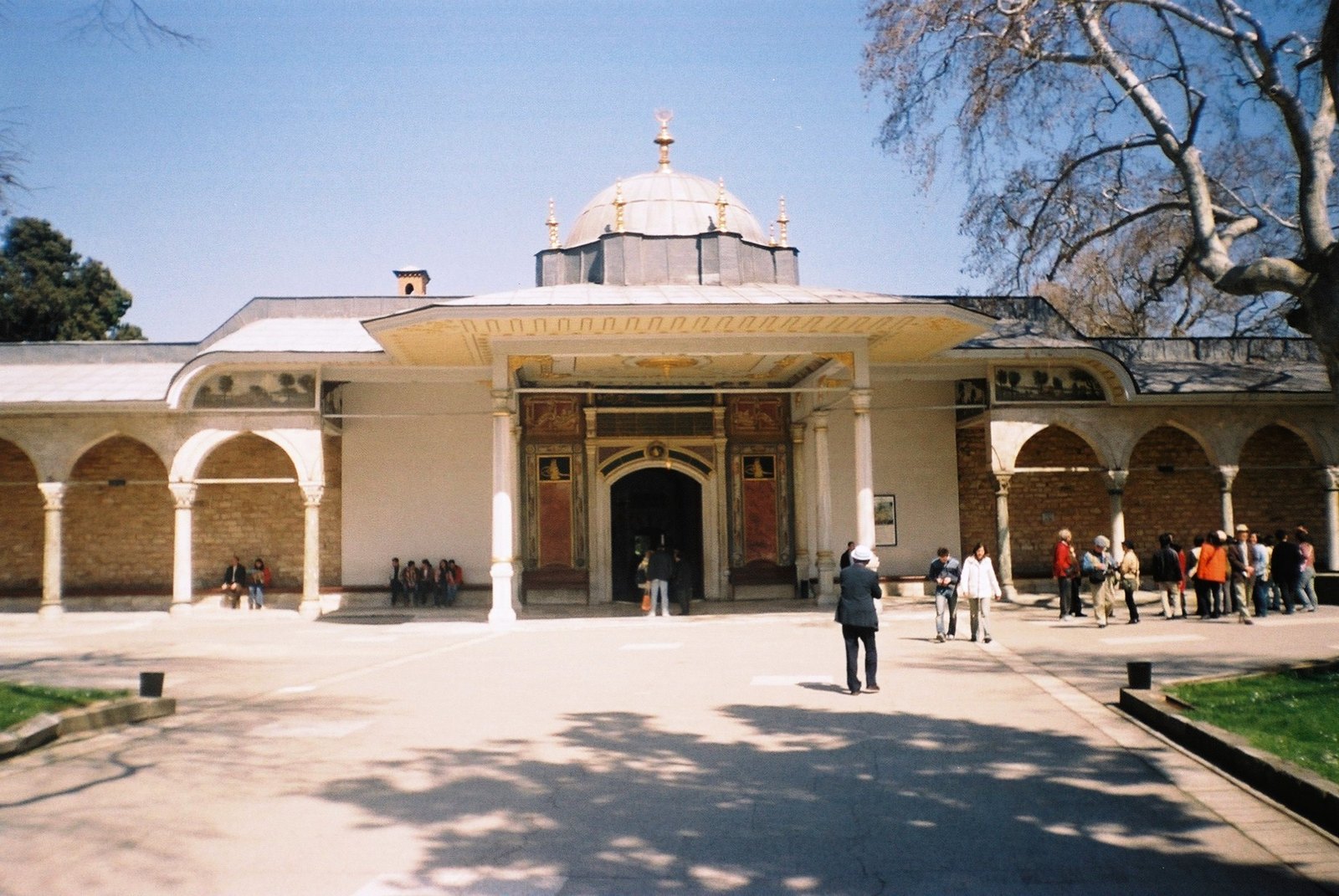
Some of these gifts, and many later ones, are preserved in the Topkapı Palace Museum in Istanbul, whose clock collection is one of the most important in the world for European clocks and watches made for the Ottoman court. It includes English, French, Austrian and Swiss pieces as well as clocks made in Istanbul.
Genevan watchmakers in Constantinople
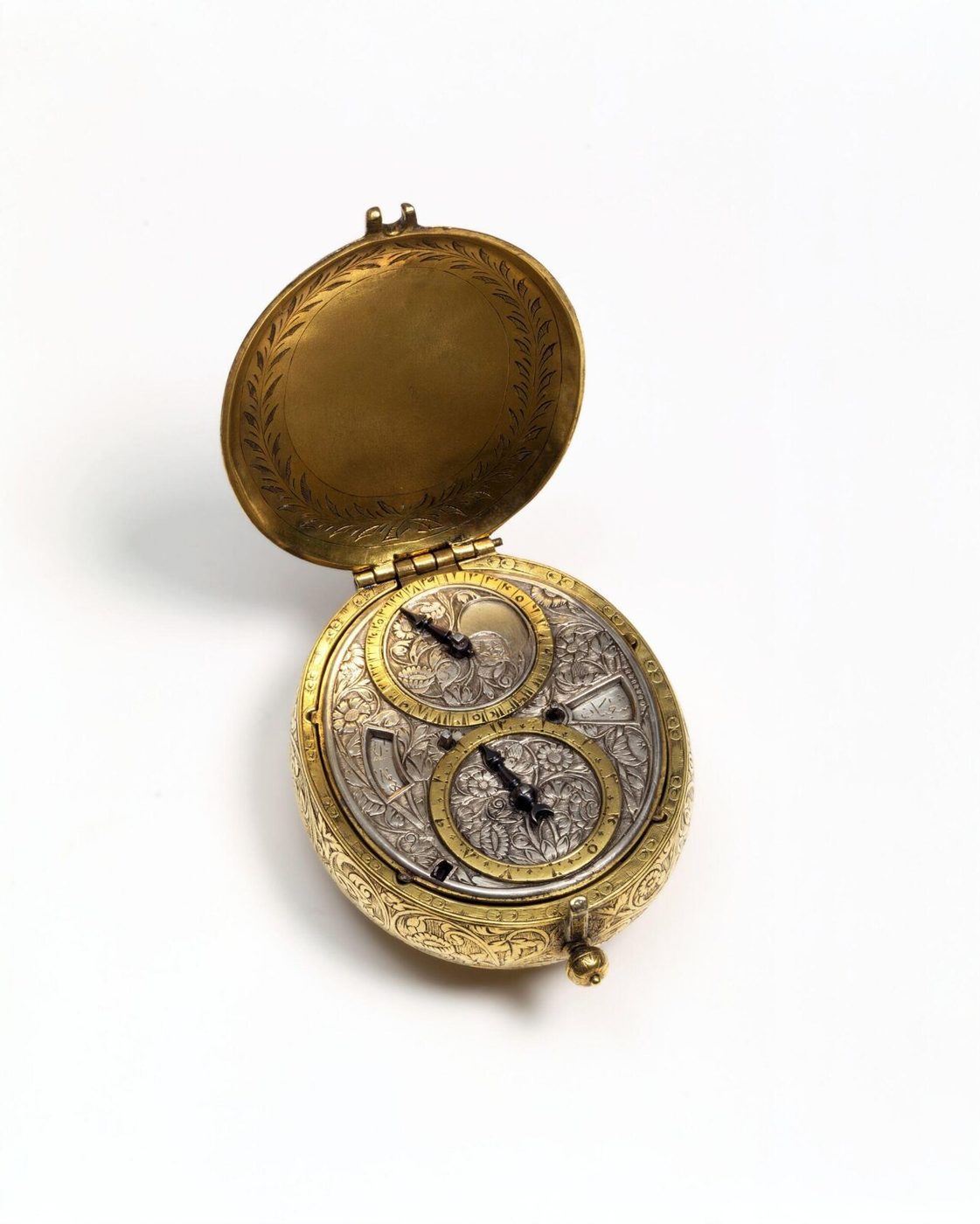
From the beginning of the 17th century, a community of Genevan watchmakers worked in Constantinople, especially in the Galata district where foreign merchants lived. They repaired imported watches, assembled and finished movements sent from Geneva, and made cases and dials to local taste. The Victoria and Albert Museum's records note that in April 1671 a Genevan merchant in Constantinople, Sébastien Chappuis, ordered fifty astronomical watches from one Genevan maker and forty from another; astronomical indications were valued because they helped with calculating religious festivals.
London and the Turkish market
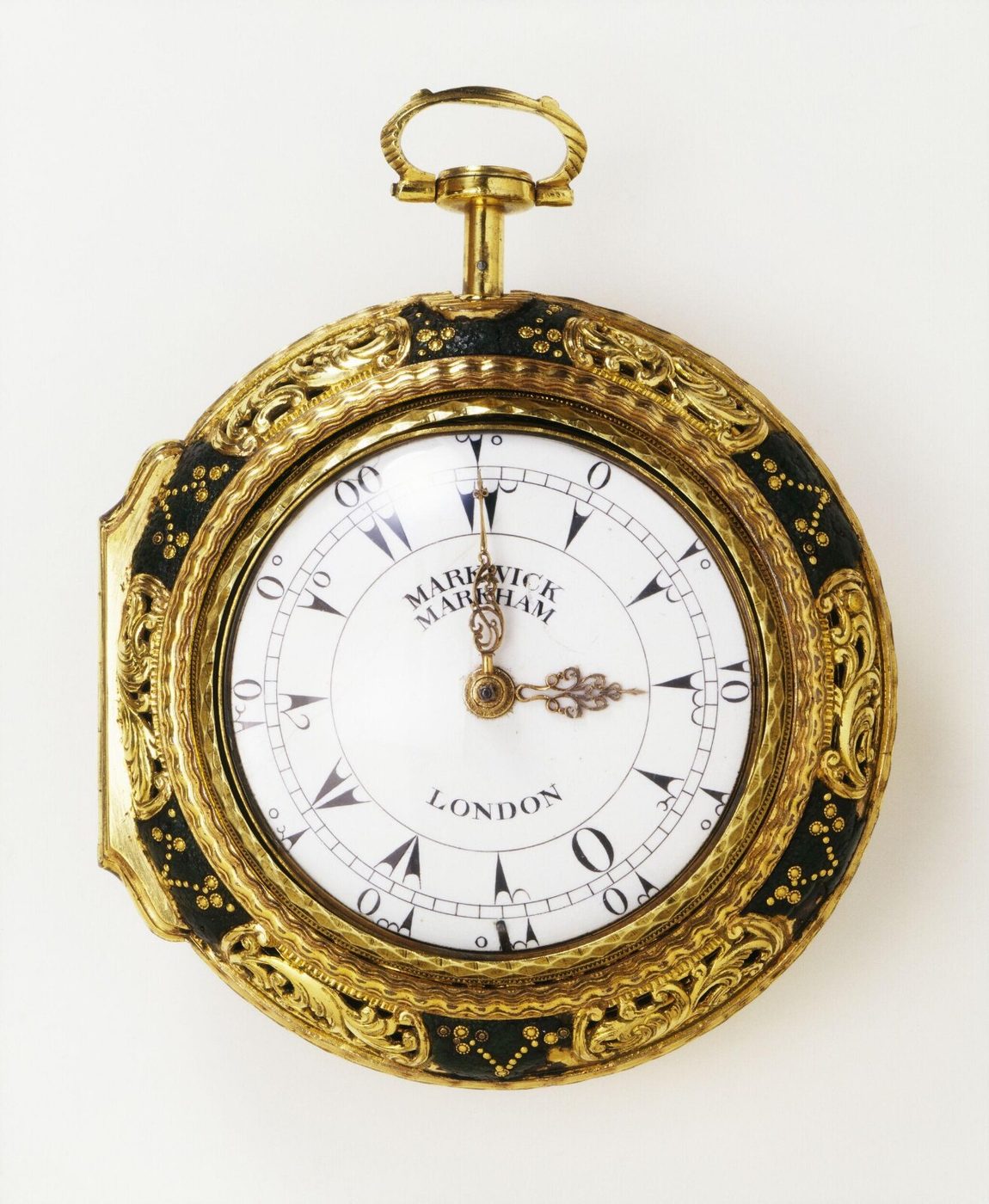
In the 18th century English makers came to dominate the trade. London watches were admired for their reliability, and English merchants of the Levant Company had long-established links with Ottoman ports. A number of London firms specialised in what was called the 'Turkey trade'. The partnership of James Markwick and Robert Markham, in business under their joint names from about 1725 to 1805 according to the V&A, was one of the most important; the name Markwick Markham continued in later partnerships, including with Francis Perigal and Louis Recordon.
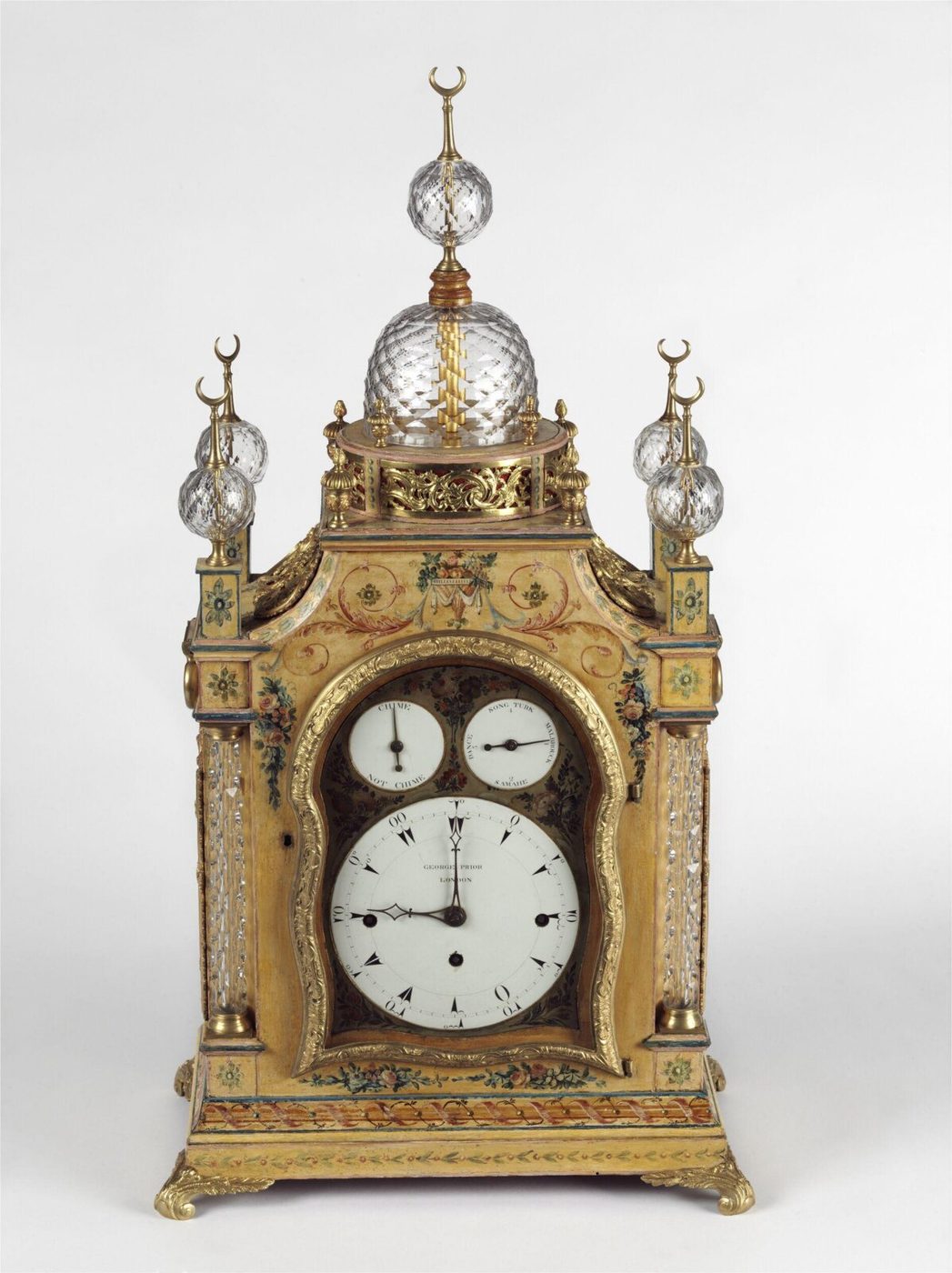
George Prior (1735–1814) was, in the V&A's words, the most significant clockmaker exporting clocks and watches to Turkey in the late 18th century. He exported thousands of watches and a smaller number of lantern clocks and musical bracket clocks, and he also retailed clocks made by other firms under his own name. Many were made and packed ready for export by the Clerkenwell firm of Thwaites. His successor Edward Prior, whom Museums Victoria records as working between 1800 and 1868, continued the specialisation well into the 19th century.
What made a watch 'for the Turkish market'
| Feature | What it looks like | Notes |
|---|---|---|
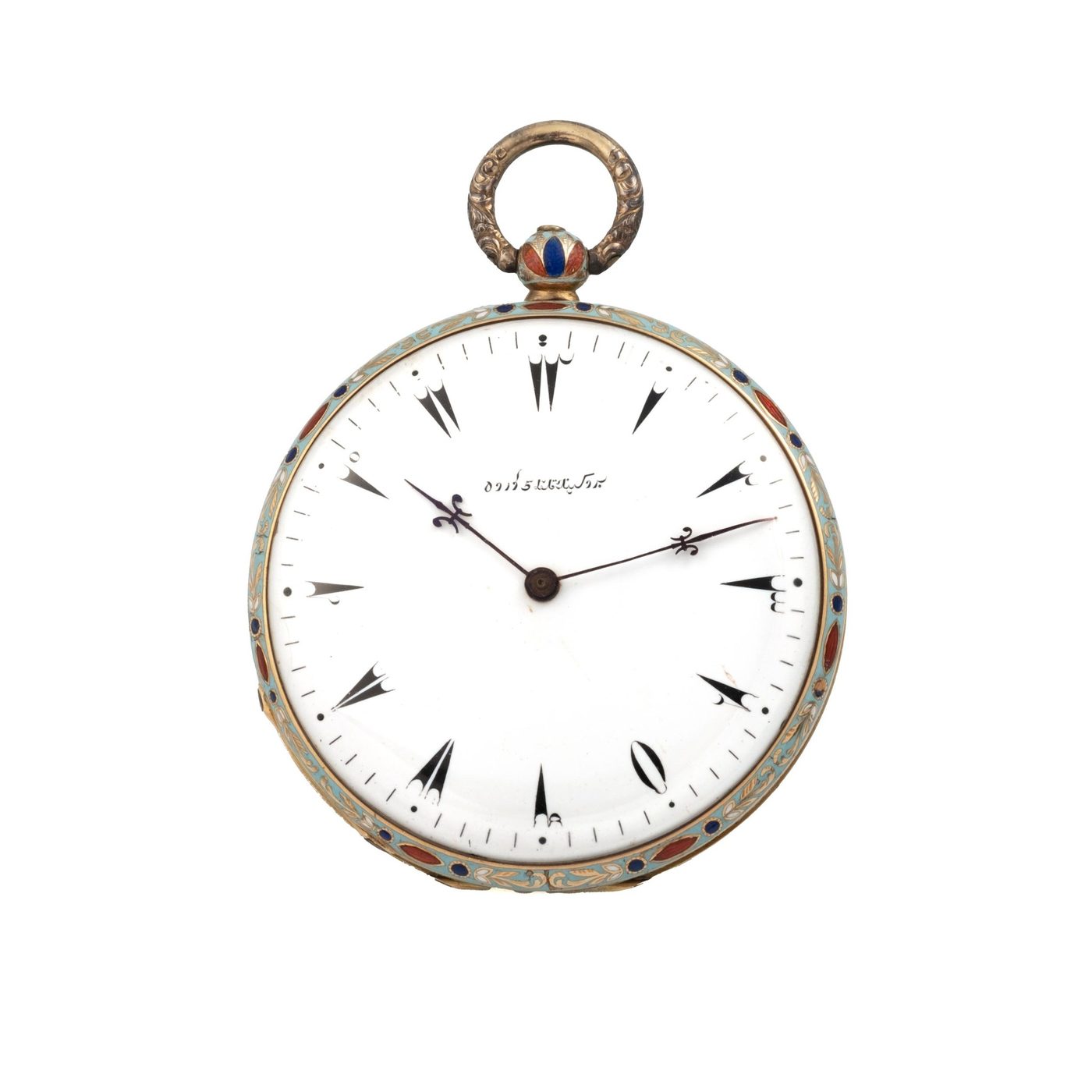
| Turkish numerals | Eastern Arabic numerals on the dial, sometimes with European numerals as well | The clearest single indicator |
| Multiple cases | Two, three or even four cases: a silver inner case and outer cases of silver, tortoiseshell or shagreen | Gave protection and display value; outer cases are often hallmarked separately |
| Verge escapement with fusee | Old-fashioned movement layout | Retained for this market long after English home-market watches adopted other escapements, valued for robustness and familiarity |
| Striking or repeating work | Bells or gongs, sometimes musical trains | Large striking watches were popular |
| Ornament | Crescent moons, floral and star patterns, occasionally the Sultan's cypher (tughra) | Applied to cases and clock pediments |
| Signatures | Maker's name sometimes repeated in Ottoman script | Pseudo-signatures also exist; treat with care |
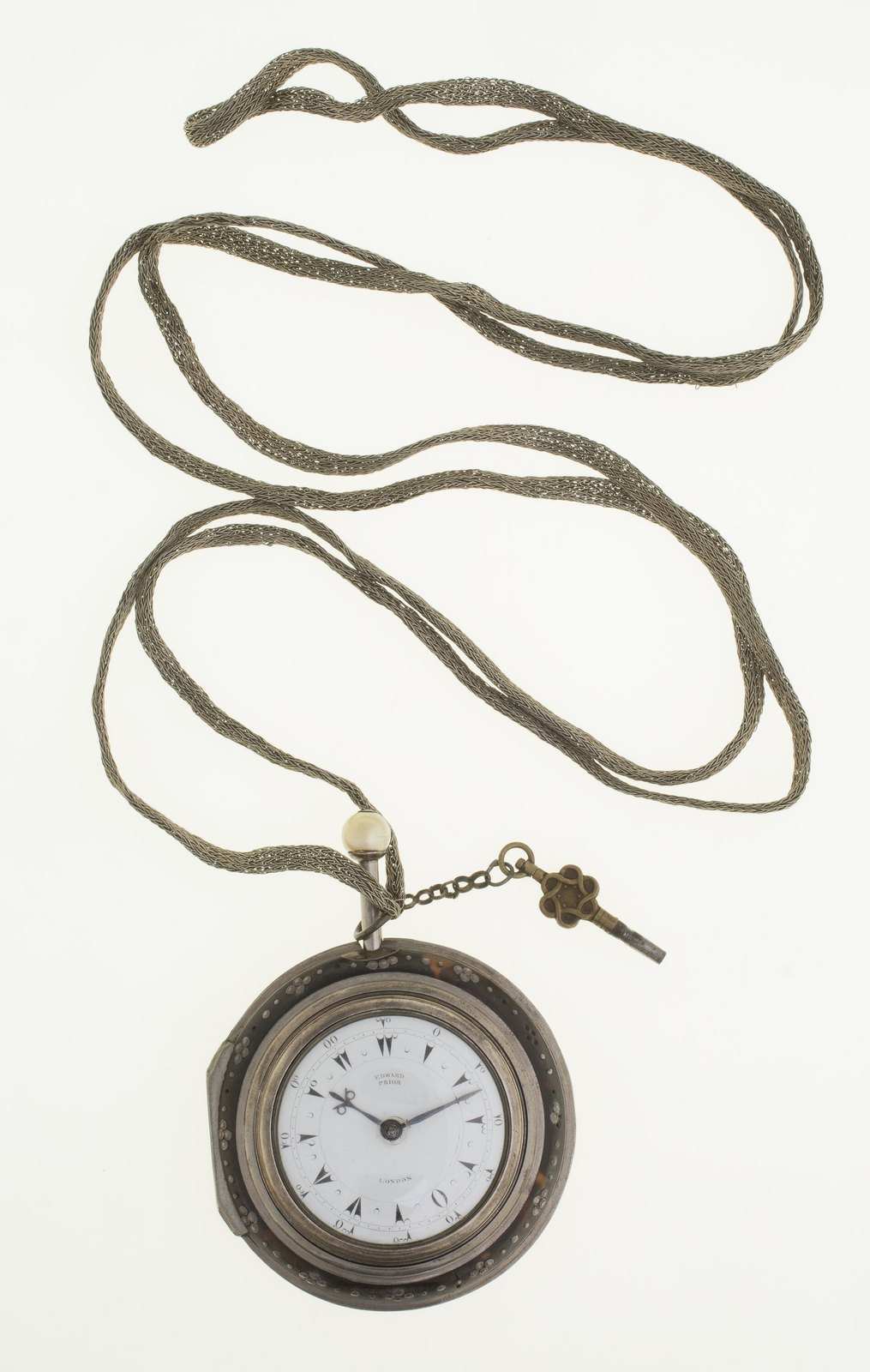
Hallmarks on these watches can give a precise date for each case, but different cases on the same watch often carry different years, as in the Edward Prior watch above. Cases were sometimes replaced or added in the Ottoman Empire, so the hallmark dates the case rather than the watch. Researchers also note that some watches signed with English names were made in Switzerland, or assembled from Swiss movements, to meet demand.
Swiss and French competition
From the late 18th century Swiss makers competed strongly for the Ottoman market, offering thinner watches with cylinder escapements, enamelled cases and lower prices. Genevan and Neuchâtel firms produced watches with Turkish numerals in large numbers in the 19th century; auction archives contain many such pieces, often signed with Ottoman-script names of retailers or with invented signatures. French makers, including Breguet, also supplied Ottoman clients with high-grade watches.
Ottoman clockmakers
Imported watches needed local skill to keep them going. Istanbul had its own clockmakers, repairers and case makers, many working in Galata and around the Grand Bazaar, and some Ottoman makers produced clocks of their own, often combining European movements with locally made cases and dials. Their work is less well documented in Western-language sources than the export trade, and signatures are rarer, so attributions should be treated with caution until museum research confirms them.
Clock towers and the late empire
In the 19th century public clocks became symbols of modernisation across the Ottoman Empire. Clock towers were built in many cities, particularly during the reign of Sultan Abdülhamid II (1876–1909), when towers were erected to mark his jubilee in 1900–01; the clock tower at Izmir, completed in 1901, is the best-known example. These towers, along with the railway and telegraph, pushed public life towards European equal-hour time, though alla turca time continued in religious and everyday use. The Turkish Republic adopted the international 24-hour system by law in 1925.
- Muvakkithane: timekeeper's houses at mosques, where prayer times were determined and clocks regulated.
- Tughra: the Sultan's monogram, occasionally added to clocks and watches made for the court.
- Alla turca / alla franca: Ottoman (sunset-based) and European (midnight-based) time systems, often shown side by side.
- Turkey trade: the 18th-century London term for export work for the Ottoman market.
Studying these objects
The standard study remains Otto Kurz's European Clocks and Watches in the Near East (1975), which uses diplomatic records, inventories and surviving objects. David King's work on Islamic astronomical timekeeping explains the muwaqqit tradition and the instruments that preceded mechanical clocks. For individual objects, museum catalogues — the V&A, British Museum, Science Museum Group and Topkapı Palace — are the most reliable sources. The Atlas catalogue records quoted here reproduce what each institution or auction house states; they have not been independently re-examined.
Sources & further reading
- European Clocks and Watches in the Near East — Otto Kurz, Warburg Institute / Brill, 1975.
- In Synchrony with the Heavens: Studies in Astronomical Timekeeping and Instrumentation in Medieval Islamic Civilization — David A. King, Brill (Leiden), 2004–2005.
- Revolution in Time: Clocks and the Making of the Modern World — David S. Landes, Harvard University Press, 1983.