
Component
Index regulator
Also known as: Raquette · Rücker
How it works
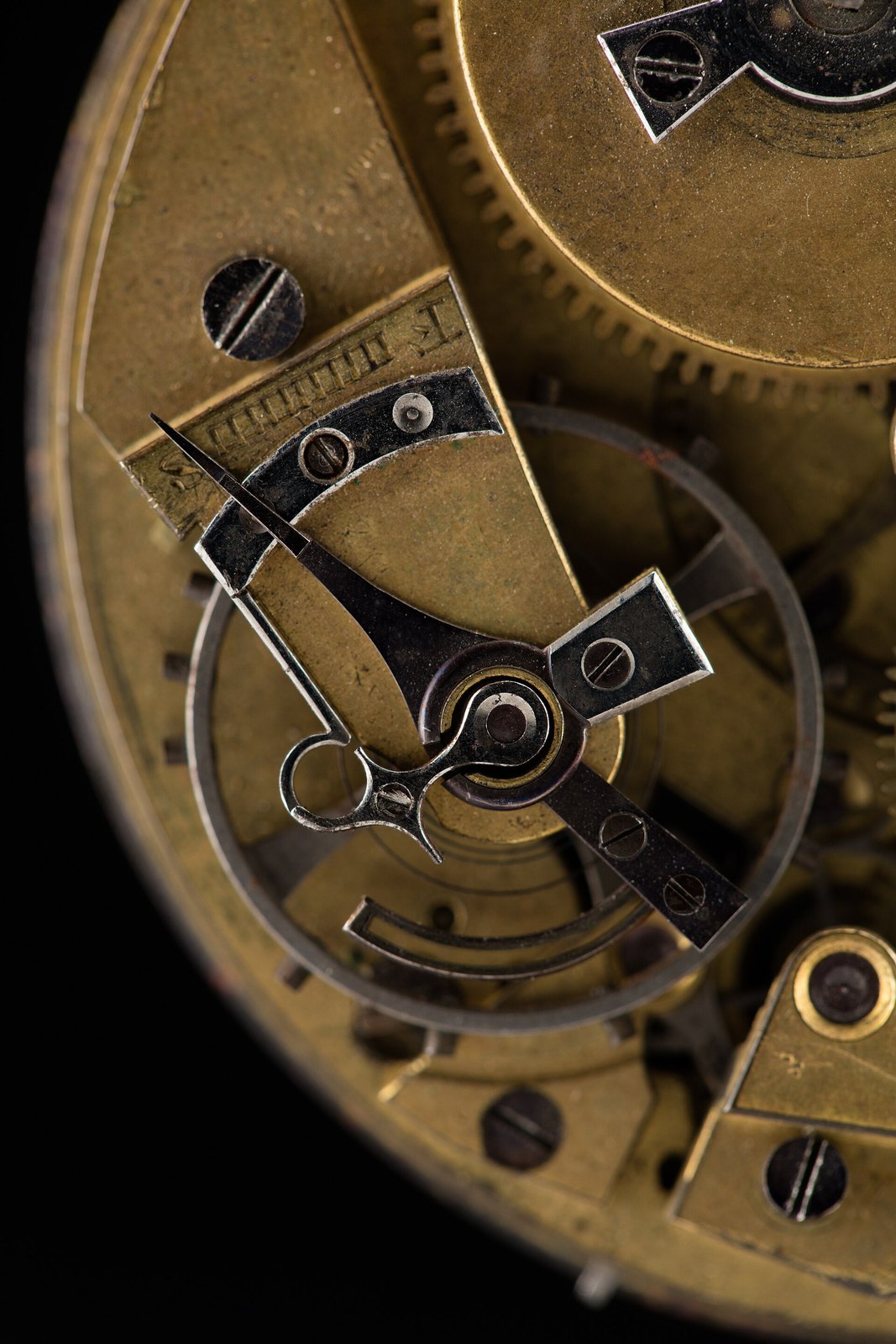
Two curb pins embrace the outer turn of the balance spring near its stud. Moving the index lever shifts the pins along the spring, changing its effective length and so the rate. Fine-adjustment forms include the swan-neck, eccentric and micrometer regulators.
Why it was invented
It allows the watchmaker or owner to adjust the rate without changing balance or spring.
- Invented
- 18th century
- Credited to
- No single inventor documented
- Historical period
- Precision & Scientific Horology
History and development
Before the index, English watches were regulated with a Tompion-style regulator disc. Joseph Bosley's index regulator (patented 1755) spread widely. 'Free-sprung' balances with timing screws or weights, which avoid curb pins altogether, are preferred in high precision work.
Earlier English watches were regulated with a small silver disc on the top plate, engraved with numbers, which moved a rack and the curb pins along the spring; Joseph Bosley's patent of 1755 replaced it with a lever and scale on the balance cock, and by the end of the 18th century the index was usual in English, French and Swiss watches.
Fine adjusters were added in the 19th century, when railway timekeeping demanded small, repeatable corrections: the curved swan-neck spring pressed by a screw, the micrometer screw and the eccentric stud. Modern movements often combine an index with an adjustable stud carrier, such as ETA's Etachron system, so the beat can be set as well as the rate.
High-precision watches increasingly dispensed with the index altogether. In a free-sprung balance the rate is set by screws or weights on the balance rim — Patek Philippe's Gyromax (introduced around 1950) and Rolex's Microstella are well-known examples — so no curb pins touch the hairspring and its isochronism is preserved.
How to recognise it
- A lever on the balance cock with a pointer moving against a scale marked F/S (fast/slow) or A/R (avance/retard).
- Two curb pins close to the hairspring stud at the lever's inner end.
- Fine adjusters: a curved swan-neck spring with a screw, or an eccentric screw beside the lever.
Names in other languages
| English | Français | Deutsch | Italiano | Español |
|---|---|---|---|---|
| Index regulator | Raquette | Rücker | Racchetta | Raqueta |
From the Atlas glossary; French and German follow trade usage, Italian and Spanish await specialist review.
Related mechanisms
Further reading
In the Academy
- Reading a movement: plates, bridges, jewels and winding
14 min · A practical tour of what you see when you open a watch: the mainplate and bridges, the train, the balance cock, the jewels and the winding work — and what each tells a researcher.