
Clocks · Clock
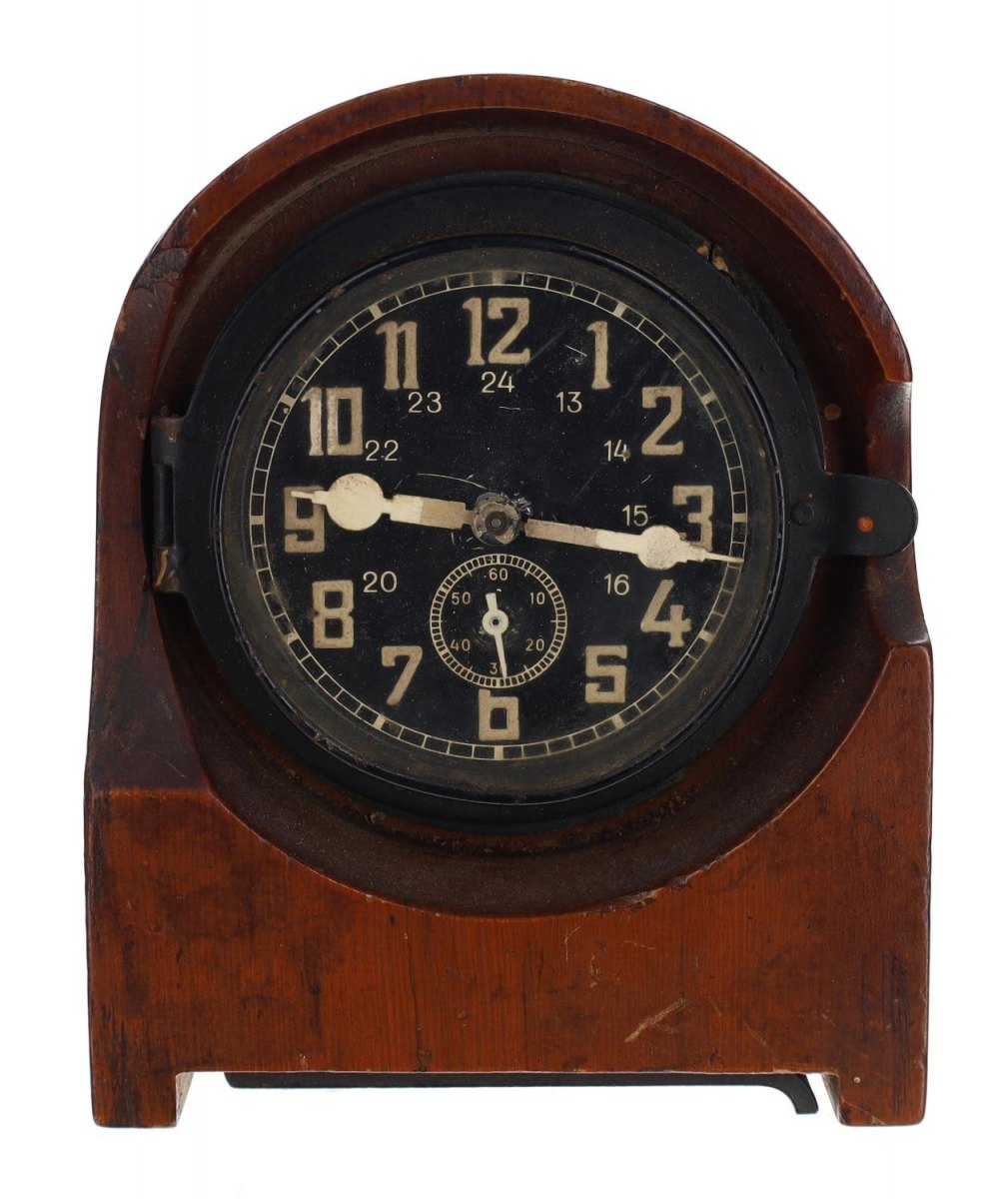
WWII German 'Stationsuhr' (radio/station clock) by Tobias Bäuerle & Söhne, 1942
- Maker / attribution
- Tobias Bäuerle & Söhne (maker)
- Date
- 1942
- Historical period
- Golden Age of Mechanical Watchmaking (1900 – 1945)
- Country of origin
- Germany
- Object type
- Clock
- Dimensions
- Height 5 in (13 cm)
- Auction house
- Gardiner Houlgate (auction house), Corsham
- Lot
- Sale 42, lot 1253A
- Credit line
- Auction lot record: lot 1253A, Fine Clocks & Related Items, Gardiner Houlgate (22nd October 2026)
- Catalogue title (original)
- Rare WWII German 'Stationsuhr' (radio/station clock) by Tobias Bäuerle & Söhne, no. 5674, dated 1942, black dial with luminous Arabic numerals and inner twenty-four hour chapter, bold white hands and (English)
View the source record (auction lot) ↗ (opens another website in a new tab)Suggest a correction
Record summary
Catalogued by Gardiner Houlgate (auction house), Corsham (lot Sale 42, lot 1253A), this is a clock by Tobias Bäuerle & Söhne, made in Germany, dated 1942. The Atlas places it in the Golden Age of Mechanical Watchmaking period (1900 – 1945) of its Clocks collection. Recorded dimensions: Height 5 in (13 cm). The record is illustrated with 3 photographs.
Assembled from the source record's structured fields. Dates and attributions are given as the source states them; where a field is missing the Atlas leaves it blank rather than estimating.
Catalogue description
Lot description — Gardiner Houlgate
Rare WWII German 'Stationsuhr' (radio/station clock) by Tobias Bäuerle & Söhne, no. 5674, dated 1942, black dial with luminous Arabic numerals and inner twenty-four hour chapter, bold white hands and subsidiary seconds dial, in a hinged cased marked 'Heereseigenium' 'T.B&S', arched top wooden case with folding iron feet support brackets, 5" high ** From the David Read Collection
Historical context
Golden Age of Mechanical Watchmaking (1900 – 1945)
The wristwatch displaces the pocket watch; waterproof cases, self-winding and grand complications.
Between 1900 and 1945 clocks were electrified: master-clock systems ran factories and offices, synchronous mains clocks entered homes, and the Shortt free-pendulum clock set new standards of accuracy before the first quartz clocks (1927). Art Deco design reshaped mantel and table clocks.
Read the period in the timelineMore clocks from this periodEarlier: Industrial Revolution
Atlas type guide
Turret, tower and public clocks
The first mechanical clocks of the late thirteenth and fourteenth centuries were large iron striking clocks in towers, monasteries and cathedrals, driven by falling weights and controlled by a verge escapement with a foliot or wheel balance. They struck a bell rather than displaying the time, and only gradually acquired dials. Public clocks ordered civic life, regulating markets, work and worship.
From the seventeenth century the pendulum and then the anchor and pinwheel escapements made turret clocks far more accurate. In the nineteenth century firms such as Dent, Smith of Derby, Gillett & Johnston, J. F. Weule and Collin made cast-iron flatbed movements, and Edmund Beckett Denison's gravity escapement for the Great Clock of Westminster (1859) became the standard for accurate tower clocks.
What to look for
- Frame construction: early wrought-iron 'birdcage' or posted frames versus later cast-iron flatbed or plate-and-spacer frames.
- The escapement: verge and foliot, anchor, pinwheel or double three-legged gravity escapement.
- Striking and chiming trains with count wheels or rack striking.
- Maker's plates and dates cast or engraved on the frame.
Dating clues
- Wedged and riveted wrought-iron frames generally predate 1700.
- Flatbed cast-iron movements date from about 1840 onward.
- Electrical synchronisation and electric winding appear from about 1900.
General guidance written by the Atlas editors about this kind of object. It is not a statement about this particular piece; for that, rely on the source record above and on physical examination.
Related records
Clocks · c. 1900
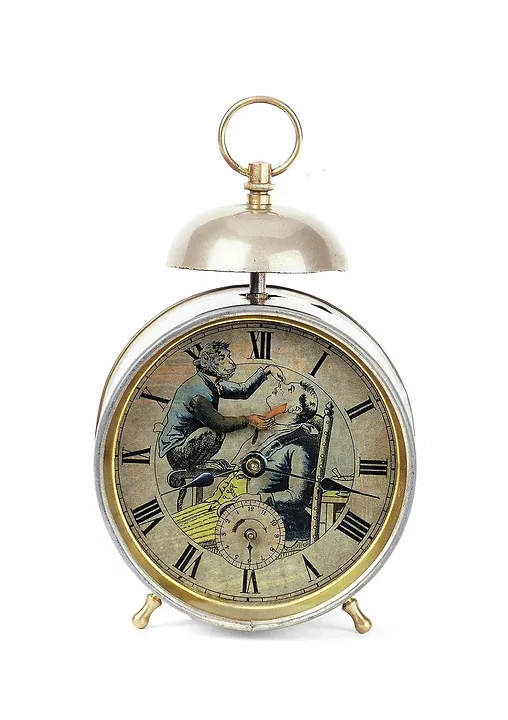
Alarm clock by Union Clock Company, Germany, c. 1900
German Clock Museum
Clocks · 1900
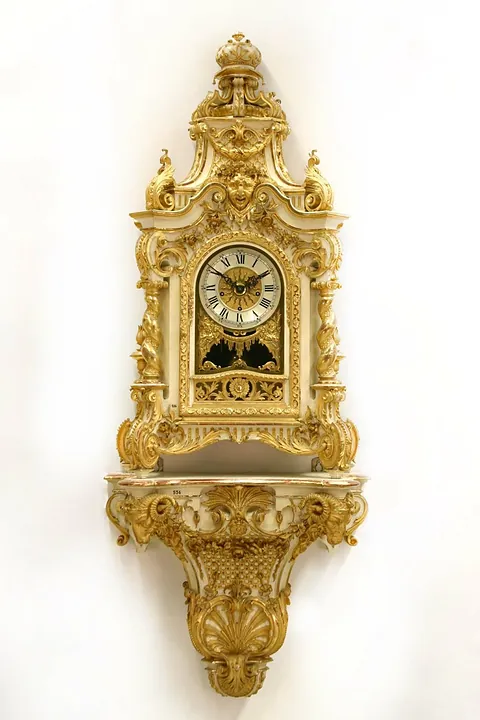
Clock by Josef Münzer, Germany, 1900
German Clock Museum
Clocks · c. 1900
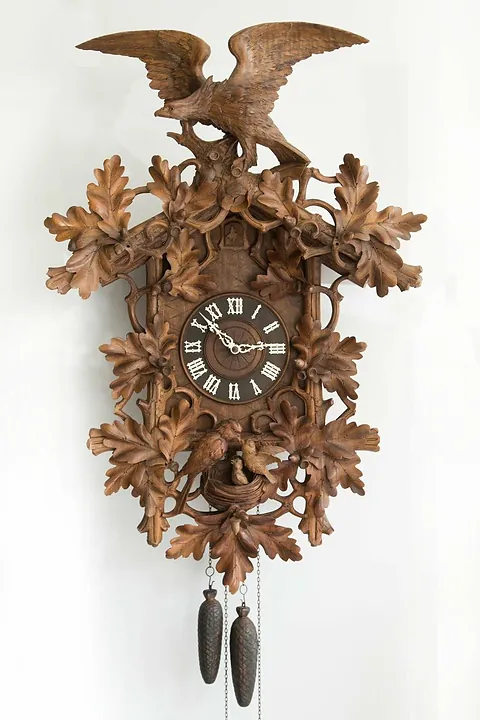
Cuckoo / black forest clock by Gebr. Lehnis, Germany, c. 1900
German Clock Museum
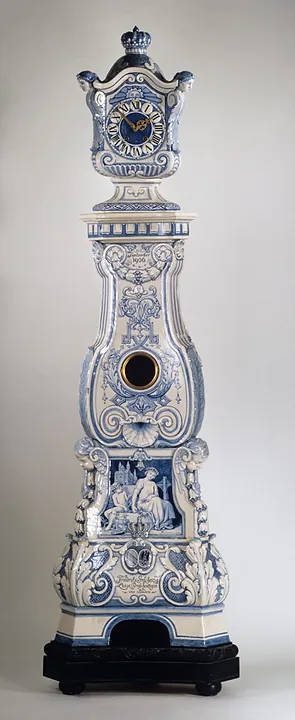
Clocks · 1900–1999
Longcase clock by Staatliche Majolika-Manufaktur Karlsruhe, Germany, 1900–1999
Badisches Landesmuseum Karlsruhe
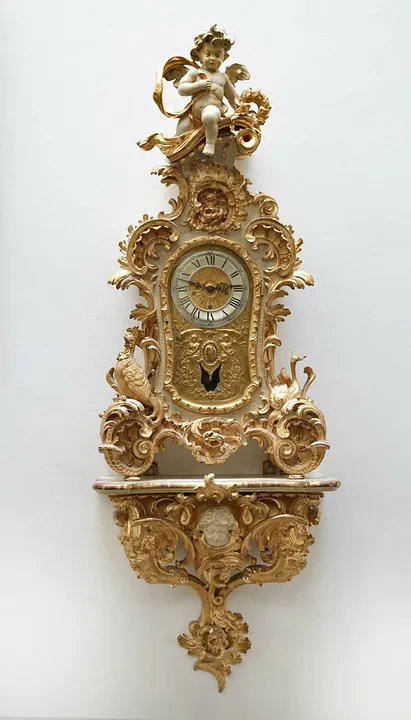
Clocks · c. 1900
Mantel clock by A. G. für Uhrenfabrikation Lenzkirch, Germany, c. 1900
German Clock Museum
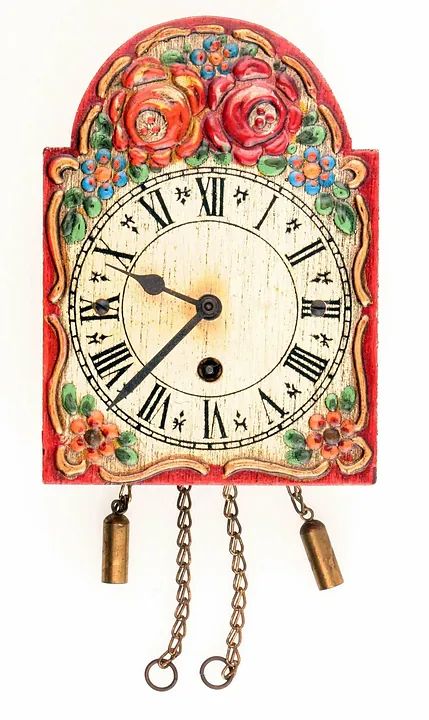
Clocks · 1900–1999
Mantel clock by Wintermantel & Co., Germany, 1900–1999 (no. 56059)
German Clock Museum
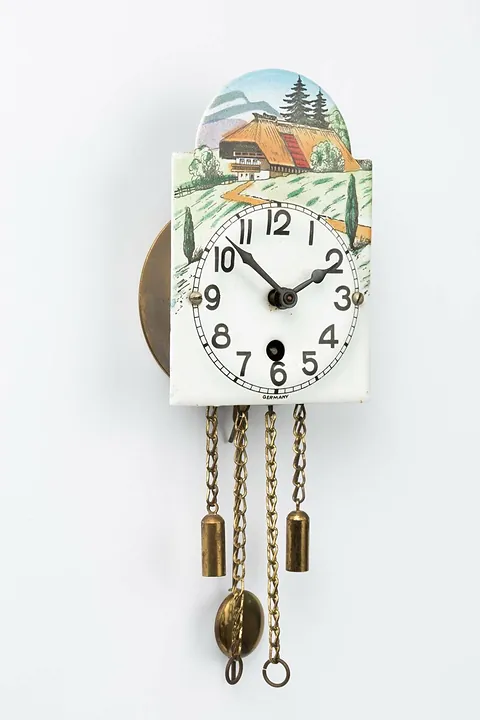
Clocks · 1900–1999
Mantel clock by Wintermantel & Co., Germany, 1900–1999 (no. 56060)
German Clock Museum
Clocks · 1900–1999
Mantel clock by Wintermantel & Co., Germany, 1900–1999 (no. 56061)
German Clock Museum