
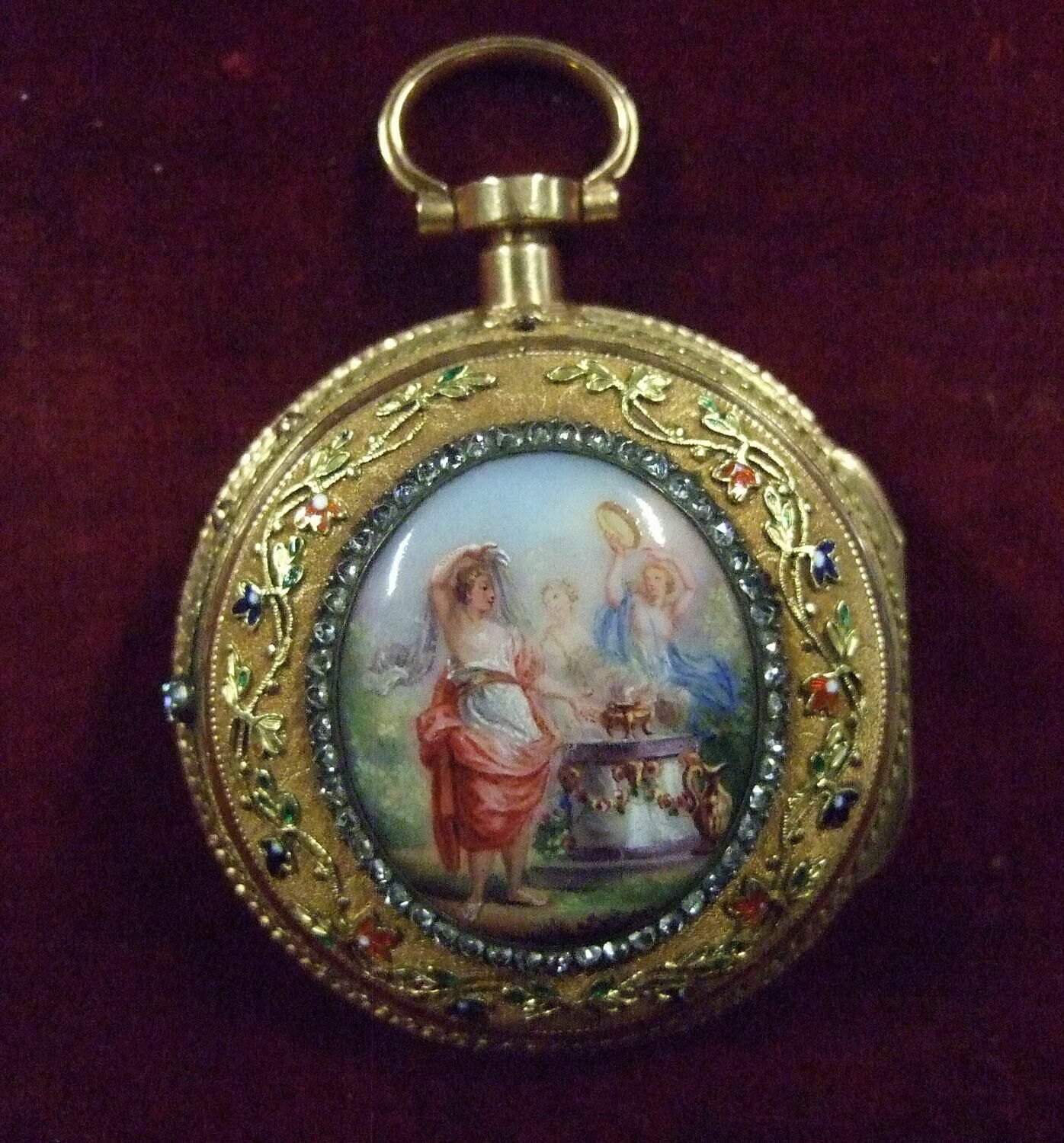
Pocket Watches · Watch
Watch by Jean-Antoine Lépine, France, 1750–1775
- Maker / attribution
- Jean-Antoine Lépine (Horloger)
- Date
- 1750–1775
- Historical period
- Precision & Scientific Horology (1750 – 1850)
- Country of origin
- France
- Place
- Paris, France
- Object type
- Watch
- Materials / technique
- diamond
- Dimensions
- diameter 4 cm; thickness 1,8 cm
- Holding institution
- Musée du Louvre, Paris
- Accession / object no.
- OA 8483
- Credit line
- Musée du Louvre, Département des Objets d'art du Moyen Age, de la Renaissance et des temps modernes
- Catalogue title (original)
- Montre ronde (French)
View the source record ↗ (opens another website in a new tab)Suggest a correction
Record summary
Held and catalogued by Musée du Louvre, Paris (object number OA 8483), this is a watch by Jean-Antoine Lépine, made in Paris, France, dated 1750–1775. The Atlas places it in the Precision & Scientific Horology period (1750 – 1850) of its Pocket Watches collection. Materials and techniques recorded by the source: diamond. Recorded dimensions: diameter 4 cm; thickness 1,8 cm. The record is illustrated with 2 photographs.
Assembled from the source record's structured fields. Dates and attributions are given as the source states them; where a field is missing the Atlas leaves it blank rather than estimating.
Catalogue description
Catalogue description — Musée du Louvre (French)
Montre ronde, fond orné d'un médaillon ovale émaillé représentant une danse antique devant un autel, un rang de roses de diamant l'entourant, le pourtour décoré de fleurs émaillées. Lunettes entourées d'entrelacs. Cadran à chiffres romains, aiguilles ornées de roses de diamant. Mouvement muni d'un échappement à roue de rencontre et d'une sonnerie à répétition sur timbre ou à toc. Coq circulaire ajouré de rinceaux.
Shown in the original language of the source catalogue. An editor-reviewed English translation has not yet been published; we do not publish machine translations as authoritative text.
Dating and period as catalogued (French)
Epoque / période : Louis XV (1715-1774) (Occident->époque moderne = Ancien Régime->dynastie des Bourbons) · · Date de création/fabrication : 1750 - 1775
Shown in the original language of the source catalogue. An editor-reviewed English translation has not yet been published; we do not publish machine translations as authoritative text.
Materials and techniques as catalogued (French)
Matériau : or (plusieurs couleurs) · Matériau : diamant · Technique : techniques métal (orfèvrerie) · Matériau : laiton (doré) · Technique : émaillé = émaillage = émail = émaux (techniques métal)
Shown in the original language of the source catalogue. An editor-reviewed English translation has not yet been published; we do not publish machine translations as authoritative text.
Inscriptions & marks
Poinçon : ; illisible (sur la tête du pendant) ; Signature : ; cadran signé : L'Epine/A.PARIS ; mouvement signé : L'Epine/A PARIS
Provenance
collection Jules-René Olivier (1855-1933), horloger-collectionneur ; legs de sa sœur Marie-Julie Olivier, n° 695 ; comité du 24 janvier 1935 ; conseil du 5 février 1935 ; décret du 4 août 1935 ; déposée au musée des Arts décoratifs le 4 novembre 1935 ; retour au musée du Louvre, arrêté du 5 février 1982.
Historical context
Precision & Scientific Horology (1750 – 1850)
Harrison solves longitude; Mudge invents the lever; Breguet's Paris workshop defines the modern watch.
From 1750 to 1850 the watch became a precision instrument. Mudge's lever escapement, the cylinder escapement, Lépine's thin bar calibre, Breguet's innovations (overcoil, tourbillon, perpétuelle) and the pocket chronometer of Arnold and Earnshaw all date from this period, while verge watches remained common in cheaper production.
Read the period in the timelineMore pocket watches from this periodEarlier: Early Modern Horology
Atlas type guide
Hunter, half-hunter and open-face watches
In the nineteenth century the pocket watch case settled into a few standard forms. The hunter (French savonnette) has a hinged front lid protecting the crystal — reputedly for riders who could not risk broken glass — and is opened by pressing the crown or a push-piece. The half-hunter has a small window in the lid so the hands can be read when closed. The open-face (lépine) watch has no front cover, with the crown at 12; hunters normally carry the crown at 3.
Case types also changed with winding: key-wound watches gave way to keyless (stem-wound) mechanisms after Adrien Philippe's and others' designs of the 1840s, with pendant setting or lever setting.
What to look for
- Crown position relative to the seconds dial: at 3 for hunters, at 12 for open-face watches.
- Spring-loaded front cover with a push-piece in the pendant.
- Half-hunter chapter ring enamelled on the lid.
- Key holes in the inner dome (cuvette) versus keyless winding.
Dating clues
- Keyless winding spread after c. 1850 and became standard by c. 1890.
- English hallmarks inside gold and silver cases give the year of assay.
General guidance written by the Atlas editors about this kind of object. It is not a statement about this particular piece; for that, rely on the source record above and on physical examination.
Read next:Detached lever escapement
Related records
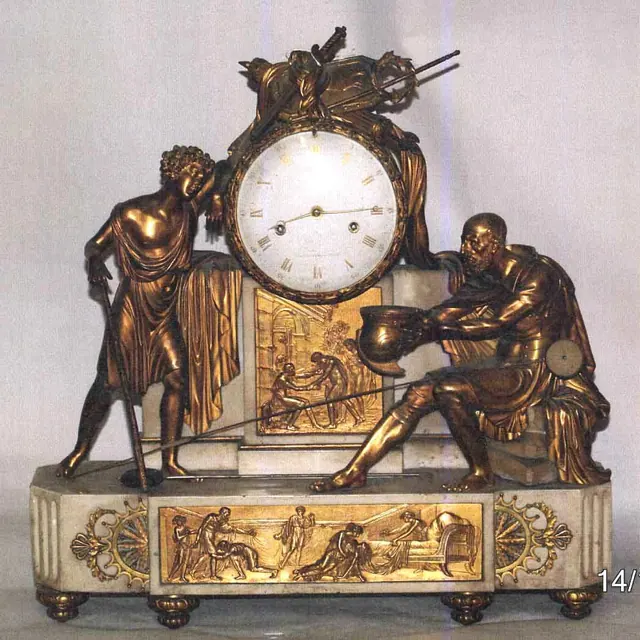
Clocks · 1800–1815
Mantel clock by Jean-Antoine Lépine, France, 1800–1815
Musée du Louvre, Paris
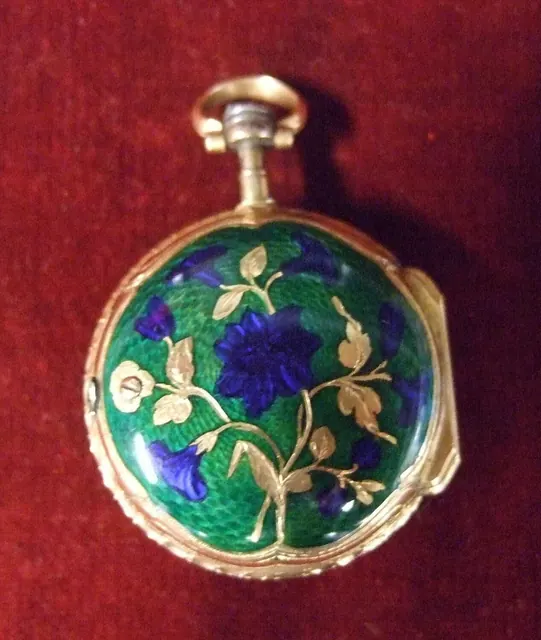
Pocket Watches · 1770–1800
Watch by Jean-Antoine Lépine, France, 1770–1800
Musée du Louvre, Paris
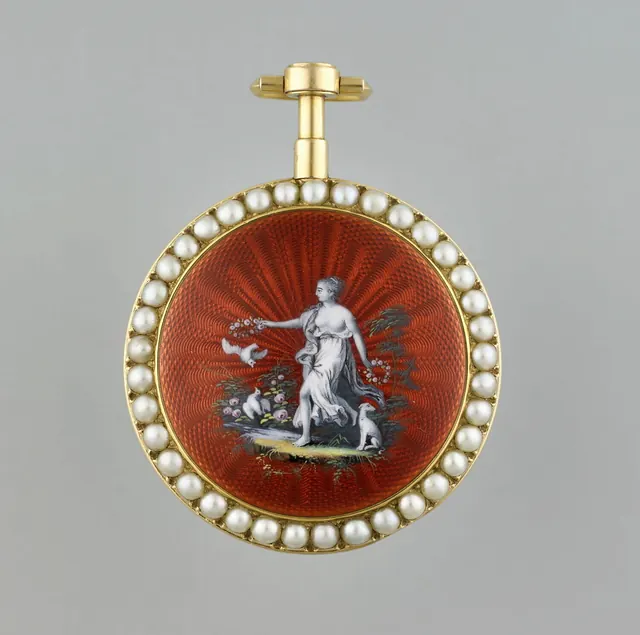
Pocket Watches · 1789–1790
Watch by Jean-Antoine Lépine, France, 1789–1790
Musée du Louvre, Paris
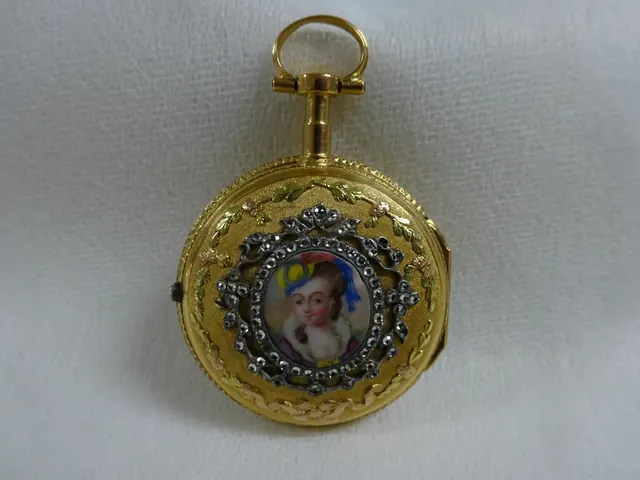
Pocket Watches · 1770–1800
Watch by Jean-Antoine Lépine, France, 1770–1800
Musée du Louvre, Paris
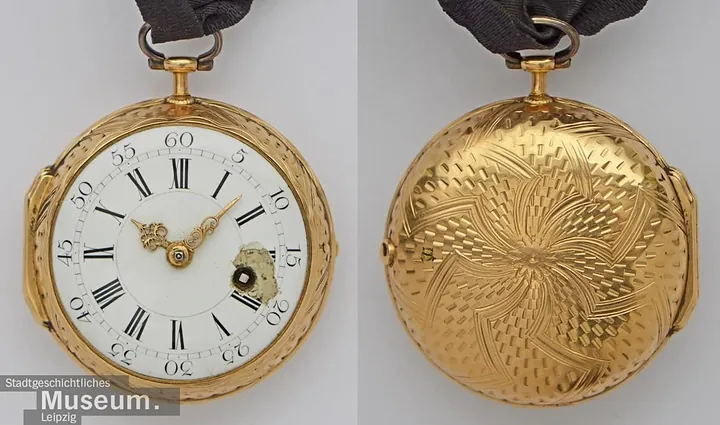
Pocket Watches · 1745–1755
Pocket watch by Jean Baptiste Baillon, France, 1745–1755
Museum of City History Leipzig
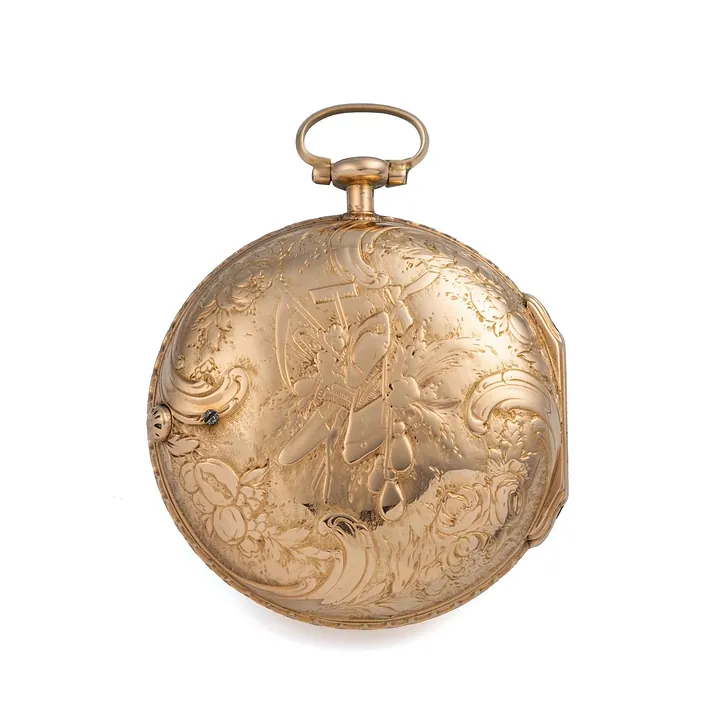
Pocket Watches · c. 1750
Baillon À Paris pocket watch, c. 1750
Antiquorum auction archive, Geneva
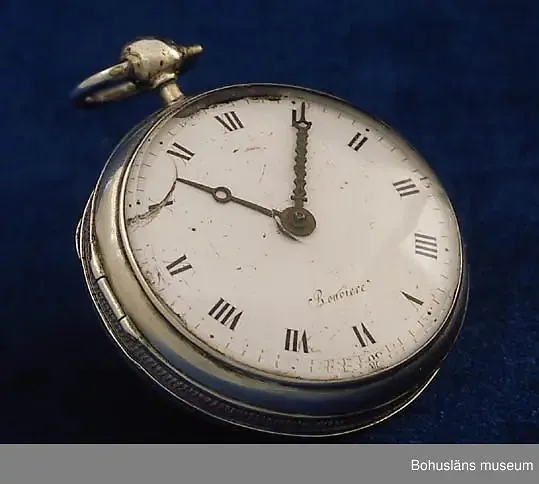
Pocket Watches · 1750–1780
Pocket watch by BONBIERE, France, 1750–1780
Bohuslän Museum
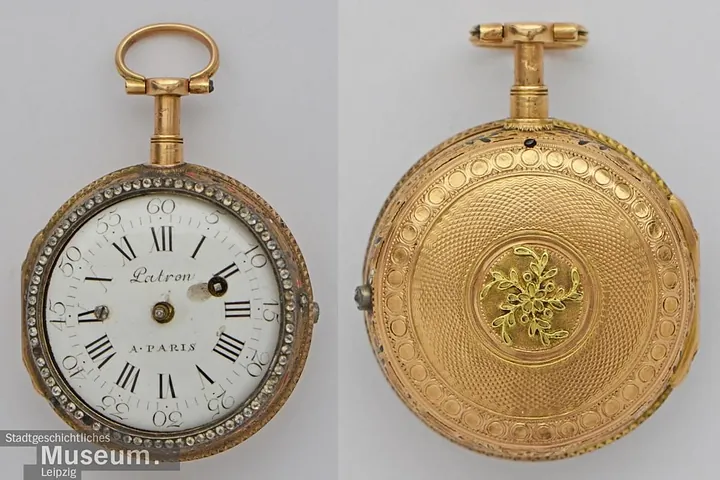
Pocket Watches · 1750
Pocket watch by Patron, France, 1750
Museum of City History Leipzig