
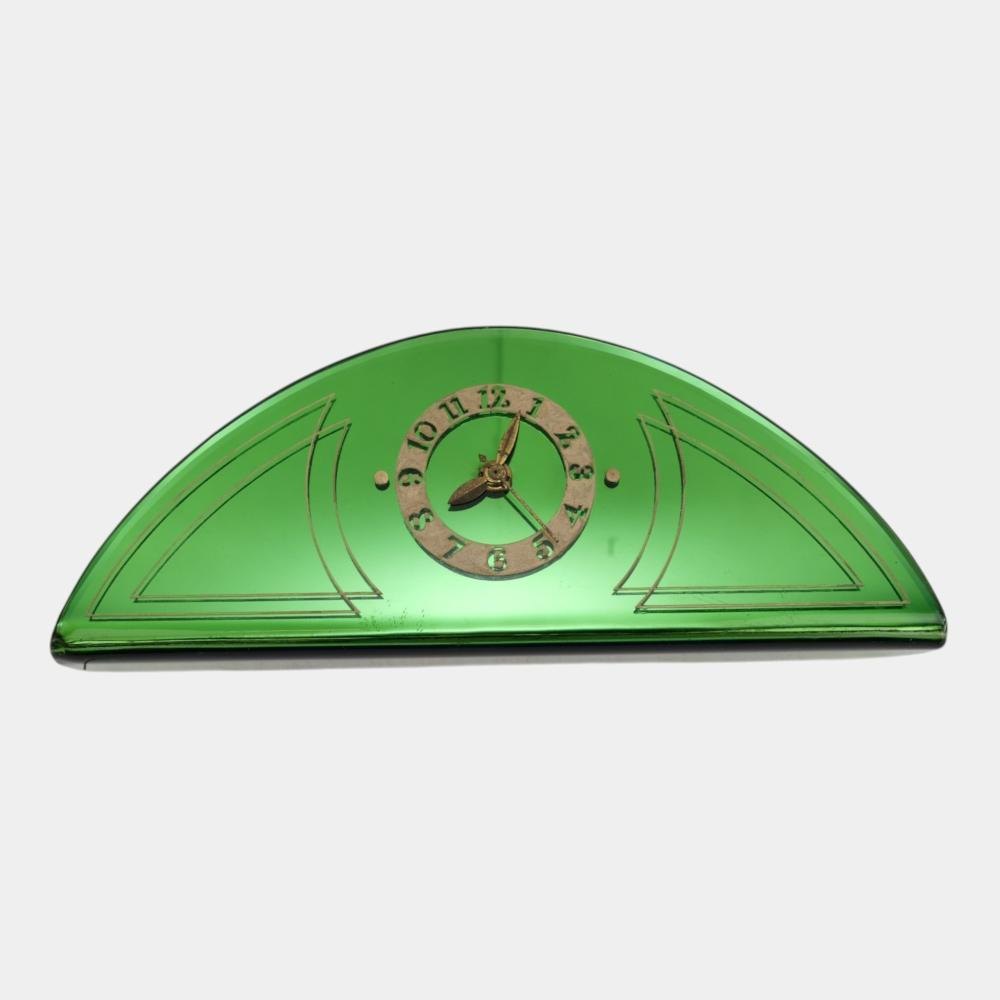
Clocks · Mantel clock
Waltham Watch Co. 1930s Art Deco Green Glass Body "Fryart" Line Mantel Clock
- Maker / attribution
- Waltham (maker)
- Date
- 1930s
- Historical period
- Golden Age of Mechanical Watchmaking (1900 – 1945)
- Country of origin
- United States
- Object type
- Mantel clock
- Materials / technique
- silver, glass
- Auction house
- Invaluable auction listings
- Lot
- Lot 8DFB54AA2C
- Credit line
- Auction lot record: lot 169, Decorative Arts And Fine Objects Auction Day 2, Crafted Auctions (2026), via Invaluable
- Catalogue title (original)
- Waltham Watch Co. 1930s Art Deco Green Glass Body "Fryart" Line Mantel Clock (English)
View the source record (auction lot) ↗ (opens another website in a new tab)Suggest a correction
Record summary
Catalogued by Invaluable auction listings (lot Lot 8DFB54AA2C), this is a mantel clock by Waltham, made in United States, dated 1930s. The Atlas places it in the Golden Age of Mechanical Watchmaking period (1900 – 1945) of its Clocks collection. Materials and techniques recorded by the source: silver, glass. The record is illustrated with 4 photographs.
Assembled from the source record's structured fields. Dates and attributions are given as the source states them; where a field is missing the Atlas leaves it blank rather than estimating.
Catalogue description
Lot description — Crafted Auctions
Professional, fast, and affordable in house shipping available for all items. For higher resolution images please visit bid.craftedauctions.com Waltham Watch Co. 1930s Art Deco Green Glass Body "Fryart" Line Mantel Clock Strikingly streamlined, this 1930s Waltham Fryart mantel clock features a vivid green glass body, geometric etched decoration and circular silver-tone dial in bold Art Deco form. Nicks to top of clock and underside of base. Age related wear. Seconds hand moves when plugged in. Buyer assume it needs service. Item is 6 1/4" tall and 15 1/2" wide.
Historical context
Golden Age of Mechanical Watchmaking (1900 – 1945)
The wristwatch displaces the pocket watch; waterproof cases, self-winding and grand complications.
Between 1900 and 1945 clocks were electrified: master-clock systems ran factories and offices, synchronous mains clocks entered homes, and the Shortt free-pendulum clock set new standards of accuracy before the first quartz clocks (1927). Art Deco design reshaped mantel and table clocks.
Read the period in the timelineMore clocks from this periodEarlier: Industrial Revolution
Atlas type guide
Mantel and French pendule clocks
The mantel clock — the French pendule de cheminée — is as much decorative art as timekeeper. From the late seventeenth century Parisian clockmakers worked with cabinet-makers, bronze founders and gilders (ciseleurs-doreurs) to create cases in Boulle marquetry, gilt bronze and marble, while the movements were often supplied by specialist makers. Clocks of the Louis XIV, Louis XV and Louis XVI periods, and Empire clocks with allegorical figures, set fashions copied across Europe.
The nineteenth century industrialised the type. The 'Paris movement', a standardised round movement with silk-thread or Brocot suspension and count-wheel striking, was made in huge numbers by firms such as Japy and Vincenti, and fitted into cases of every style and material.
What to look for
- Round 'Paris' movements with makers' stamps (e.g. Japy Frères, Vincenti, S. Marti) and medal marks from exhibitions.
- Suspension type: silk thread (earlier) or Brocot adjustable suspension (after c. 1840).
- Visible Brocot escapement on the dial in later clocks.
- Fire-gilt (mercury) gilding on bronzes versus later electro-gilding.
- Signed dials naming a retailer rather than the movement maker.
Dating clues
- Silk-suspension Paris movements: c. 1800–1850.
- Brocot suspension and visible escapements: after c. 1840.
- Exhibition medal stamps on movements give dates after the medal year.
General guidance written by the Atlas editors about this kind of object. It is not a statement about this particular piece; for that, rely on the source record above and on physical examination.
Read next:Anchor (recoil) escapement
Related records
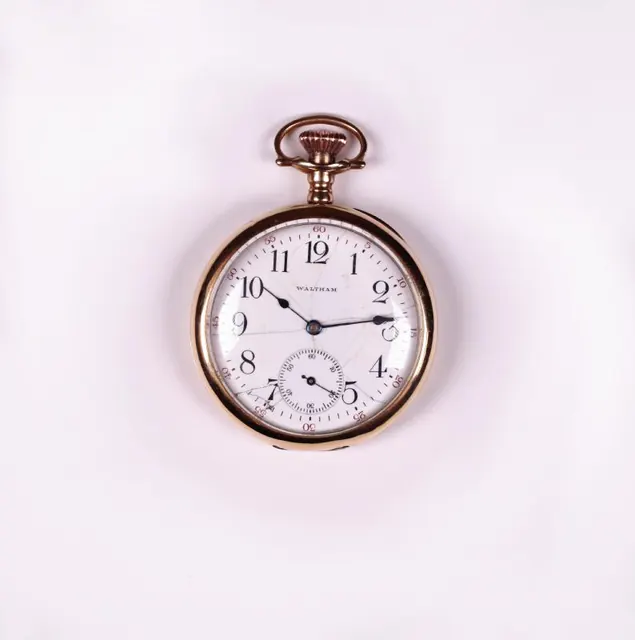
Pocket Watches · 1910s
Pocket watch by Waltham, United States, 1910s
Suomen Urheilumuseo
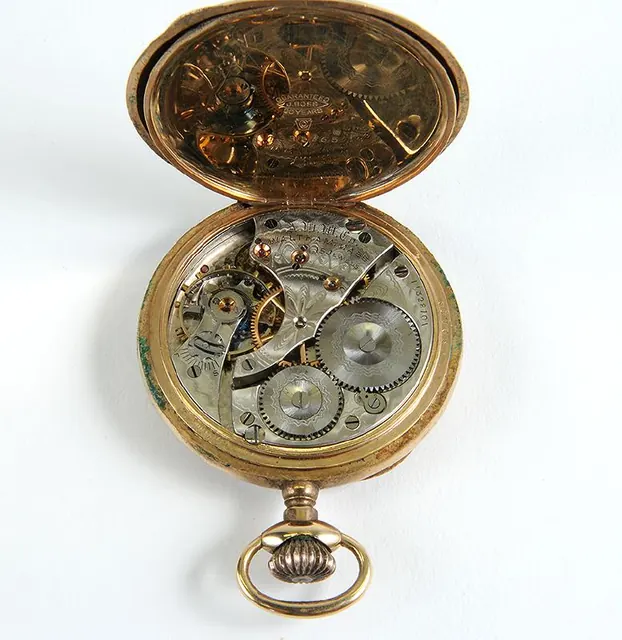
Pocket Watches · 1902
Pocket watch by Waltham, United States, 1902
Turun kaupunginmuseo
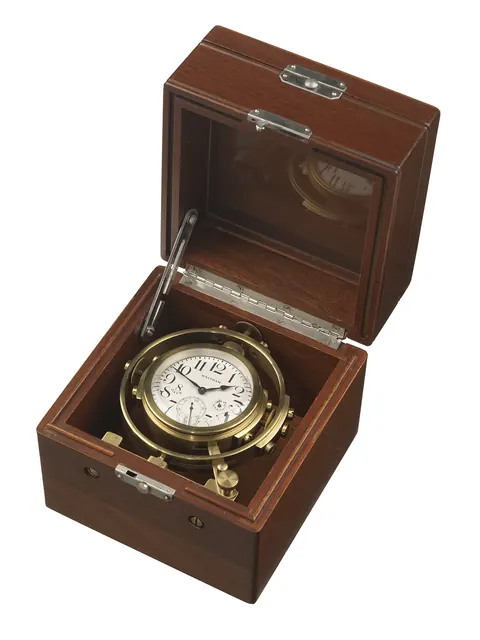
Instruments · c.1938
Marine chronometer watch no. 30683313 by Waltham
Royal Museums Greenwich
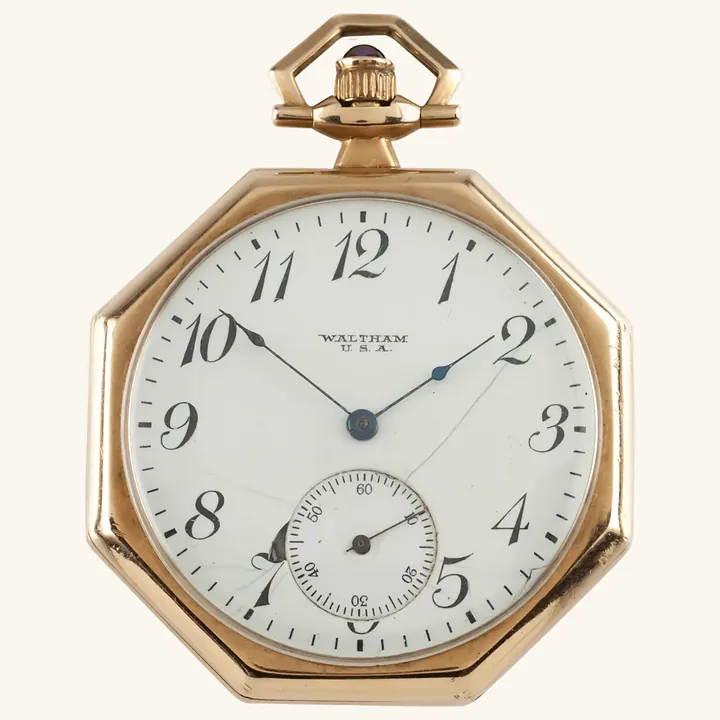
Pocket Watches · 1917
Waltham Octagon14 Karat Pocket Watch Jewel, 1917
WatchMuseum.org shop
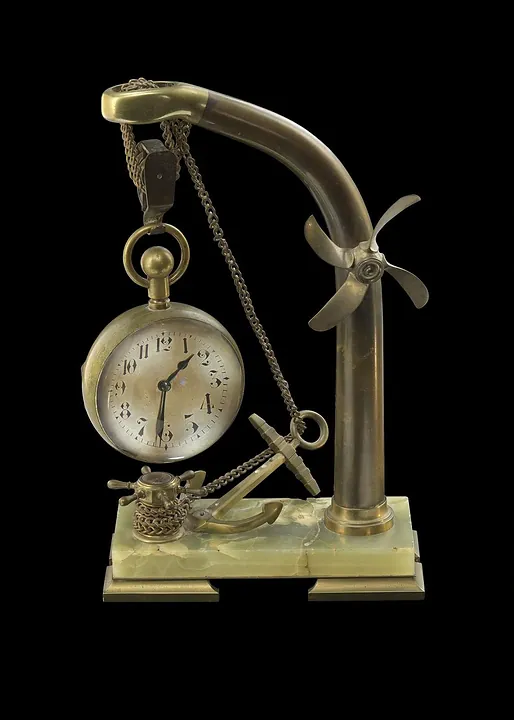
Clocks · 1905–1919
Mantel clock given by President Theodore Roosevelt to William L. Houston, United States, 1905–1919
National Museum of African American History and Culture, Smithsonian Institution, Washington DC
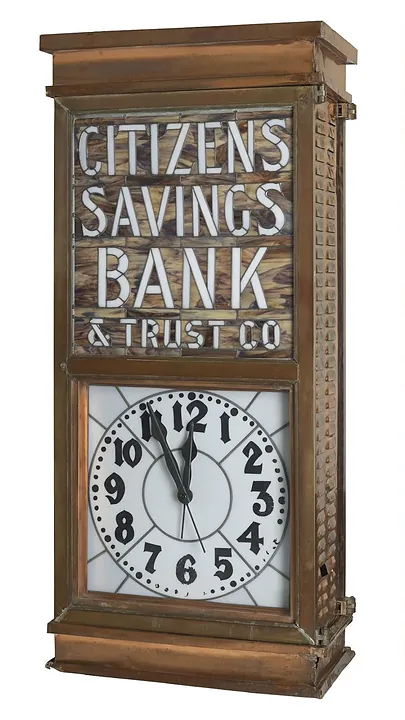
Clocks · 1920–2013
Bank clock and sign of the Citizens Savings Bank & Trust Co., Nashville, 1920–2013
National Museum of African American History and Culture, Smithsonian Institution, Washington DC
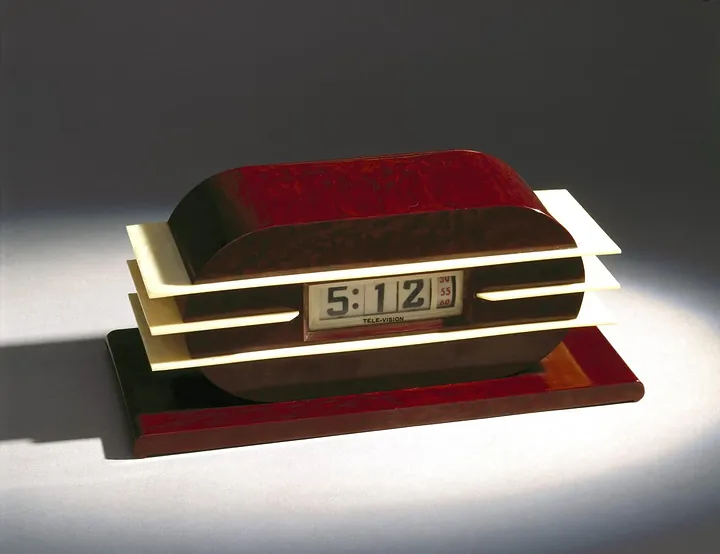
Clocks · 1925–1940
Brown phenolic electric digital clock with `TELE-VISION' on the face. Made by Penwood Numechron Co., U.S.A., c. 1930. Art Deco design.
Science Museum Group, London
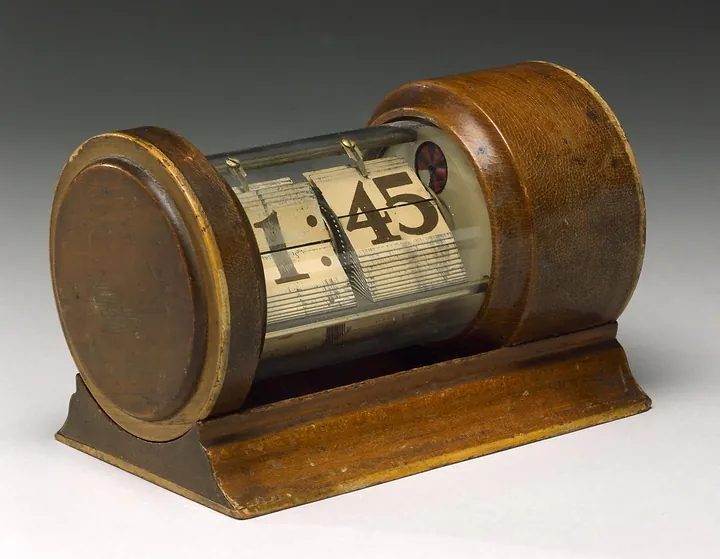
Clocks · 1934
Synchronous mains electric clock of the self-starting type, with digital display. Made by The Westinghouse Electric Supply Co. USA. Early c.1934's
Science Museum Group, London