
Pocket Watches · Pocket watch
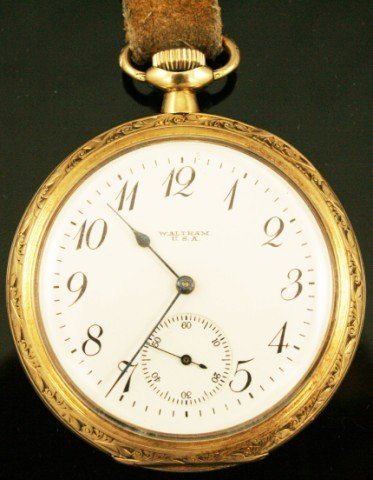
Waltham USA "Railroad" pocket watch, circa 1894
- Maker / attribution
- WALTHAM (maker)
- Date
- c. 1894
- Historical period
- Industrial Revolution (1850 – 1900)
- Country of origin
- United States
- Object type
- Pocket watch
- Materials / technique
- gold, yellow gold
- Auction house
- LiveAuctioneers auction archive
- Lot
- Item 9905684
- Credit line
- Auction lot record: lot 18561, Fine Art, Jewelry, Timepiece & Collectibles, Manor Auctions (2011), via LiveAuctioneers
- Catalogue title (original)
- WALTHAM USA "RAILROAD" POCKET WATCH, CIRCA 1894 (English)
View the source record (auction lot) ↗ (opens another website in a new tab)Suggest a correction
Record summary
Catalogued by LiveAuctioneers auction archive (lot Item 9905684), this is a pocket watch by WALTHAM, made in United States, dated c. 1894. The Atlas places it in the Industrial Revolution period (1850 – 1900) of its Pocket Watches collection. Materials and techniques recorded by the source: gold, yellow gold. The record is illustrated with 3 photographs.
Assembled from the source record's structured fields. Dates and attributions are given as the source states them; where a field is missing the Atlas leaves it blank rather than estimating.
Catalogue description
Lot description — Manor Auctions
WALTHAM USA "RAILROAD" POCKET WATCH, CIRCA 1894 WALTHAM USA "RAILROAD" Pocket watch, circa 1894, Case: REF. 458135, #12 size, 46mm, 14K yellow gold, 3/4 plate, double case. Hand tooled engraved reverse, oval bow. Dial: White, Arabic numbers, sunken second hand aperture. Cobalt batons, curved crystal. Movement: SN#22231xxx, #235 grade, 17 jewels. Breguet spring balance. Size: Case: 46mm Condition: Good Est. 600-900 Lot 18561
Historical context
Industrial Revolution (1850 – 1900)
American interchangeable-parts manufacture; railroad time standards; Swiss and German factory systems.
Machine production with interchangeable parts, pioneered by Waltham (1850s) and adopted by Elgin, Longines, Omega and others, made reliable lever watches widely affordable. Keyless winding became standard, railroad watch standards were introduced (1890s), and Swiss and American industries competed globally.
Read the period in the timelineMore pocket watches from this periodEarlier: Precision & Scientific Horology
Atlas type guide
Railroad and railway watches
Timetables made accurate timekeeping a matter of safety. After a fatal collision at Kipton, Ohio, in 1891, American railroads adopted strict standards: open-face watches, lever setting, at least 17 jewels, adjustment to temperature and five positions, and a performance within 30 seconds a week, inspected regularly by approved watch inspectors. Waltham, Elgin, Hamilton, Illinois and Ball made railroad-grade watches in large numbers.
European railways issued service watches to guards, drivers and station staff, often engraved with the railway's initials and a staff number. Such watches link industrial timekeeping with the standardisation of time zones (Greenwich Mean Time adopted by British railways in 1847; North American standard time in 1883).
What to look for
- Open-face cases with the crown at 12 and lever setting under the bezel.
- Montgomery dials with every minute numbered, or bold Arabic numerals.
- 'Railroad grade', '21 Jewels', 'Adjusted 5 positions' on the movement.
- Railway initials and issue numbers engraved on the case back.
Dating clues
- American railroad standards: from 1891–93, revised c. 1908.
- Serial numbers of American makers allow dating to within a year.
General guidance written by the Atlas editors about this kind of object. It is not a statement about this particular piece; for that, rely on the source record above and on physical examination.
Read next:Detached lever escapement
Related records
Pocket Watches · 1850
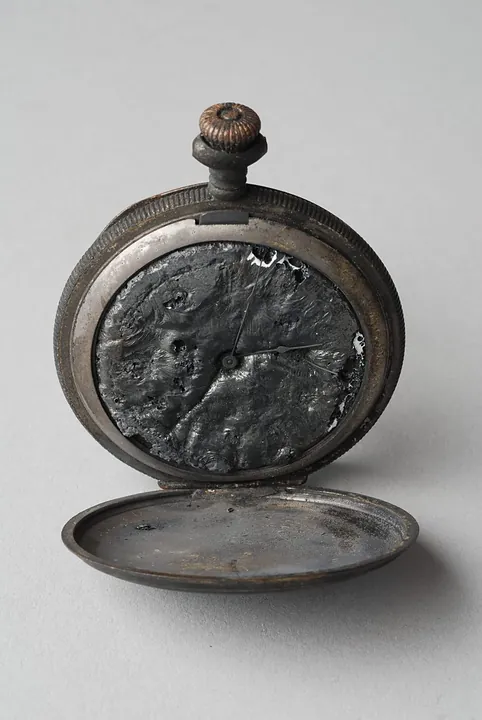
Pocket watch by Standard Watch, United States, 1850
Museum Rotterdam
Pocket Watches · 1877
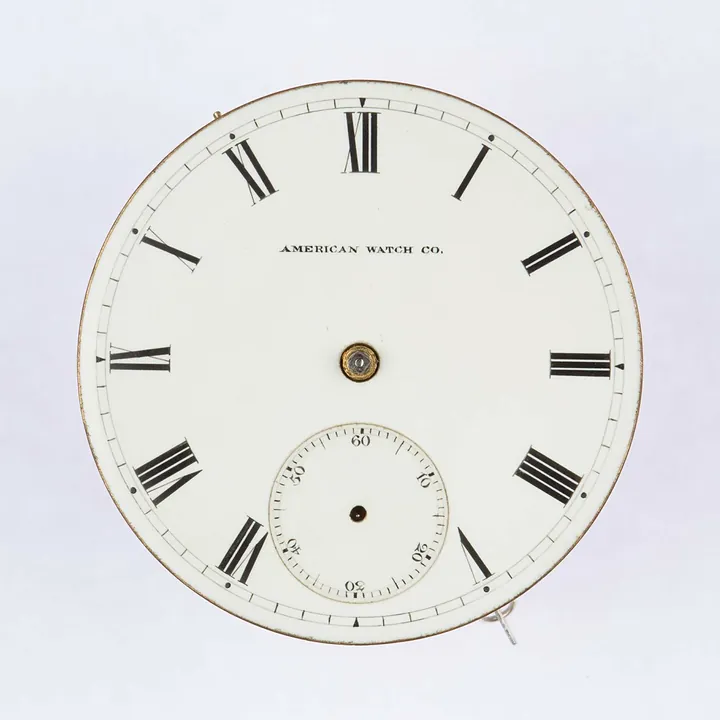
Pocket watch by Waltham A. W. W. Co., United States, 1877
German Clock Museum
Pocket Watches · 1879
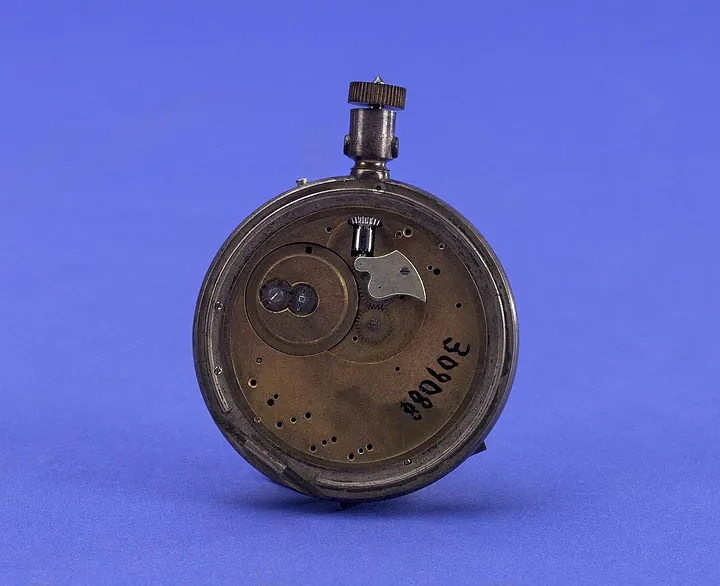
Watch by P. H. Gontard, United States, 1879
National Museum of American History, Smithsonian Institution, Washington DC
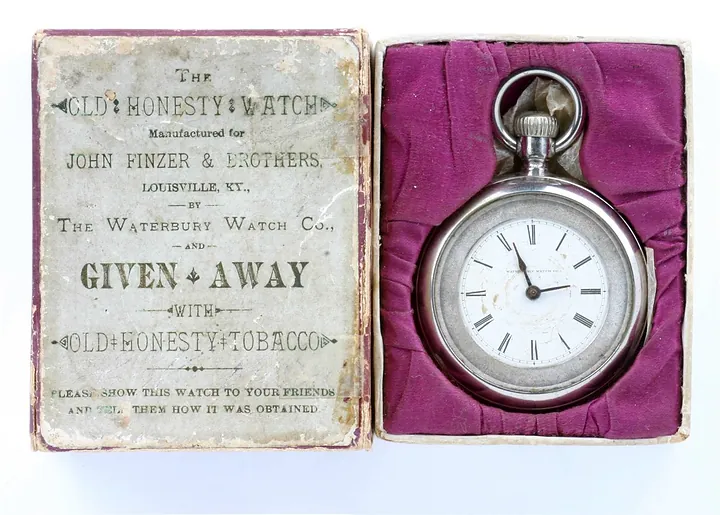
Pocket Watches · c. 1882
Pocket watch, United States, c. 1882
German Clock Museum
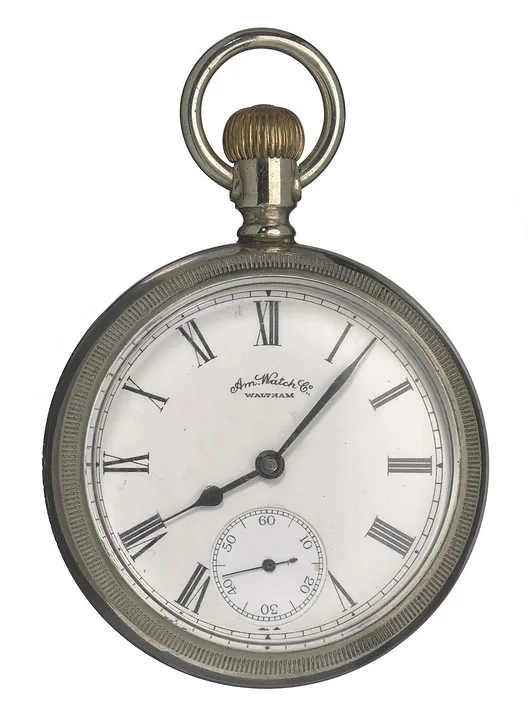
Pocket Watches · 1888-1889; inscribed 1908 or 1909
Pocket watch by the American Watch Company, Waltham, carried by Matthew A. Henson on Peary's 1908–09 North Pole expedition
National Museum of African American History and Culture, Smithsonian Institution, Washington DC
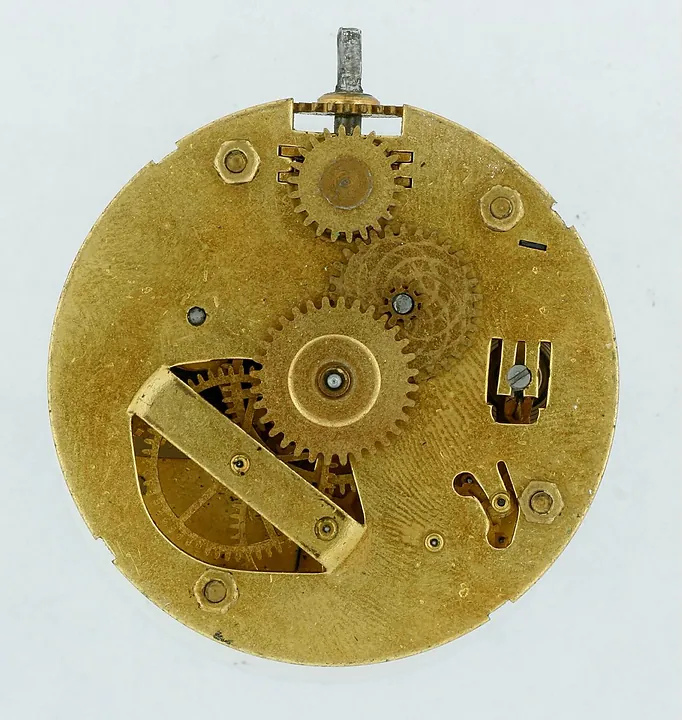
Pocket Watches · c. 1890
Pocket watch by Ansonia Clock Company, United States, c. 1890
German Clock Museum
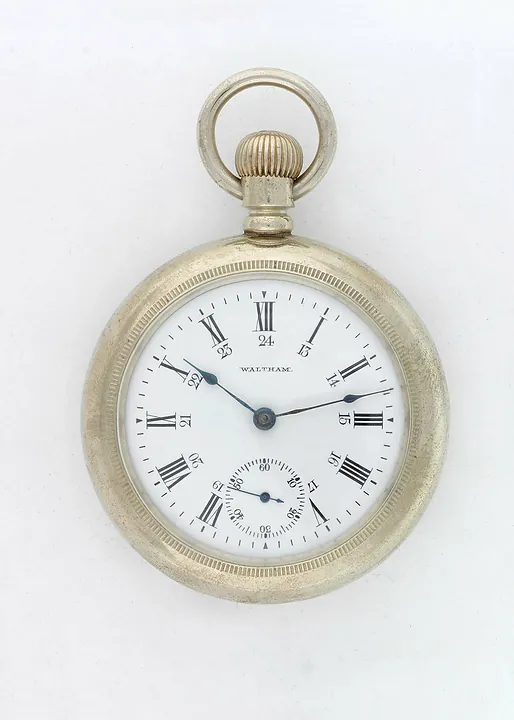
Pocket Watches · c. 1890
Pocket watch by Waltham A. W. W. Co., United States, c. 1890
German Clock Museum
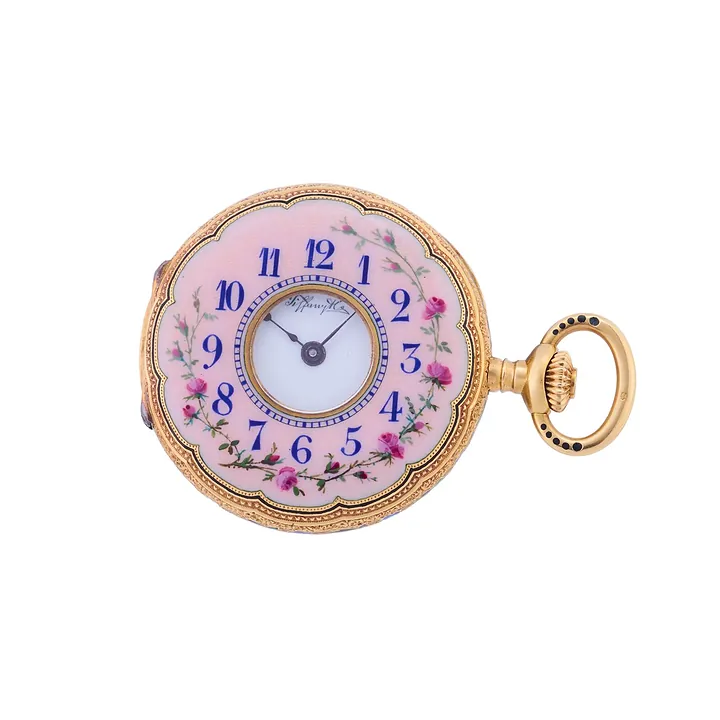
Pocket Watches · c. 1890s
Tiffany & Co Semi-Hunting Case, c. 1890s
Antiquorum auction archive, Geneva