
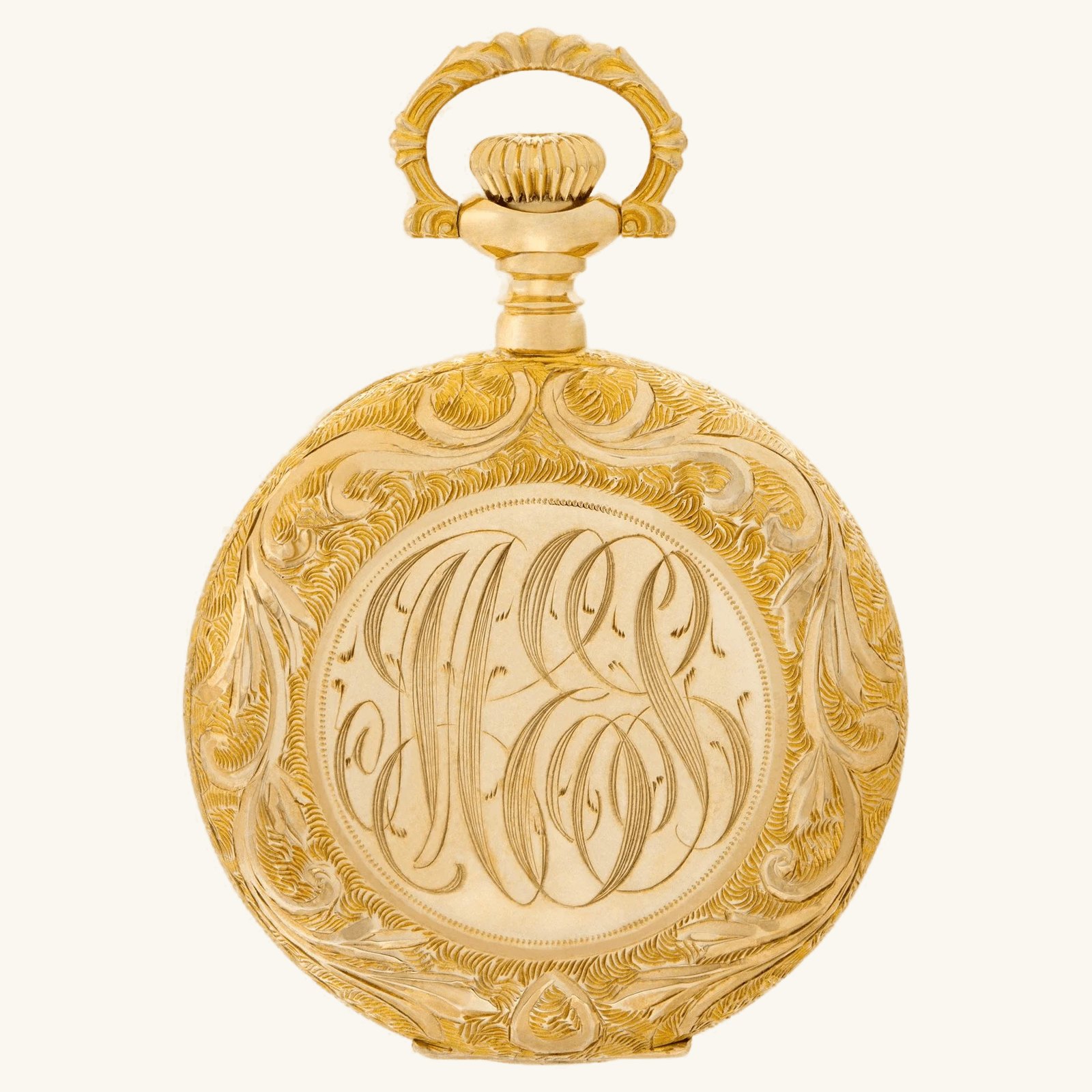
Pocket Watches · Pocket watch
Waltham Pocket Watch 14k Yellow Gold White Dial Case, 1900
- Maker / attribution
- Waltham (maker)
- Date
- 1900
- Historical period
- Golden Age of Mechanical Watchmaking (1900 – 1945)
- Country of origin
- United States
- Object type
- Pocket watch
- Materials / technique
- gold
- Dealer
- WatchMuseum.org shop
- Stock no.
- Product 4241
- Credit line
- Dealer listing, WatchMuseum.org shop (product 4241)
- Catalogue title (original)
- Waltham Pocket Watch 14k Yellow Gold White Dial Case (English)
View the source record (dealer listing) ↗ (opens another website in a new tab)Suggest a correction
Record summary
Catalogued by WatchMuseum.org shop (stock number Product 4241), this is a pocket watch by Waltham, made in United States, dated 1900. The Atlas places it in the Golden Age of Mechanical Watchmaking period (1900 – 1945) of its Pocket Watches collection. Materials and techniques recorded by the source: gold. The record is illustrated with 5 photographs.
Assembled from the source record's structured fields. Dates and attributions are given as the source states them; where a field is missing the Atlas leaves it blank rather than estimating.
Catalogue description
Dealer description — WatchMuseum.org shop
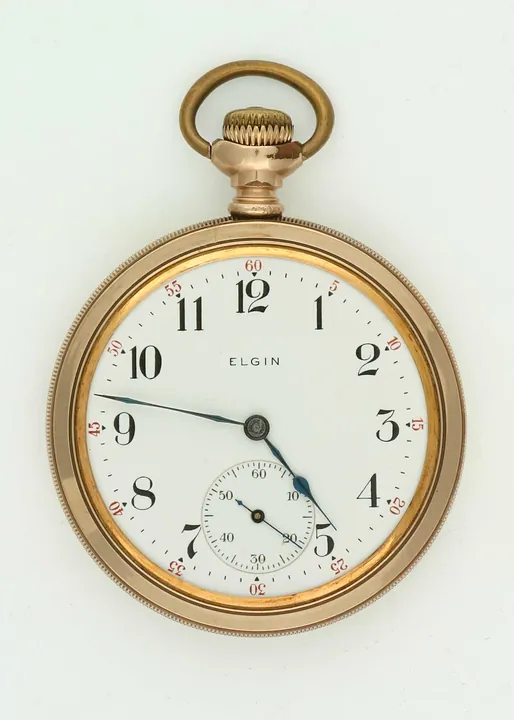
Step back in time with the exquisite Waltham Pocket Watch, a masterpiece of horological craftsmanship from the year 1900. This elegant timepiece, encased in luxurious 14k yellow gold, is a testament to the enduring allure of vintage watches. Its hunter case design, paired with a pristine porcelain dial, showcases a classic aesthetic that is both timeless and sophisticated. The white Arabic numerals and spade hands offer a clear and refined display, while the manual winding mechanism with sub-seconds underscores the watch’s precision and elegance. Adorned with 7 jewels, this Waltham pocket watch is not just a functional accessory but a piece of history, radiating luxury and sophistication. Despite being over a century old, it remains in excellent condition, a tribute to the skill and artistry of its creators. With its round case measuring 30 mm in both width and length, this watch is a perfect blend of form and function, making it an ideal choice for those who appreciate the historical significance and timeless beauty of authentic timepieces. Whether you’re a seasoned collector or a connoisseur of fine watches, the Waltham Pocket Watch is a remarkable addition to any collection, offering a glimpse into the elegance and craftsmanship of the early 20th century. Introducing a stunning vintage Waltham pocket watch! This precious timepiece features a hunter case and is crafted with 14k yellow gold. The watch boasts a porcelain dial with easy-to-read White Arabic Numerals and spade hands. The manual winding mechanism with sub-seconds adds to the timeless elegance of this watch. With 7 jewels, this Waltham pocket watch is a true gem that exudes luxury and sophistication. This watch is over a hundred years old and dates back to the early 1900s. Despite its age, it remains in very good condition, and its classic design still shines just as brightly as it did when it was first crafted. If you are looking for an authentic timepiece with a historical significance, this Waltham pocket watch is a perfect choice. Creator: Waltham Case Material: Yellow Gold Case Shape: Round Movement: Manual Wind Case Dimensions: Width: 30 mm (1.19 in)Length: 30 mm (1.19 in) Period: 1900-1909 Date of Manufacture: 1900 Condition: Excellent
Historical context
Golden Age of Mechanical Watchmaking (1900 – 1945)
The wristwatch displaces the pocket watch; waterproof cases, self-winding and grand complications.
The pocket watch reached technical maturity and then began to give way to the wristwatch after the First World War. Complicated watches for collectors such as Henry Graves Jr. and James Ward Packard, railroad watches, and slim Art Deco dress watches are characteristic.
Read the period in the timelineMore pocket watches from this periodEarlier: Industrial Revolution
Atlas type guide
Pocket watches
The pocket watch was the dominant personal timekeeper from the late seventeenth century until the First World War. Its development tracks the history of the escapement: verge watches with fusees until the late eighteenth century; Thomas Mudge's lever escapement (c. 1755) and the cylinder escapement popularised by George Graham and later by Swiss makers; and the Swiss and English lever watches of the nineteenth century. Lépine's bar-bridge calibre and keyless winding made watches thinner and easier to use.
Industrialisation transformed the trade: American factories such as Waltham (from 1850) and Elgin produced interchangeable parts by machine, and Swiss makers responded with their own mechanisation after the 1876 Philadelphia Exhibition. By 1900 a reliable watch was affordable to millions; the finest makers continued to produce complications and precision watches.
What to look for
- The escapement: verge (crown wheel), cylinder, duplex, English or Swiss lever.
- Key winding (a square arbor in dial or back) or keyless crown winding.
- Signatures and serial numbers on the movement, dial and inside case back.
- Hallmarks, case maker's marks and gold or silver standards stamped in the case.
- Dial material: enamel, silver, gold, later printed metal.
Dating clues
- Verge watches dominate before c. 1800; cylinder watches c. 1770–1900; lever watches after c. 1820.
- Keyless winding: increasingly common after c. 1860.
- Manufacturer serial number lists exist for Waltham, Elgin, Longines, Omega, Patek Philippe and others.
General guidance written by the Atlas editors about this kind of object. It is not a statement about this particular piece; for that, rely on the source record above and on physical examination.
Read next:Verge escapementDetached lever escapementFuseeIdentification Centre
Related records
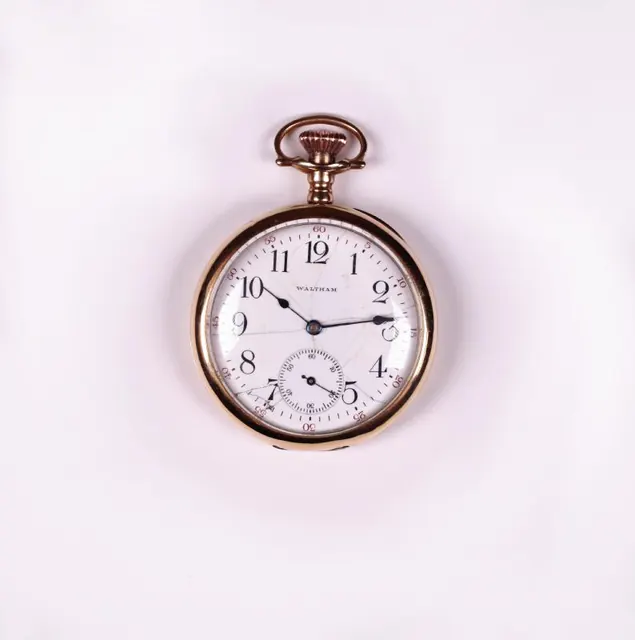
Pocket Watches · 1910s
Pocket watch by Waltham, United States, 1910s
Suomen Urheilumuseo
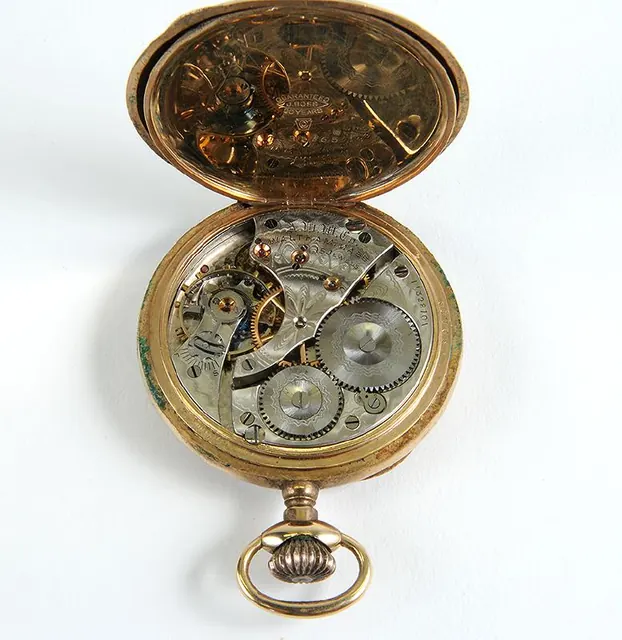
Pocket Watches · 1902
Pocket watch by Waltham, United States, 1902
Turun kaupunginmuseo
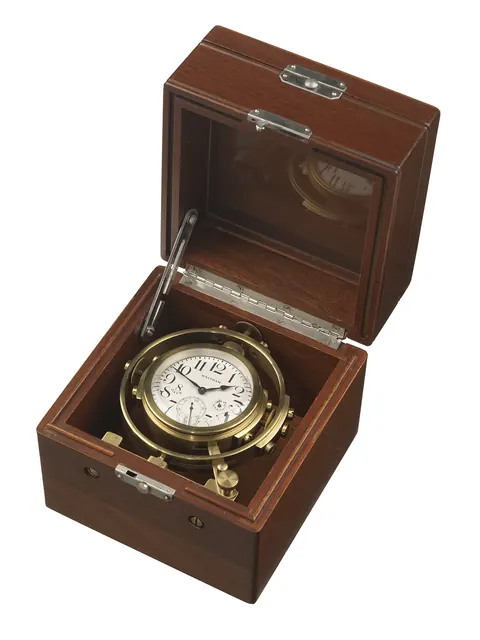
Instruments · c.1938
Marine chronometer watch no. 30683313 by Waltham
Royal Museums Greenwich
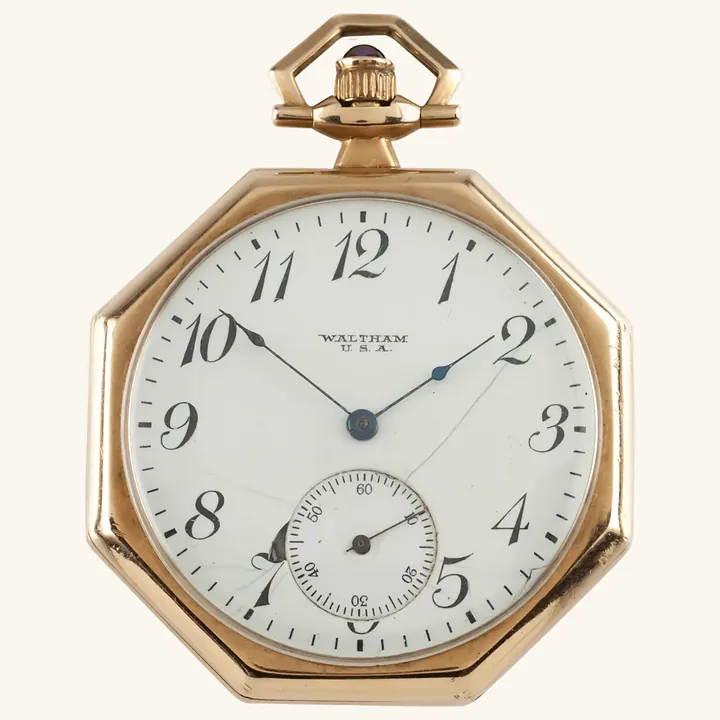
Pocket Watches · 1917
Waltham Octagon14 Karat Pocket Watch Jewel, 1917
WatchMuseum.org shop
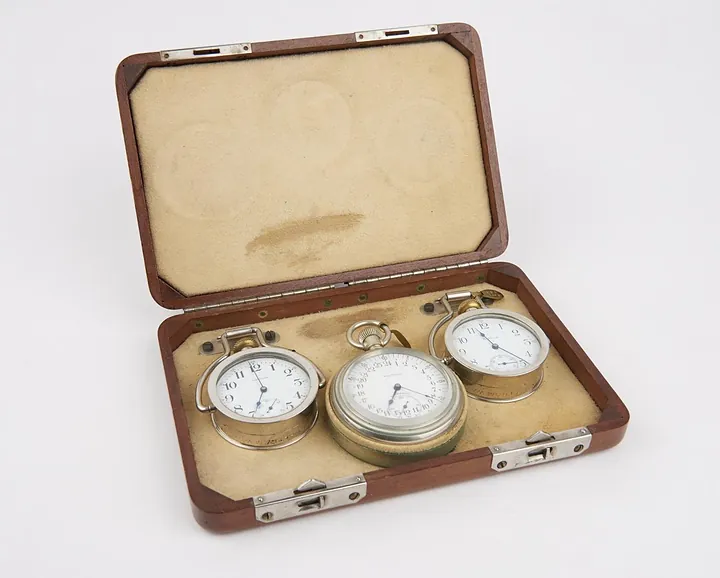
Pocket Watches · c. 1900
Pocket watch by American Waltham Watch Company, United States, c. 1900
Science Museum Group, London
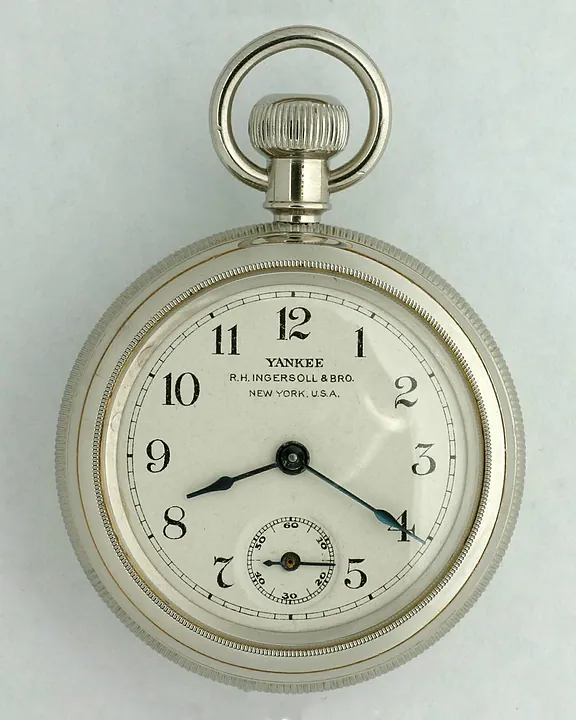
Pocket Watches · c. 1900
Pocket watch by Robt. H. und Bro. Ingersoll, United States, c. 1900
German Clock Museum
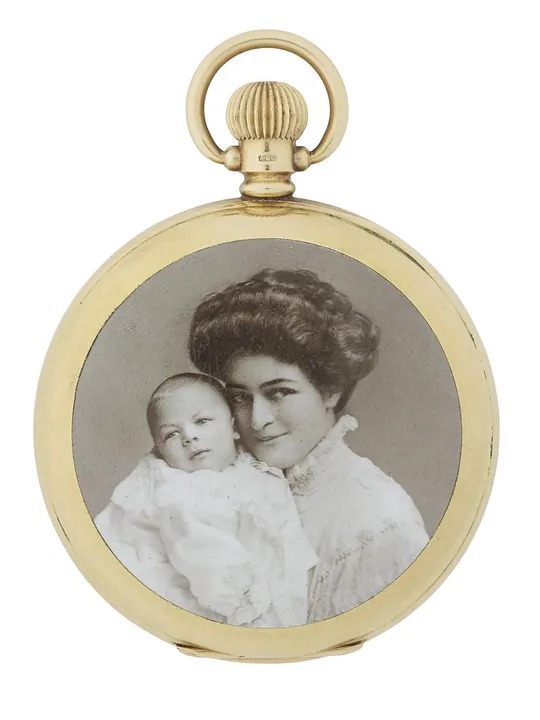
Pocket Watches · 1904
Pocket watch by American Waltham Watch Company and Dennison Watch Case Co, United States, 1904
Science Museum Group, London
Pocket Watches · c. 1905
Pocket watch by Brooklyn Watch Case Co. B. W. C., United States, c. 1905
German Clock Museum