
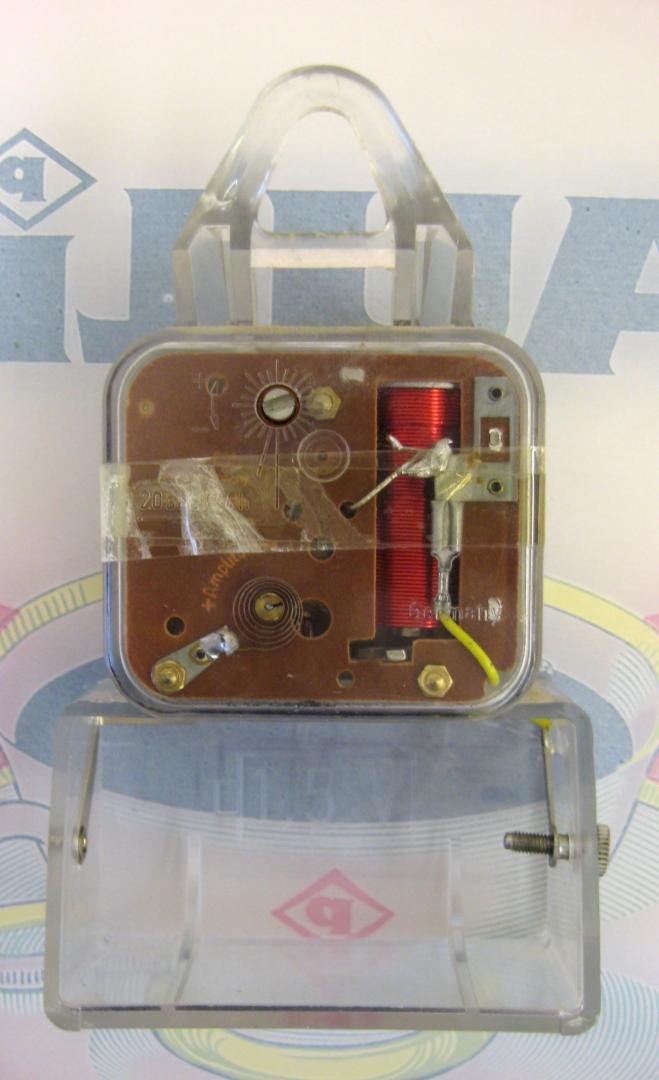
Clocks · Wall clock
Wall clock, Germany, 1960 - 1970s
- Maker / attribution
- Unrecorded in source
- Date
- 1960 - 1970s
- Historical period
- Quartz Revolution (1969 – 1990)
- Country of origin
- Germany
- Place
- Germany
- Object type
- Wall clock
- Materials / technique
- plastic, metal
- Dimensions
- kellotaulun diameter 34 cm kellotaulun thickness 1 cm koneiston thickness 3 cm
- Holding institution
- Pielisen museo
- Accession / object no.
- 14382:30
- Credit line
- Pielisen museo (via Finna)
- Catalogue title (original)
- Kello; Paulig-seinäkello (Finnish)
View the source record ↗ (opens another website in a new tab)Suggest a correction
Record summary
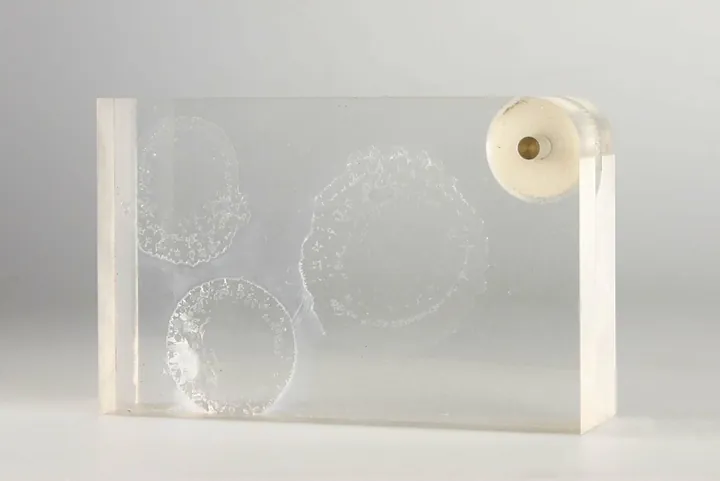
Held and catalogued by Pielisen museo (object number 14382:30), this is a wall clock, made in Germany, dated 1960 - 1970s. The Atlas places it in the Quartz Revolution period (1969 – 1990) of its Clocks collection. Materials and techniques recorded by the source: plastic, metal. Recorded dimensions: kellotaulun diameter 34 cm kellotaulun thickness 1 cm koneiston thickness 3 cm. The record is illustrated with 2 photographs.
Assembled from the source record's structured fields. Dates and attributions are given as the source states them; where a field is missing the Atlas leaves it blank rather than estimating.
Catalogue description
Description — Pielisen museo
Paulig-seinäkellossa on kellotaulu, koneisto ja viisarit. Pyöreä kellotaulu on valmistettu kovasta läpinäkyvästä muovista. Kellotauluun on painettu punataustainen, valkoista kultareunaista kahvikuppia ja asettia esittävä piirroskuva. Kahvikuppi on täynnä mustaa kahvia. Kupin taustalla on valkea ovaali, jonka keskellä on musta Paulig-logo. Painatuksen reunaa kiertävät paksut valkoiset pystyviivat, jotka osoittavat ajan. Kellotaulun reunoilla on neljä kahden rinnakkaisen pystyviivan kokonaisuutta, jotka symbolisoivat kello kolmea, kuutta, yhdeksää ja 12:a. Kellotaulun pinta on kiiltävä, heijastava. Kellotaulun keskellä on reikä, jonka läpi kulkee viisarien akseli. Kellossa on kaksi kullanväristä metalliviisaria, tunti- ja minuuttiviisari, jotka kapenevat kärkeä kohti. Kellotaulun takaosassa on kovasta läpinäkyvästä muovista valmistettu neliskulmainen kotelo, jonka sisällä on kellon koneisto. Kotelon yläosassa on muovilenkki, joka toimii kellon ripustimena ja alaosassa tyhjä tila, johon asetetaan kellon virtalähde. Kotelon ympäri on teipattu kirkas teippi.
Shown in the original language of the source catalogue. An editor-reviewed English translation has not yet been published; we do not publish machine translations as authoritative text.
Inscriptions & marks
Koneiston kotelossa lukee kohokirjaimin "Made in Germany".
Historical context
Quartz Revolution (1969 – 1990)
Seiko's Astron begins mass quartz timekeeping; traditional industries contract sharply.
Quartz movements and digital displays made accurate clocks cheap and ubiquitous after the early 1970s. LED and LCD clocks, clock radios and radio-controlled clocks appeared, while traditional mechanical clockmaking contracted sharply in Germany, France and Britain.
Read the period in the timelineMore clocks from this periodEarlier: Modern Mechanical Horology
Atlas type guide
Regulators, wall and Vienna clocks
A regulator is a precision pendulum clock used as a time standard in observatories, workshops and railway offices. Typical features are a deadbeat or Graham escapement, a temperature-compensated pendulum (mercury jar, gridiron or later invar), maintaining power and a regulator dial that separates hours, minutes and seconds. George Graham's deadbeat escapement (c. 1715) and his mercury pendulum, together with Harrison's gridiron, set the pattern for two centuries.
Wall clocks span a much wider range: the elegant Viennese Laterndluhr and Dachluhr of the Biedermeier period, the Dutch stoelklok and staartklok, English 'dial' clocks used in schools, offices and railway stations, and mass-produced spring and weight wall clocks from Germany (Gustav Becker, Junghans, Kienzle) and America.
What to look for
- Deadbeat escapement and compensated pendulum (gridiron rods, mercury jar or wood rod).
- A regulator dial with a large central minute hand and separate hour and seconds dials.
- Vienna regulators: glazed cases, slender pendulum, small weights, enamel two-piece dials.
- German factory trademarks stamped on the backplate (e.g. Gustav Becker anchor and crown, Junghans star).
Dating clues
- Graham-type deadbeat regulators: from c. 1720.
- Viennese Laterndluhr: c. 1800–1850.
- German factory 'Vienna-style' regulators: c. 1870–1930; Gustav Becker serial numbers allow close dating.
General guidance written by the Atlas editors about this kind of object. It is not a statement about this particular piece; for that, rely on the source record above and on physical examination.
Read next:Deadbeat escapementAnchor (recoil) escapementGrasshopper escapement
Related records
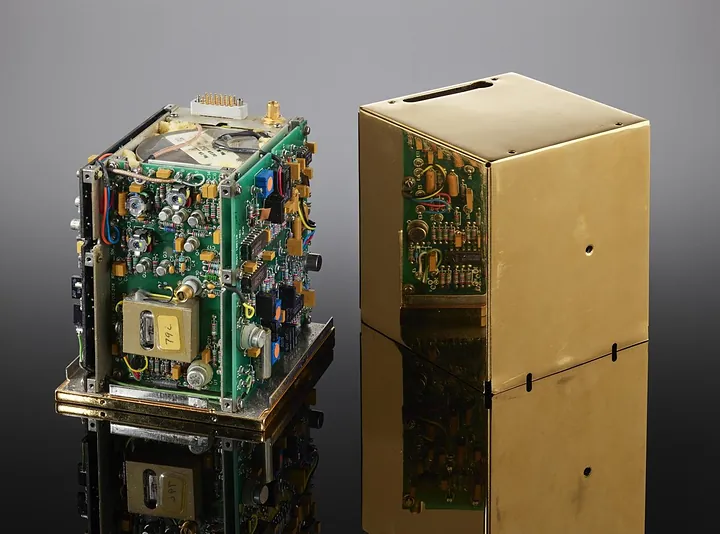
Clocks · 1960–1996
Electric clock by Efratom GmbH, Germany, 1960–1996
Science Museum Group, London
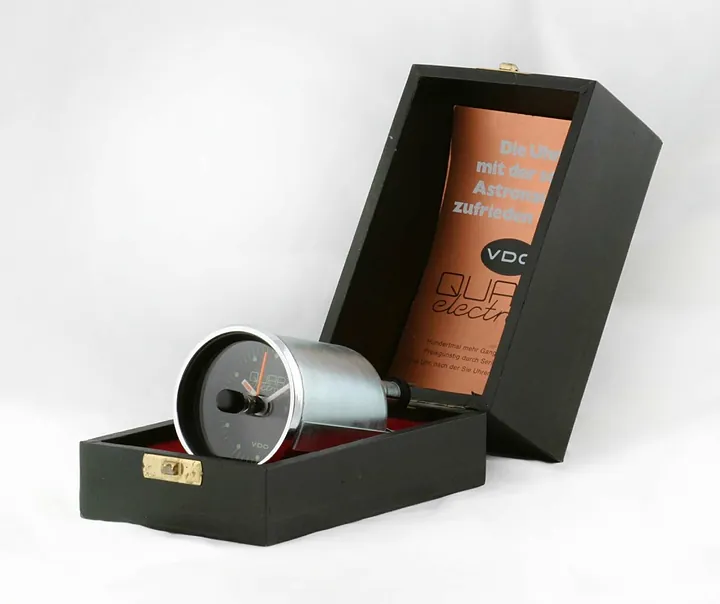
Clocks · 1969
Clock by VDO, Germany, 1969
German Clock Museum
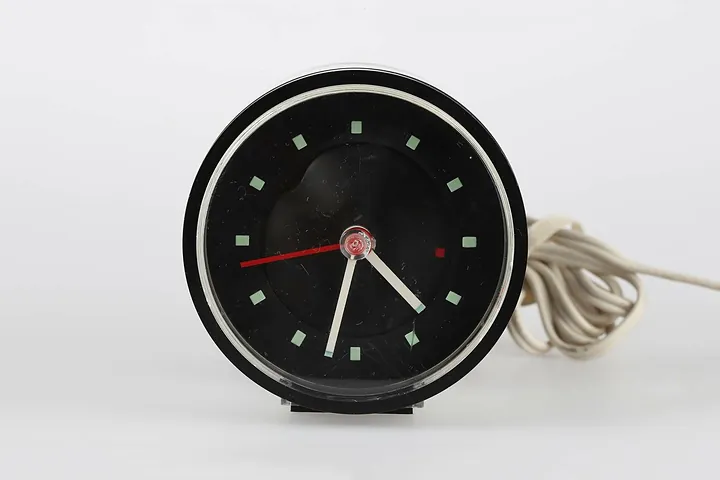
Clocks · 1970
Alarm clock by Werner Staiger, Germany, 1970
German Clock Museum
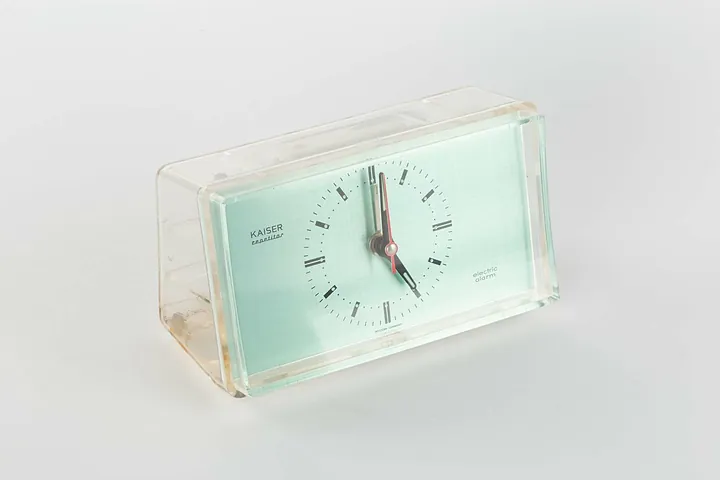
Clocks · c. 1970
Alarm clock, Germany, c. 1970 (no. 59356)
German Clock Museum
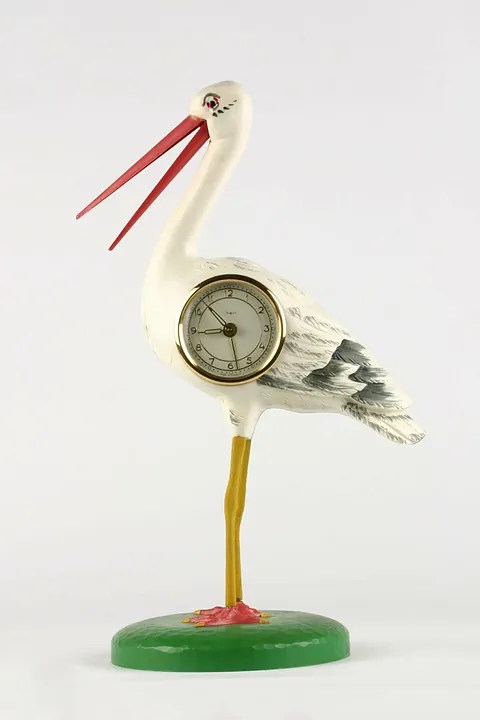
Clocks · c. 1970
Alarm clock, Germany, c. 1970 (no. 59389)
German Clock Museum
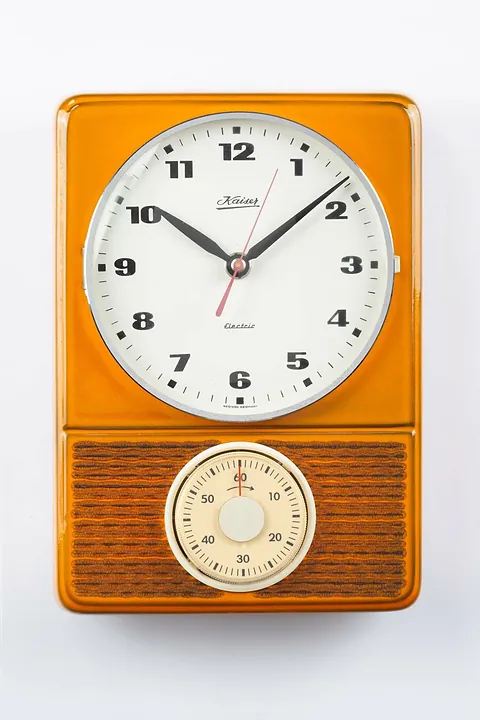
Clocks · c. 1970
Clock, Germany, c. 1970
German Clock Museum
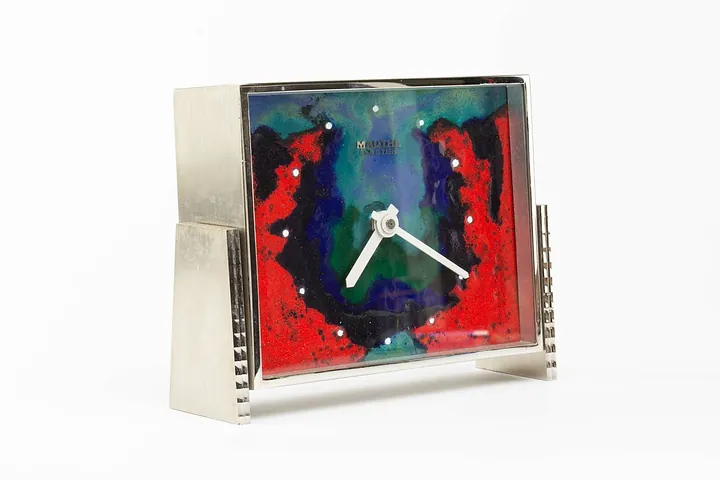
Clocks · c. 1970
Table clock by Friedrich Mauthe, Germany, c. 1970
German Clock Museum
Clocks · 1971
Alarm clock by Kienzle - Uhrenfabrik, Germany, 1971
German Clock Museum