
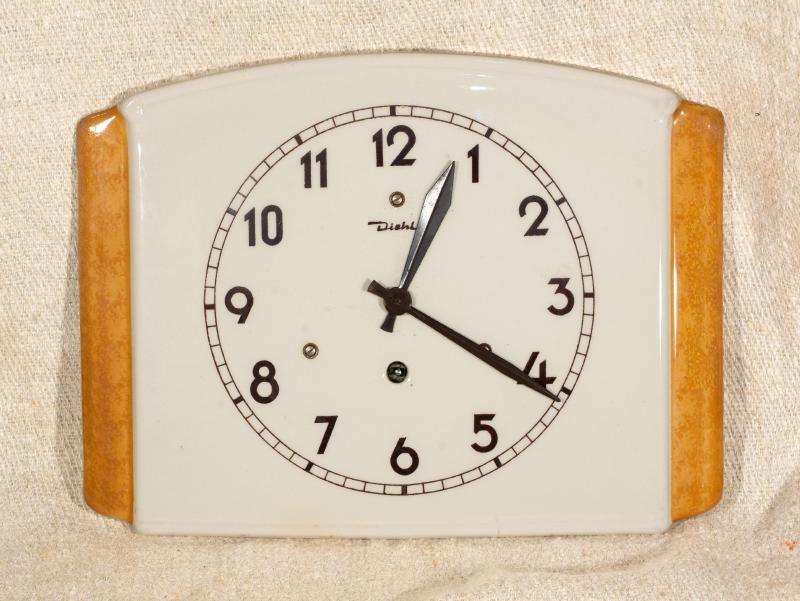
Clocks · Wall clock
Wall clock by Diehl, Germany, c. 1964 - 1971
- Maker / attribution
- Diehl (maker)
- Date
- c. 1964 - 1971
- Historical period
- Modern Mechanical Horology (1945 – 1969)
- Country of origin
- Germany
- Place
- Nürnberg
- Object type
- Wall clock
- Dimensions
- height 18 cm; width 13,5 cm; depth 9,8 cm
- Holding institution
- Koskipirtti ja Museotalo
- Accession / object no.
- KOS3143
- Credit line
- Koskipirtti ja Museotalo (via Finna)
- Catalogue title (original)
- seinäkello; kello; Diehl / Arabia (Finnish)
View the source record ↗ (opens another website in a new tab)Suggest a correction
Record summary
Held and catalogued by Koskipirtti ja Museotalo (object number KOS3143), this is a wall clock by Diehl, made in Nürnberg, Germany, dated c. 1964 - 1971. The Atlas places it in the Modern Mechanical Horology period (1945 – 1969) of its Clocks collection. Recorded dimensions: height 18 cm; width 13,5 cm; depth 9,8 cm. The record is illustrated with 1 photograph.
Assembled from the source record's structured fields. Dates and attributions are given as the source states them; where a field is missing the Atlas leaves it blank rather than estimating.
Catalogue description
Description — Koskipirtti ja Museotalo
fyysinen kuvaus: Arabian valmistama kuori, jossa sivuilla oranssi lasiteliete, keskellä valkoinen. Päällä siirtokuvana kellotaulu. Taistapuolella kermanväriseksi maalattuun peltikoteloon sijoitettu saksalaisen Diehl-tehtään koneisto.
Shown in the original language of the source catalogue. An editor-reviewed English translation has not yet been published; we do not publish machine translations as authoritative text.
Inscriptions & marks
Diehl tavaramerkki painatus; ARABIA MADE IN FINLAND leima
Historical context
Modern Mechanical Horology (1945 – 1969)
Tool watches for divers, pilots and astronauts; electric watches anticipate the electronic age.
Post-war clocks combined new materials and industrial design: plastic and metal cases, battery-powered transistor movements from the late 1950s, and design classics by George Nelson, Max Bill and others. The first caesium atomic clock (1955) moved the definition of time from astronomy to physics.
Read the period in the timelineMore clocks from this periodEarlier: Golden Age of Mechanical Watchmaking
Atlas type guide
Regulators, wall and Vienna clocks
A regulator is a precision pendulum clock used as a time standard in observatories, workshops and railway offices. Typical features are a deadbeat or Graham escapement, a temperature-compensated pendulum (mercury jar, gridiron or later invar), maintaining power and a regulator dial that separates hours, minutes and seconds. George Graham's deadbeat escapement (c. 1715) and his mercury pendulum, together with Harrison's gridiron, set the pattern for two centuries.
Wall clocks span a much wider range: the elegant Viennese Laterndluhr and Dachluhr of the Biedermeier period, the Dutch stoelklok and staartklok, English 'dial' clocks used in schools, offices and railway stations, and mass-produced spring and weight wall clocks from Germany (Gustav Becker, Junghans, Kienzle) and America.
What to look for
- Deadbeat escapement and compensated pendulum (gridiron rods, mercury jar or wood rod).
- A regulator dial with a large central minute hand and separate hour and seconds dials.
- Vienna regulators: glazed cases, slender pendulum, small weights, enamel two-piece dials.
- German factory trademarks stamped on the backplate (e.g. Gustav Becker anchor and crown, Junghans star).
Dating clues
- Graham-type deadbeat regulators: from c. 1720.
- Viennese Laterndluhr: c. 1800–1850.
- German factory 'Vienna-style' regulators: c. 1870–1930; Gustav Becker serial numbers allow close dating.
General guidance written by the Atlas editors about this kind of object. It is not a statement about this particular piece; for that, rely on the source record above and on physical examination.
Read next:Deadbeat escapementAnchor (recoil) escapementGrasshopper escapement
Related records
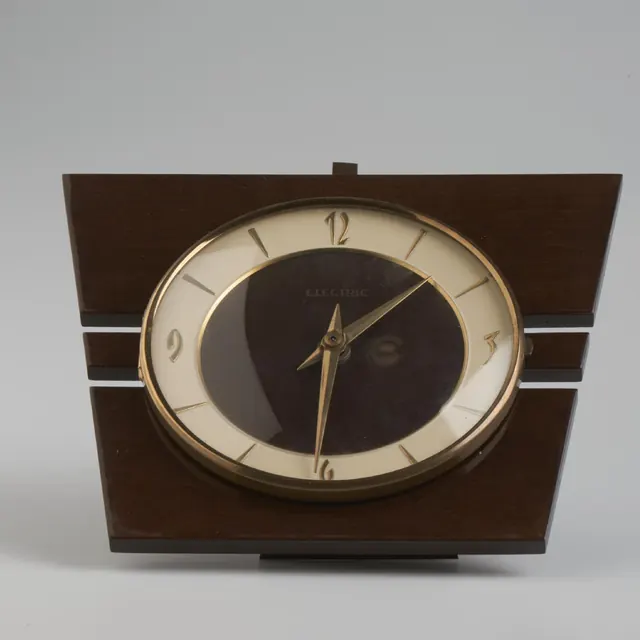
Clocks · 1950–1959
Wall clock by Diehl, Germany, 1950–1959
LVR-open air museum Kommern
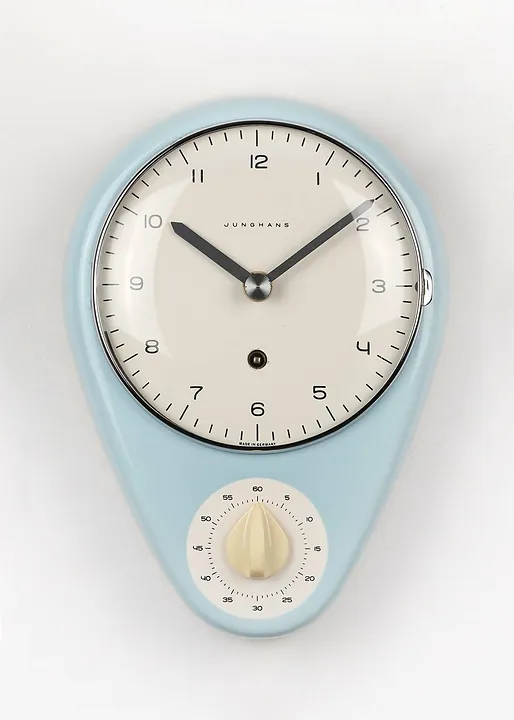
Clocks · c. 1960
Clock, Germany, c. 1960 (no. 58196)
German Clock Museum
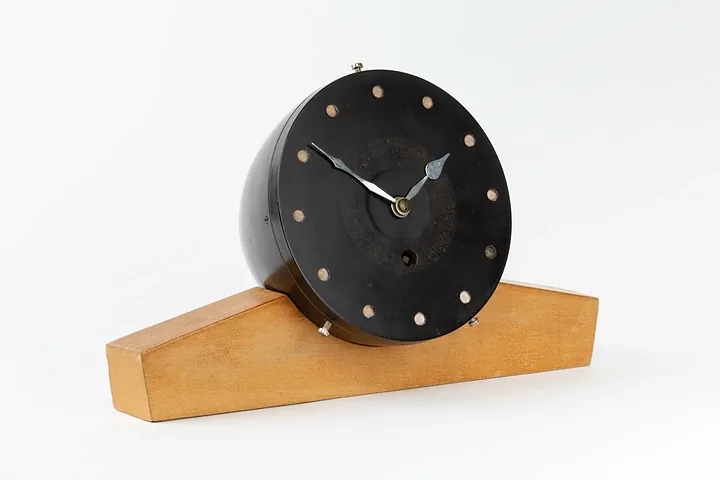
Clocks · 1945
Table clock, Germany, 1945
German Clock Museum
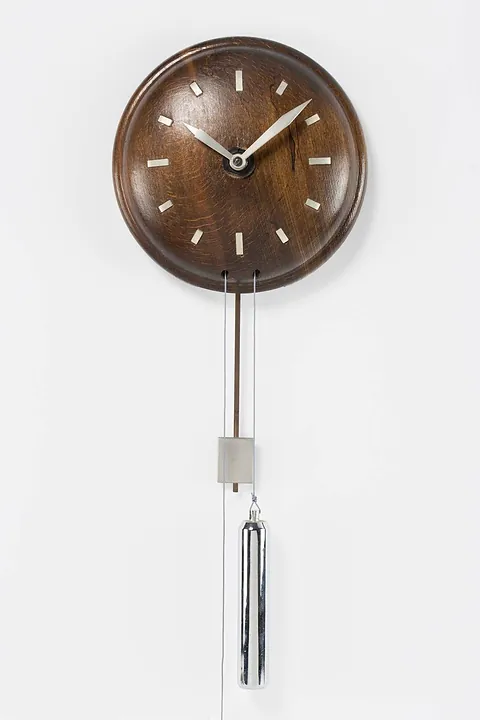
Clocks · c. 1945
Wall clock, Germany, c. 1945 (no. 59680)
German Clock Museum
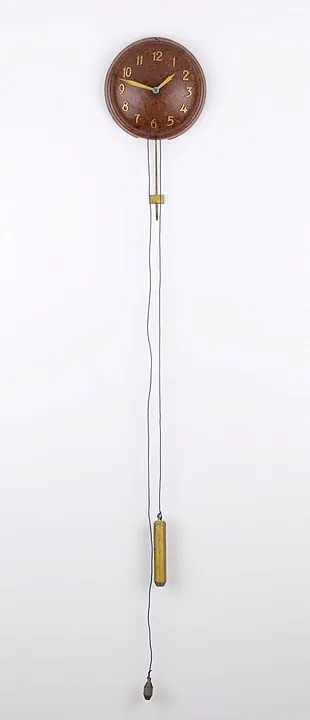
Clocks · c. 1945
Wall clock, Germany, c. 1945 (no. 59700)
German Clock Museum
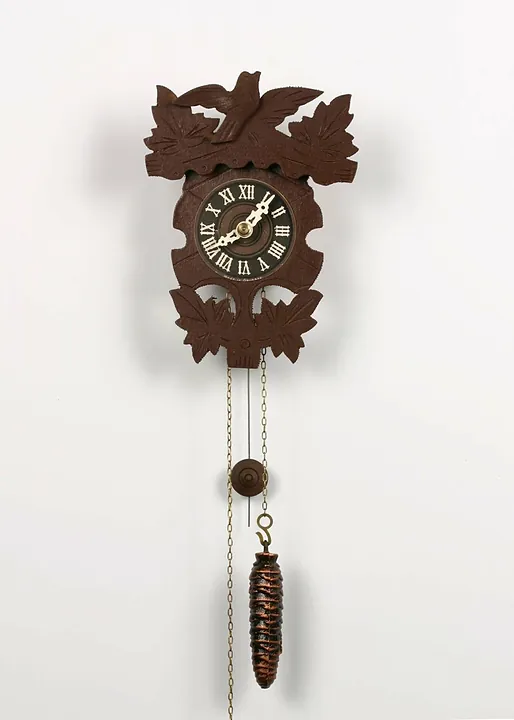
Clocks · c. 1948
Wall clock, Germany, c. 1948
German Clock Museum
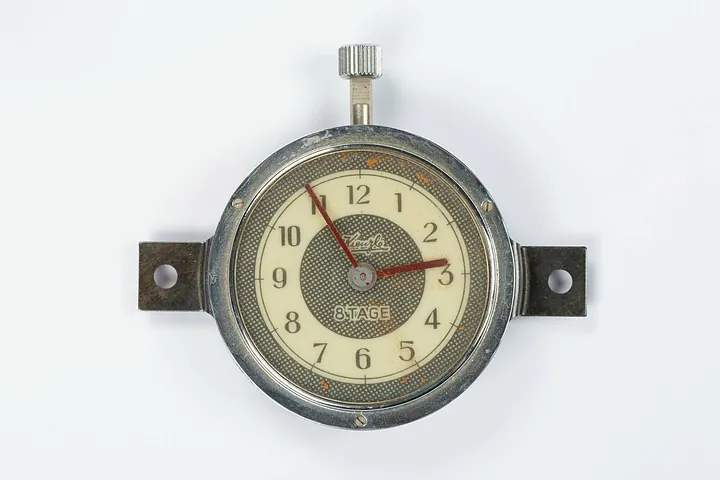
Clocks · c. 1950
Clock by Kienzle - Uhrenfabrik, Germany, c. 1950
German Clock Museum
Clocks · c. 1950
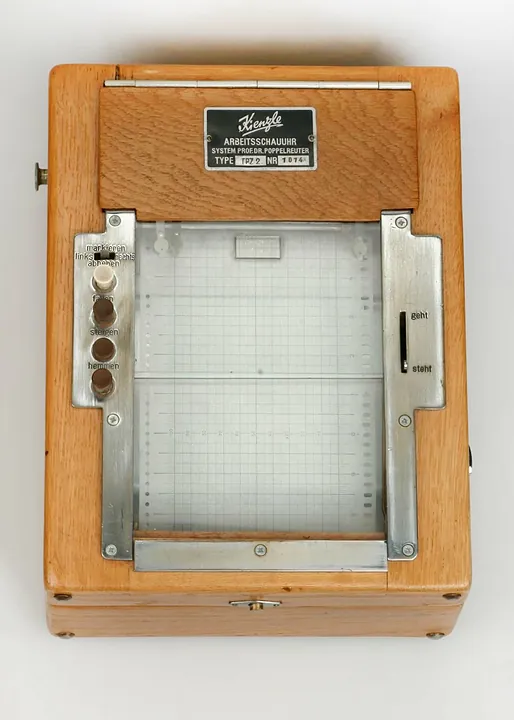
Clock by Kienzle Apparate GmbH, Germany, c. 1950
German Clock Museum