
Wristwatches · Wristwatch
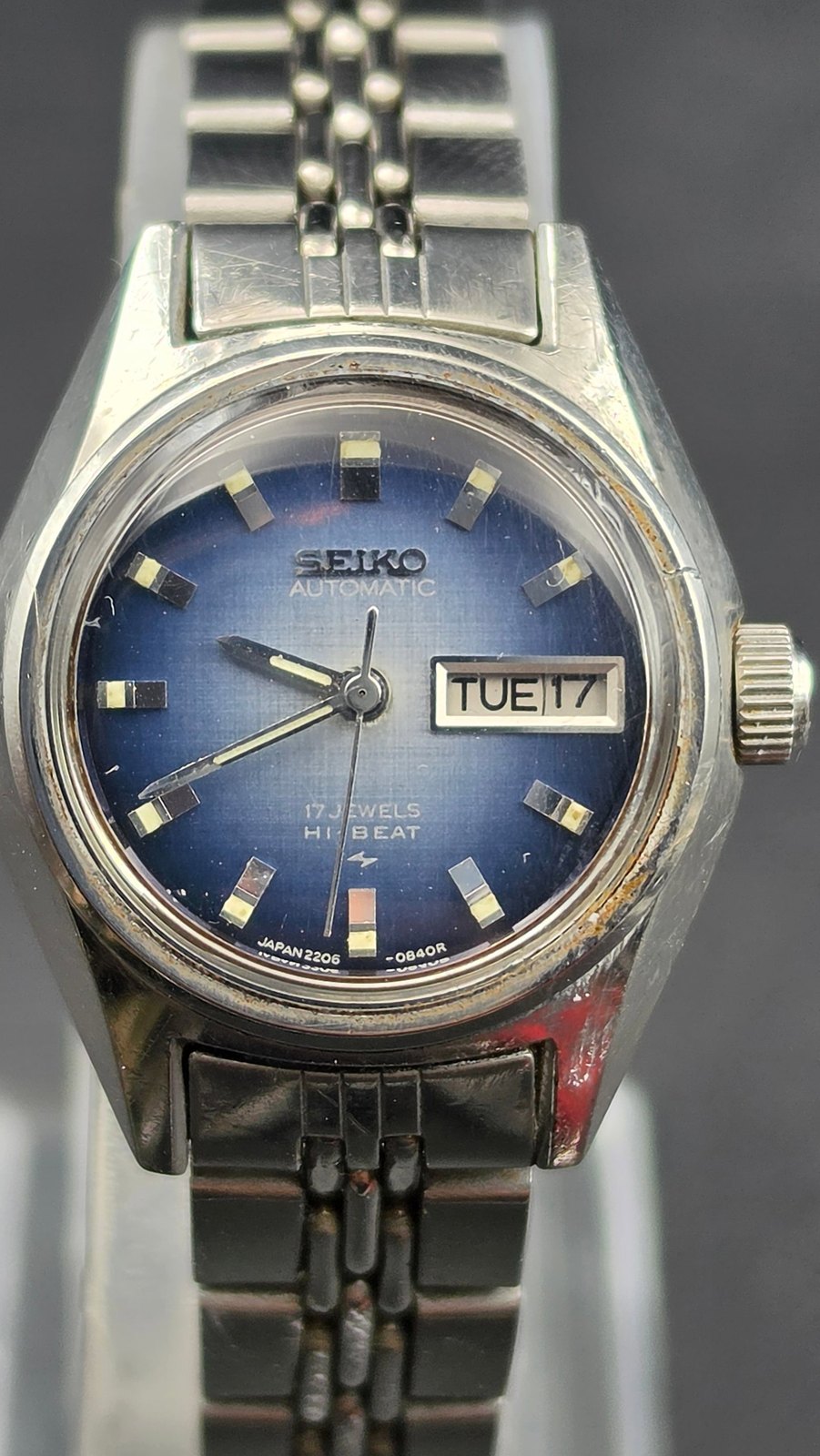
Vintage circa 1970s Seiko Automatic Hi-Beat Ladies Watch Ref 2206-0840R Blue Dial Day-Date 17 Jewels
- Maker / attribution
- Seiko (maker)
- Date
- c. 1970s
- Historical period
- Quartz Revolution (1969 – 1990)
- Country of origin
- Japan
- Object type
- Wristwatch
- Auction house
- LiveAuctioneers auction archive
- Lot
- Item 235201248
- Credit line
- Auction lot record: lot 70, EXCLUSIVE WATCHES AND POCKET WATCHES 13, Sphere Auctions LLC (2026), via LiveAuctioneers
- Catalogue title (original)
- Vintage circa 1970s Seiko Automatic Hi-Beat Ladies Watch Ref 2206-0840R Blue Dial Day-Date 17 Jewels (English)
View the source record (auction lot) ↗ (opens another website in a new tab)Suggest a correction
Record summary
Catalogued by LiveAuctioneers auction archive (lot Item 235201248), this is a wristwatch by Seiko, made in Japan, dated c. 1970s. The Atlas places it in the Quartz Revolution period (1969 – 1990) of its Wristwatches collection. The record is illustrated with 4 photographs.
Assembled from the source record's structured fields. Dates and attributions are given as the source states them; where a field is missing the Atlas leaves it blank rather than estimating.
Catalogue description
Lot description — Sphere Auctions LLC
This is a vintage Seiko ladies automatic Hi-Beat wristwatch, reference 2206-0840R, powered by caliber 2206A — a 17-jewel Hi-Beat automatic movement with quickset day-date, confirmed by the exhibition caseback which displays the movement plate marked "Seventeen 2206A, 17 Jewels Japan, Unadjusted." The case back is stamped "Seiko Water Resistant, 6N025, Japan-A, Stainless Steel, 2206-0118." The dial is a deep blue sunburst with a fine linen texture, applied gold-tone rectangular indices, sweep seconds hand, and a dual-window day-date display reading TUE/17 in English. "Seiko Automatic, 17 Jewels Hi-Beat" and the reference "Japan 2206-0840R" are printed on the dial. The round stainless steel case measures 24.62mm per digital calipers. The original signed Seiko stainless steel jubilee-style bracelet with reference Z506 and signed deployment clasp is present and intact.The Seiko 2206A Hi-Beat ladies automatic is a well-regarded vintage caliber from the early 1970s, and the blue linen sunburst dial is a desirable and visually striking variant. The watch starts and stops and would benefit from a service to restore reliable running. Sold in its current condition. The movement is mechanical automatic and will require professional service for consistent performance.This listing is for the watch as shown. All items sold in their current condition. No returns. The seller makes no warranty, expressed or implied, as to the ongoing running condition of any mechanical timepiece.
Historical context
Quartz Revolution (1969 – 1990)
Seiko's Astron begins mass quartz timekeeping; traditional industries contract sharply.
Quartz and digital watches transformed the market after 1969. Swiss employment collapsed, Japanese and Hong Kong production soared, and the Swatch (1983) helped the Swiss industry recover; mechanical watches survived as luxury goods.
Read the period in the timelineMore wristwatches from this periodEarlier: Modern Mechanical Horology
Atlas type guide
Calendar, moon-phase and perpetual calendar watches
Calendar complications range from a simple date to the perpetual calendar, which automatically allows for months of different lengths and leap years until 2100. Pocket watches with perpetual calendars were made in the eighteenth and nineteenth centuries; Patek Philippe made the first perpetual calendar wristwatch in 1925, and series production followed in 1941. The annual calendar (Patek Philippe, 1996) needs correction only once a year.
Moon-phase displays use a disc with two moons and 59 teeth advanced daily, approximating the 29.5-day lunation; more precise trains reduce the error to one day in over a century.
What to look for
- Apertures or subsidiary dials for day, date, month and leap year.
- Moon disc under a 'bosom' shaped aperture.
- Recessed correctors on the case band for setting the calendar.
Dating clues
- Triple-date wristwatches: popular c. 1940–1955.
- Perpetual calendar wristwatches: from 1925 (unique) and 1941 (series).
General guidance written by the Atlas editors about this kind of object. It is not a statement about this particular piece; for that, rely on the source record above and on physical examination.
Related records
Wristwatches · 1967
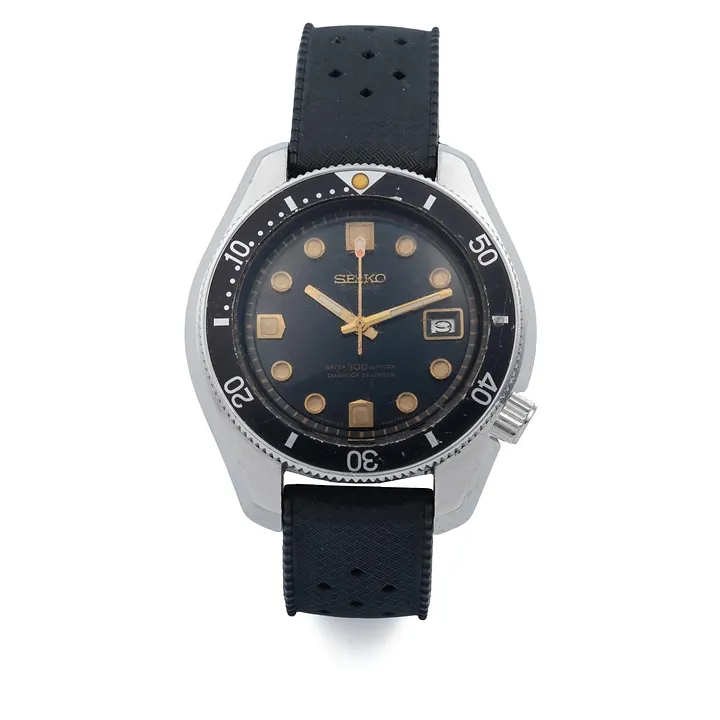
Seiko 300 M, ref. 6215-7000, 1967
Antiquorum auction archive, Geneva
Wristwatches · 1967
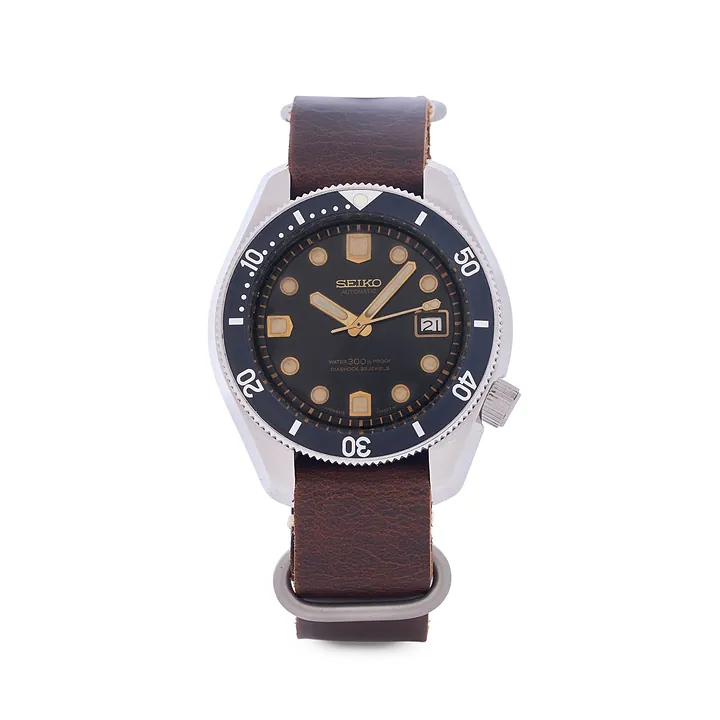
Seiko 300 Meter Diver, ref. 6215-7000, 1967
Antiquorum auction archive, Geneva
Wristwatches · c. 1968
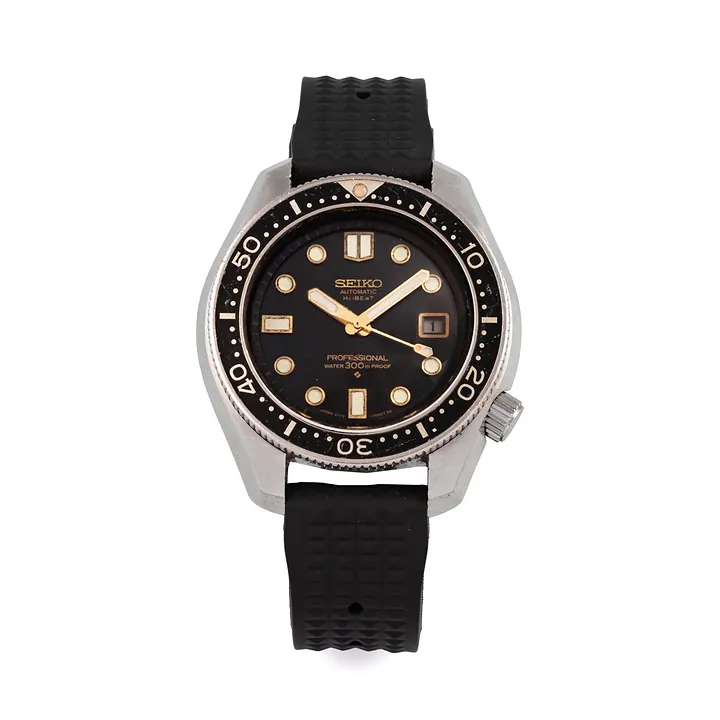
Seiko Hi-Beat, ref. 6159-7000, c. 1968
Antiquorum auction archive, Geneva
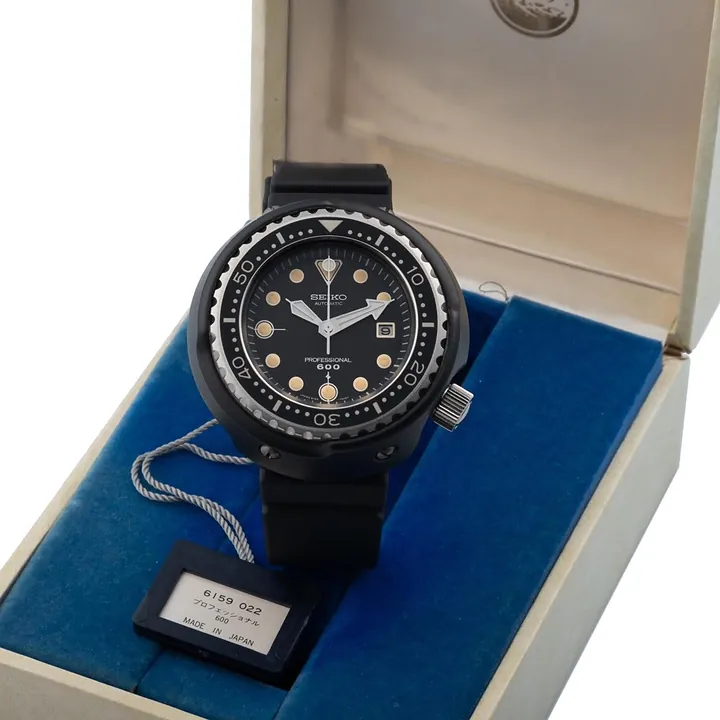
Wristwatches · 1975
Seiko Tuna Professional 600, ref. 6159-7010, 1975
Antiquorum auction archive, Geneva
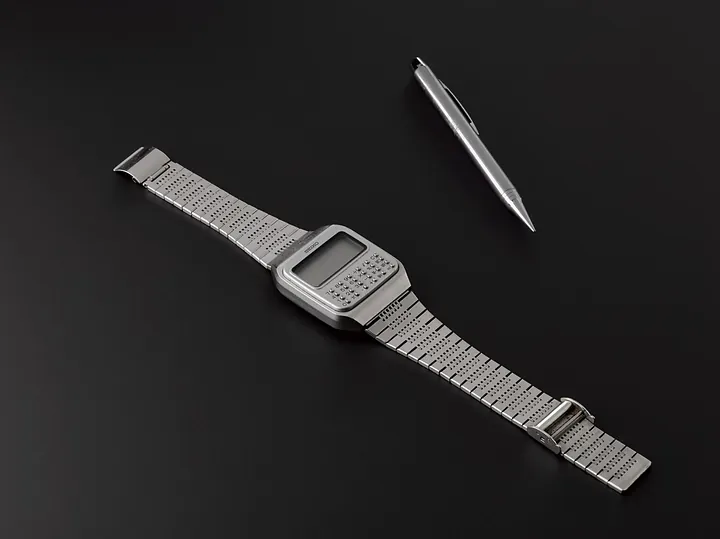
Wristwatches · 1978
Calculator wristwatch by Suwa Seikosha Co. Limited, Japan, 1978
Science Museum Group, London
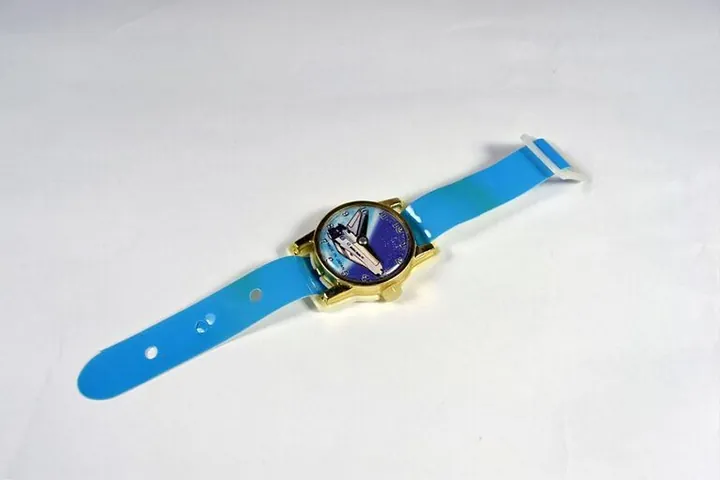
Wristwatches · 1980–1982
Wristwatch, Space Shuttle; plastic, Japan, 1970-1979?
Victoria and Albert Museum, London
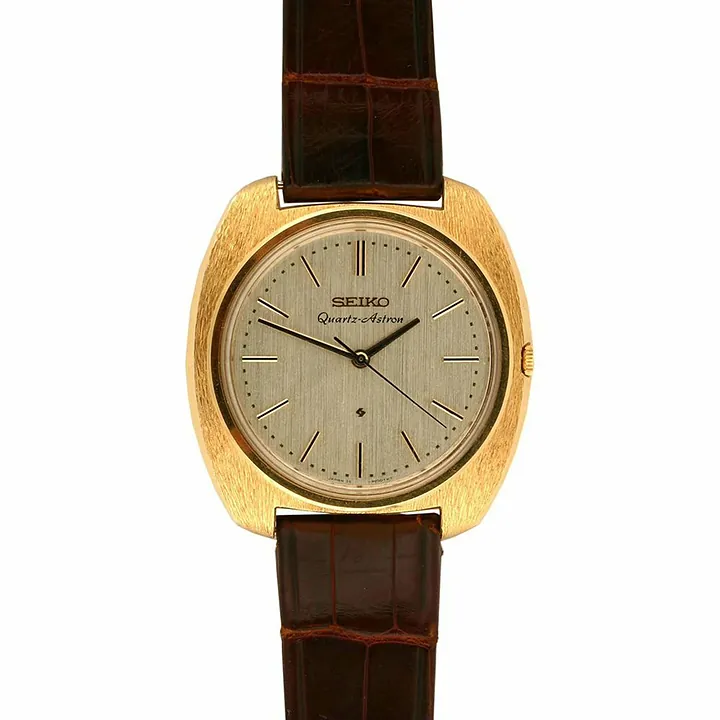
Wristwatches · 1969
Wristwatch, Japan, 1969 (no. 29912)
German Clock Museum
Wristwatches · c. 1972
Wristwatch, Japan, c. 1972
German Clock Museum