
Wristwatches · Wristwatch
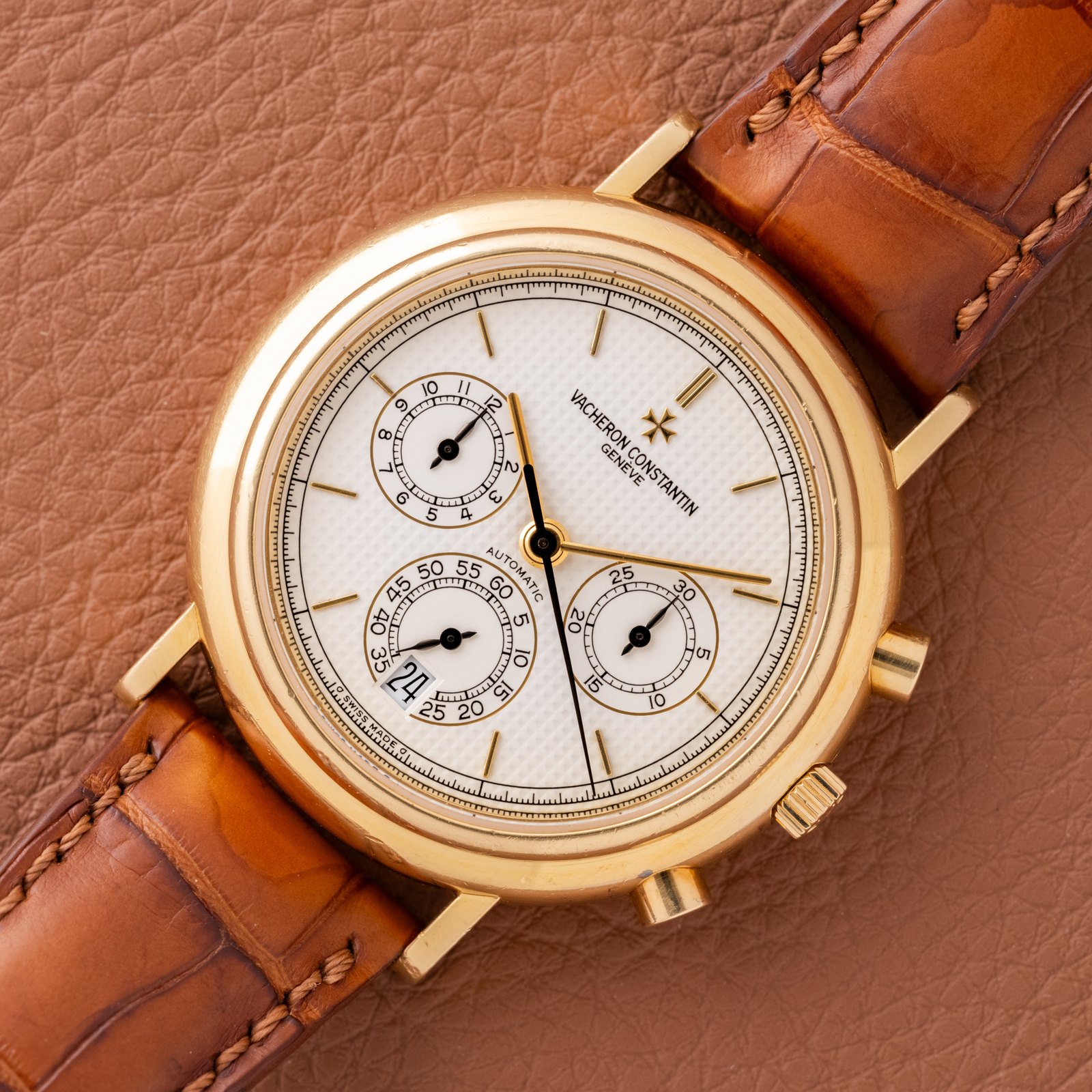
Vacheron Constantin Patrimony Chronograph (Ref. 49003), 1990s
- Maker / attribution
- Vacheron Constantin (maker)
- Date
- 1990s
- Historical period
- Mechanical Renaissance (1990 – 2010)
- Country of origin
- Switzerland
- Object type
- Wristwatch
- Dimensions
- Case 38 mm
- Stock no.
- Product 8557917601975
- Credit line
- Dealer listing, Huntington Company (product 8557917601975)
- Catalogue title (original)
- 1990s Vacheron Constantin Patrimony Chronograph (Ref. 49003) (English)
View the source record (dealer listing) ↗ (opens another website in a new tab)Suggest a correction
Record summary
Catalogued by Huntington Company (dealer) (stock number Product 8557917601975), this is a wristwatch by Vacheron Constantin, made in Switzerland, dated 1990s. The Atlas places it in the Mechanical Renaissance period (1990 – 2010) of its Wristwatches collection. Recorded dimensions: Case 38 mm. The record is illustrated with 6 photographs.
Assembled from the source record's structured fields. Dates and attributions are given as the source states them; where a field is missing the Atlas leaves it blank rather than estimating.
Catalogue description
Dealer description — Huntington Company
History and Significance The reference 49003 sits in an interesting period for Vacheron Constantin, when the brand was producing classical complications with a strong emphasis on proportion and restraint. Unlike later chronographs that lean into size or visual complexity, this reference keeps everything measured and intentional. The 38mm yellow gold case offers a slightly more contemporary presence compared to earlier 36mm examples, while still maintaining traditional proportions. The dial is where this watch separates itself. A finely textured white base gives depth without relying on color, paired with applied gold markers and a clean triple-register layout. The calendar execution is particularly well handled, with the date integrated into the lower subdial in a way that feels natural rather than forced. Overall, this is a watch that reflects Vacheron’s approach during the era, focusing on balance, legibility, and subtle detailing rather than overt design statements. Writer’s Thoughts The 38mm size is ideal for a chronograph like this. It gives the dial enough room to breathe without losing that classic feel. The date integration ironically stands out because of how well it is executed. It’s functional but doesn’t interrupt the symmetry, which is rarely done this well. It’s a watch that doesn’t try to do too much, and that’s exactly why it works. Our Promise Every watch is thoroughly vetted, carefully described with complete transparency, and guaranteed authentic. Each piece is offered in honest condition, ensuring collectors receive a timepiece that reflects both originality and integrity. Specifications Brand: Vacheron Constantin Model: Chronograph (Ref. 49003) Year: circa 1990s Case Material: Yellow gold Case Size: 38mm Bezel: Smooth yellow gold bezel Dial: White textured dial with applied gold markers and triple register chronograph layout Movement: Automatic Vacheron Constantin chronograph caliber Strap/Bracelet: Original brown leather strap Buckle/Clasp: Vacheron Constantin yellow gold buckle Contents: Watch only Condition Case: Strong overall with visible surface wear and light marks consistent with use; retains full shape with thick lugs. Dial: Clean and well-preserved with no damage; texture remains crisp. Hands: Excellent condition with no wear. Crystal: Clean with no signs of wear. Strap/Bracelet: Strap shows normal wear; remains functional.
Historical context
Mechanical Renaissance (1990 – 2010)
Mechanical watches return as cultural objects; independent watchmaking flourishes.
Mechanical watches returned as cultural and luxury objects. Complications, tourbillons and new materials proliferated; independent watchmakers such as George Daniels, F.P. Journe and Philippe Dufour revived artisanal watchmaking; collecting vintage watches became a major field.
Read the period in the timelineMore wristwatches from this periodEarlier: Quartz Revolution
Atlas type guide
Chronographs and split-seconds watches
A chronograph is a watch with an additional seconds hand that can be started, stopped and returned to zero independently of the timekeeping. Louis Moinet built an early example in 1816 and Nicolas Rieussec a recording 'chronographe' in 1821; Adolphe Nicole's heart-shaped reset cam (patented 1862) made the modern return-to-zero possible. Split-seconds (rattrapante) chronographs add a second hand that can be stopped for intermediate times; flyback chronographs restart instantly.
Chronographs were essential tools for doctors (pulsometer scales), artillery (telemeter), engineers and sport. In wristwatches, Valjoux, Venus, Lemania and later the automatic chronographs of 1969 (Zenith El Primero, the Chronomatic Calibre 11 group and Seiko 6139) are milestones.
What to look for
- Push-pieces on the case band or a single button in the crown (monopusher).
- Subsidiary registers for minutes and hours; tachymeter, telemeter or pulsometer scales.
- Column wheel versus cam control visible in the movement.
- Calibre markings of specialist makers (Valjoux, Lemania, Venus, Landeron).
Dating clues
- Pocket chronographs with heart cam reset: after 1862.
- Wrist chronographs: from c. 1910; two-button designs from the 1930s.
- Automatic chronographs: from 1969.
General guidance written by the Atlas editors about this kind of object. It is not a statement about this particular piece; for that, rely on the source record above and on physical examination.
Read next:Flyback chronographChronograph
Related records
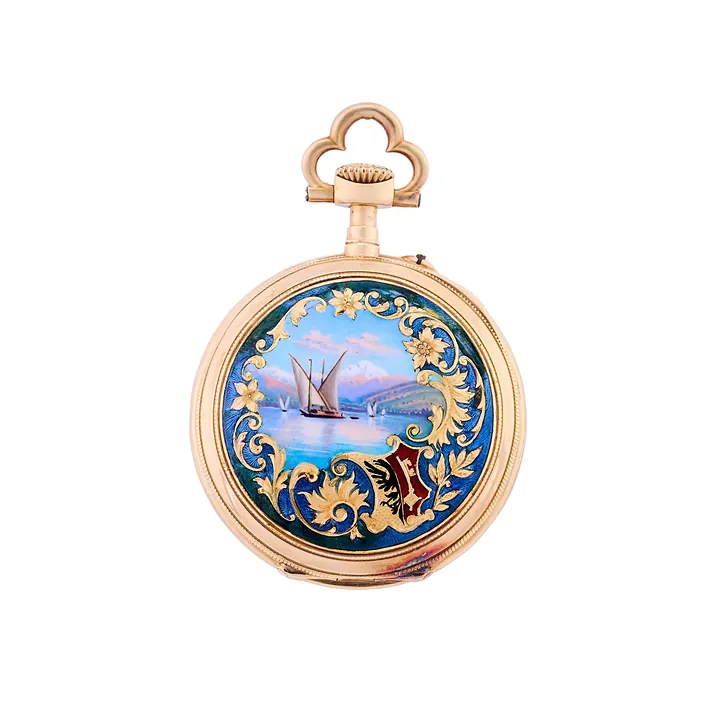
Pocket Watches · c. 1896
Vacheron Constantin “grand TIR de L’exposition Nationale, Genève 1896, c. 1896
Antiquorum auction archive, Geneva
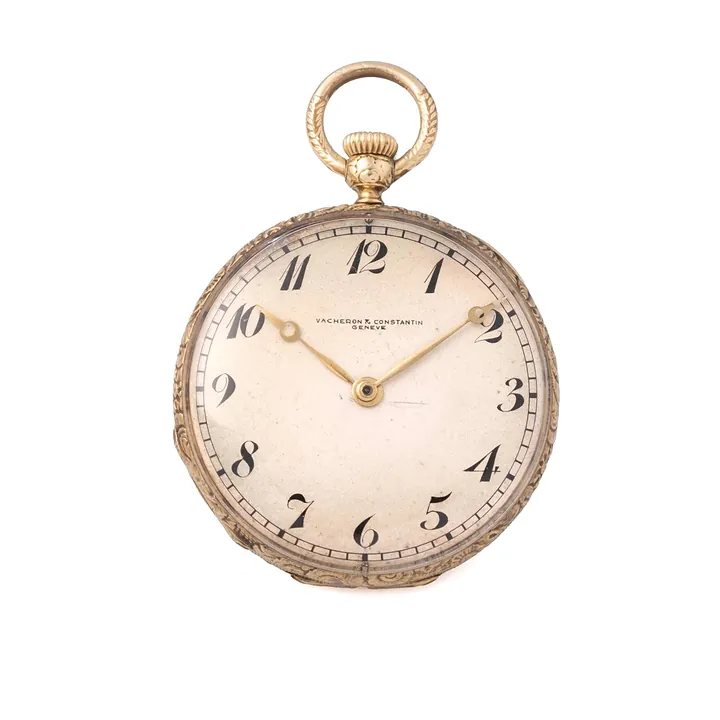
Pocket Watches · c. 1940
Vacheron Constantin pocket watch, ref. 345, c. 1940
Antiquorum auction archive, Geneva
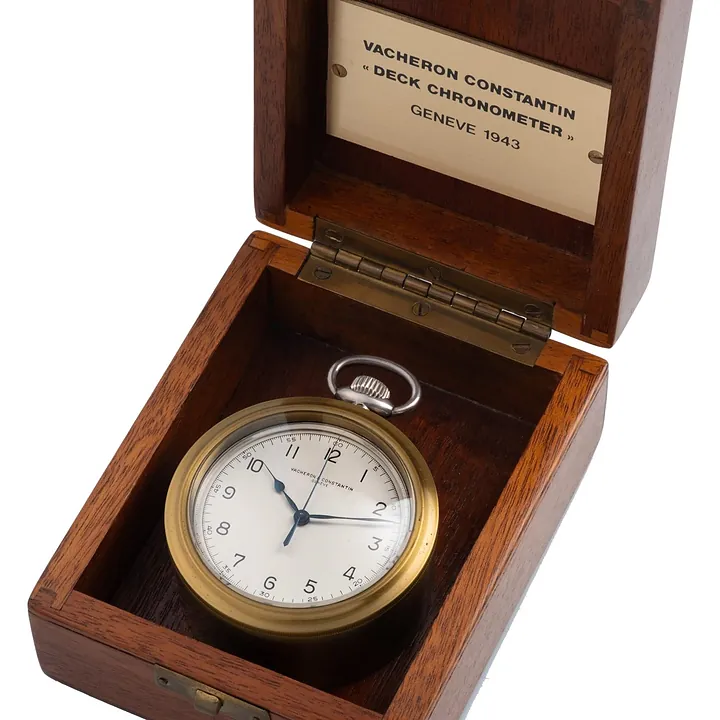
Pocket Watches · c. 1945
Vacheron Constantin pocket chronometer, c. 1945
Antiquorum auction archive, Geneva
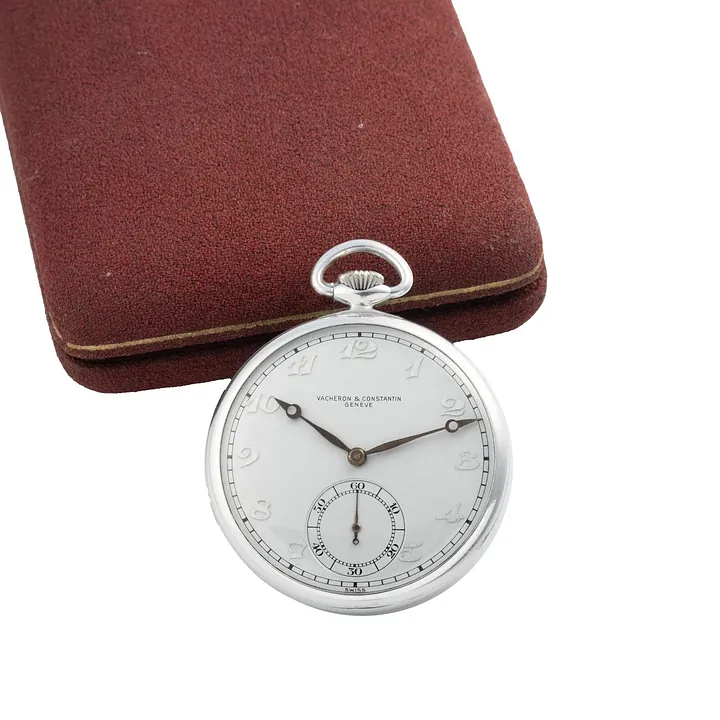
Pocket Watches · c. 1945
Vacheron Constantin watch, c. 1945
Antiquorum auction archive, Geneva

Wristwatches · 2008
Wristwatch by Breitling?, 2008
Museum Rotterdam

Wristwatches · c. 1990s
Audemars Piguet Bamboo, c. 1990s
Antiquorum auction archive, Geneva

Wristwatches · c. 1990
Audemars Piguet Huitieme Perpetual Calendar, ref. 25696PT, c. 1990
Antiquorum auction archive, Geneva

Wristwatches · c. 1990
Breitling Chronomat, ref. b13050.1, c. 1990
Antiquorum auction archive, Geneva