
Wristwatches · Wristwatch
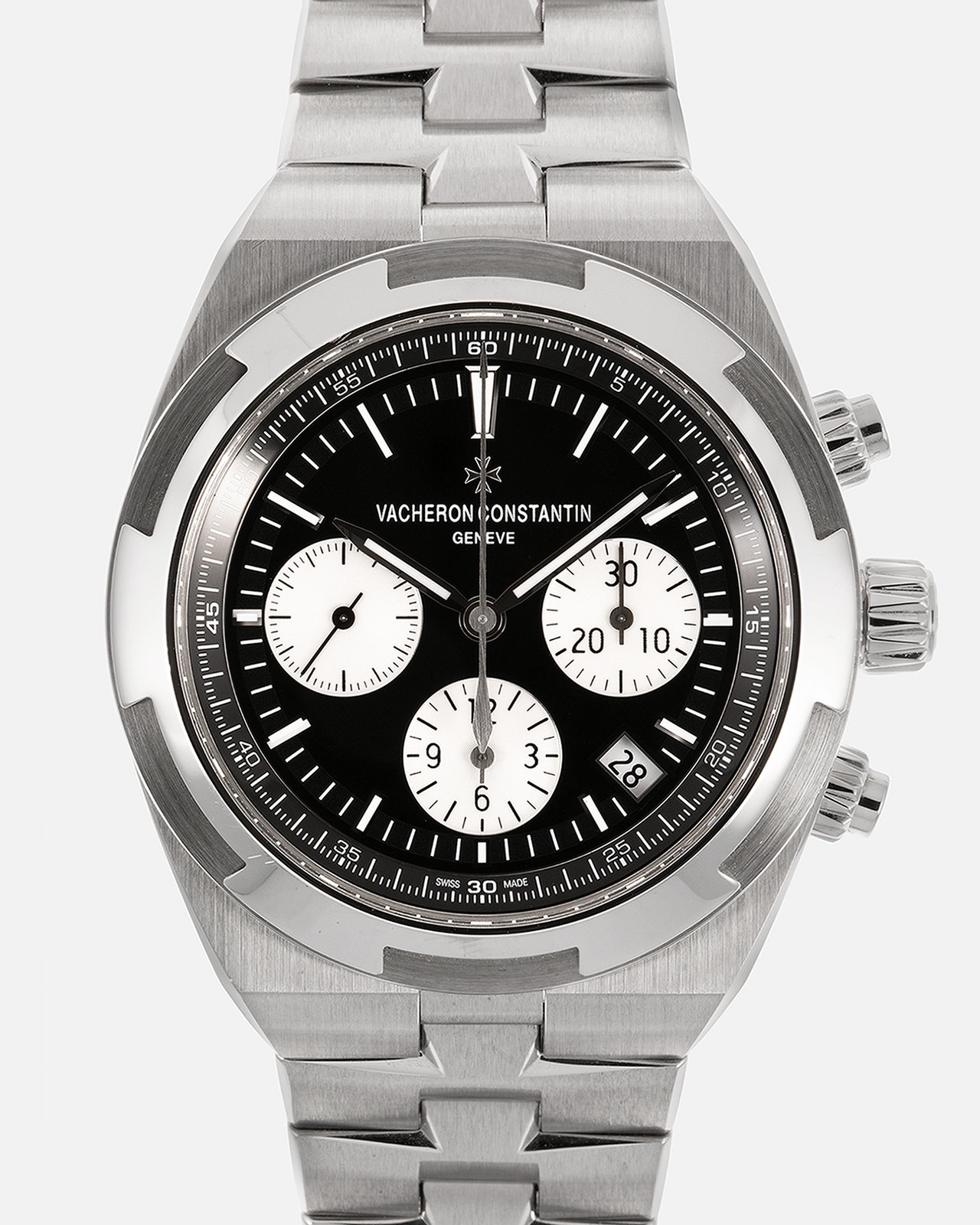
Vacheron Constantin Overseas 5500V Chronograph, 2020
- Maker / attribution
- Vacheron Constantin (maker)
- Date
- 2020
- Historical period
- Contemporary Horology (2010 – Present)
- Country of origin
- Switzerland
- Object type
- Wristwatch
- Dimensions
- Case 42.5 mm
- Stock no.
- Product 6923692343383
- Credit line
- Dealer listing, S.Song Watches (product 6923692343383)
- Catalogue title (original)
- Vacheron Constantin Overseas 5500V Chronograph (English)
View the source record (dealer listing) ↗ (opens another website in a new tab)Suggest a correction
Record summary
Catalogued by S.Song Watches (dealer), Seattle (stock number Product 6923692343383), this is a wristwatch by Vacheron Constantin, made in Switzerland, dated 2020. The Atlas places it in the Contemporary Horology period (2010 – Present) of its Wristwatches collection. Recorded dimensions: Case 42.5 mm. The record is illustrated with 6 photographs.
Assembled from the source record's structured fields. Dates and attributions are given as the source states them; where a field is missing the Atlas leaves it blank rather than estimating.
Catalogue description
Dealer description — S.Song Watches
Originally released in 1996, the Vacheron Constantin Overseas was the revival of Vacheron's first sports watch, the 222. Like many other iconic timepieces, the Overseas has evolved over the years with three distinct generations under its belt. The current generation was released in 2016 and features some aesthetic design elements from previous generations, while also featuring modern creature comforts and luxuries that Vacheron has pioneered. In my opinion, this current generation is the best Overseas line the brand has ever produced. Sized at 42.5mm x 13.7mm and tonneau-shaped with a Maltese-style bezel, the case is finished excellently with brushed and polished surfaces throughout the case all the way to each bracelet link. Integrated as all luxury sports watches are these days, the bracelet is perhaps one of the stars of the show. Engineered with innovative quick-release functionality, the Overseas Maltese cross-inspired integrated bracelet can be swapped in seconds for the additional sporty rubber strap provided. Furthermore, the Overseas bracelet features an incredible extension system on either side of its hidden butterfly clasp that can provide 2mm on either side of the bracelet's partition. None of Vacheron Constantin’s rivals provides any functionality close to this, quite the opposite actually. The Royal Oak and Nautilus annoyingly have a strap and bracelet-specific references- so if you want your bracelet Ref. 5711 with a strap, you just have to buy a whole new watch that allows for it. Dedicated to going the extra mile, the Vacheron Constantin Overseas Chronograph Ref. 5500V features one of the most incredible-looking dials in all of watchmaking. A jet-black lacquered dial adorned with white gold indices, a date window aperture at the 4:30 position, contrasting silver sub-registers and logos, effectively making it a ‘reverse-panda’ dial, if you will. With all these elements in place, this dial imparts a monochromatic edge to their Overseas' aesthetic while also being extremely legible with two separate chapter rings- one for the minutes along the dial periphery and one for seconds along the rehaut. The depth achieved from the mirrored lacquer finish is amazing. Featuring satin-brushed finishing along with the majority of its case, the Overseas' polished sides, and Maltese cross bezel both pop in conjunction with the incredible black dial. Powered by the stunning in-house automatic Cal. 5200 movement, the Ref. 5500V features a 22-carat gold oscillating weight, 52 hours of power reserve, and a myriad of finishing techniques, all on display behind the Overseas' sapphire crystal exhibition screw-down caseback, which aids in providing 150m of water resistance. All in all, it is only a matter of time before the Overseas begins to appreciate in tandem with its Holy Trinity counterparts. In fact, waitlists are growing at boutiques just like how the Nautilus and Royal Oak did a few years ago (hint hint). Relatively accessible at the moment given its incredible craftsmanship and rich heritage, collectors will soon understand the plethora of strengths this timepiece has as a luxury sports watch hailing from one of the big three.
Historical context
Contemporary Horology (2010 – Present)
Silicon components, connected watches, optical-lattice research clocks and a thriving independent scene.
Smartwatches became the world's best-selling watches, while mechanical watchmaking focuses on craft, innovation (silicon components, new escapements) and independent makers.
Read the period in the timelineMore wristwatches from this periodEarlier: Mechanical Renaissance
Atlas type guide
Chronographs and split-seconds watches
A chronograph is a watch with an additional seconds hand that can be started, stopped and returned to zero independently of the timekeeping. Louis Moinet built an early example in 1816 and Nicolas Rieussec a recording 'chronographe' in 1821; Adolphe Nicole's heart-shaped reset cam (patented 1862) made the modern return-to-zero possible. Split-seconds (rattrapante) chronographs add a second hand that can be stopped for intermediate times; flyback chronographs restart instantly.
Chronographs were essential tools for doctors (pulsometer scales), artillery (telemeter), engineers and sport. In wristwatches, Valjoux, Venus, Lemania and later the automatic chronographs of 1969 (Zenith El Primero, the Chronomatic Calibre 11 group and Seiko 6139) are milestones.
What to look for
- Push-pieces on the case band or a single button in the crown (monopusher).
- Subsidiary registers for minutes and hours; tachymeter, telemeter or pulsometer scales.
- Column wheel versus cam control visible in the movement.
- Calibre markings of specialist makers (Valjoux, Lemania, Venus, Landeron).
Dating clues
- Pocket chronographs with heart cam reset: after 1862.
- Wrist chronographs: from c. 1910; two-button designs from the 1930s.
- Automatic chronographs: from 1969.
General guidance written by the Atlas editors about this kind of object. It is not a statement about this particular piece; for that, rely on the source record above and on physical examination.
Read next:Flyback chronographChronograph
Related records
Pocket Watches · c. 1896
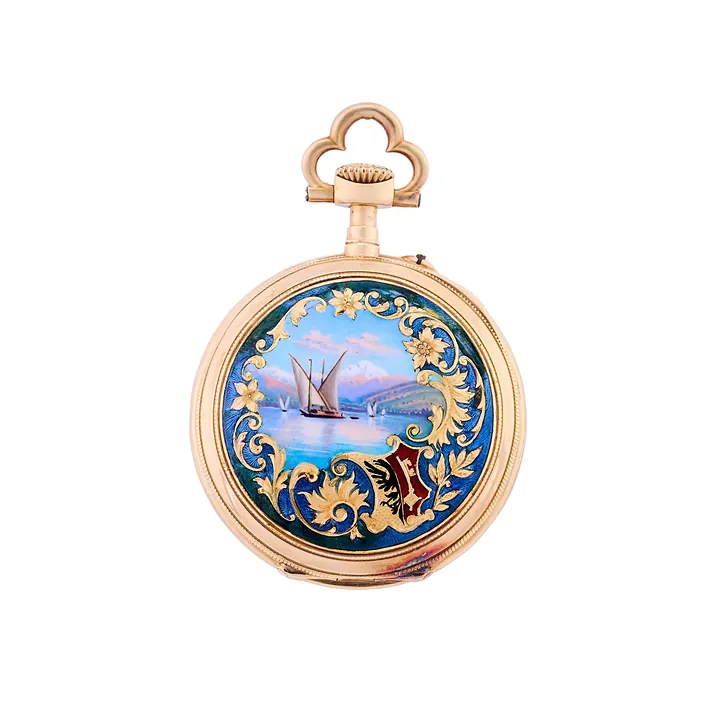
Vacheron Constantin “grand TIR de L’exposition Nationale, Genève 1896, c. 1896
Antiquorum auction archive, Geneva
Pocket Watches · c. 1940
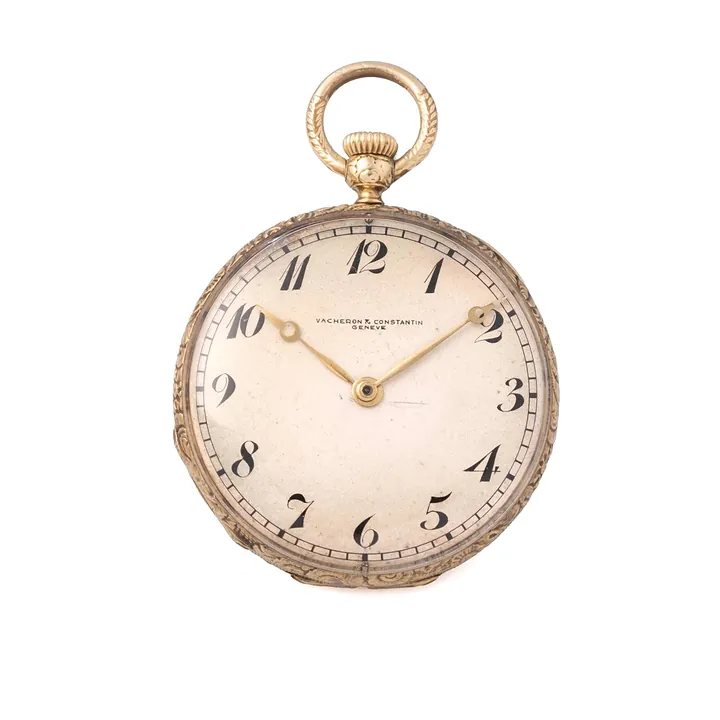
Vacheron Constantin pocket watch, ref. 345, c. 1940
Antiquorum auction archive, Geneva
Pocket Watches · c. 1945
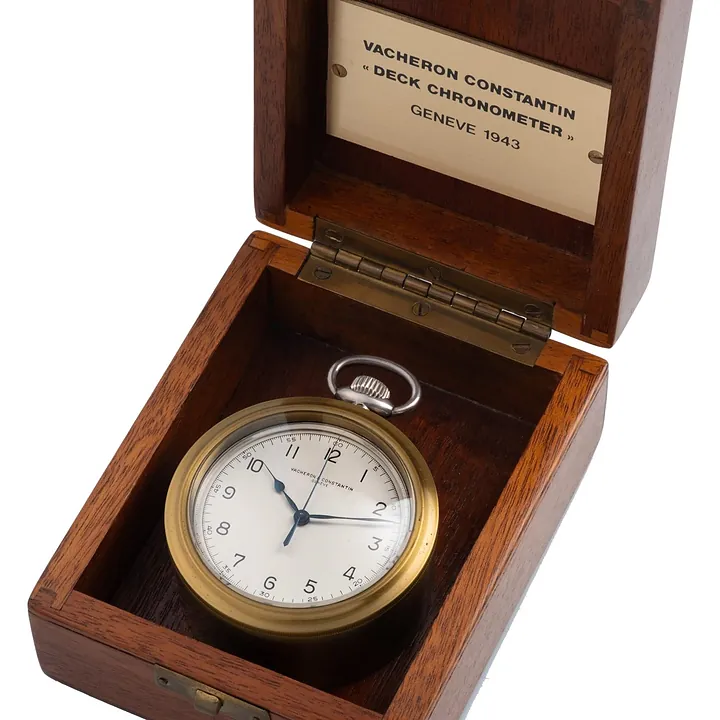
Vacheron Constantin pocket chronometer, c. 1945
Antiquorum auction archive, Geneva
Pocket Watches · c. 1945
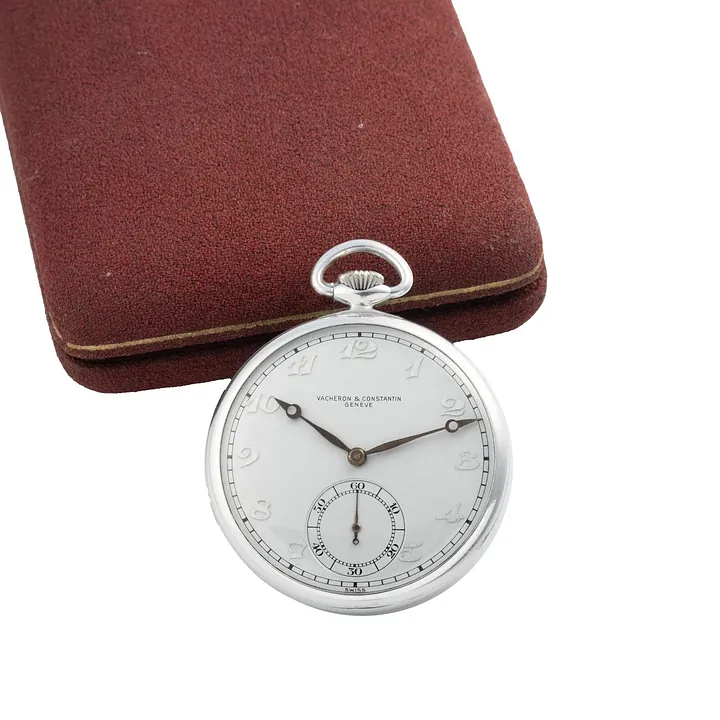
Vacheron Constantin watch, c. 1945
Antiquorum auction archive, Geneva

Wristwatches · c. 2010s
Breguet Type XXI, ref. 3810, c. 2010s (Antiquorum Lot 381-24)
Antiquorum auction archive, Geneva

Wristwatches · c. 2010s
Breguet Type XXI, ref. 3810, c. 2010s (Antiquorum Lot 386-229)
Antiquorum auction archive, Geneva

Wristwatches · Sold in September 2010
Breitling Cosmonaute, ref. A 22322, Sold in September 2010
Antiquorum auction archive, Geneva

Wristwatches · c. 2010
Corum Bubble Chrono, ref. 396.150.20, c. 2010
Antiquorum auction archive, Geneva