
Pocket Watches · Pocket watch
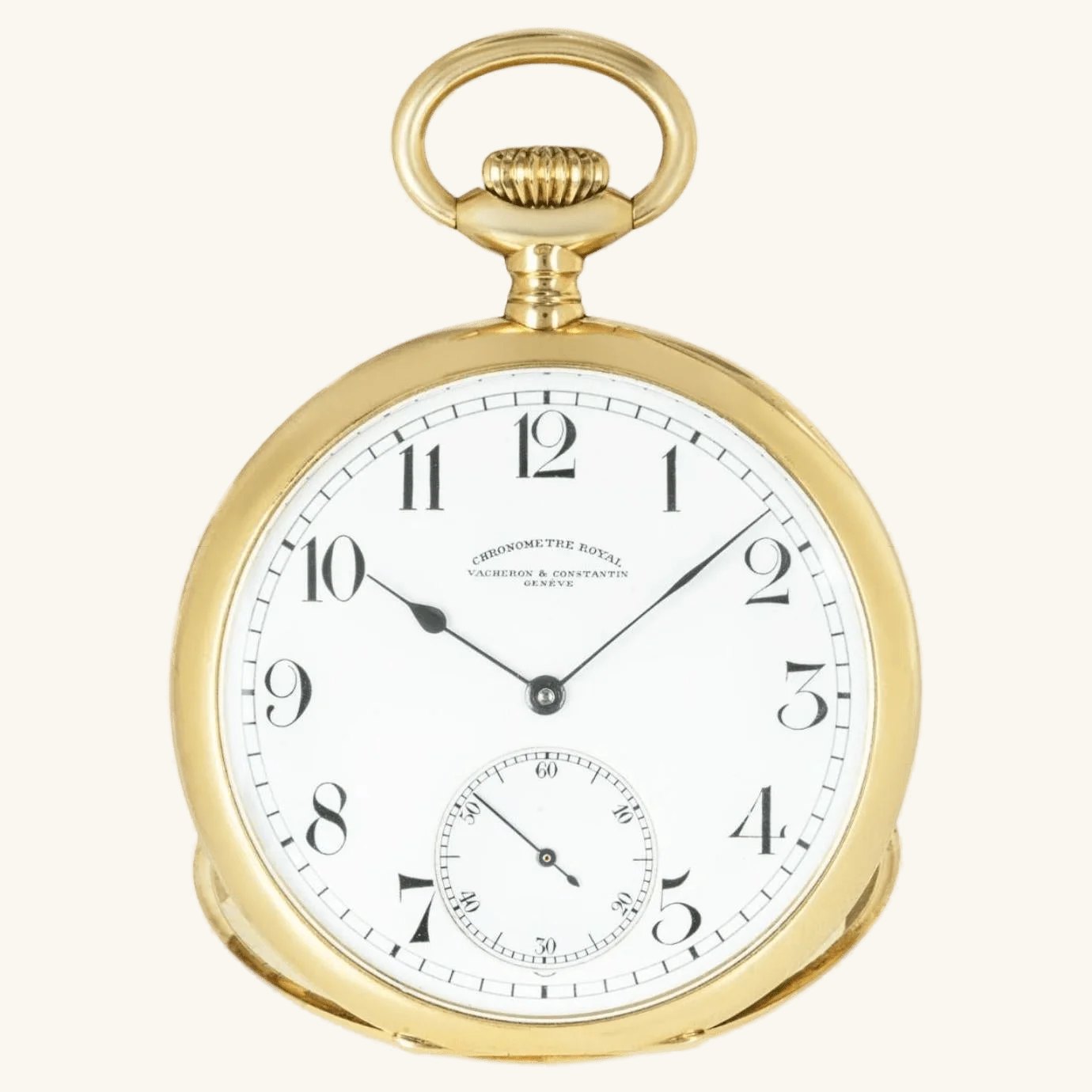
Vacheron Constantin Chronometer Royal 18CT Gold Pocket Watch, c. 1920
- Maker / attribution
- Vacheron Constantin (maker)
- Date
- c. 1920
- Historical period
- Golden Age of Mechanical Watchmaking (1900 – 1945)
- Country of origin
- Switzerland
- Object type
- Pocket watch
- Materials / technique
- gold
- Dealer
- WatchMuseum.org shop
- Stock no.
- Product 2427
- Credit line
- Dealer listing, WatchMuseum.org shop (product 2427)
- Catalogue title (original)
- Vacheron Constantin Chronometer Royal 18CT Gold Pocket Watch (English)
View the source record (dealer listing) ↗ (opens another website in a new tab)Suggest a correction
Record summary
Catalogued by WatchMuseum.org shop (stock number Product 2427), this is a pocket watch by Vacheron Constantin, made in Switzerland, dated c. 1920. The Atlas places it in the Golden Age of Mechanical Watchmaking period (1900 – 1945) of its Pocket Watches collection. Materials and techniques recorded by the source: gold. The record is illustrated with 6 photographs.
Assembled from the source record's structured fields. Dates and attributions are given as the source states them; where a field is missing the Atlas leaves it blank rather than estimating.
Catalogue description
Dealer description — WatchMuseum.org shop
Step into the world of timeless elegance with the Vacheron Constantin Chronometer Royal 18CT Gold Pocket Watch, a masterpiece from the 1920s that epitomizes the pinnacle of Swiss watchmaking. This keyless lever open face pocket watch boasts a stunning white enamel dial, fully signed by Chronometre Royal Vacheron & Constantin Genève, adorned with Arabic numerals, an outer minute track, and a subsidiary seconds dial. The original blued steel spade hands and matching seconds hand add a touch of classic sophistication. Encased in heavy, sturdy 18ct yellow gold, the watch features an engine-turned design on the case back with a round vacant cartouche, and a fully signed inner cuvette. The cases are Swiss hallmarked, numbered, and bear the prestigious Vacheron Constantin stamp and cross. The gilt fully jeweled movement, signed and numbered, includes a compensation balance, micrometer regulation, and wolf’s tooth winding, showcasing the impeccable craftsmanship of Vacheron. Designed to compete with the Patek Philippe Gondolo Pocket Watch, this piece stands as a testament to Vacheron’s dedication to excellence. In pristine condition, it promises to be a standout addition to any collection, captivating even the most discerning watch enthusiasts. Introducing the exquisite Vacheron Constantin Chronometre Royal 18ct Yellow gold Keyless Lever Open Face Pocket Watch, produced in the 1920s. Featuring a stunning white enamel dial fully signed by Chronometre Royal Vacheron & Constantin Genève, with Arabic numerals, an outer minute track, and a subsidiary seconds dial, this watch is a true marvel of watchmaking. The dial is complemented by original blued steel spade hands and a matching seconds hand. The 18ct yellow gold case is heavy and sturdy, with the case back having an engine-turned design and a round vacant cartouche. The inner cuvette is also fully signed, and the cases are fully Swiss hallmarked, numbered, and have the Vacheron Constantin stamp and cross. The gilt fully jeweled signed and numbered movement boasts compensation balance, micrometer regulation, and wolf’s tooth winding, making it an excellent example of Vacheron’s craftsmanship. This pocket watch was created by Vacheron to vie with the Patek Philippe Gondolo Pocket Watch, and it truly stands up to the competition. Its pristine condition makes it a piece that would seamlessly blend into any collection and is sure to impress even the most discerning watch collector. Creator: Vacheron Constantin Case Material: 18k Gold,Yellow Gold,Gold Case Shape: Round Movement: Manual Wind Case Dimensions: Diameter: 56 mm (2.21 in) Place of Origin: Switzerland Period: Early 20th Century Date of Manufacture: C1920s Condition: Excellent
Historical context
Golden Age of Mechanical Watchmaking (1900 – 1945)
The wristwatch displaces the pocket watch; waterproof cases, self-winding and grand complications.
The pocket watch reached technical maturity and then began to give way to the wristwatch after the First World War. Complicated watches for collectors such as Henry Graves Jr. and James Ward Packard, railroad watches, and slim Art Deco dress watches are characteristic.
Read the period in the timelineMore pocket watches from this periodEarlier: Industrial Revolution
Atlas type guide
Pocket chronometers and precision watches
A pocket chronometer is a watch built to observatory standards, traditionally with a detent escapement like a marine chronometer. English makers such as John Arnold and Thomas Earnshaw made the first pocket chronometers in the 1780s. In the nineteenth century the term increasingly referred to any watch that had passed official rating trials at observatories in Kew, Neuchâtel, Geneva or Besançon, and the Swiss lever chronometer became dominant.
Tourbillon and karrusel watches belong to the same world of precision. Breguet patented the tourbillon in 1801 to average out positional errors; Bahne Bonniksen's karrusel (1892) was a cheaper English alternative. Rating certificates (bulletins de marche) that accompany such watches are historical documents in their own right.
What to look for
- Detent escapement (no pallets; a fine spring detent locks the escape wheel).
- Observatory certificates, competition results or 'Chronometer' marking on the dial.
- Tourbillon carriage visible through an aperture or on the movement.
- Fine finishing: jewelled holes in gold chatons, diamond endstones.
Dating clues
- English pocket chronometers: c. 1780–1900.
- Observatory trials at Neuchâtel from 1866, Geneva from 1873, Kew from 1884.
- Karrusels: 1892–c. 1915.
General guidance written by the Atlas editors about this kind of object. It is not a statement about this particular piece; for that, rely on the source record above and on physical examination.
Read next:Spring detent (chronometer) escapementTourbillonDetached lever escapement
Related records
Pocket Watches · c. 1896
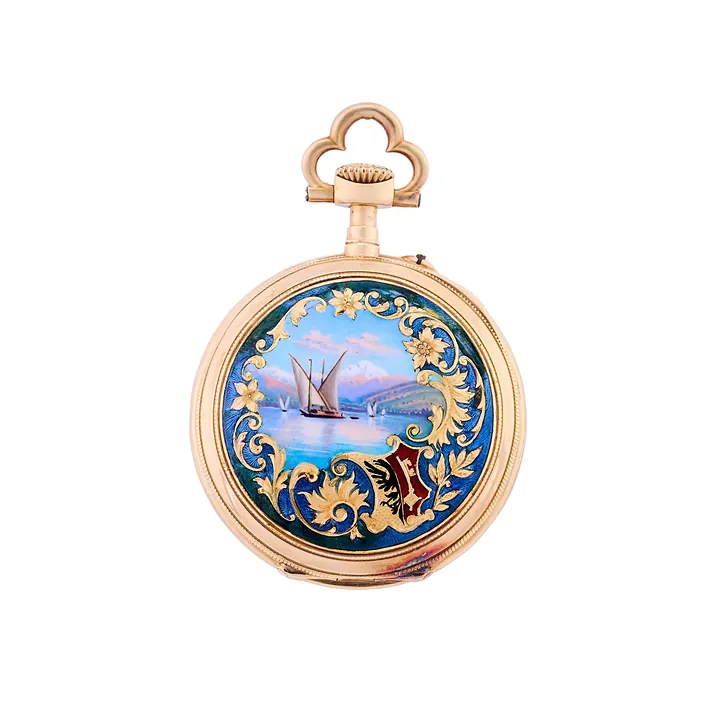
Vacheron Constantin “grand TIR de L’exposition Nationale, Genève 1896, c. 1896
Antiquorum auction archive, Geneva
Pocket Watches · c. 1940
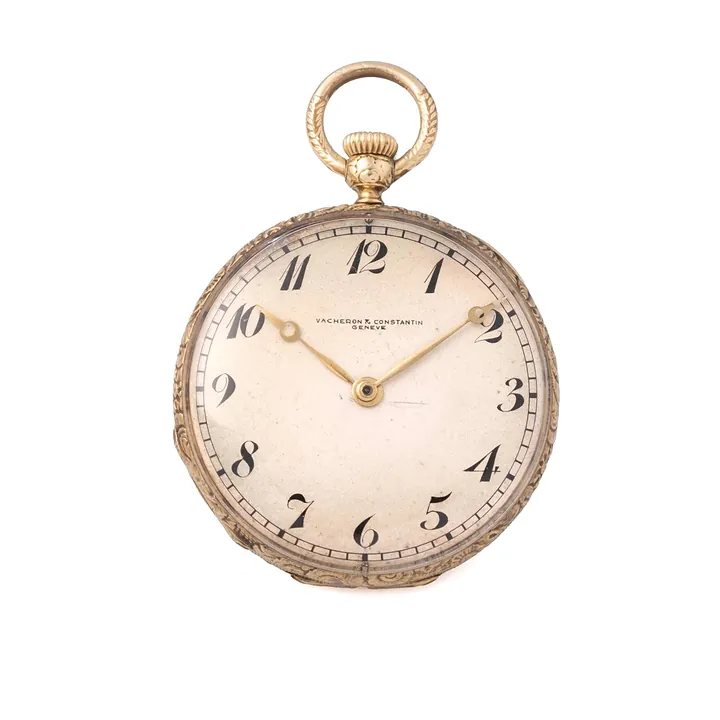
Vacheron Constantin pocket watch, ref. 345, c. 1940
Antiquorum auction archive, Geneva
Pocket Watches · c. 1945
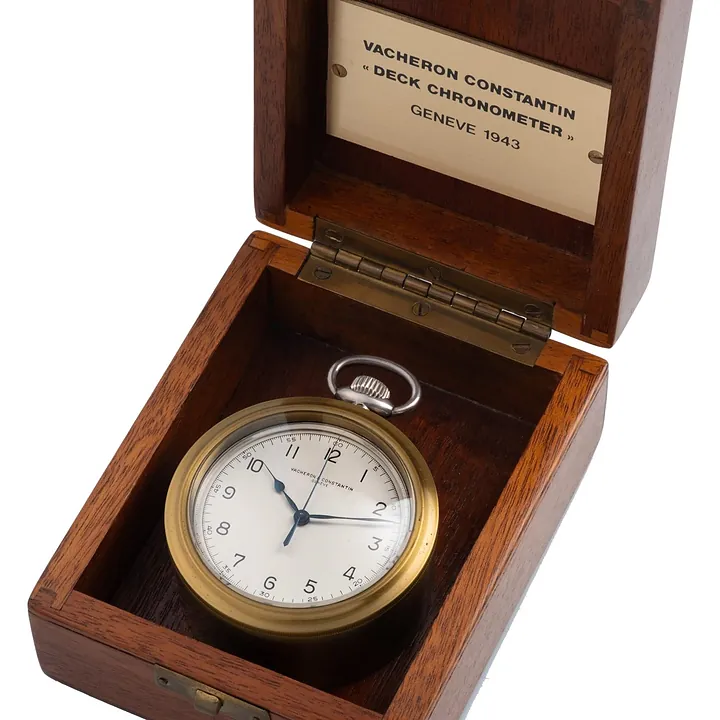
Vacheron Constantin pocket chronometer, c. 1945
Antiquorum auction archive, Geneva
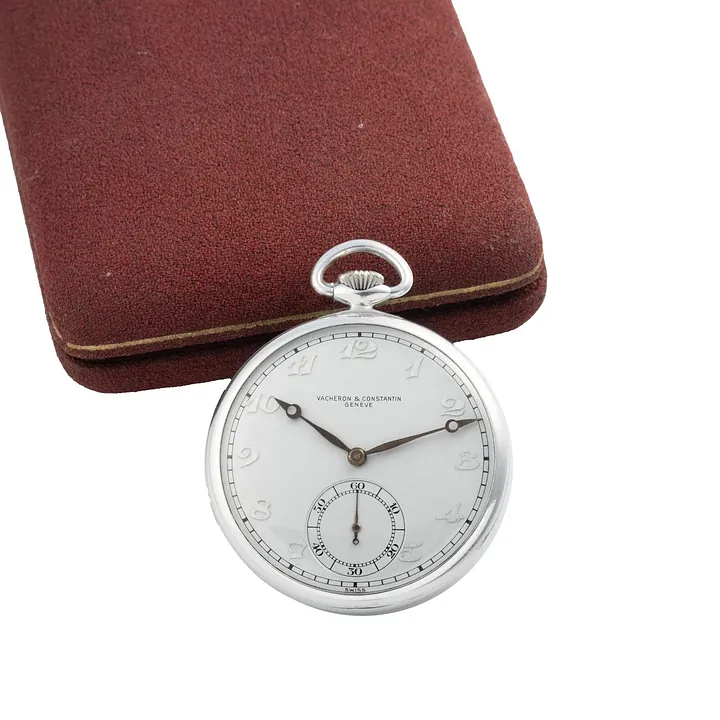
Pocket Watches · c. 1945
Vacheron Constantin watch, c. 1945
Antiquorum auction archive, Geneva

Pocket Watches · c. 1900
Patek Philippe Chronometro Gondolo, c. 1900
Antiquorum auction archive, Geneva
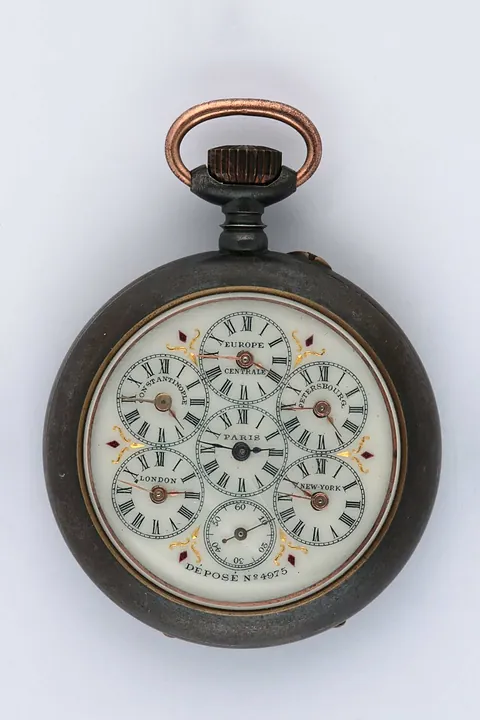
Pocket Watches · c. 1900
Pocket watch by A. Sandoz-Boucherin, Switzerland, c. 1900
German Clock Museum
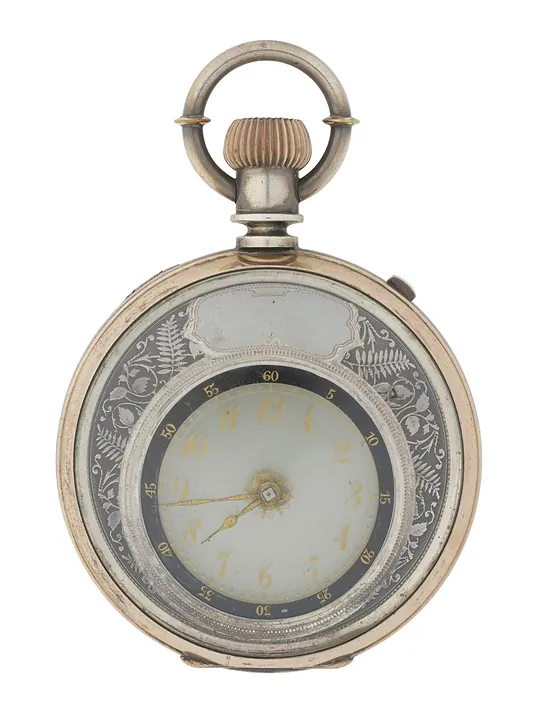
Pocket Watches · 1900
Pocket watch by Armand Schwob & Frère, Switzerland, 1900
Science Museum Group, London
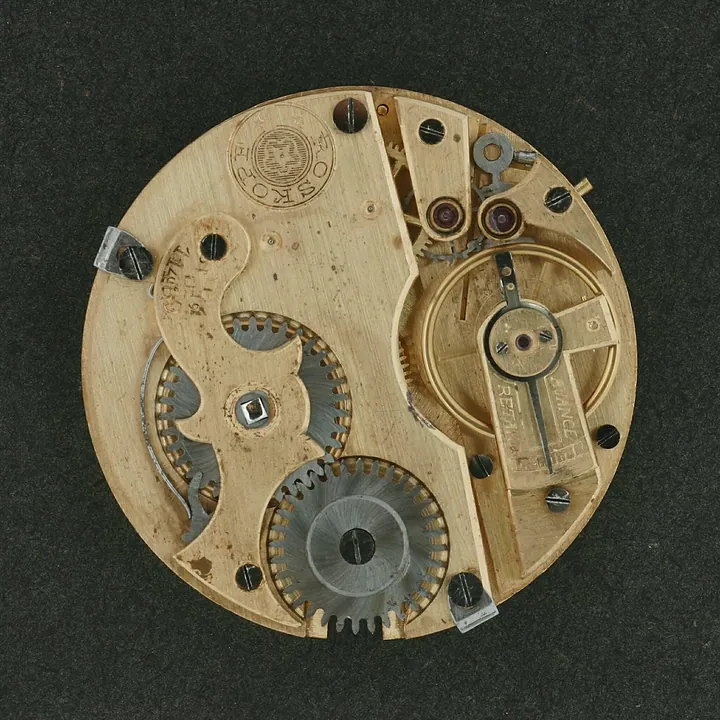
Pocket Watches · c. 1900
Pocket watch by Vve. Chs. Léon Schmid und Cie, Switzerland, c. 1900
German Clock Museum