
Pocket Watches · Pocket watch
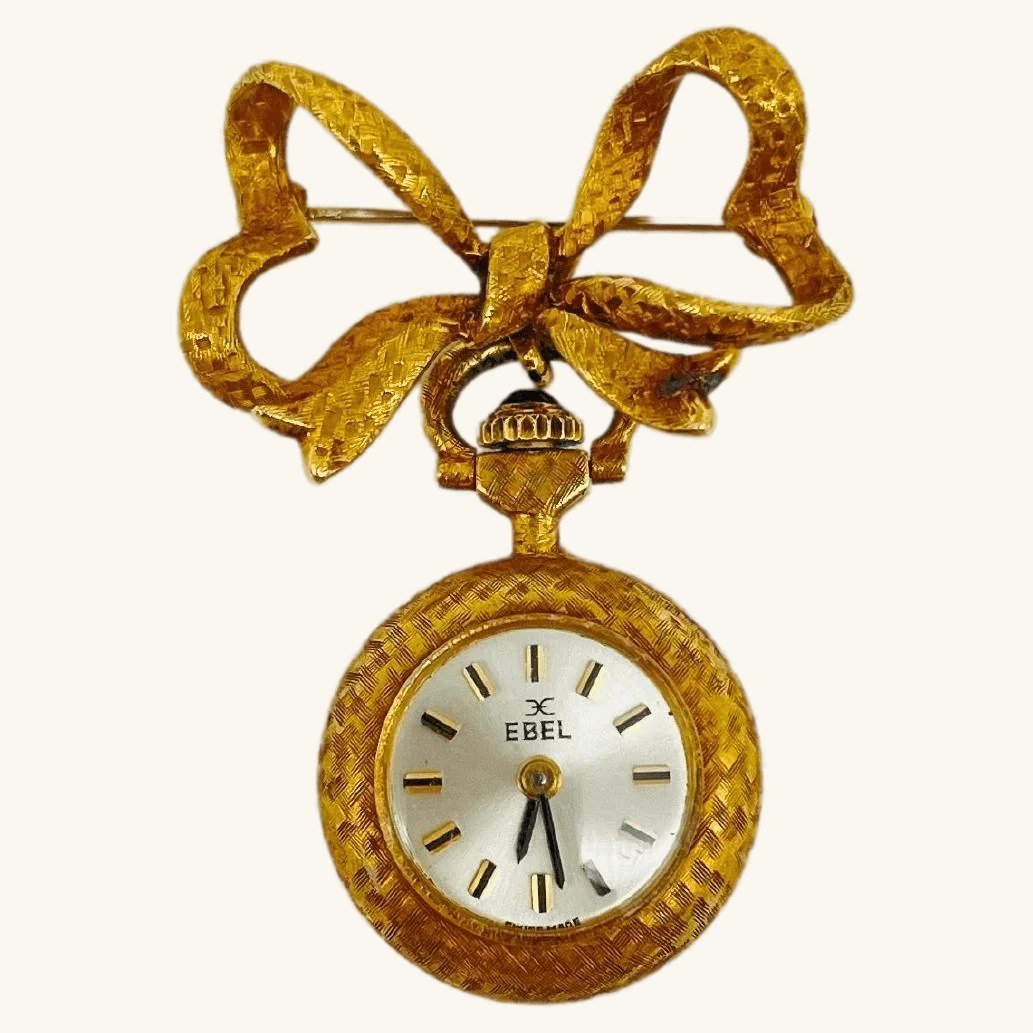
Unique Ebel Brooch Watch 18k Yellow Gold, 1980
- Maker / attribution
- Unrecorded in source
- Date
- 1980
- Historical period
- Quartz Revolution (1969 – 1990)
- Country of origin
- Unrecorded in source
- Object type
- Pocket watch
- Materials / technique
- gold
- Dealer
- WatchMuseum.org shop
- Stock no.
- Product 2739
- Credit line
- Dealer listing, WatchMuseum.org shop (product 2739)
- Catalogue title (original)
- Unique Ebel Brooch Watch 18k Yellow Gold (English)
View the source record (dealer listing) ↗ (opens another website in a new tab)Suggest a correction
Record summary
Catalogued by WatchMuseum.org shop (stock number Product 2739), this is a pocket watch, dated 1980. The Atlas places it in the Quartz Revolution period (1969 – 1990) of its Pocket Watches collection. Materials and techniques recorded by the source: gold. The record is illustrated with 6 photographs.
Assembled from the source record's structured fields. Dates and attributions are given as the source states them; where a field is missing the Atlas leaves it blank rather than estimating.
Catalogue description
Dealer description — WatchMuseum.org shop
Step into a world of timeless elegance with the Unique Ebel Brooch Watch crafted in 18k yellow gold, a true testament to the artistry and precision of Swiss watchmaking from the 1980s. This exquisite piece is not just a timekeeper but a work of art, meticulously designed with intricate engravings and chasing that highlight the exceptional craftsmanship of its creators. The minimalist white dial, adorned with golden indices, harmonizes beautifully with the luxurious gold casing, exuding an air of understated sophistication. Adding a splash of color and character, the brooch watch features a stunning blue sapphire set in golden embellishments, elevating its aesthetic to one of regal refinement. With a weight of 21 grams and dimensions that ensure a comfortable yet striking presence, this brooch watch is as functional as it is beautiful, allowing you to keep track of time while showcasing your impeccable sense of style. Originating from Switzerland and dating back to 1980, this piece remains in good condition, a testament to its enduring quality and timeless appeal. Whether you are a collector of fine timepieces or someone who appreciates the fusion of practicality and luxury, the Unique Ebel Brooch Watch is sure to captivate and impress. The Ebel brooch watch is truly a masterpiece, crafted with exceptional attention to detail and quality. Made with 18k yellow gold, this timepiece boasts intricate engravings and chasing, showcasing the fine craftsmanship of its makers. The white dial is elegant and minimalist, with golden indices that complement the gold casing perfectly. The brooch watch’s top section features a stunning green stone delicately set in golden embellishments, adding a touch of character and color to the piece. This precious stone is actually a blue sapphire, a luxurious gemstone that imbues the overall aesthetic with a sense of royalty and refinement. Not only is this brooch watch visually stunning, but it’s also highly functional, allowing its wearer to keep track of time while flaunting their impeccable sense of taste and style. From its exquisite design to its practical functionality, the Ebel brooch watch is truly a magnificent piece that is sure to impress anyone who sees it. Creator: Ebel Case Material: Yellow Gold Stone: Blue Sapphire Stone Cut: Cabochon Weight: 21 g Case Dimensions: Height: 40 mm (1.58 in)Width: 30 mm (1.19 in)Diameter: 20 mm (0.79 in) Place of Origin: Switzerland Period: 1980-1989 Date of Manufacture: 1980 Condition: Good
Historical context
Quartz Revolution (1969 – 1990)
Seiko's Astron begins mass quartz timekeeping; traditional industries contract sharply.
Quartz pocket watches and inexpensive novelty watches appeared, while traditional mechanical pocket watches survived mainly as collectibles and gifts.
Read the period in the timelineMore pocket watches from this periodEarlier: Modern Mechanical Horology
Atlas type guide
Pocket watches
The pocket watch was the dominant personal timekeeper from the late seventeenth century until the First World War. Its development tracks the history of the escapement: verge watches with fusees until the late eighteenth century; Thomas Mudge's lever escapement (c. 1755) and the cylinder escapement popularised by George Graham and later by Swiss makers; and the Swiss and English lever watches of the nineteenth century. Lépine's bar-bridge calibre and keyless winding made watches thinner and easier to use.
Industrialisation transformed the trade: American factories such as Waltham (from 1850) and Elgin produced interchangeable parts by machine, and Swiss makers responded with their own mechanisation after the 1876 Philadelphia Exhibition. By 1900 a reliable watch was affordable to millions; the finest makers continued to produce complications and precision watches.
What to look for
- The escapement: verge (crown wheel), cylinder, duplex, English or Swiss lever.
- Key winding (a square arbor in dial or back) or keyless crown winding.
- Signatures and serial numbers on the movement, dial and inside case back.
- Hallmarks, case maker's marks and gold or silver standards stamped in the case.
- Dial material: enamel, silver, gold, later printed metal.
Dating clues
- Verge watches dominate before c. 1800; cylinder watches c. 1770–1900; lever watches after c. 1820.
- Keyless winding: increasingly common after c. 1860.
- Manufacturer serial number lists exist for Waltham, Elgin, Longines, Omega, Patek Philippe and others.
General guidance written by the Atlas editors about this kind of object. It is not a statement about this particular piece; for that, rely on the source record above and on physical examination.
Read next:Verge escapementDetached lever escapementFuseeIdentification Centre
Related records
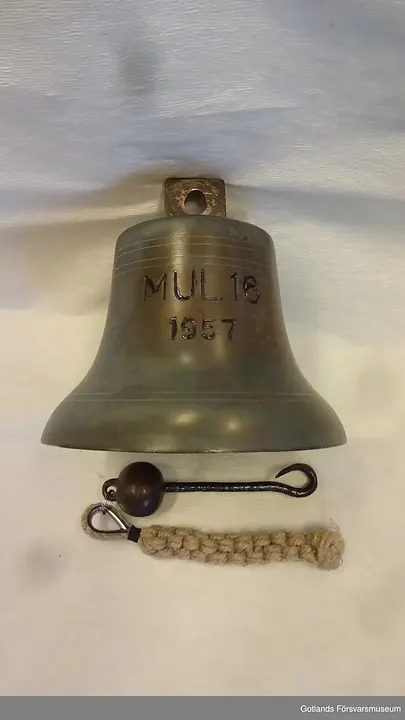
Pocket Watches · 1957–1990
Pocket watch, Sweden, 1957–1990
Gotland Defense Museum
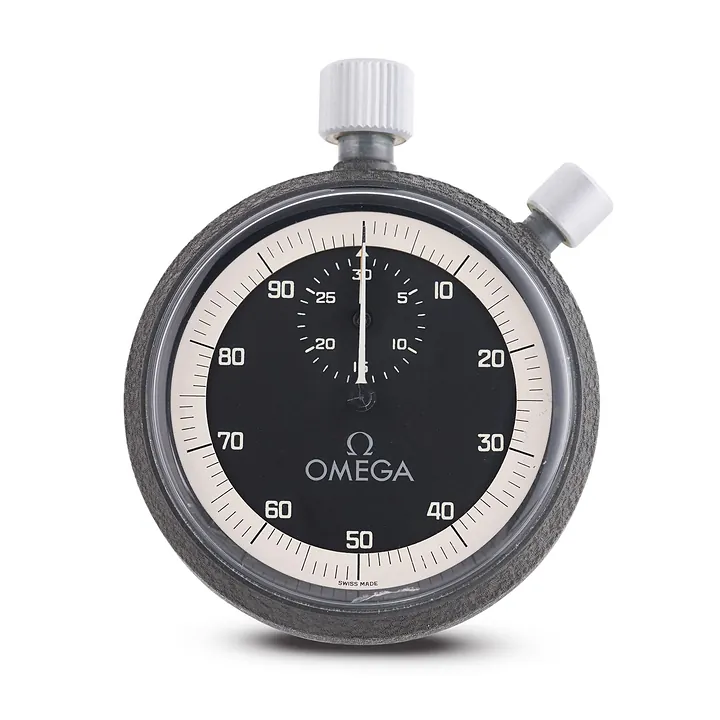
Pocket Watches · c. 1970s
Omega Stop Watch, c. 1970s
Antiquorum auction archive, Geneva
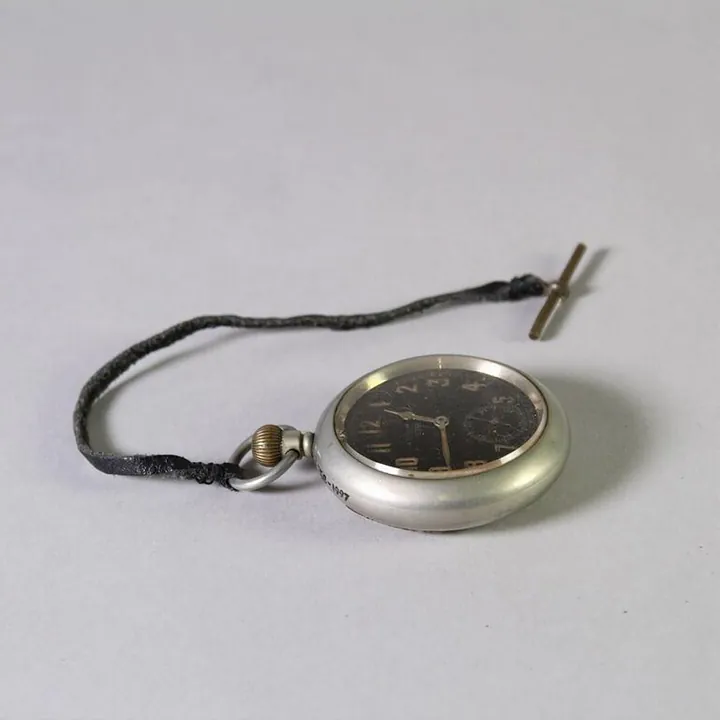
Pocket Watches · 1970
Watch, Williamson, British, 1970
Victoria and Albert Museum, London
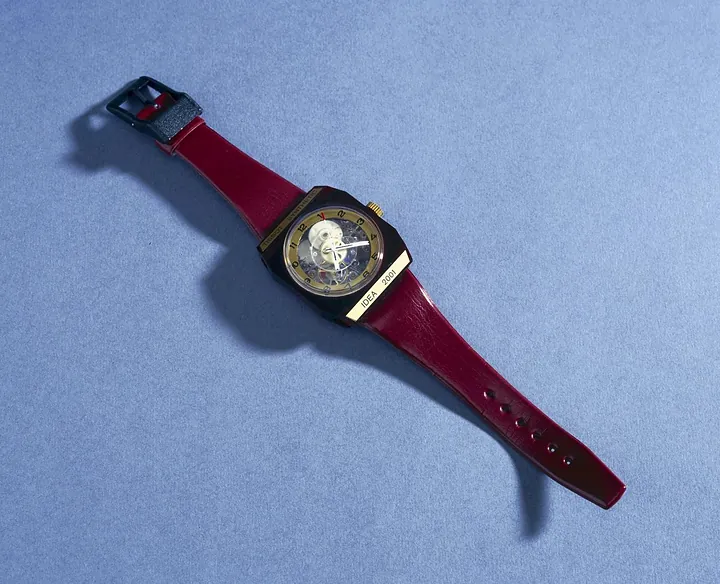
Pocket Watches · 1971–2001
"Tissot synthetic idea 2001" the first plastic watch, introduced in 1971
Science Museum Group, London
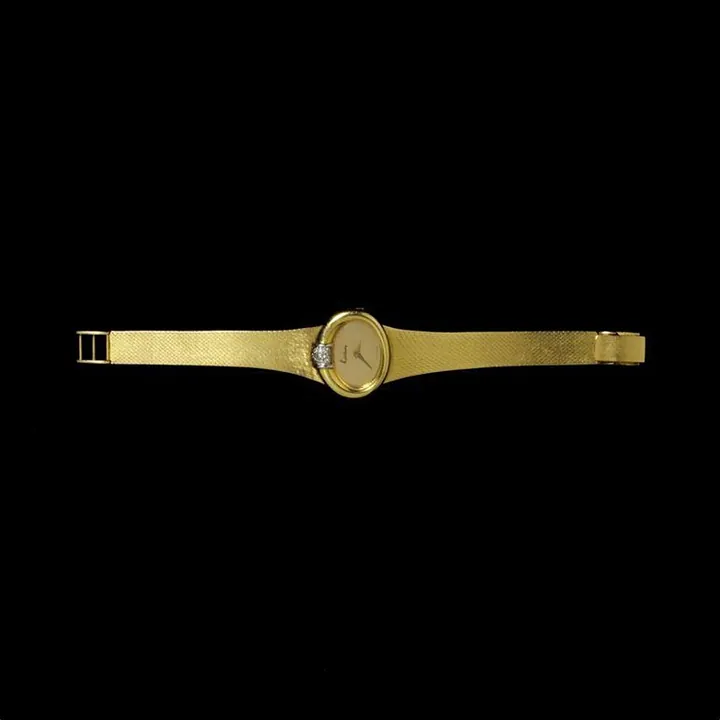
Pocket Watches · 1973
Woman's watch, gold with diamonds set in platinum. Made for Kutchinsky, London by Chopard et Cie. Switzerland, 1973
Victoria and Albert Museum, London
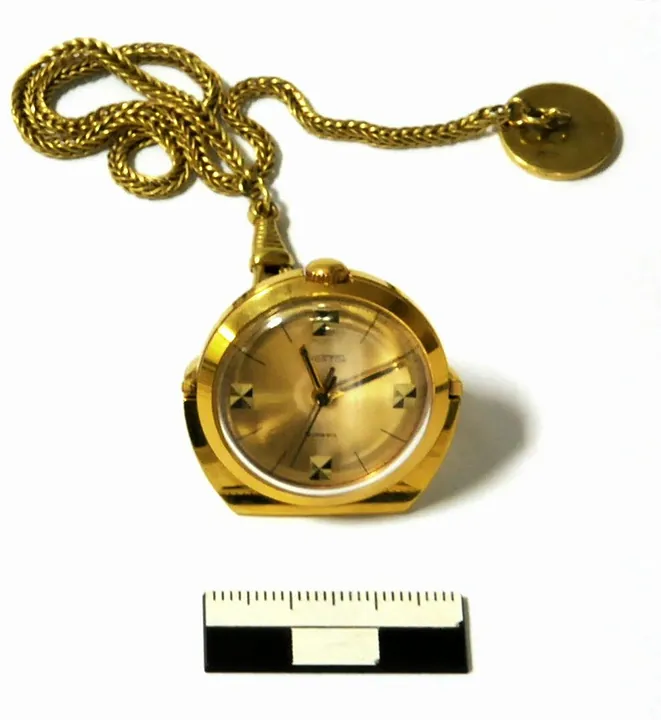
Pocket Watches · 1974
Pocket watch, Germany, 1974
Montanhistorisches Dokumentationszentrum
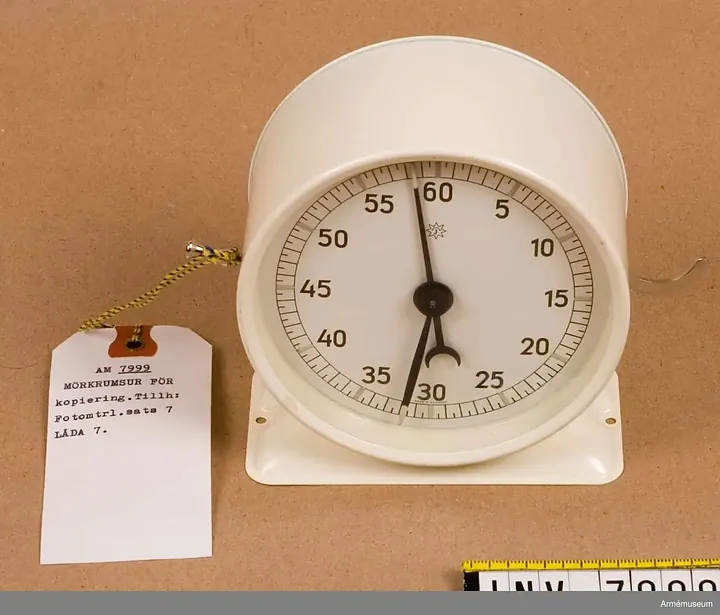
Pocket Watches · 1975
Pocket watch, 1975
Army Museum
Pocket Watches · c. 1980
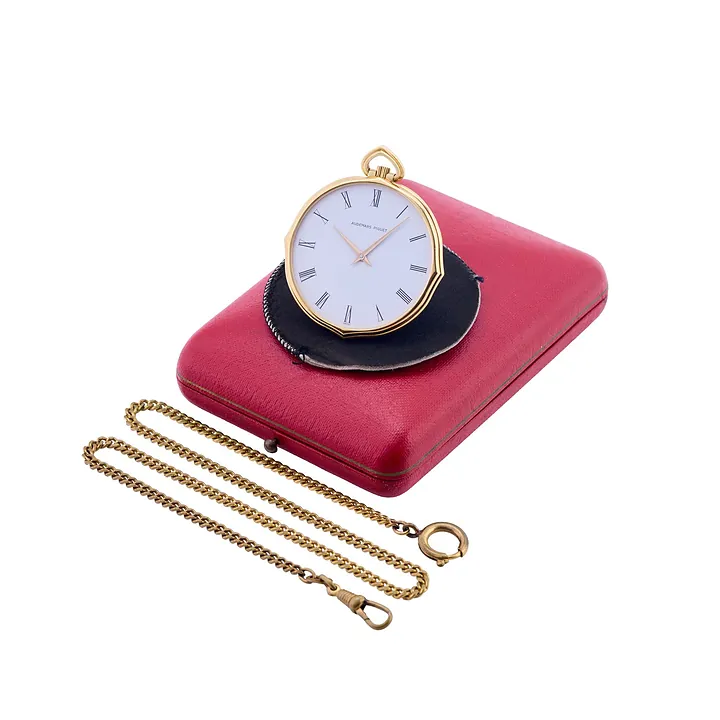
Audemars Piguet pocket watch, c. 1980
Antiquorum auction archive, Geneva