
Wristwatches · Wristwatch
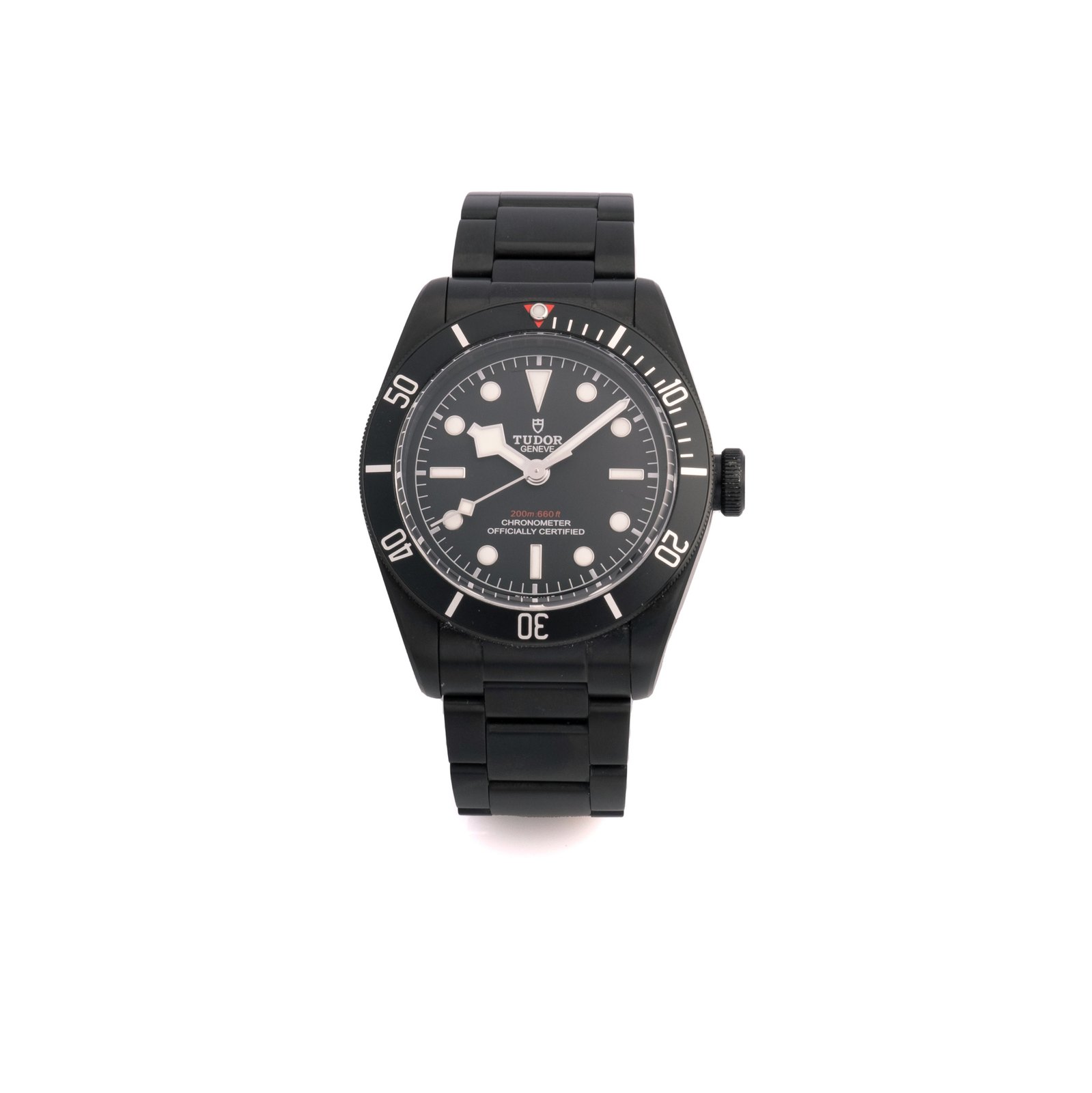
Tudor wristwatch, ref. 79230, Diver's Self-Winding, circa 2019
- Maker / attribution
- Tudor (brand / maker)
- Date
- c. 2019
- Historical period
- Contemporary Horology (2010 – Present)
- Country of origin
- Switzerland
- Object type
- Wristwatch
- Materials / technique
- stainless steel
- Dimensions
- diameter 40.9 mm. (bezel) mm; length 175 mm; height 50.1 mm; width 41.1 mm
- Auction house
- Antiquorum auction archive, Geneva
- Lot
- Lot 353-46
- Credit line
- Auction lot record: LOT 46, Monaco Auction
- Catalogue title (original)
- TUDOR REF. 79230 DK, DIVER’S SELF-WINDING, CENTRE-SECONDS; “HERITAGE BLACK BAY DARK”; BLACK PVD-COATED STAINLESS STEEL (English)
View the source record (auction lot) ↗ (opens another website in a new tab)Suggest a correction
Record summary
Catalogued by Antiquorum auction archive, Geneva (lot Lot 353-46), this is a wristwatch by Tudor, made in Switzerland, dated c. 2019. The Atlas places it in the Contemporary Horology period (2010 – Present) of its Wristwatches collection. Materials and techniques recorded by the source: stainless steel. Recorded dimensions: diameter 40.9 mm. (bezel) mm; length 175 mm; height 50.1 mm; width 41.1 mm. The record is illustrated with 2 photographs.
Assembled from the source record's structured fields. Dates and attributions are given as the source states them; where a field is missing the Atlas leaves it blank rather than estimating.
Catalogue description
Antiquorum catalogue description
Black PVD-coated (physical vapor deposition) stainless steel, self-winding, “tonneau”-shaped, diver’s wristwatch, water-resistant with screwed case-back, 60-minute graduated unidirectional revolving black bezel for the decompression times, black colour dial with centre-seconds.
Lot specifications (Antiquorum)
Model: “Heritage Black Bay Dark” “200 m : 660 ft” “Chronometer Officially Certified”; Reference: 79230 DK; Case No.: I 817 368; Material: black PVD-coated stainless steel; Bracelet: black PVD-coated stainless steel Tudor “Oyster” bracelet with deployant clasp; Caliber: MT 5602, 25 jewels; Diameter: 40.9 mm. (bezel); Length: 175 mm.; Height: 50.1 mm.; Width: 41.1 mm.; Signature: dial, case and movement; Accessories: original fitted box and outer box, certificate of origin, hang tag, additional links
Inscriptions & marks
dial, case and movement
Historical context
Contemporary Horology (2010 – Present)
Silicon components, connected watches, optical-lattice research clocks and a thriving independent scene.
Smartwatches became the world's best-selling watches, while mechanical watchmaking focuses on craft, innovation (silicon components, new escapements) and independent makers.
Read the period in the timelineMore wristwatches from this periodEarlier: Mechanical Renaissance
Atlas type guide
Dive and water-resistant watches
Keeping water and dust out of a wristwatch was a long-standing challenge. Rolex's screw-down Oyster case (1926) and Omega's Marine (1932) were landmarks; in the early 1950s Blancpain's Fifty Fathoms and Rolex's Submariner defined the professional dive watch with rotating bezels for timing dives, luminous dials and high water resistance. The ISO 6425 standard (1982) later codified what a 'diver's watch' must do.
Dive watches became icons of post-war design and exploration, and their evolution — helium escape valves, ceramic bezels, saturation-diving depth ratings — records the history of underwater work.
What to look for
- Unidirectional or bidirectional rotating bezel with minute markings.
- Screw-down crown and case back; depth rating printed on the dial.
- Luminous hands and markers (radium before c. 1960, tritium c. 1960–1998, then Super-LumiNova).
- Reference numbers on the case between the lugs or inside the back.
Dating clues
- Screw-down Oyster cases: from 1926.
- Professional dive watches: from 1953.
- Tritium 'T' marks on dials: c. 1960–1998.
General guidance written by the Atlas editors about this kind of object. It is not a statement about this particular piece; for that, rely on the source record above and on physical examination.
Related records
Wristwatches · c. 1973
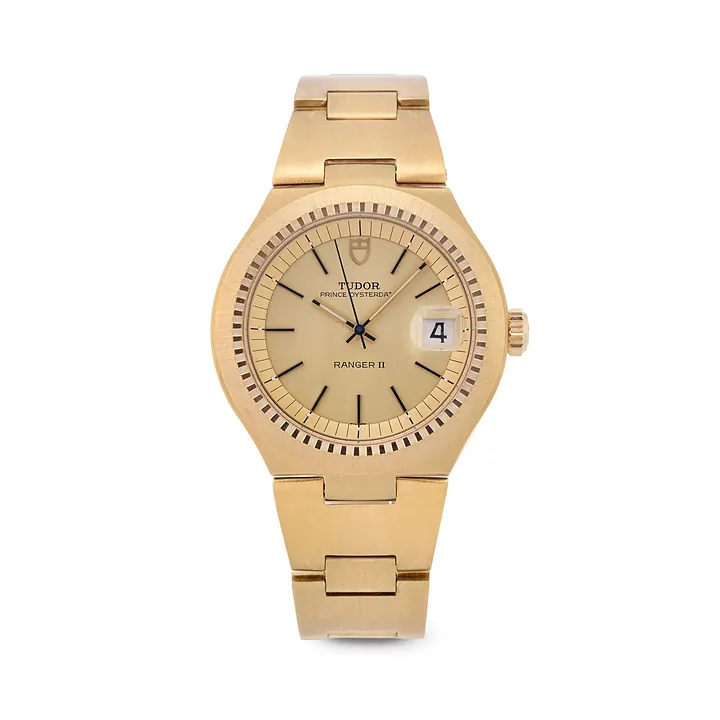
Tudor Prince Oysterdate Ranger II, ref. 9101/1, c. 1973
Antiquorum auction archive, Geneva
Wristwatches · c. 1973
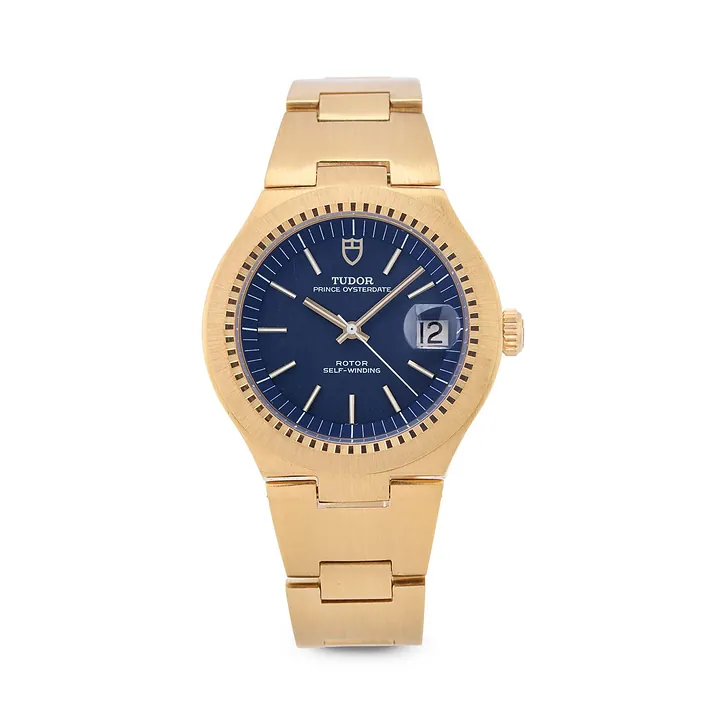
Tudor Prince Oysterdate, ref. 9101/1, c. 1973 (Antiquorum Lot 389-114)
Antiquorum auction archive, Geneva
Wristwatches · c. 1973
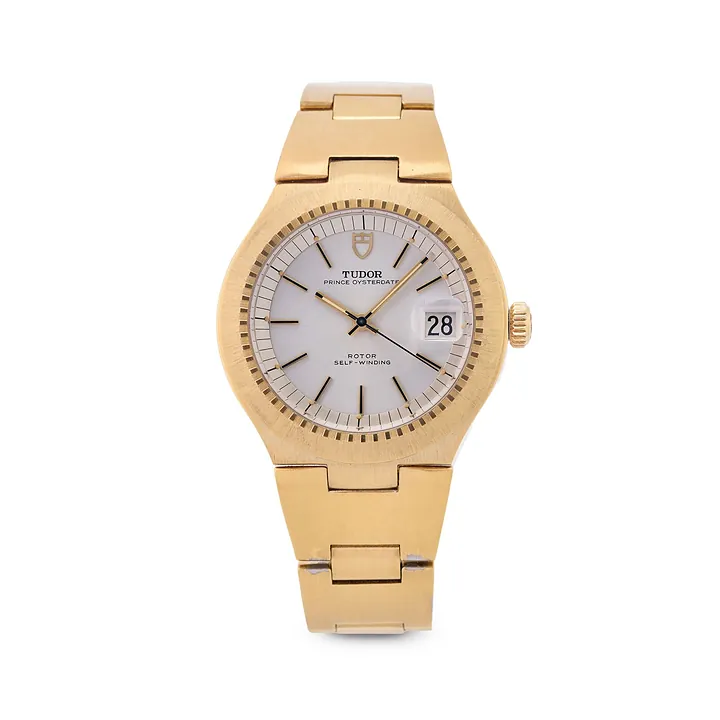
Tudor Prince Oysterdate, ref. 9101/1, c. 1973 (Antiquorum Lot 389-115)
Antiquorum auction archive, Geneva
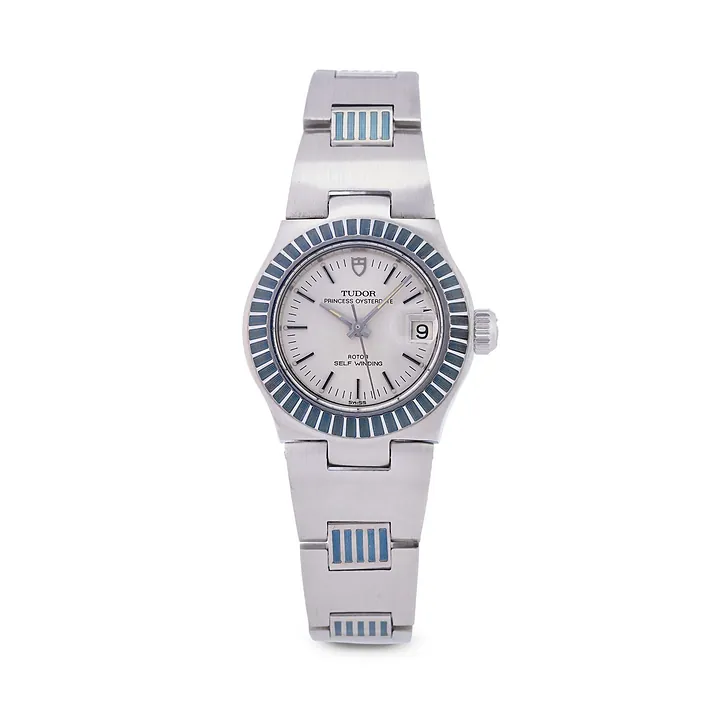
Wristwatches · c. 1974
Tudor Princess Oysterdate, ref. 9311/0, c. 1974
Antiquorum auction archive, Geneva

Wristwatches · c. 2010s
Breguet Type XXI, ref. 3810, c. 2010s (Antiquorum Lot 381-24)
Antiquorum auction archive, Geneva

Wristwatches · c. 2010s
Breguet Type XXI, ref. 3810, c. 2010s (Antiquorum Lot 386-229)
Antiquorum auction archive, Geneva

Wristwatches · Sold in September 2010
Breitling Cosmonaute, ref. A 22322, Sold in September 2010
Antiquorum auction archive, Geneva

Wristwatches · c. 2010
Corum Bubble Chrono, ref. 396.150.20, c. 2010
Antiquorum auction archive, Geneva