
Wristwatches · Wristwatch
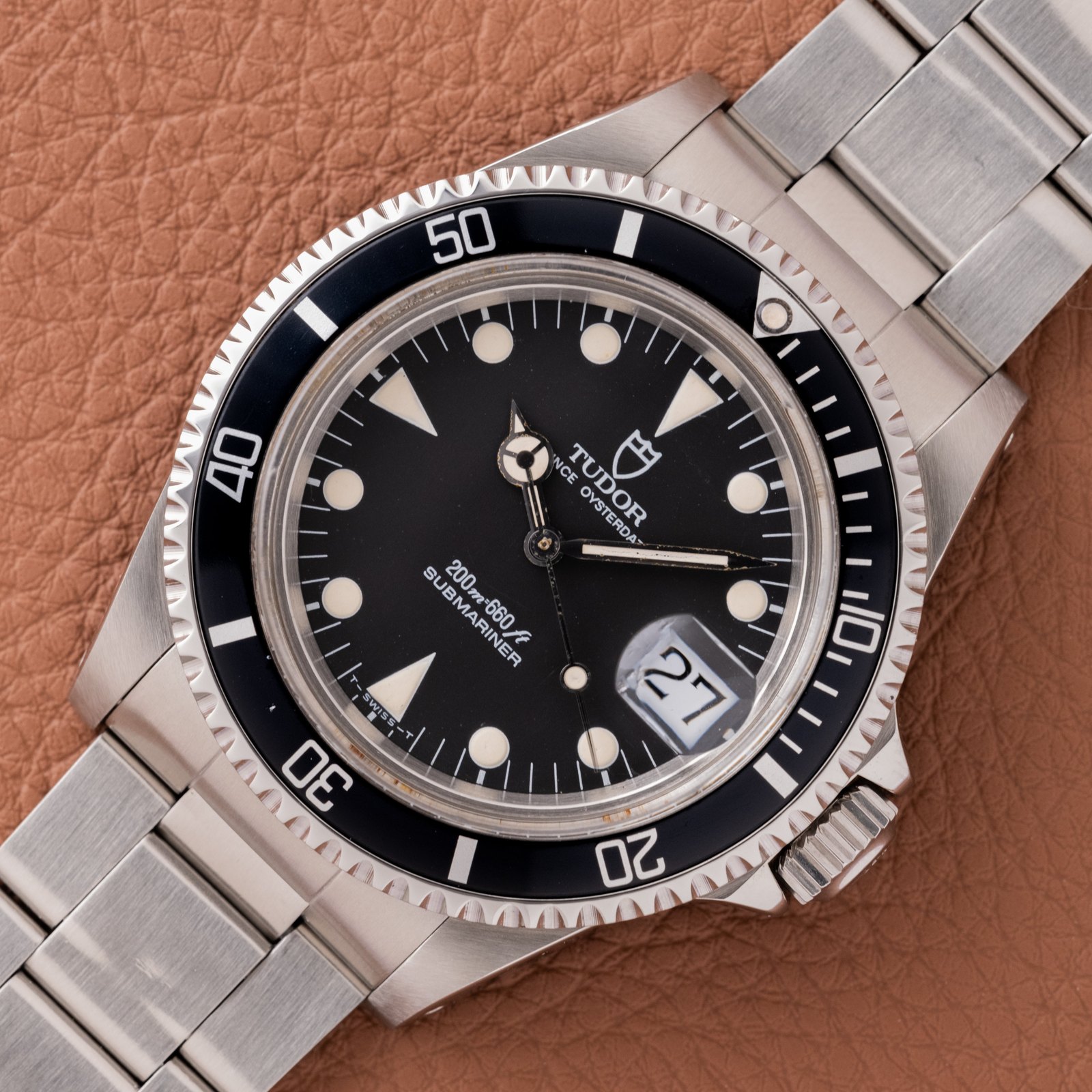
Tudor Submariner Black Dial (Ref. 79090), 1992
- Maker / attribution
- Tudor (maker)
- Date
- 1992
- Historical period
- Mechanical Renaissance (1990 – 2010)
- Country of origin
- Switzerland
- Object type
- Wristwatch
- Dimensions
- Case 39 mm
- Stock no.
- Product 8720759029943
- Credit line
- Dealer listing, Huntington Company (product 8720759029943)
- Catalogue title (original)
- 1992 Tudor Submariner Black Dial (Ref. 79090) (English)
View the source record (dealer listing) ↗ (opens another website in a new tab)Suggest a correction
Record summary
Catalogued by Huntington Company (dealer) (stock number Product 8720759029943), this is a wristwatch by Tudor, made in Switzerland, dated 1992. The Atlas places it in the Mechanical Renaissance period (1990 – 2010) of its Wristwatches collection. Recorded dimensions: Case 39 mm. The record is illustrated with 6 photographs.
Assembled from the source record's structured fields. Dates and attributions are given as the source states them; where a field is missing the Atlas leaves it blank rather than estimating.
Catalogue description
Dealer description — Huntington Company
History and Significance There was a time when a Tudor Submariner could be dismissed as simply the less expensive relative of a Rolex Submariner. That view has changed considerably. Collectors now recognize these watches for exactly what they are: an important part of Tudor's history and some of the last true vintage-style Submariners produced before the brand moved away from the model entirely. The reference 79090 arrived at an especially interesting point in that timeline. Produced around the late 1980s and early 1990s, it retained many of the characteristics collectors now associate with vintage dive watches. The acrylic crystal rises above the bezel, the dial and hands use tritium lume, and the case retains the slimmer proportions that disappeared as sports watches became increasingly substantial. At 39mm, it has enough presence to feel like a proper dive watch while remaining noticeably more restrained than most modern alternatives. There is also something particularly appealing about how Tudor watches from this era were constructed. The relationship with Rolex was visible everywhere, from the Oyster-style case architecture to the bracelets and crowns used across different references, but Tudor paired those components with its own movements and identity. The result wasn't simply a cheaper Rolex. It was a robust tool watch that occupied its own place within the shared history of the two companies. More than thirty years later, condition and originality have become much more important than the name printed on the dial. Many 79090s have been polished, relumed, fitted with later bracelets or had their naturally aged components replaced during servicing. An example that still retains its original tritium, sharp case geometry and period folded-link bracelet gives you a much better idea of what owning one of these watches was actually like in the early 1990s. Writer's Thoughts The lume is what makes this one for us. Across the dial, the original tritium has matured into a rich creamy tone that immediately gives the watch warmth without looking forced or overly aged. Against the black dial and bezel, it is exactly the kind of patina we hope to see on an early Tudor Submariner. Then there is the case. This 1992 reference 79090 remains remarkably sharp, with clean chamfers still visible along the lugs and strong overall proportions. Those details matter because once they're polished away, they never really come back. The original folded-link bracelet completes the watch and gives it the light, slightly mechanical feel that is so different from a modern Tudor bracelet. It is an honest Submariner with all the details we want left intact. Our Promise Every watch is thoroughly vetted, carefully described with complete transparency, and guaranteed authentic. Each piece is offered in honest condition, ensuring collectors receive a timepiece that reflects both originality and integrity. Specifications B rand: Tudor Model: Submariner Year: 1992 Case Material: Stainless steel Case Size: 39mm Dial: Black tritium dial Movement: Automatic Strap/Bracelet: Original folded-link stainless steel bracelet Buckle/Clasp: Original folding clasp Contents: Watch only Condition Case: Very sharp stainless steel case retaining attractive, clearly defined chamfers and strong proportions. Honest surface wear is present throughout consistent with age. Dial: Original black dial remains exceptionally clean with attractive creamy tritium hour plots. Hands: Original hands retain aged tritium that complements the dial beautifully. Crystal: Acrylic crystal presents well with light signs of use consistent with age. Strap/Bracelet: Original folded-link stainless steel bracelet remains fitted to the watch and shows normal wear consistent with careful use. Buckle/Clasp: Original clasp presents well with honest surface wear consistent with the bracelet.
Historical context
Mechanical Renaissance (1990 – 2010)
Mechanical watches return as cultural objects; independent watchmaking flourishes.
Mechanical watches returned as cultural and luxury objects. Complications, tourbillons and new materials proliferated; independent watchmakers such as George Daniels, F.P. Journe and Philippe Dufour revived artisanal watchmaking; collecting vintage watches became a major field.
Read the period in the timelineMore wristwatches from this periodEarlier: Quartz Revolution
Atlas type guide
Dive and water-resistant watches
Keeping water and dust out of a wristwatch was a long-standing challenge. Rolex's screw-down Oyster case (1926) and Omega's Marine (1932) were landmarks; in the early 1950s Blancpain's Fifty Fathoms and Rolex's Submariner defined the professional dive watch with rotating bezels for timing dives, luminous dials and high water resistance. The ISO 6425 standard (1982) later codified what a 'diver's watch' must do.
Dive watches became icons of post-war design and exploration, and their evolution — helium escape valves, ceramic bezels, saturation-diving depth ratings — records the history of underwater work.
What to look for
- Unidirectional or bidirectional rotating bezel with minute markings.
- Screw-down crown and case back; depth rating printed on the dial.
- Luminous hands and markers (radium before c. 1960, tritium c. 1960–1998, then Super-LumiNova).
- Reference numbers on the case between the lugs or inside the back.
Dating clues
- Screw-down Oyster cases: from 1926.
- Professional dive watches: from 1953.
- Tritium 'T' marks on dials: c. 1960–1998.
General guidance written by the Atlas editors about this kind of object. It is not a statement about this particular piece; for that, rely on the source record above and on physical examination.
Related records
Wristwatches · c. 1973
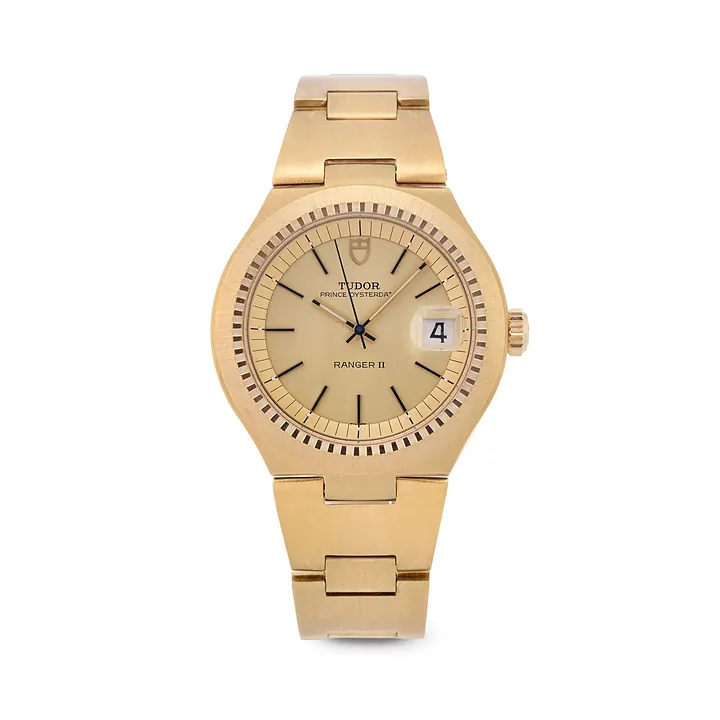
Tudor Prince Oysterdate Ranger II, ref. 9101/1, c. 1973
Antiquorum auction archive, Geneva
Wristwatches · c. 1973
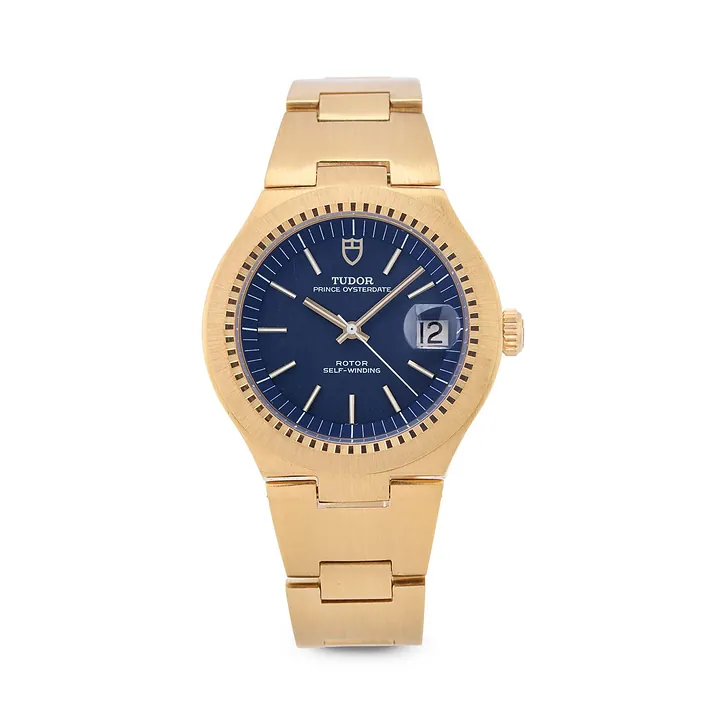
Tudor Prince Oysterdate, ref. 9101/1, c. 1973 (Antiquorum Lot 389-114)
Antiquorum auction archive, Geneva
Wristwatches · c. 1973
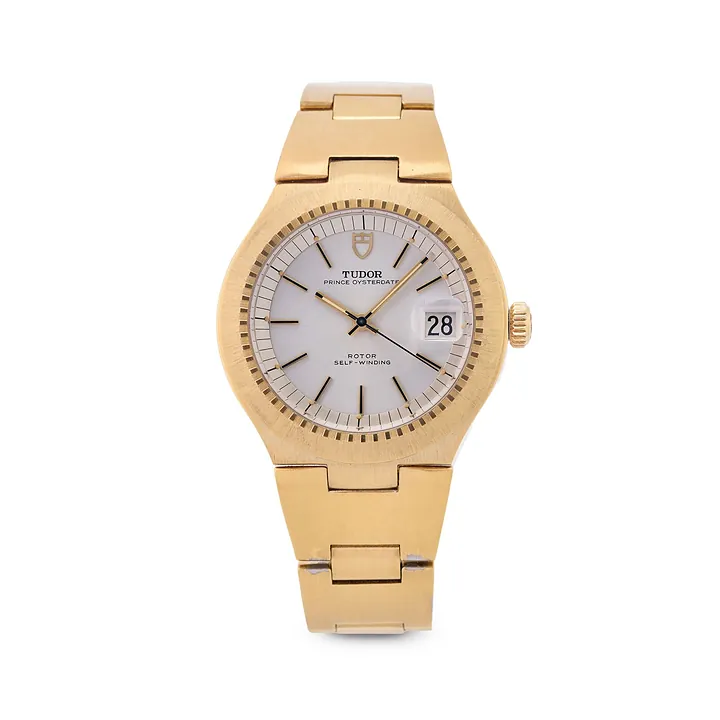
Tudor Prince Oysterdate, ref. 9101/1, c. 1973 (Antiquorum Lot 389-115)
Antiquorum auction archive, Geneva
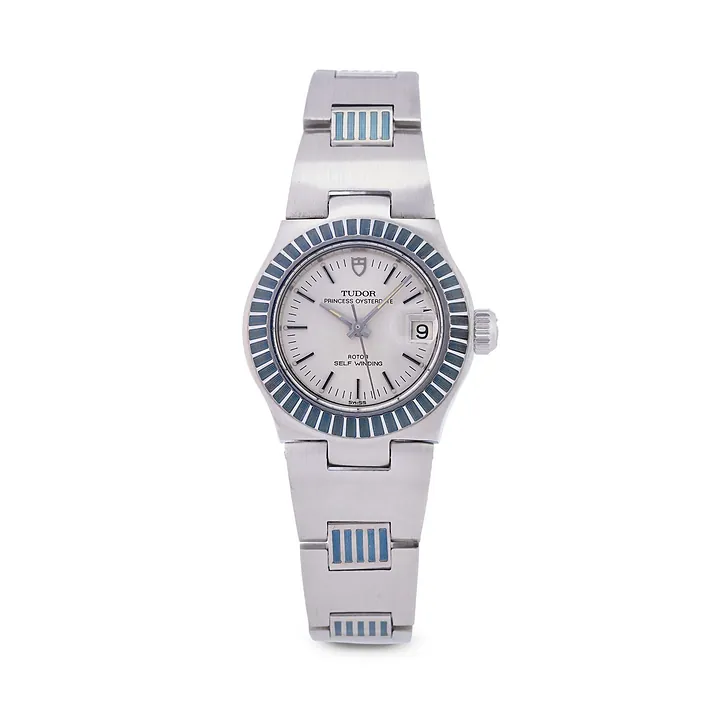
Wristwatches · c. 1974
Tudor Princess Oysterdate, ref. 9311/0, c. 1974
Antiquorum auction archive, Geneva

Wristwatches · 2008
Wristwatch by Breitling?, 2008
Museum Rotterdam

Wristwatches · c. 1990s
Audemars Piguet Bamboo, c. 1990s
Antiquorum auction archive, Geneva

Wristwatches · c. 1990
Audemars Piguet Huitieme Perpetual Calendar, ref. 25696PT, c. 1990
Antiquorum auction archive, Geneva

Wristwatches · c. 1990
Breitling Chronomat, ref. b13050.1, c. 1990
Antiquorum auction archive, Geneva