
Wristwatches · Wristwatch
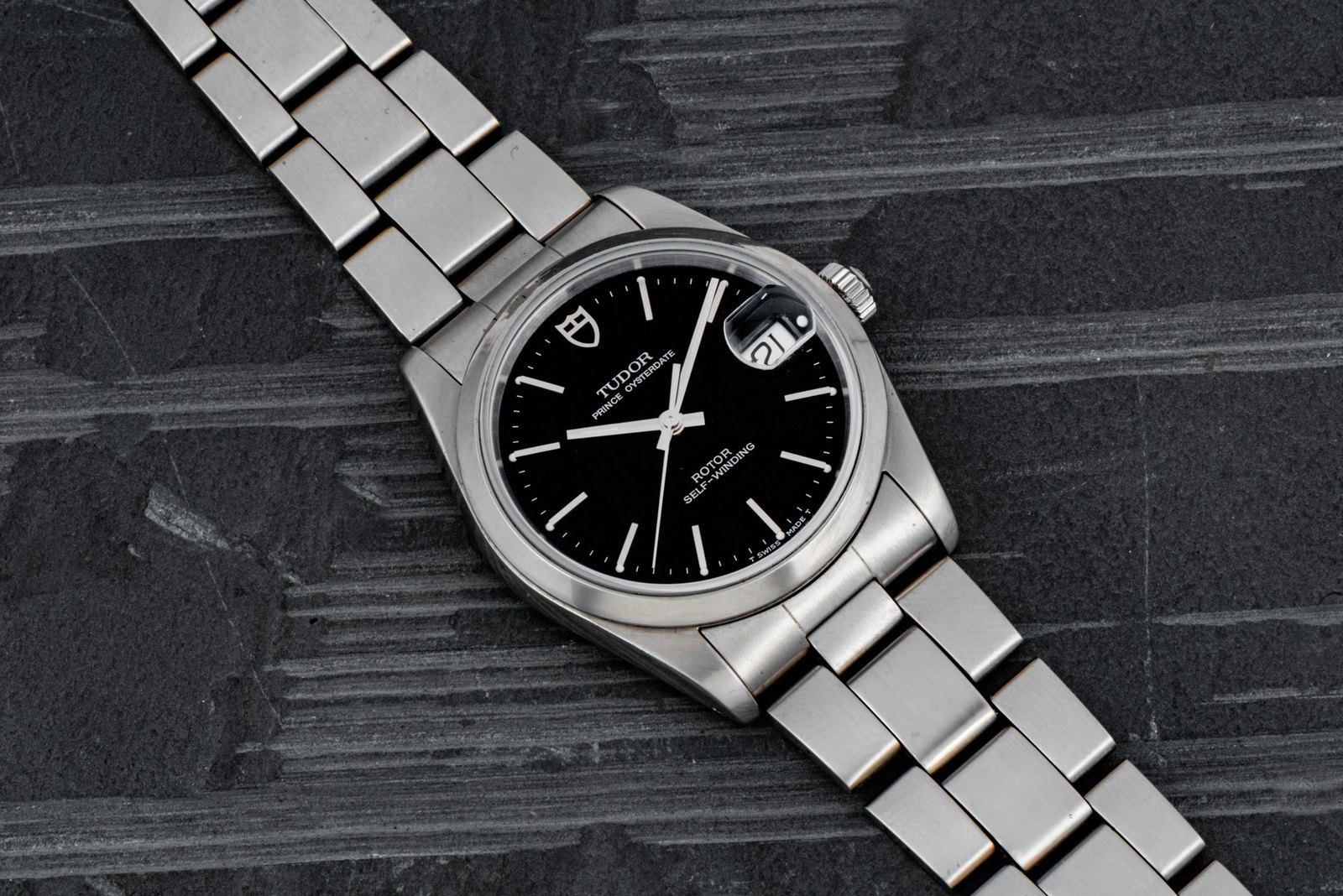
Tudor Prince OysterDate
- Maker / attribution
- Tudor (maker)
- Date
- c. 1998
- Historical period
- Mechanical Renaissance (1990 – 2010)
- Country of origin
- Switzerland
- Object type
- Wristwatch
- Dimensions
- Case 34 mm
- Stock no.
- 40991354
- Credit line
- Dealer listing, Analog/Shift (40991354)
- Catalogue title (original)
- Tudor Prince OysterDate (English)
View the source record (dealer listing) ↗ (opens another website in a new tab)Suggest a correction
Record summary
Catalogued by Analog/Shift (dealer), New York (stock number 40991354), this is a wristwatch by Tudor, made in Switzerland, dated c. 1998. The Atlas places it in the Mechanical Renaissance period (1990 – 2010) of its Wristwatches collection. Recorded dimensions: Case 34 mm. The record is illustrated with 6 photographs.
Assembled from the source record's structured fields. Dates and attributions are given as the source states them; where a field is missing the Atlas leaves it blank rather than estimating.
Catalogue description
Dealer description — Analog/Shift
When the Tudor Oyster Prince was introduced in the mid 1940s, it was meant to be a watch for the everyman. Contemporary ads showed these watches being subjected to a ‘Trial of Destruction,’ in which it was worn by a worker operating a jackhammer. Other advertisements drove that point home even further, showing a Tudor Prince on the wrists of construction workers and miners. In 1952, thirty Oyster Prince watches even found their way to the Arctic on the wrists of Captain J.D. Walker and his crew in the British North Greenland Expedition. The Oyster Prince had certainly demonstrated its reliability, and the sheer variety of models that Tudor released over the years saw that it had a universal appeal. While there is certainly a preference for models from the 1950s and 1960s, the model’s longevity meant that, beyond being a watch for the everyman, there was a Prince for everybody. This particular model is a Reference 74000 Prince Oysterdate dating to circa 1998. Housed in a 34mm stainless steel Oyster case with holey lugs , a magnified sapphire crystal, a signed crown, and a polished bezel, it features a handsome, glossy black Tritium dial with applied indices, a matching baton handset, and a date window at 3:00. Powered by an automatic ETA movement, it comes paired to a stainless steel Oyster bracelet with a signed blade clasp and all its goodies! Rugged, practical, and the perfect size for both men and women, the Tudor Prince Oysterdate is one of the most versatile designs in the Tudor back catalog. Have a look!
Historical context
Mechanical Renaissance (1990 – 2010)
Mechanical watches return as cultural objects; independent watchmaking flourishes.
Mechanical watches returned as cultural and luxury objects. Complications, tourbillons and new materials proliferated; independent watchmakers such as George Daniels, F.P. Journe and Philippe Dufour revived artisanal watchmaking; collecting vintage watches became a major field.
Read the period in the timelineMore wristwatches from this periodEarlier: Quartz Revolution
Atlas type guide
Dive and water-resistant watches
Keeping water and dust out of a wristwatch was a long-standing challenge. Rolex's screw-down Oyster case (1926) and Omega's Marine (1932) were landmarks; in the early 1950s Blancpain's Fifty Fathoms and Rolex's Submariner defined the professional dive watch with rotating bezels for timing dives, luminous dials and high water resistance. The ISO 6425 standard (1982) later codified what a 'diver's watch' must do.
Dive watches became icons of post-war design and exploration, and their evolution — helium escape valves, ceramic bezels, saturation-diving depth ratings — records the history of underwater work.
What to look for
- Unidirectional or bidirectional rotating bezel with minute markings.
- Screw-down crown and case back; depth rating printed on the dial.
- Luminous hands and markers (radium before c. 1960, tritium c. 1960–1998, then Super-LumiNova).
- Reference numbers on the case between the lugs or inside the back.
Dating clues
- Screw-down Oyster cases: from 1926.
- Professional dive watches: from 1953.
- Tritium 'T' marks on dials: c. 1960–1998.
General guidance written by the Atlas editors about this kind of object. It is not a statement about this particular piece; for that, rely on the source record above and on physical examination.
Related records
Wristwatches · c. 1973
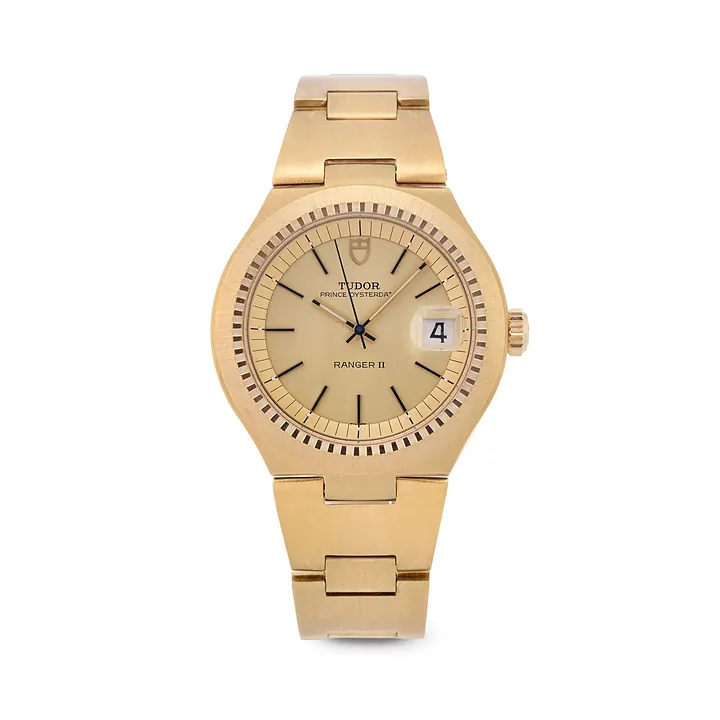
Tudor Prince Oysterdate Ranger II, ref. 9101/1, c. 1973
Antiquorum auction archive, Geneva
Wristwatches · c. 1973
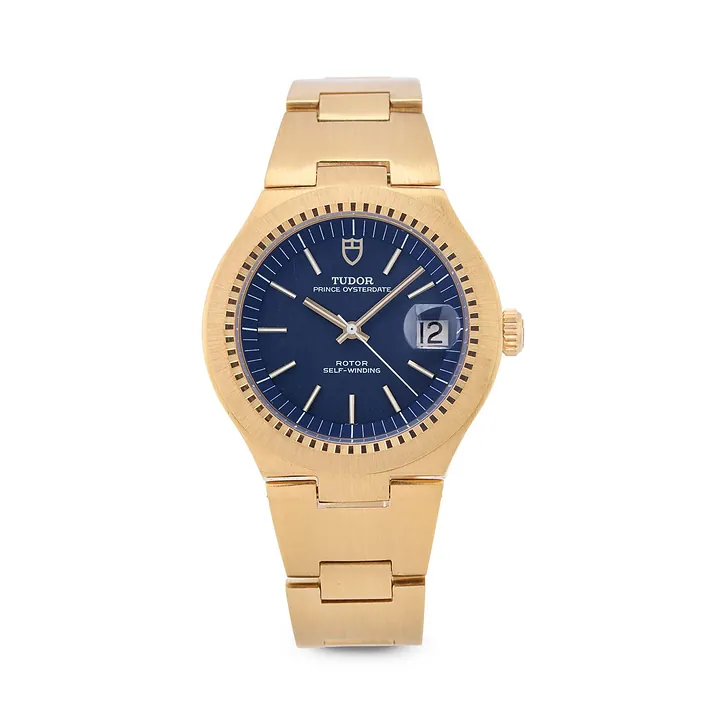
Tudor Prince Oysterdate, ref. 9101/1, c. 1973 (Antiquorum Lot 389-114)
Antiquorum auction archive, Geneva
Wristwatches · c. 1973
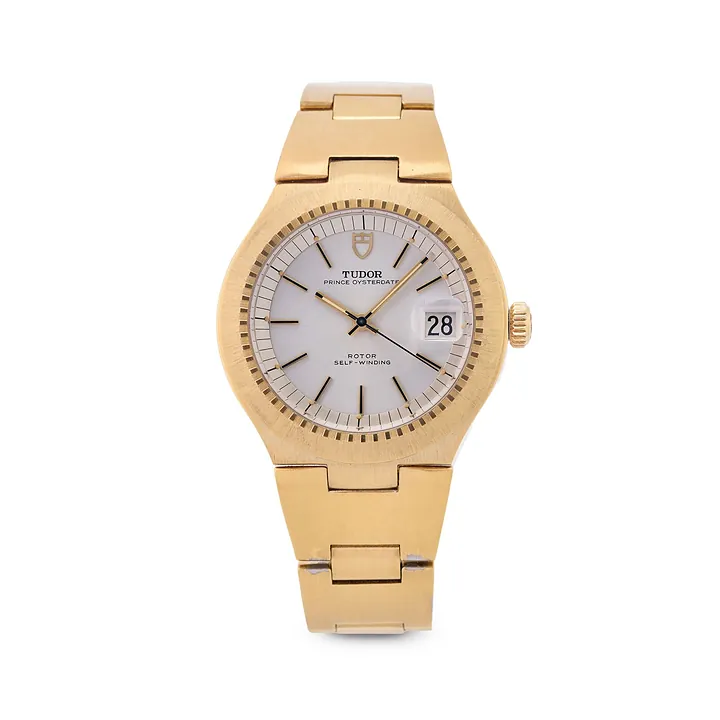
Tudor Prince Oysterdate, ref. 9101/1, c. 1973 (Antiquorum Lot 389-115)
Antiquorum auction archive, Geneva
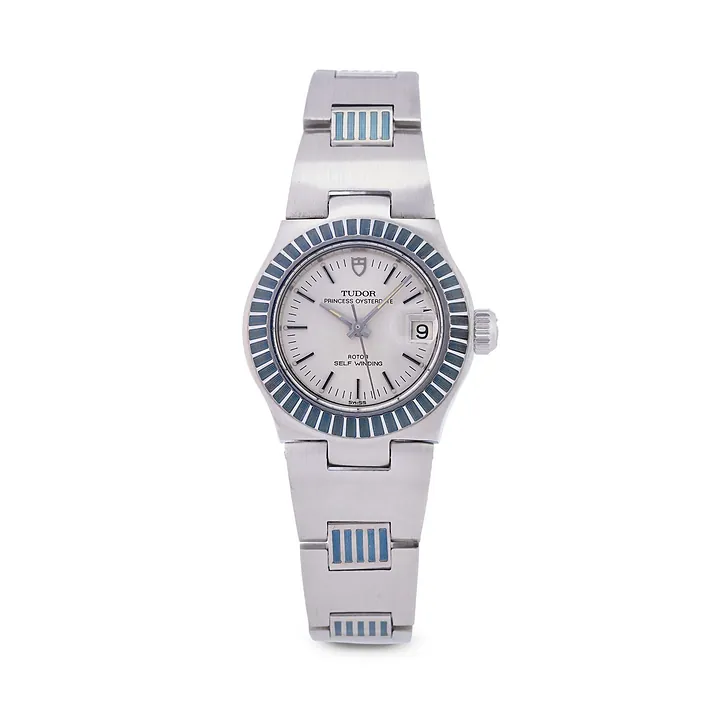
Wristwatches · c. 1974
Tudor Princess Oysterdate, ref. 9311/0, c. 1974
Antiquorum auction archive, Geneva

Wristwatches · 2008
Wristwatch by Breitling?, 2008
Museum Rotterdam

Wristwatches · c. 1990s
Audemars Piguet Bamboo, c. 1990s
Antiquorum auction archive, Geneva

Wristwatches · c. 1990
Audemars Piguet Huitieme Perpetual Calendar, ref. 25696PT, c. 1990
Antiquorum auction archive, Geneva

Wristwatches · c. 1990
Breitling Chronomat, ref. b13050.1, c. 1990
Antiquorum auction archive, Geneva