
Wristwatches · Wristwatch
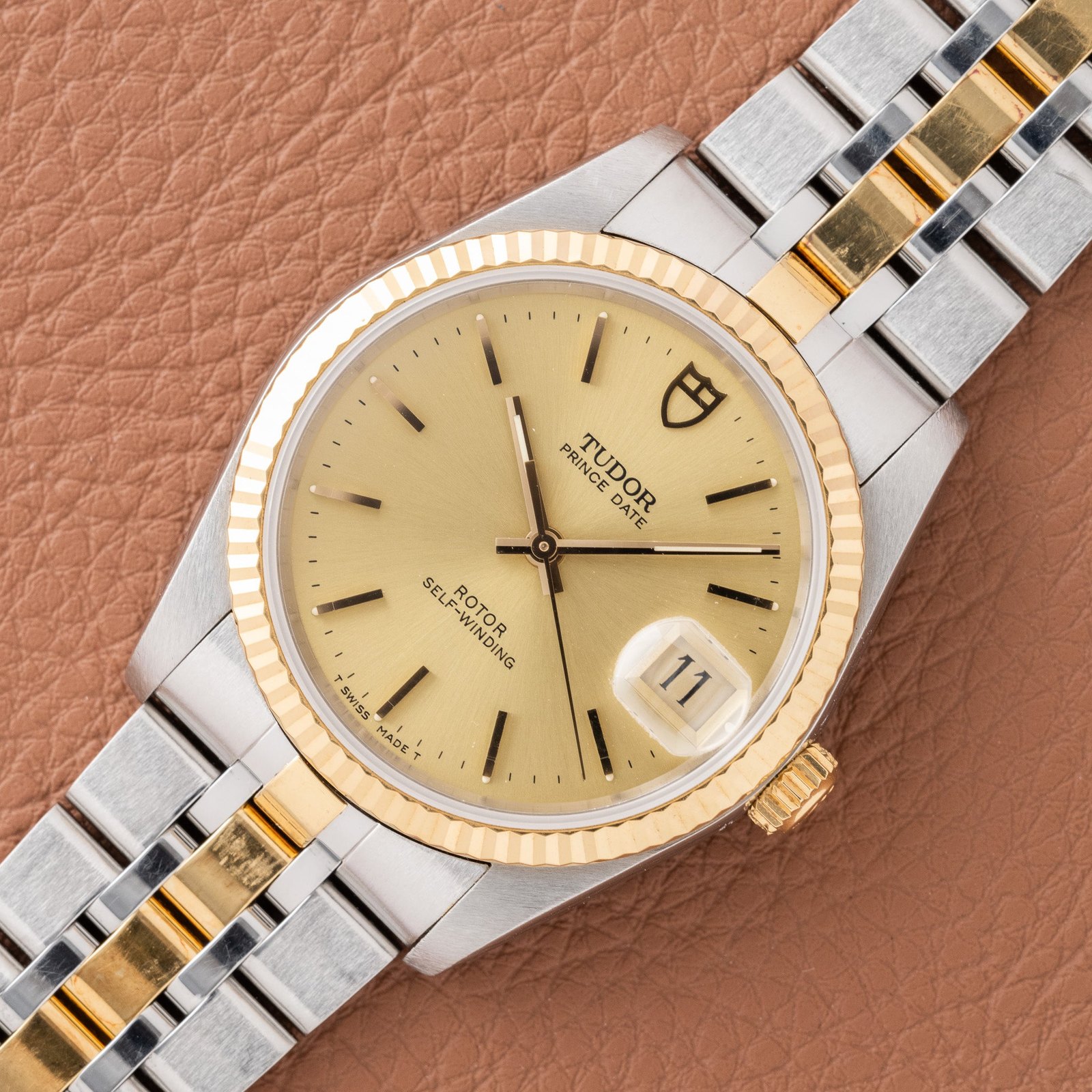
Tudor Prince Date Two-Tone IBM (Ref. 74033), 1994
- Maker / attribution
- Tudor (maker)
- Date
- 1994
- Historical period
- Mechanical Renaissance (1990 – 2010)
- Country of origin
- Switzerland
- Object type
- Wristwatch
- Materials / technique
- two-tone
- Dimensions
- Case 34 mm
- Stock no.
- Product 8405738553527
- Credit line
- Dealer listing, Huntington Company (product 8405738553527)
- Catalogue title (original)
- 1994 Tudor Prince Date Two-Tone IBM (Ref. 74033) (English)
View the source record (dealer listing) ↗ (opens another website in a new tab)Suggest a correction
Record summary
Catalogued by Huntington Company (dealer) (stock number Product 8405738553527), this is a wristwatch by Tudor, made in Switzerland, dated 1994. The Atlas places it in the Mechanical Renaissance period (1990 – 2010) of its Wristwatches collection. Materials and techniques recorded by the source: two-tone. Recorded dimensions: Case 34 mm. The record is illustrated with 6 photographs.
Assembled from the source record's structured fields. Dates and attributions are given as the source states them; where a field is missing the Atlas leaves it blank rather than estimating.
Catalogue description
Dealer description — Huntington Company
History and Significance The Tudor Prince Date reference 74033 sits firmly in the lineage of Tudor’s long-running Datejust-adjacent models, combining Rolex-derived case architecture with Tudor’s own positioning as a more approachable, everyday counterpart. Produced in the early 1990s, this reference reflects a period when Tudor leaned heavily into versatility, offering robust automatic movements, familiar proportions, and two-tone configurations that worked equally well in professional and casual settings. This example is notable for its IBM caseback engraving, part of a long tradition of corporate-issued watches commissioned for milestones, retirements, or executive recognition. IBM-signed watches occupy an interesting space within vintage collecting, especially when paired with Rolex and Tudor, as the company frequently partnered with top-tier Swiss manufacturers. While Rolex IBM Datejusts are the most commonly discussed, Tudor examples are far less frequently encountered, adding an extra layer of interest for collectors who appreciate provenance beyond the dial. The champagne dial is classic for the reference, offering a warm contrast against the steel and yellow gold case and bracelet. The fluted yellow gold bezel ties the watch visually to its Rolex sibling, while the overall execution remains restrained and practical, true to Tudor’s design philosophy during this era. Writer’s Thoughts What I like about this watch is how naturally the details come together without trying to steal attention. The two-tone case feels balanced, the champagne dial has just enough warmth, and the IBM engraving adds a personal, almost archival quality to the piece. It feels like a watch that lived a real life before ending up here, worn daily rather than kept away. If you appreciate corporate-signed watches but want something a bit less obvious than a Rolex Datejust, this hits a very satisfying middle ground. Our Promise Every watch is thoroughly vetted, carefully described with complete transparency, and guaranteed authentic. This watch is offered in honest condition. Specifications Brand: Tudor Model: Prince Date (Ref. 74033) Year: 1994 Case Material: Stainless steel case with yellow gold fluted bezel Case Size: Approximately 34 mm Dial: Champagne dial with applied indices Crystal: Sapphire Movement: Automatic Tudor movement Strap/Bracelet: Stainless steel and yellow gold Tudor bracelet Buckle/Clasp: Tudor folding clasp Contents: Watch only Condition Case: Stainless steel case with yellow gold fluted bezel shows light surface wear consistent with age. The case remains unpolished. Crystal: Sapphire crystal is clean with no notable chips or cracks. Dial: Champagne dial is well preserved with even coloration and clean printing. Hands: Original hands show light aging consistent with the rest of the watch. Strap/Bracelet: Two-tone Tudor bracelet shows light wear from use and remains structurally sound. Buckle/Clasp: Tudor clasp shows light surface marks and functions properly.
Historical context
Mechanical Renaissance (1990 – 2010)
Mechanical watches return as cultural objects; independent watchmaking flourishes.
Mechanical watches returned as cultural and luxury objects. Complications, tourbillons and new materials proliferated; independent watchmakers such as George Daniels, F.P. Journe and Philippe Dufour revived artisanal watchmaking; collecting vintage watches became a major field.
Read the period in the timelineMore wristwatches from this periodEarlier: Quartz Revolution
Atlas type guide
Wristwatches
Bracelet watches were worn by women from the early nineteenth century — Breguet made one for Caroline Murat, Queen of Naples, in 1810–12 — but the wristwatch only became a man's instrument with military use and aviation in the early twentieth century. Between the World Wars it overtook the pocket watch; the 1920s and 1930s brought rectangular Art Deco cases, water-resistant cases and the first automatic winding systems.
After 1945 the wristwatch became a carrier of identity — dress watches, sports and dive watches, chronographs, calendars — produced by Swiss, American, Japanese, German, Soviet and Chinese industries. The quartz revolution after 1969 and the mechanical renaissance since the 1990s, including the rise of independent watchmakers, complete the story.
What to look for
- The reference number (between the lugs or inside the case back) and serial number, the starting point for dating.
- The calibre: its maker and number are often stamped under the dial or on the bridge.
- Originality of dial, hands and crown — refinished ('redial') dials are common.
- Case material marks: 18K/750, 14K/585, stainless steel, gold-filled, plated.
Dating clues
- Wire-lug cases: before c. 1925.
- Water-resistant screw-down cases: from 1926.
- Quartz movements: from 1969; sapphire crystals widespread after c. 1980.
General guidance written by the Atlas editors about this kind of object. It is not a statement about this particular piece; for that, rely on the source record above and on physical examination.
Related records
Wristwatches · c. 1973
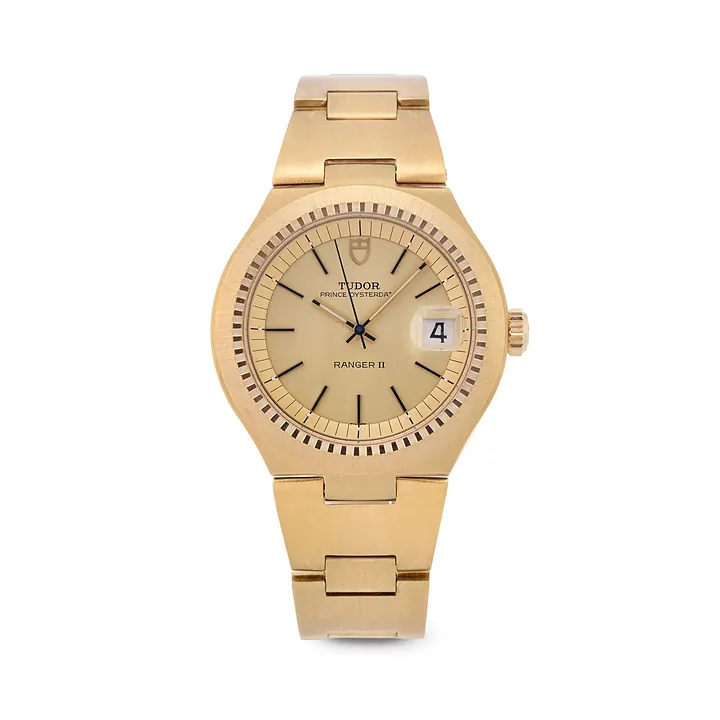
Tudor Prince Oysterdate Ranger II, ref. 9101/1, c. 1973
Antiquorum auction archive, Geneva
Wristwatches · c. 1973
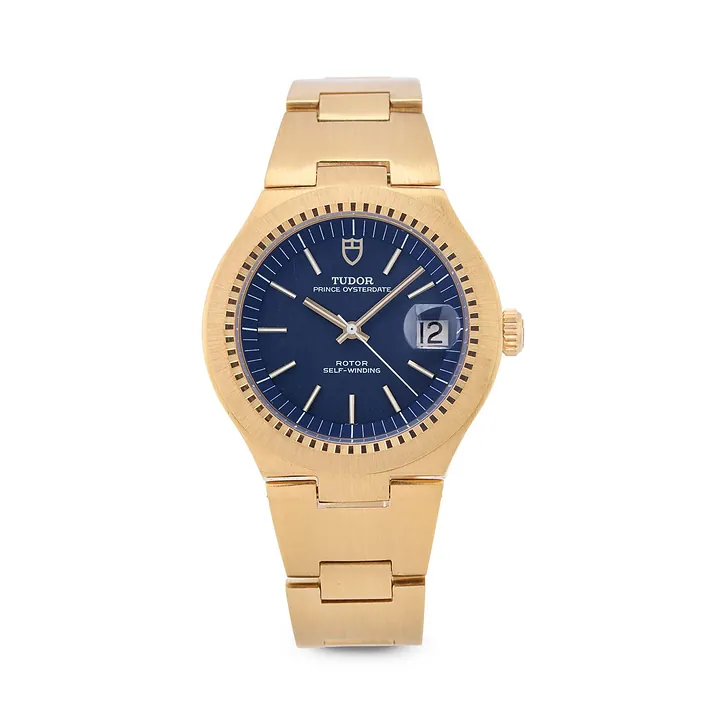
Tudor Prince Oysterdate, ref. 9101/1, c. 1973 (Antiquorum Lot 389-114)
Antiquorum auction archive, Geneva
Wristwatches · c. 1973
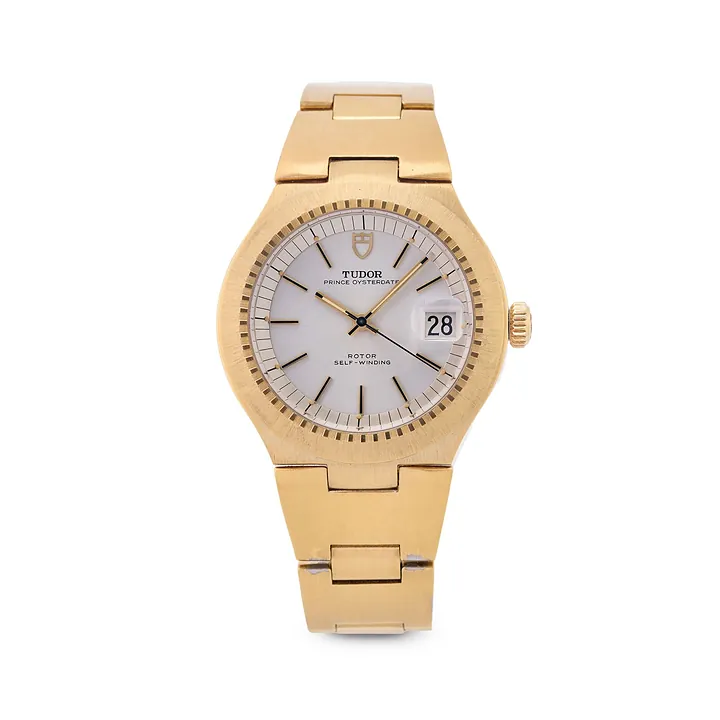
Tudor Prince Oysterdate, ref. 9101/1, c. 1973 (Antiquorum Lot 389-115)
Antiquorum auction archive, Geneva
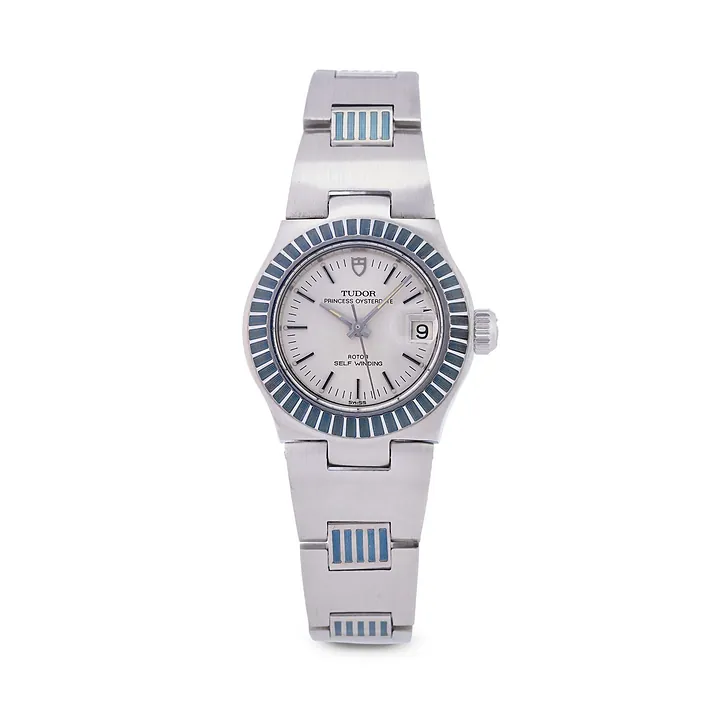
Wristwatches · c. 1974
Tudor Princess Oysterdate, ref. 9311/0, c. 1974
Antiquorum auction archive, Geneva

Wristwatches · 2008
Wristwatch by Breitling?, 2008
Museum Rotterdam

Wristwatches · c. 1990s
Audemars Piguet Bamboo, c. 1990s
Antiquorum auction archive, Geneva

Wristwatches · c. 1990
Audemars Piguet Huitieme Perpetual Calendar, ref. 25696PT, c. 1990
Antiquorum auction archive, Geneva

Wristwatches · c. 1990
Breitling Chronomat, ref. b13050.1, c. 1990
Antiquorum auction archive, Geneva