
Wristwatches · Wristwatch
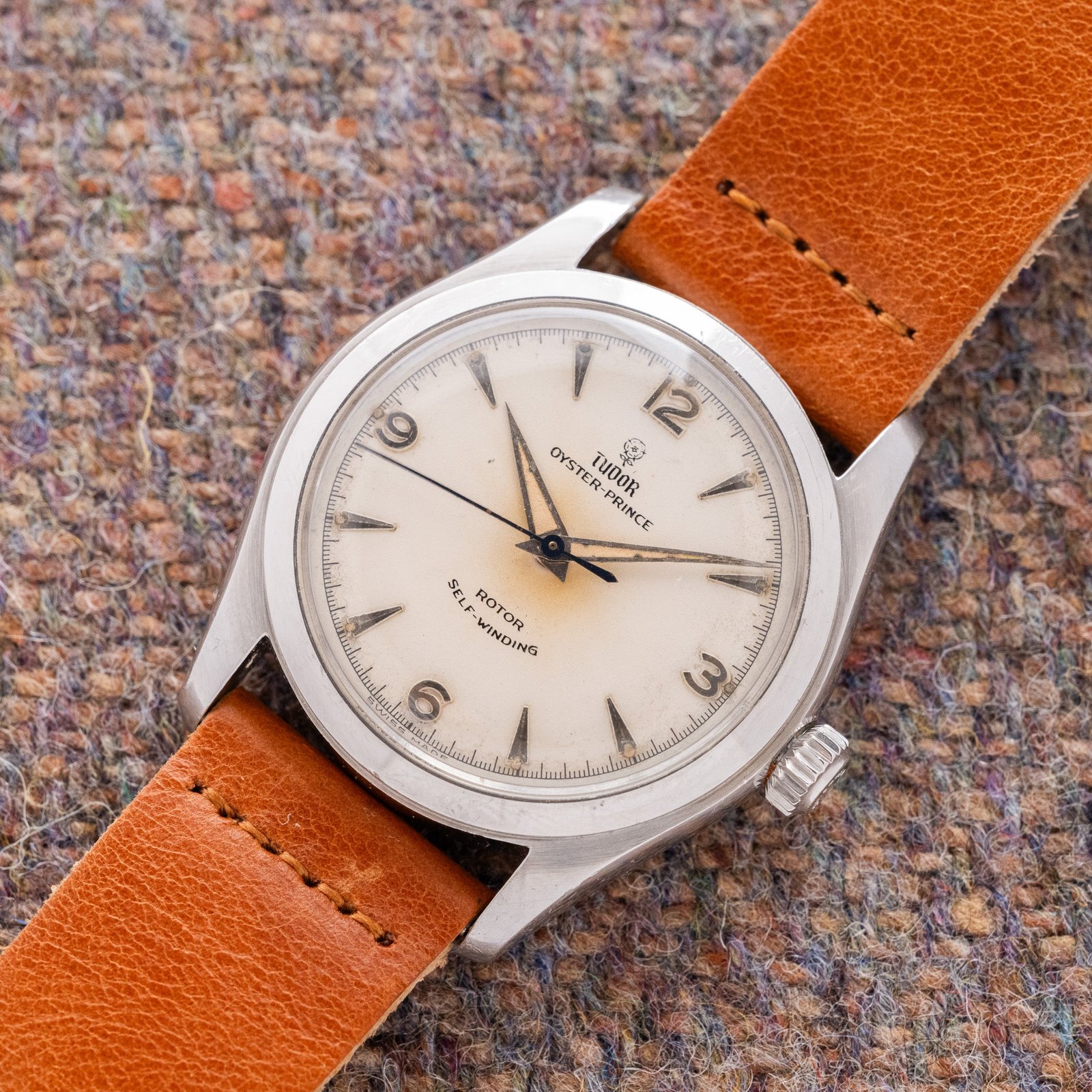
Tudor Oyster Prince British North Greenland Expedition (Ref. 7808), 1952
- Maker / attribution
- Tudor (maker)
- Date
- 1952
- Historical period
- Modern Mechanical Horology (1945 – 1969)
- Country of origin
- England
- Object type
- Wristwatch
- Dimensions
- Case 34 mm
- Stock no.
- Product 8109702774967
- Credit line
- Dealer listing, Huntington Company (product 8109702774967)
- Catalogue title (original)
- 1952 Tudor Oyster Prince British North Greenland Expedition (Ref. 7808) (English)
View the source record (dealer listing) ↗ (opens another website in a new tab)Suggest a correction
Record summary
Catalogued by Huntington Company (dealer) (stock number Product 8109702774967), this is a wristwatch by Tudor, made in England, dated 1952. The Atlas places it in the Modern Mechanical Horology period (1945 – 1969) of its Wristwatches collection. Recorded dimensions: Case 34 mm. The record is illustrated with 5 photographs.
Assembled from the source record's structured fields. Dates and attributions are given as the source states them; where a field is missing the Atlas leaves it blank rather than estimating.
Catalogue description
Dealer description — Huntington Company
The Tudor Oyster Prince was introduced in 1952 as a rugged watch designed for the British North Greenland Expedition (BNGE). Hans Wilsdorf, head of Rolex, wanted to test the watches' performance and promote them. Each BNGE member received a new Oyster Prince with the request to provide feedback on their performance. The men kept logbooks of their watches' accuracy against daily time signals broadcast by the BBC. These logbooks were given to Tudor following the expedition and used it to great effect in its advertising, touting its durability under harsh conditions. The Oyster Prince was a small, unassuming watch with no date, arrow hands, and a white dial with the Tudor rose logo at 12 o'clock and applied markers. It was built for utility with little ornamental flourish, with thick pierced lugs and a screw-down crown. Inside was a self-winding FEF caliber 390, modified by Tudor from a Fabrique d’Ebauches de Fleurier movement blank. The men of the BNGE wore the watches on extra-long leather straps for use over their cold weather clothing. Captain J.D. Walker of the Royal Engineers wrote to Tudor when he returned to England, expressing his admiration for the Rolex Tudor Oyster Prince which he wore on his wrist throughout his tour with the Expedition. Broadcast signals from the BBC were used to verify the accuracy of the Oyster Prince watches. Staff Sergeant Desmond "Roy" Homard, a mechanic by training, joined the BNGE in 1953 for its second year, leaving his wife Enid behind in the U.K. When he left for the Antarctic expedition in 1956, Homard left behind his Oyster Prince, which Enid claimed for her wrist. Specifications Model: Oyster Prince Movement: Automatic Year: 1952 Contents: Watch only Case: The size is 34mm with a classic oyster case. Dial: A warm white dial with baton markers. The dial is toasty near the center. This is also the same configuration as the examples used during the BNGE, which was from 1952 to 1954. Strap & Buckle: Aftermarket strap and buckle.
Historical context
Modern Mechanical Horology (1945 – 1969)
Tool watches for divers, pilots and astronauts; electric watches anticipate the electronic age.
The classic era of the mechanical wristwatch: dive watches, chronographs for motor racing and space flight, GMT watches for jet travel, slim dress watches, automatic calendars, and the rise of Japanese manufacturers alongside Swiss, American, German and Soviet industries.
Read the period in the timelineMore wristwatches from this periodEarlier: Golden Age of Mechanical Watchmaking
Atlas type guide
Dive and water-resistant watches
Keeping water and dust out of a wristwatch was a long-standing challenge. Rolex's screw-down Oyster case (1926) and Omega's Marine (1932) were landmarks; in the early 1950s Blancpain's Fifty Fathoms and Rolex's Submariner defined the professional dive watch with rotating bezels for timing dives, luminous dials and high water resistance. The ISO 6425 standard (1982) later codified what a 'diver's watch' must do.
Dive watches became icons of post-war design and exploration, and their evolution — helium escape valves, ceramic bezels, saturation-diving depth ratings — records the history of underwater work.
What to look for
- Unidirectional or bidirectional rotating bezel with minute markings.
- Screw-down crown and case back; depth rating printed on the dial.
- Luminous hands and markers (radium before c. 1960, tritium c. 1960–1998, then Super-LumiNova).
- Reference numbers on the case between the lugs or inside the back.
Dating clues
- Screw-down Oyster cases: from 1926.
- Professional dive watches: from 1953.
- Tritium 'T' marks on dials: c. 1960–1998.
General guidance written by the Atlas editors about this kind of object. It is not a statement about this particular piece; for that, rely on the source record above and on physical examination.
Related records
Wristwatches · c. 1973
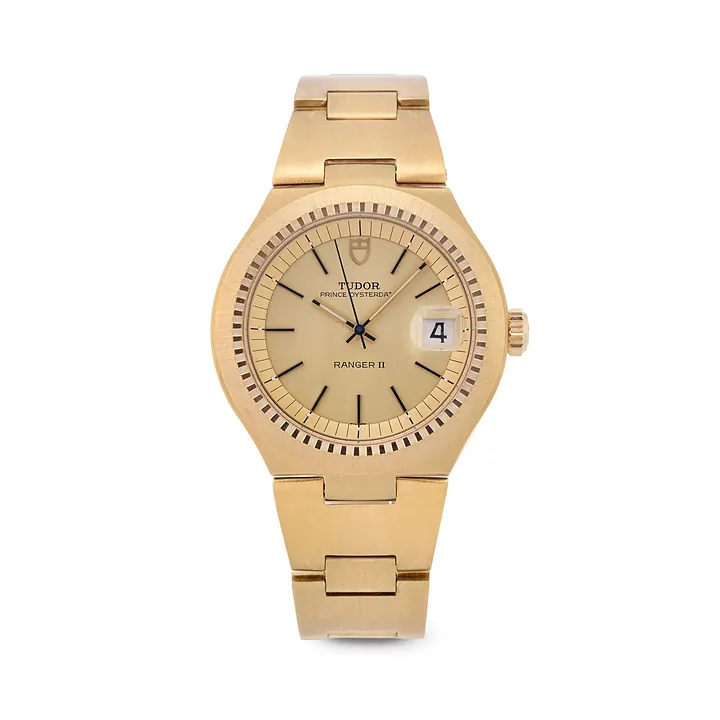
Tudor Prince Oysterdate Ranger II, ref. 9101/1, c. 1973
Antiquorum auction archive, Geneva
Wristwatches · c. 1973
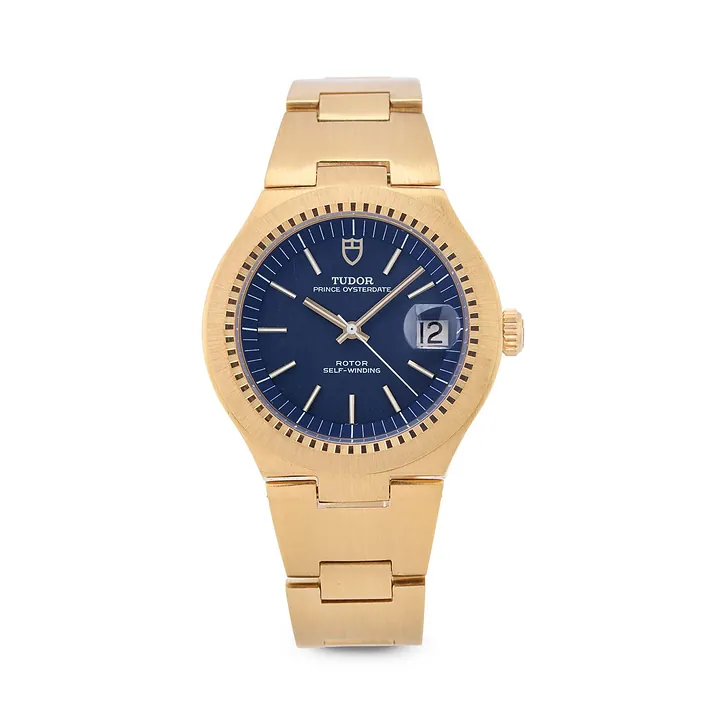
Tudor Prince Oysterdate, ref. 9101/1, c. 1973 (Antiquorum Lot 389-114)
Antiquorum auction archive, Geneva
Wristwatches · c. 1973
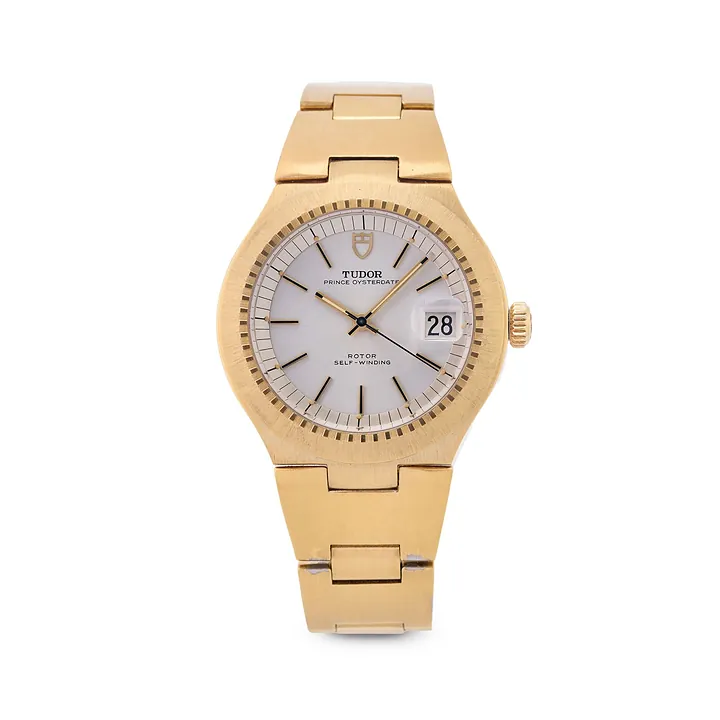
Tudor Prince Oysterdate, ref. 9101/1, c. 1973 (Antiquorum Lot 389-115)
Antiquorum auction archive, Geneva
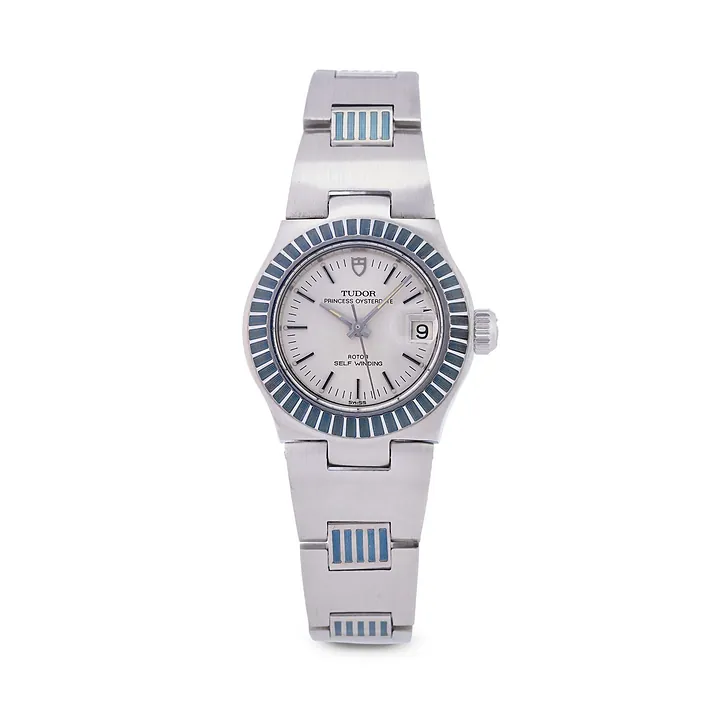
Wristwatches · c. 1974
Tudor Princess Oysterdate, ref. 9311/0, c. 1974
Antiquorum auction archive, Geneva
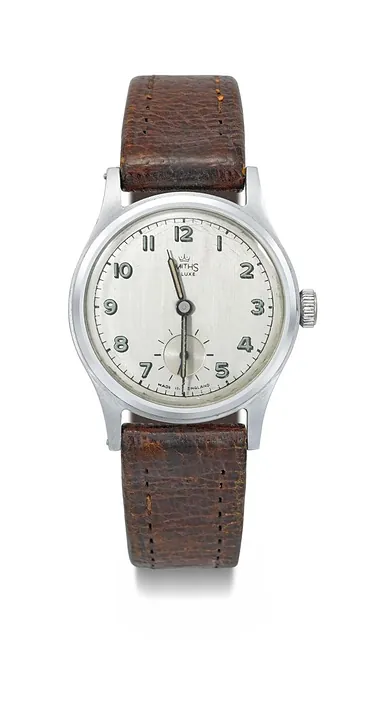
Wristwatches · 1953
Wristwatch by Smiths English Clocks Limited, England, 1953
Science Museum Group, London
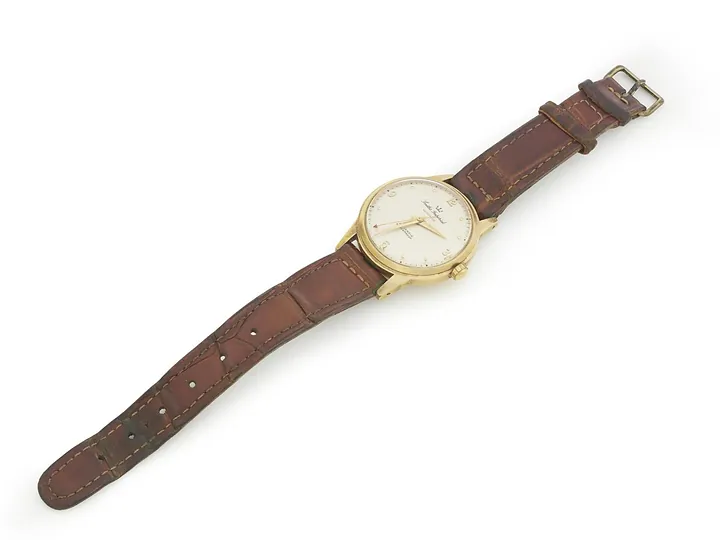
Wristwatches · 1959
Wristwatch by Smiths Clocks & Watches Ltd, England, 1959
Science Museum Group, London
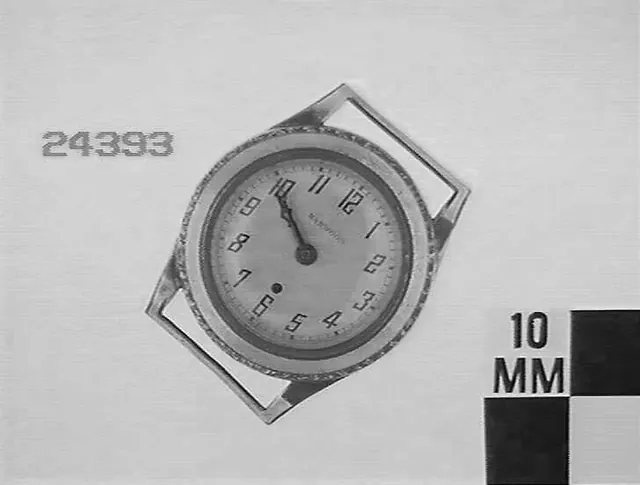
Wristwatches · 1958
Wrist Watch - Harwood, England, 1958
Museums Victoria, Melbourne
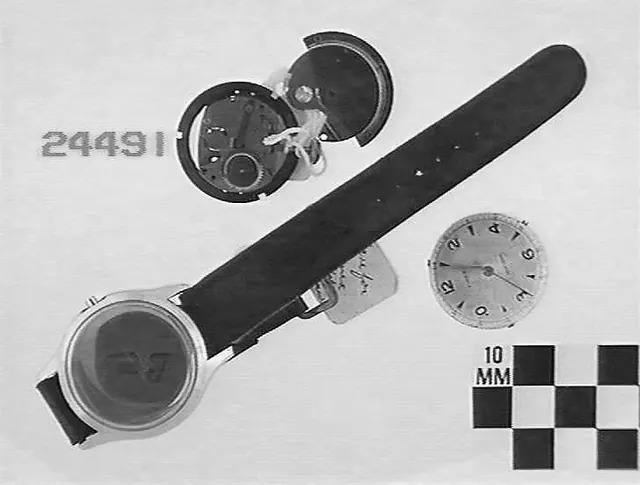
Wristwatches · c. 1957
Wrist Watch - Timex, Great Britain, c. 1957
Museums Victoria, Melbourne