
Clocks · Tower clock
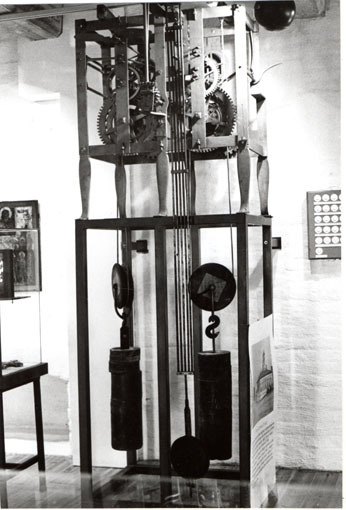
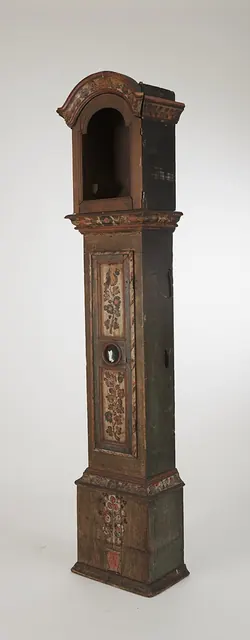
Tower clock by Johannes Yli-Könni, Finland, 1847
- Maker / attribution
- Johannes Yli-Könni (maker)
- Date
- 1847
- Historical period
- Precision & Scientific Horology (1750 – 1850)
- Country of origin
- Finland
- Place
- Finland, Ilmola
- Object type
- Tower clock
- Materials / technique
- iron, wood
- Dimensions
- height, telineineen: 290 cm; height, teline: 160 cm; width, width edestä: 97 cm
- Holding institution
- ETELÄ-KARJALAN MUSEO
- Accession / object no.
- EKME4931
- Credit line
- ETELÄ-KARJALAN MUSEO (via Finna)
- Catalogue title (original)
- Lappeenrannan raatihuoneen ajannäytön tornikello; entinen manuaalinen, purettu 1973 ja otettu kokoelmiin (Finnish)
View the source record ↗ (opens another website in a new tab)Suggest a correction
Record summary
Held and catalogued by ETELÄ-KARJALAN MUSEO (object number EKME4931), this is a tower clock by Johannes Yli-Könni, made in Finland, Ilmola, dated 1847. The Atlas places it in the Precision & Scientific Horology period (1750 – 1850) of its Clocks collection. Materials and techniques recorded by the source: iron, wood. Recorded dimensions: height, telineineen: 290 cm; height, teline: 160 cm; width, width edestä: 97 cm. The record is illustrated with 2 photographs.
Assembled from the source record's structured fields. Dates and attributions are given as the source states them; where a field is missing the Atlas leaves it blank rather than estimating.
Catalogue description
Description — ETELÄ-KARJALAN MUSEO
sisällön kuvaus: Kello ollut Lappeenrannan kaupungin raatihuoneen tornissa vuoteen 1973, jolloin se purettiin ja kuljetettiin museolle. Koneistossa on signeeraus:Joh: Yli Könni Ilmola 1847 no 5. Myös laatta, jossa teksti: Täysin korjattu vuonna 1941 Hugo Stanleyn kellotehtaalla Lahdessa.
Shown in the original language of the source catalogue. An editor-reviewed English translation has not yet been published; we do not publish machine translations as authoritative text.
Historical context
Precision & Scientific Horology (1750 – 1850)
Harrison solves longitude; Mudge invents the lever; Breguet's Paris workshop defines the modern watch.
The age of the deadbeat escapement, compensated pendulums and observatory regulators. Domestic clocks spread through the middle classes: English longcase and bracket clocks, French gilt-bronze mantel clocks, Viennese Biedermeier wall clocks, Black Forest painted-shield clocks, and the first American shelf clocks.
Read the period in the timelineMore clocks from this periodEarlier: Early Modern Horology
Atlas type guide
Turret, tower and public clocks
The first mechanical clocks of the late thirteenth and fourteenth centuries were large iron striking clocks in towers, monasteries and cathedrals, driven by falling weights and controlled by a verge escapement with a foliot or wheel balance. They struck a bell rather than displaying the time, and only gradually acquired dials. Public clocks ordered civic life, regulating markets, work and worship.
From the seventeenth century the pendulum and then the anchor and pinwheel escapements made turret clocks far more accurate. In the nineteenth century firms such as Dent, Smith of Derby, Gillett & Johnston, J. F. Weule and Collin made cast-iron flatbed movements, and Edmund Beckett Denison's gravity escapement for the Great Clock of Westminster (1859) became the standard for accurate tower clocks.
What to look for
- Frame construction: early wrought-iron 'birdcage' or posted frames versus later cast-iron flatbed or plate-and-spacer frames.
- The escapement: verge and foliot, anchor, pinwheel or double three-legged gravity escapement.
- Striking and chiming trains with count wheels or rack striking.
- Maker's plates and dates cast or engraved on the frame.
Dating clues
- Wedged and riveted wrought-iron frames generally predate 1700.
- Flatbed cast-iron movements date from about 1840 onward.
- Electrical synchronisation and electric winding appear from about 1900.
General guidance written by the Atlas editors about this kind of object. It is not a statement about this particular piece; for that, rely on the source record above and on physical examination.
Related records
Clocks · 1842–1849
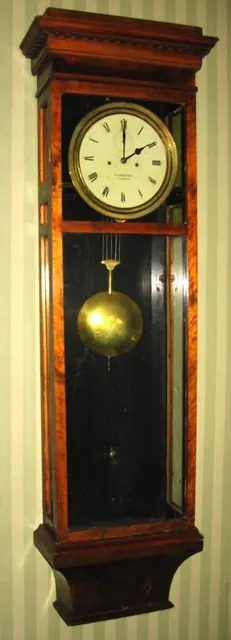
Wall clock by Niclas Lagerstrand, Finland, 1842–1849
HKM / Kulttuurihistoriallinen
Clocks · 1848
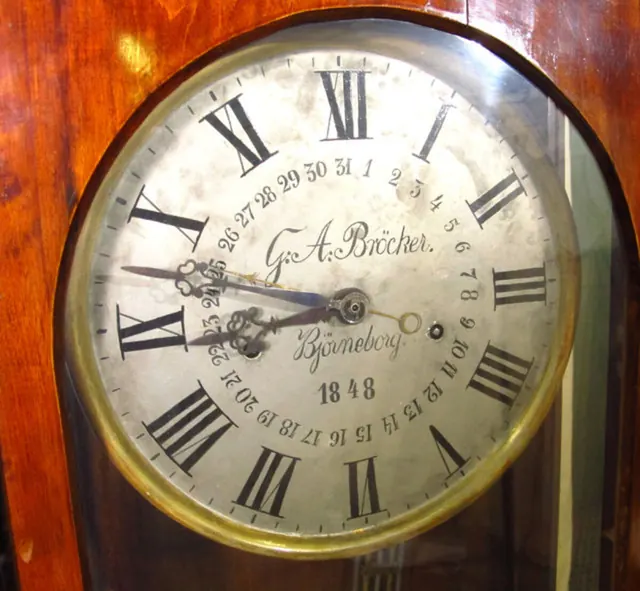
Wall clock by G.A. Bröcker, Finland, 1848
Satakunnan Museo
Clocks · 02.11.1835-18.12.1861, 1835-1861
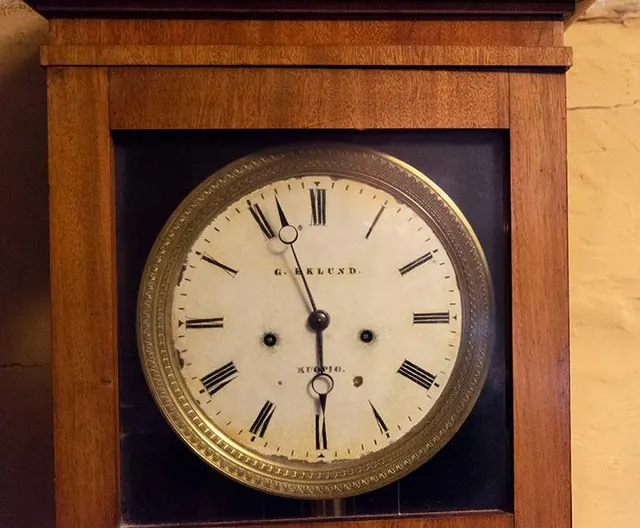
Clock by Gustaf Eklund, Finland, 02.11.1835-18.12.1861, 1835-1861
Kuopion kulttuurihistoriallinen museo
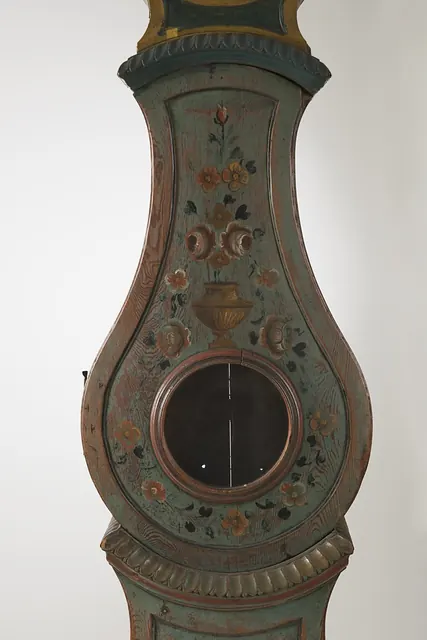
Clocks · 1797–1841
Longcase clock, Finland, 1797–1841
Suomen kansallismuseo
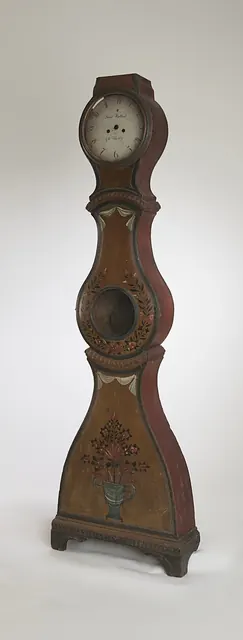
Clocks · 1848, 1800s
Longcase clock by Daniel Hallback, Finland, 1848, 1800s
Suomen kansallismuseo
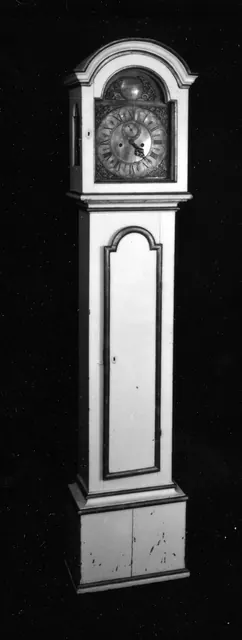
Clocks · mid-1700s
Longcase clock by Wrigstadius (Wrigstedt), Johan, Finland, mid-1700s
Suomen kansallismuseo
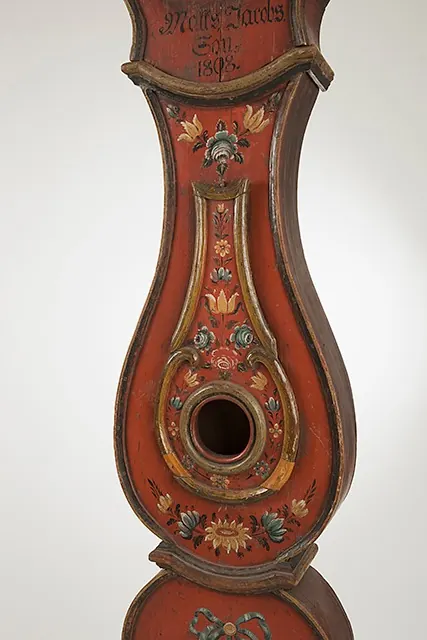
Clocks · 1808, 1800s
Longcase clock, Finland, 1808, 1800s
Suomen kansallismuseo
Clocks · 1800-1824, 1800s
Longcase clock, Finland, 1800-1824, 1800s
Suomen kansallismuseo