
Wristwatches · Wristwatch
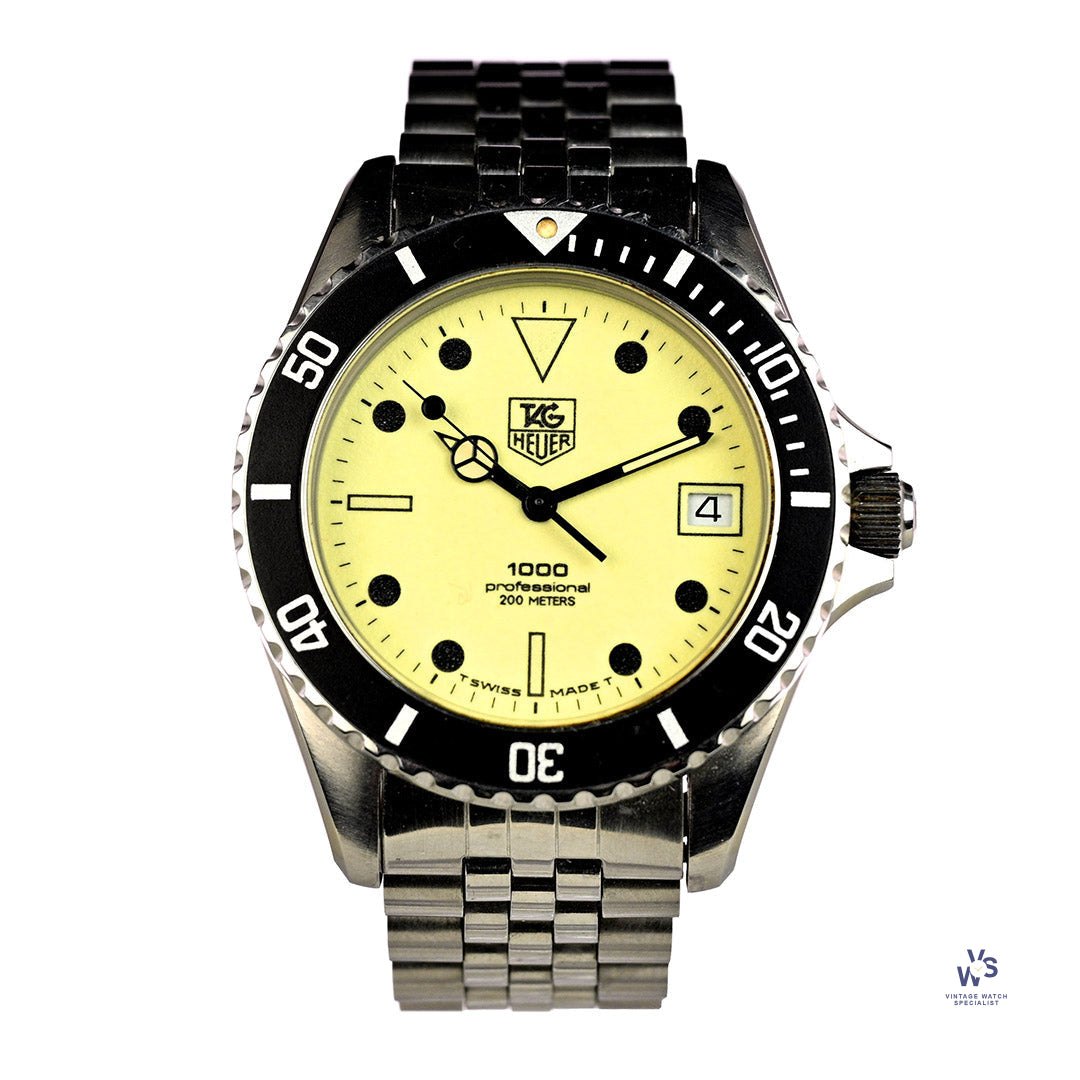
TAG Heuer Night Diver, Model 980.113N, James Bond, Full Luminous Dial, circa 1980s
- Maker / attribution
- TAG Heuer (maker)
- Date
- c. 1980s
- Historical period
- Quartz Revolution (1969 – 1990)
- Country of origin
- Switzerland
- Object type
- Wristwatch
- Stock no.
- vws3835
- Credit line
- Dealer listing, Vintage Watch Specialist (vws3835)
- Catalogue title (original)
- TAG Heuer Night Diver - Model 980.113N - James Bond - Full Luminous Dial - c.1980s (English)
View the source record (dealer listing) ↗ (opens another website in a new tab)Suggest a correction
Record summary
Catalogued by Vintage Watch Specialist (dealer), United Kingdom (stock number vws3835), this is a wristwatch by TAG Heuer, made in Switzerland, dated c. 1980s. The Atlas places it in the Quartz Revolution period (1969 – 1990) of its Wristwatches collection. The record is illustrated with 6 photographs.
Assembled from the source record's structured fields. Dates and attributions are given as the source states them; where a field is missing the Atlas leaves it blank rather than estimating.
Catalogue description
Dealer description — Vintage Watch Specialist
The Stunning and Much Sought-After TAG Heuer Night Diver (James Bond) with a Fully Luminous Dial, in Superb Preowned Condition, c.1980s The TAG Heuer 1000 Night Diver 980.113N, introduced in the 1980s, is a cult classic and and is hugely collectable across the globe. Originally part of the Heuer 1000 Series before the TAG acquisition, it was designed as a rugged, accessible dive watch for professionals and military personnel. Famously worn by Timothy Dalton as James Bond in The Living Daylights , the Night Diver blends bold aesthetics with reliable performance, cementing its iconic status among vintage tool watches. What's on Offer We’re excited to present this superb example (almost in NOS condition) of the TAG Heuer 1000 Night Diver Reference 980.113n, a true favourite among collectors and enthusiasts alike. Made famous by its appearance on the wrist of Timothy Dalton’s James Bond, the Night Diver has become an icon in its own right, and this particular model is a standout. This watch features the distinctive fully luminous dial, a hallmark of the Night Diver series, designed for ultimate visibility in low-light and underwater conditions. The rich black unidirectional bezel provides a bold contrast, perfectly framing the luminous display with Mercedes hands and dot hour indices, all of which remain crisp and vibrant. A subtle date aperture at 3 o’clock adds functionality without detracting from the clean design. The stainless steel case and matching steel bracelet are both in superb pre-owned condition, with light wear consistent with careful use. These Night Divers are becoming increasingly sought after, especially in this well-preserved form, making this a truly collectable piece from TAG Heuer’s golden era of tool watches. Whether you’re a Bond aficionado, a vintage dive watch collector, or simply after a bold, functional timepiece with character—this one ticks all the boxes. I asked the boss if I could wear it for a while - he said no. Sad face.
Historical context
Quartz Revolution (1969 – 1990)
Seiko's Astron begins mass quartz timekeeping; traditional industries contract sharply.
Quartz and digital watches transformed the market after 1969. Swiss employment collapsed, Japanese and Hong Kong production soared, and the Swatch (1983) helped the Swiss industry recover; mechanical watches survived as luxury goods.
Read the period in the timelineMore wristwatches from this periodEarlier: Modern Mechanical Horology
Atlas type guide
Dive and water-resistant watches
Keeping water and dust out of a wristwatch was a long-standing challenge. Rolex's screw-down Oyster case (1926) and Omega's Marine (1932) were landmarks; in the early 1950s Blancpain's Fifty Fathoms and Rolex's Submariner defined the professional dive watch with rotating bezels for timing dives, luminous dials and high water resistance. The ISO 6425 standard (1982) later codified what a 'diver's watch' must do.
Dive watches became icons of post-war design and exploration, and their evolution — helium escape valves, ceramic bezels, saturation-diving depth ratings — records the history of underwater work.
What to look for
- Unidirectional or bidirectional rotating bezel with minute markings.
- Screw-down crown and case back; depth rating printed on the dial.
- Luminous hands and markers (radium before c. 1960, tritium c. 1960–1998, then Super-LumiNova).
- Reference numbers on the case between the lugs or inside the back.
Dating clues
- Screw-down Oyster cases: from 1926.
- Professional dive watches: from 1953.
- Tritium 'T' marks on dials: c. 1960–1998.
General guidance written by the Atlas editors about this kind of object. It is not a statement about this particular piece; for that, rely on the source record above and on physical examination.
Related records
Wristwatches · c. 2000
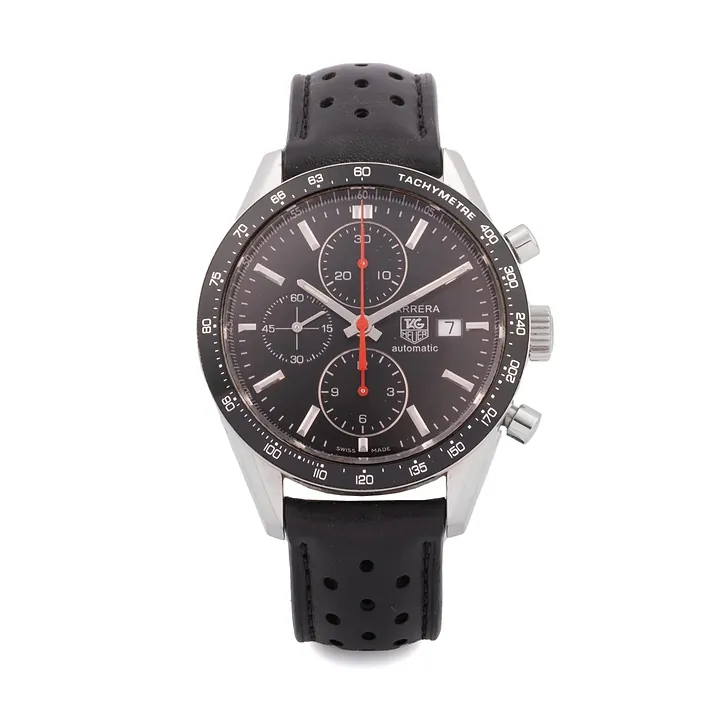
TAG Heuer wristwatch, ref. cv2014-2, c. 2000
Antiquorum auction archive, Geneva
Wristwatches · c. 2010s
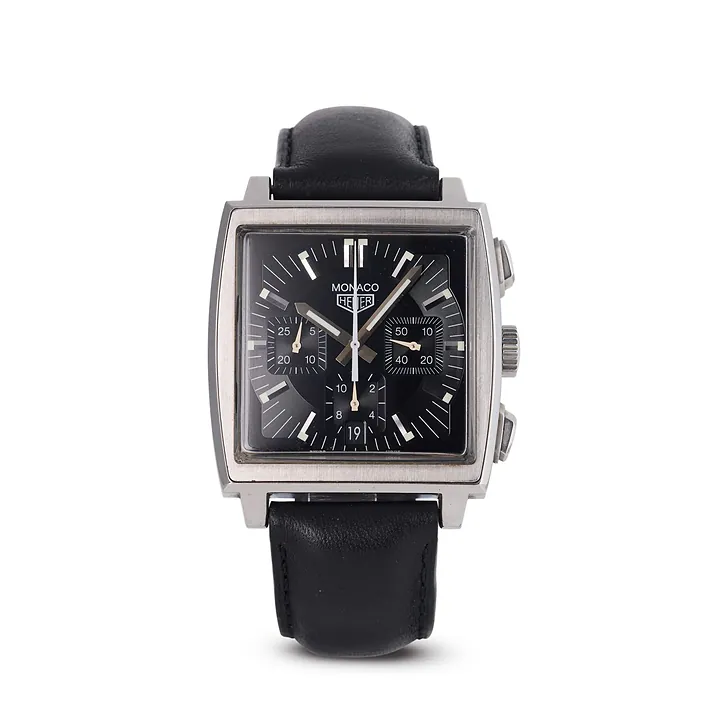
TAG Heuer Monaco, ref. CS2111, c. 2010s
Antiquorum auction archive, Geneva
Wristwatches · c. 2014
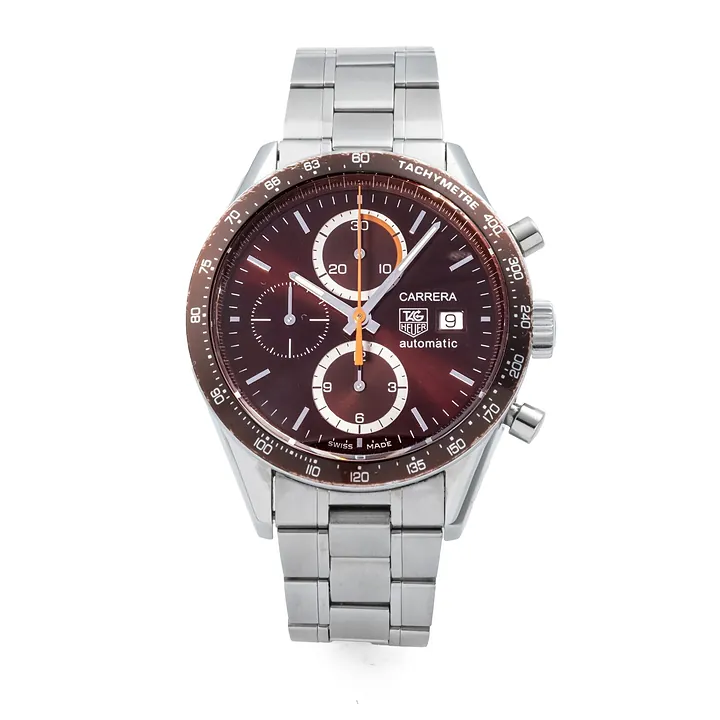
TAG Heuer Carrera 1860, ref. CV2013.BA0794, c. 2014
Antiquorum auction archive, Geneva

Wristwatches · Sold in March 2018
TAG Heuer Carrera, ref. CAR201V, Sold in March 2018
Antiquorum auction archive, Geneva

Wristwatches · 1970
Wristwatch by Heno, Switzerland, 1970
Museum Rotterdam

Wristwatches · 1960–1986
'Tri-Compax' calendar chronograph wristwatch in gold case, by Universal, Geneva, Switzerland, 1960–1986.
Science Museum Group, London

Wristwatches · 1969–1970
Beta 21 Quartz wristwatch movement, made in Switzerland, 1970.
Science Museum Group, London

Wristwatches · c. 1969
Omega Speedmaster Moonwatch, ref. 145022-69st, c. 1969
Antiquorum auction archive, Geneva