
Movements & Components · Table clock
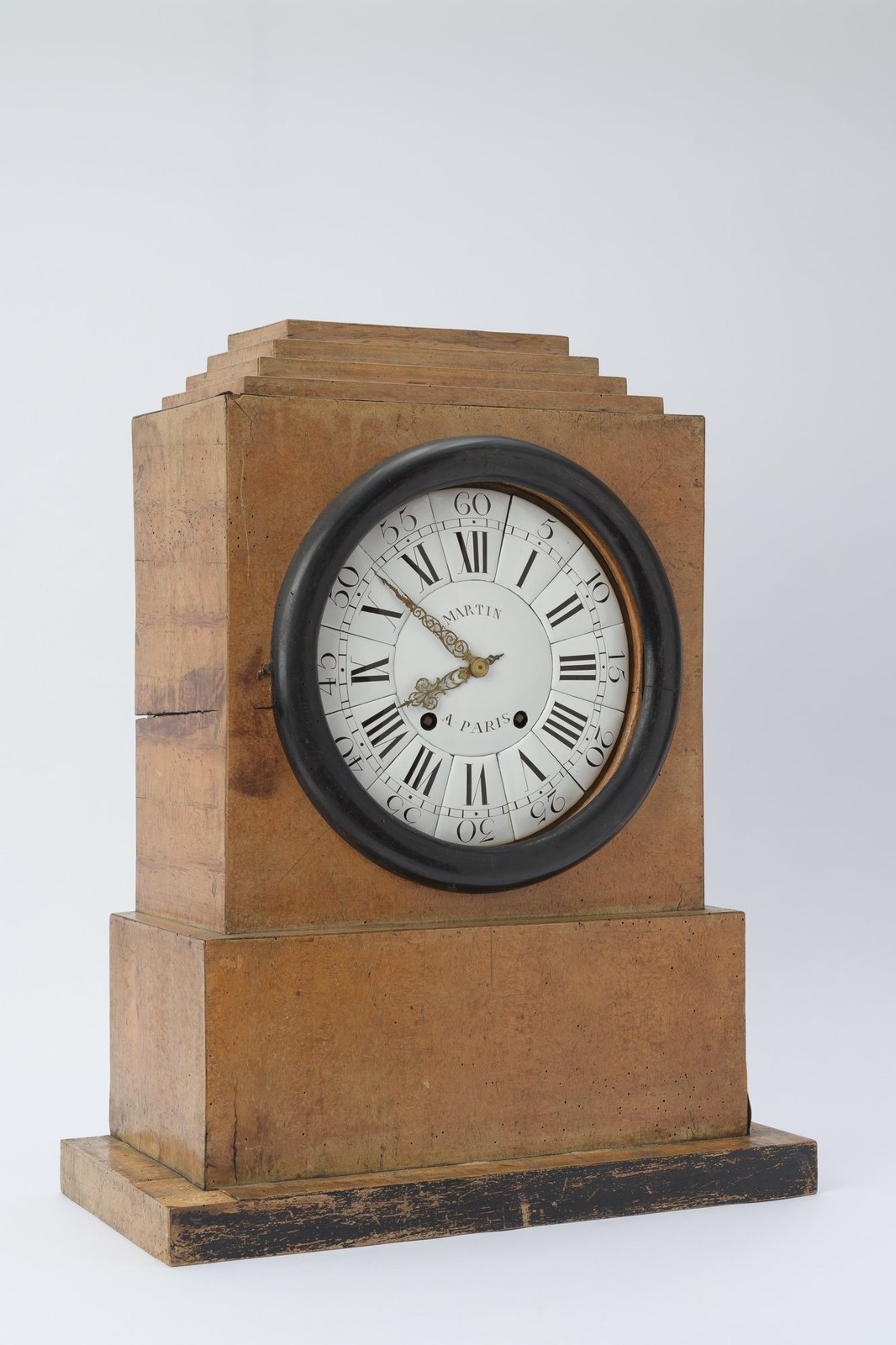
Table clock, France, 1750–1770
- Maker / attribution
- Unrecorded in source
- Date
- 1750–1770
- Historical period
- Precision & Scientific Horology (1750 – 1850)
- Country of origin
- France
- Place
- Paris
- Object type
- Table clock
- Materials / technique
- Kiefernholz, Birkenholz, Email, Messing, furniert, ebonisiert, poliert
- Dimensions
- Gehäuse: Höhe: 70 cm, Breite: 53 cm, Tiefe: 27 cm; Zifferblatt: Durchmesser: 27 cm
- Holding institution
- Museum Eberswalde
- Accession / object no.
- Inv.-Nr. V 1586 E
- Credit line
- Museum Eberswalde
- Catalogue title (original)
- Tischuhr (German)
View the source record ↗ (opens another website in a new tab)Suggest a correction
Record summary
Held and catalogued by Museum Eberswalde (object number Inv.-Nr. V 1586 E), this is a table clock, made in Paris, France, dated 1750–1770. The Atlas places it in the Precision & Scientific Horology period (1750 – 1850) of its Movements & Components collection. Materials and techniques recorded by the source: Kiefernholz, Birkenholz, Email, Messing, furniert, ebonisiert, poliert. Recorded dimensions: Gehäuse: Höhe: 70 cm, Breite: 53 cm, Tiefe: 27 cm; Zifferblatt: Durchmesser: 27 cm. The record is illustrated with 5 photographs.
Assembled from the source record's structured fields. Dates and attributions are given as the source states them; where a field is missing the Atlas leaves it blank rather than estimating.
Catalogue description
Catalogue description from Museum Eberswalde (German)
Das hochrechteckige, mit poliertem Birkenholz furnierte Nadelholzgehäuse besteht aus einem hohen Sockel auf einer Basisplatte und einem quadratischen Kasten mit dem Uhrwerk. Der getreppte Aufsatz bildet die Bekrönung. Der Rahmen vor dem Zifferblatt (heute ohne Glas) und die Außenkanten der Basisplatte sind schwarz poliert. Die nicht furnierte Rückfront des Gehäuses ist mit einer Tür versehen, die Zugang zum Uhrwerk bietet. Als Scharniere dienen braune Lederstreifen, die auf das Gehäuse und Türblatt genagelt sind. Auf der Türinnenseite ist das Schallloch mit einem orangefarbenem Wollmischgewebe mit Blumenmuster abgedeckt. Das weiße Emailzifferblatt ist aus zwölf trapezförmigen Teilen und einem runden Mittelfeld (Treize-Pièces-Zifferblatt) zusammengesetzt. Auf den Trapezformen sind große römische Stundenziffern, kleinere arabische Fünfminutenziffern und eine Minuterie mit Strichen und Punkten in schwarzer Farbe aufgemalt. Das runde Mittelfeld ist bezeichnet mit „MARTIN A PARIS“. Die Aufzugslöcher liegen vor den Ziffern IIII (bei Uhren eine übliche Darstellung der römischen Ziffer 4) und V sowie VII und VIII. Die Fleur-de-lys-Messingzeiger sind ziseliert und feuervergoldet. Das viereckige Messingplatinenwerk ist mit einem Schlossscheibenschlagwerk auf einer Glocke ausgestattet. Der Antrieb erfolgt über ein Messingpendel mit Fadenaufhängung. Das Zifferblatt ist in die Zeit von 1750 bis 1770 zu datieren, in der es technisch noch nicht möglich war, größere Flächen zu emaillieren. Mit dem Treize-Pièces-Zifferblatt der Bodenstanduhr von Louis George von 1780 (Inv. Nr. V 214 E) besitzt das Museum Eberswalde ein weiteres bedeutendes Beispiel. Welcher Uhrmacher sich hinter dem Namen Martin verbirgt, konnte bisher nicht geklärt werden. Tardy verzeichnet mehrere Uhrmacher gleichen Namens, die Mitte des 18. Jahrhunderts in Paris wirkten. Die strenge kubische Form des Uhrgehäuses ohne zusätzliche Ornamentik und die Farbkontraste zwischen hellen und ebonisierten Holzfurnieren sind typisch für die Berliner Möbelbaukunst des Biedermeier bis 1830. Die Zweitverwendung eines Zifferblattes des 18. Jahrhunderts in einem Gehäuse der Biedermeierzeit lässt vermuten, dass es dem Besitzer lieb und teuer war. Die Uhr stammt aus dem Nachlass von Auguste von Schroeder und wurde 1968 dem Museum Eberswalde übergeben. Ihr Vater Hans Gottlieb Friedrich Schroeder, in den 1880er Jahren geadelt, war Gutsherr auf Braunsfelde im Kreis Friedeberg in der Neumark (heute Bronowice in Polen), ihre Mutter Sophie eine geborene von Bojanowsky. Da Mitglieder der Familie von Bojanowsky in Eberswalde ansässig waren, übersiedelten Mutter und Tochter nach Kriegsende 1945 dorthin und wohnten in der Schneiderstraße 10. Ob die Tischuhr aus Braunsfelde oder aus einem der Haushalte der Bojanowskys stammt, konnte bisher nicht ermittelt werden. (Silke Kreibich)
Shown in the original language of the source catalogue. An editor-reviewed English translation has not yet been published; we do not publish machine translations as authoritative text.
Inscriptions & marks
Auf dem Zifferblatt "MARTIN A PARIS"
Provenance
Literature: Kreisarchiv Landkreis Barnim: Einwohnermeldekarte, Auguste von Schroeder (1968); Kreisarchiv Landkreis Barnim: Sterberegistereintrag, Nr. 572, Auguste von Schroeder (1968); Tardy: Dictionnaire des horlogers français (1972)
Historical context
Precision & Scientific Horology (1750 – 1850)
Harrison solves longitude; Mudge invents the lever; Breguet's Paris workshop defines the modern watch.
The age of escapement invention: cylinder, duplex, lever, detent and many experimental escapements; compensation balances and fine finishing.
Read the period in the timelineMore movements & components from this periodEarlier: Early Modern Horology
Atlas type guide
Clock and watch movements
The movement is the mechanism of a clock or watch, without its case and dial. It consists of the power source (weight or mainspring in its barrel, sometimes with a fusee), the going train of wheels and pinions, the escapement and oscillator, the motion work that drives the hands, and in many cases additional trains for striking or complications.
From the eighteenth century watch movements were increasingly produced in stages: Swiss and French ébauche makers supplied rough movements that finishers, repasseurs and retailers completed and signed. Calibre numbers — first used systematically by American and Swiss factories in the nineteenth century — make it possible to identify movements, find spare parts and date watches.
What to look for
- Plate and bridge layout: full plate, three-quarter plate, Lépine bar calibre, bridges and cocks.
- Jewel count and whether jewels are set in chatons or rubbed in.
- Signatures, calibre and serial numbers on the plate or under the dial.
- Finishing: Geneva stripes (Côtes de Genève), perlage, bevelled edges, blued screws.
- Fusee and chain, going barrel, or electrical components.
Dating clues
- Full-plate English movements dominate before c. 1850; three-quarter plate and Lépine calibres after.
- Jewelled movements spread after Facio and Debaufre's patent of 1704, mainly in English work until c. 1800.
- Calibre numbers and factory serials allow close dating for industrial production after c. 1850.
General guidance written by the Atlas editors about this kind of object. It is not a statement about this particular piece; for that, rely on the source record above and on physical examination.
Related records
Movements & Components · 1756–1757
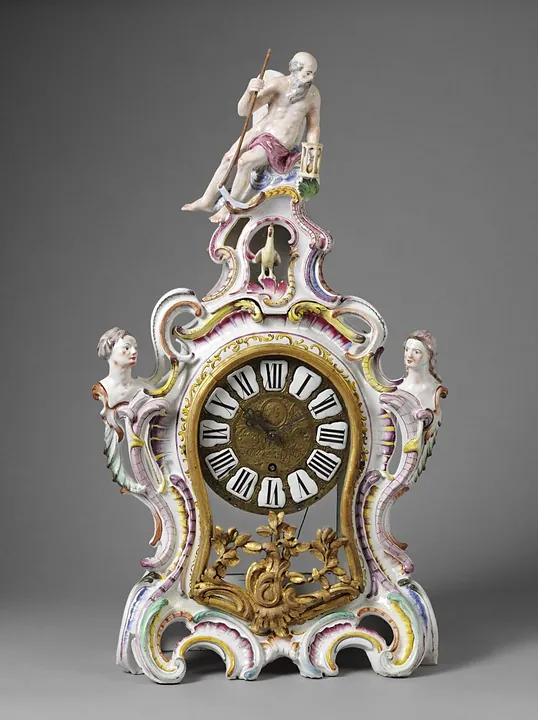
Clock case by Paul Hannong's pottery factory, France, 1756–1757
Victoria and Albert Museum, London
Movements & Components · 1770
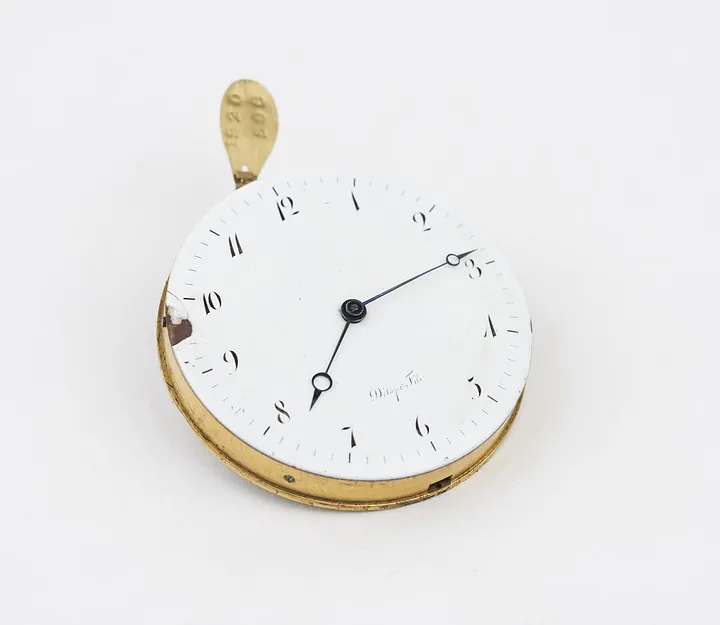
Duplex repeater, about 1770, by Detape Fils, Paris, France
Science Museum Group, London
Movements & Components · probably c. 1770
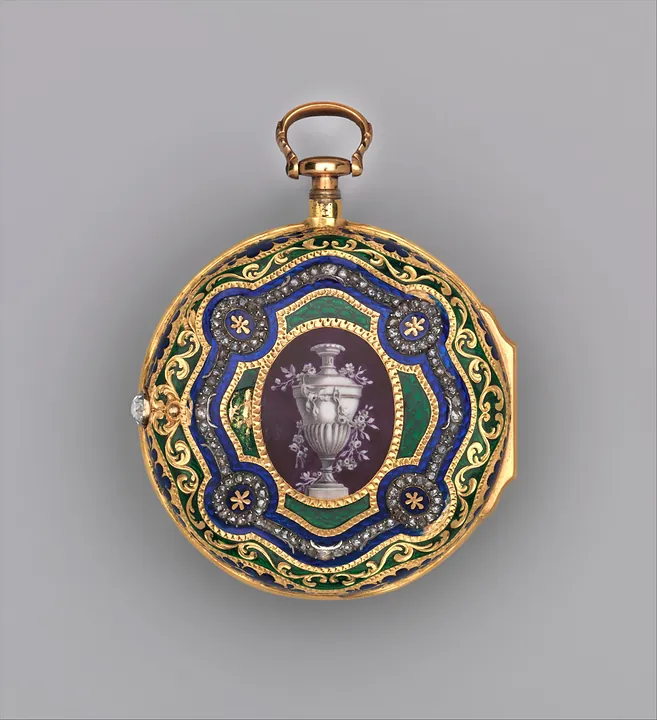
Watch case possibly by George Harrison, France, probably c. 1770
The Metropolitan Museum of Art, New York
Movements & Components · 1770–1800
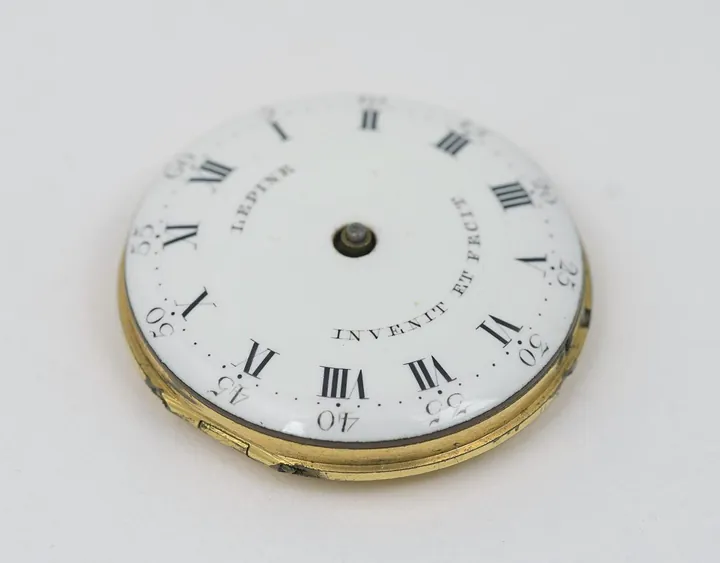
Watch movement made by Jean Antoine Lepine, Paris, France, c. 1770–1800.
Science Museum Group, London
Movements & Components · early 19th century
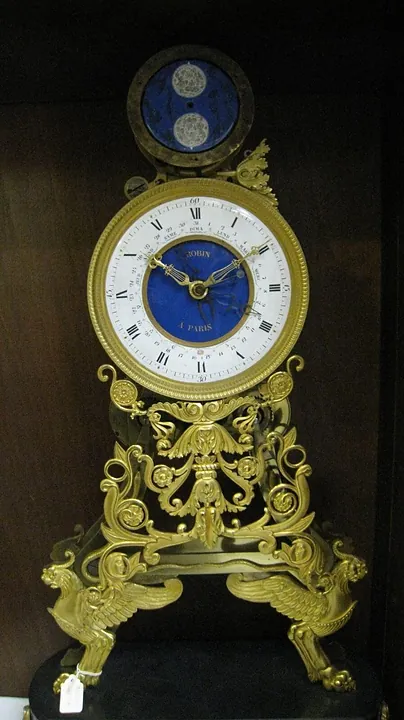
Skeleton clock with case, signed ROBIN A PARIS, early 19th century
Victoria and Albert Museum, London
Movements & Components · c. 1800
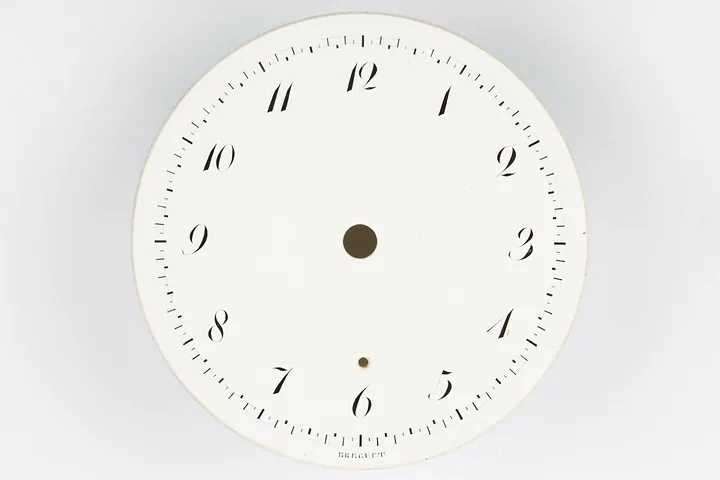
Watch movement by Abraham-Louis Breguet, France, c. 1800
German Clock Museum
Movements & Components · 1801–1830
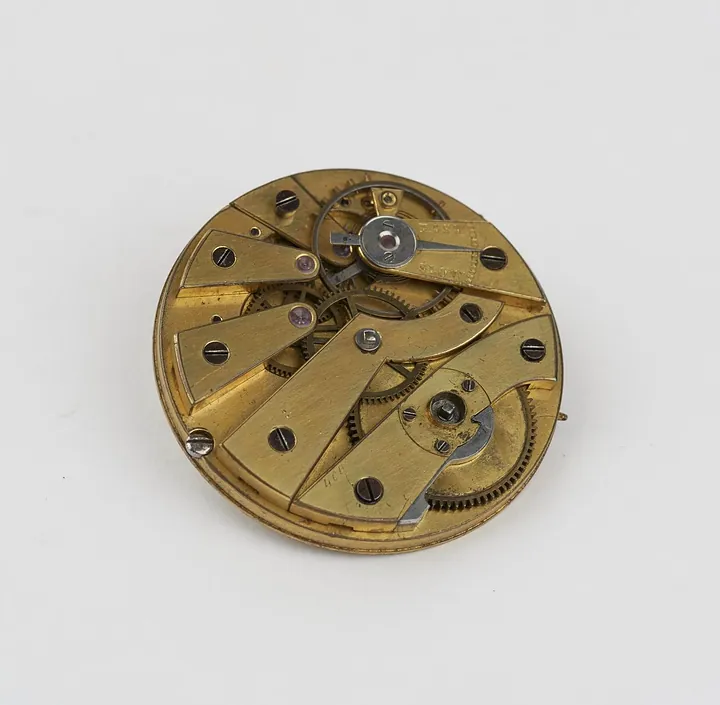
Duplex, French or Swiss, early 19th century
Science Museum Group, London
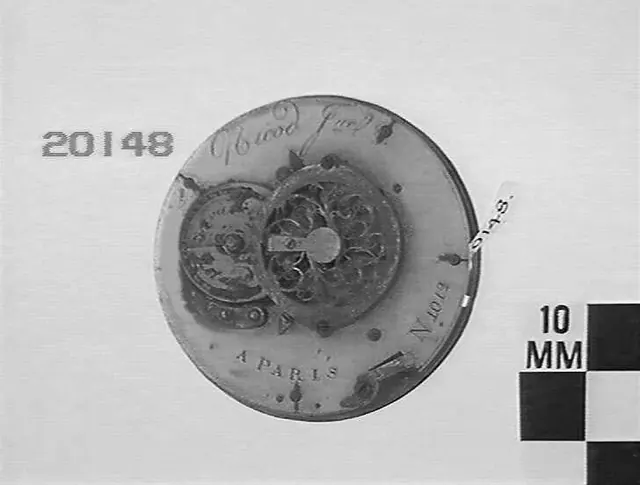
Movements & Components · c. 1820
Pocket Watch Movement - Nicod Jeune, Paris, c. 1820
Museums Victoria, Melbourne