
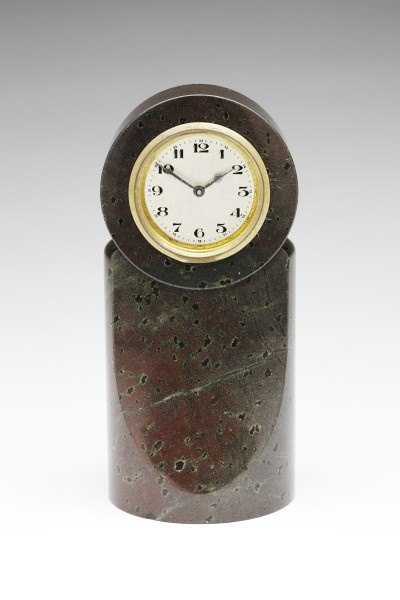
Clocks · Table clock
Table clock by Albin Müller, Before 1908
- Maker / attribution
- Albin Müller (Created); Sächsische Serpentinstein-Gesellschaft (Created)
- Date
- Before 1908
- Historical period
- Golden Age of Mechanical Watchmaking (1900 – 1945)
- Country of origin
- Unrecorded in source
- Place
- Darmstadt
- Object type
- Table clock
- Materials / technique
- Rötlicher, grüngeäderter Granatserpentinstein, Messing, Glas
- Dimensions
- Höhe 18 cm, Durchmesser 8,2 cm
- Holding institution
- GRASSI Museum für Angewandte Kunst Leipzig
- Accession / object no.
- 1992.75
- Credit line
- GRASSI Museum für Angewandte Kunst Leipzig
- Catalogue title (original)
- Tischuhr (German)
View the source record ↗ (opens another website in a new tab)Suggest a correction
Record summary
Held and catalogued by GRASSI Museum für Angewandte Kunst Leipzig (object number 1992.75), this is a table clock by Albin Müller, made in Darmstadt, dated Before 1908. The Atlas places it in the Golden Age of Mechanical Watchmaking period (1900 – 1945) of its Clocks collection. Materials and techniques recorded by the source: Rötlicher, grüngeäderter Granatserpentinstein, Messing, Glas. Recorded dimensions: Höhe 18 cm, Durchmesser 8,2 cm. The record is illustrated with 1 photograph.
Assembled from the source record's structured fields. Dates and attributions are given as the source states them; where a field is missing the Atlas leaves it blank rather than estimating.
Catalogue description
Catalogue description from GRASSI Museum für Angewandte Kunst Leipzig (German)
Albinmüller arbeitete vor allem als Architekt, entwarf aber auch im Sinne des Raumes als Gesamtkunstwerk zahlreiche Innenausstattungen. Dazu gehörten neben Bodenbelägen, Tapeten und Möbeln auch Keramiken, Metall- und anderes Gerät. Für die Sächsische Serpentinstein-Gesellschaft, die sich um modernes, als zeitgemäß empfundenes Kunstgewerbe aus dem weltbekannten Zöblitzer Serpentinstein bemühte, entwarf Albinmüller über viele Jahre die unterschiedlichsten Ausstattungsgegenstände. Diese Tischuhr entstand während seiner Zeit in der Darmstädter Künstlerkolonie, an die er 1906 berufen wurde. Die Uhr ist von äußerster Schlichtheit, lediglich die natürliche Äderung des Steins bildet den Dekor. Erworben aus dem Leipziger Kunsthandel, 1992.
Shown in the original language of the source catalogue. An editor-reviewed English translation has not yet been published; we do not publish machine translations as authoritative text.
Provenance
Literature: GRASSI Museum für Angewandte Kunst Leipzig (Hrsg.): Ständige Ausstellung. Jugendstil bis Gegenwart (2012)
Historical context
Golden Age of Mechanical Watchmaking (1900 – 1945)
The wristwatch displaces the pocket watch; waterproof cases, self-winding and grand complications.
Between 1900 and 1945 clocks were electrified: master-clock systems ran factories and offices, synchronous mains clocks entered homes, and the Shortt free-pendulum clock set new standards of accuracy before the first quartz clocks (1927). Art Deco design reshaped mantel and table clocks.
Read the period in the timelineMore clocks from this periodEarlier: Industrial Revolution
Atlas type guide
Bracket, table and spring-driven clocks
Spring-driven clocks freed timekeeping from the hanging weight. The coiled mainspring, documented from the fifteenth century, made portable table clocks possible; to even out its declining force, makers used the fusee, a conical pulley connected to the barrel by a gut line or chain. Renaissance table clocks from Augsburg and Nuremberg — drum-shaped, square or tower-shaped in gilt brass — were luxury scientific objects, often with astronomical dials and alarms.
After the pendulum, English makers developed the bracket clock: a wooden case with a carrying handle, a short pendulum with a verge escapement, and often repeating work to sound the hours on demand at night. Later examples use the anchor escapement. In the nineteenth century, 'table clock' became a broad term for spring clocks of every nationality.
What to look for
- A fusee in the movement (cone-shaped pulley) and the type of line — gut or chain.
- Verge escapement with a short bob pendulum, often with a decoratively engraved backplate.
- Repeat cords or buttons that make the clock strike again on demand.
- Gilt-brass engraved cases and horizontal dials on Renaissance pieces.
- Case shapes: inverted bell, bell top, break-arch, lancet or balloon.
Dating clues
- Drum and tower table clocks: c. 1520–1650.
- Ebony veneered English bracket clocks with verge escapements: c. 1670–1800.
- Engraved backplates were usual on English clocks until c. 1800, then generally plain.
General guidance written by the Atlas editors about this kind of object. It is not a statement about this particular piece; for that, rely on the source record above and on physical examination.
Related records
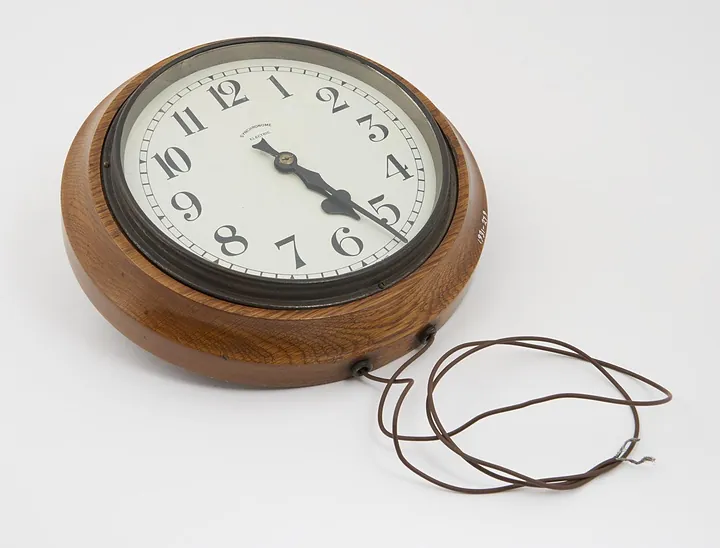
Clocks · 1890–1930
Clock with 8-inch impulse dial, by the Synchronome Company Limited, England, 1890–1930.
Science Museum Group, London
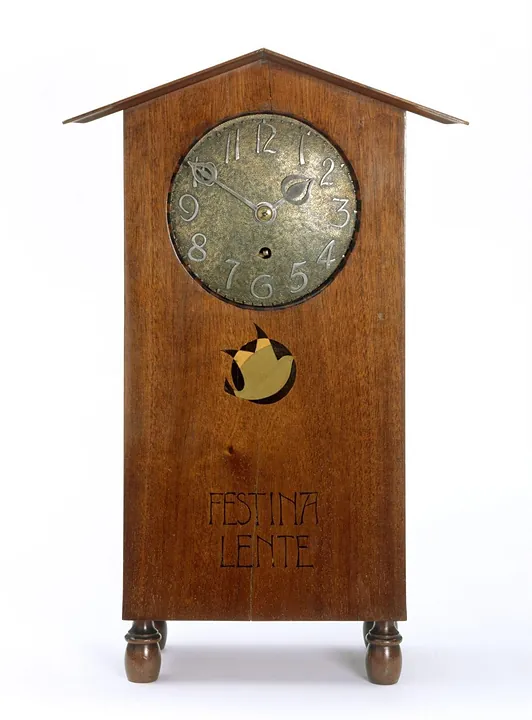
Clocks · c.1900
Clock by Mackay Hugh Baillie Scott, Bedfordshire, c.1900
Victoria and Albert Museum, London
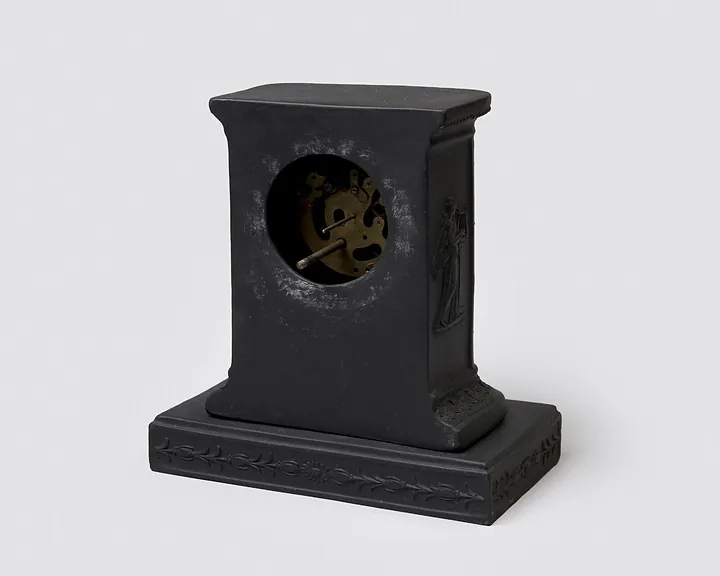
Clocks · c. 1900
Clock, black basalt, brass, Josiah Wedgwood and Sons, Etruria, c. 1900
Victoria and Albert Museum, London
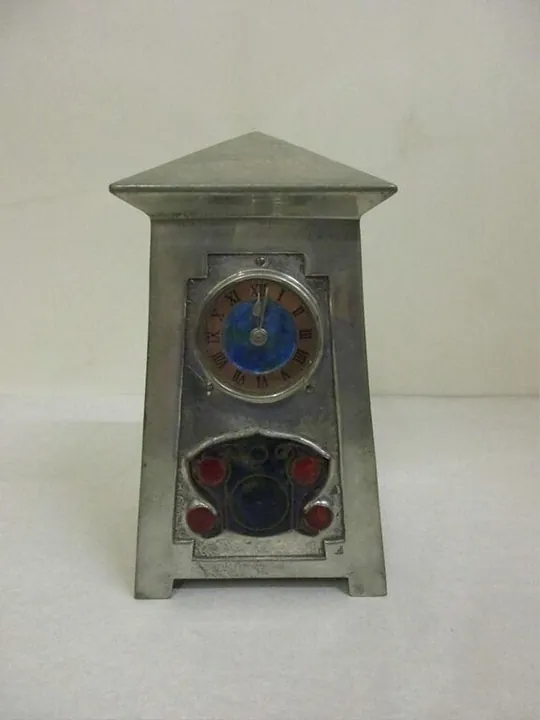
Clocks · c.1903-1904
Clock, pewter, made for Liberty& Co., England. 1903-4.
Victoria and Albert Museum, London
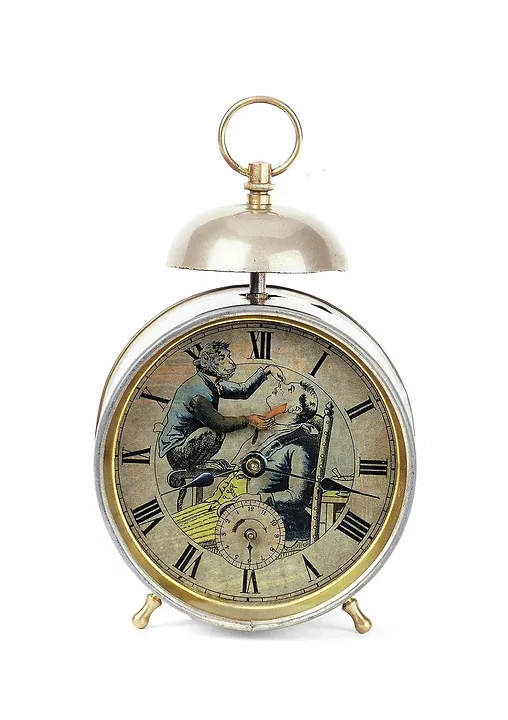
Clocks · c. 1900
Alarm clock by Union Clock Company, Germany, c. 1900
German Clock Museum
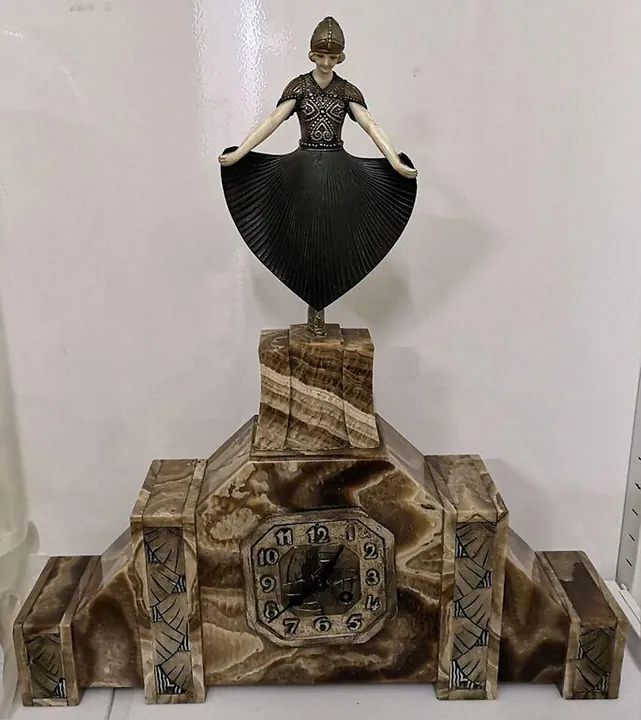
Clocks · 20th century
Base Metal, 20th c. Bronze, marble and ivory clock by Chiparus
Victoria and Albert Museum, London
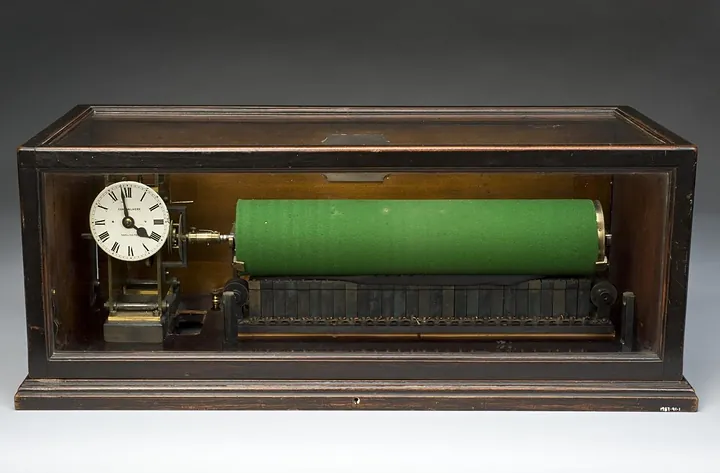
Clocks · 1900–1939
Clock by Cox-Walkers of Darlington, England, 1900–1939
Science Museum Group, London
Clocks · 1900–1999
Clock by Französisch (Schule), 1900–1999
Fine Arts Museum Vienna