
Wristwatches · Wristwatch
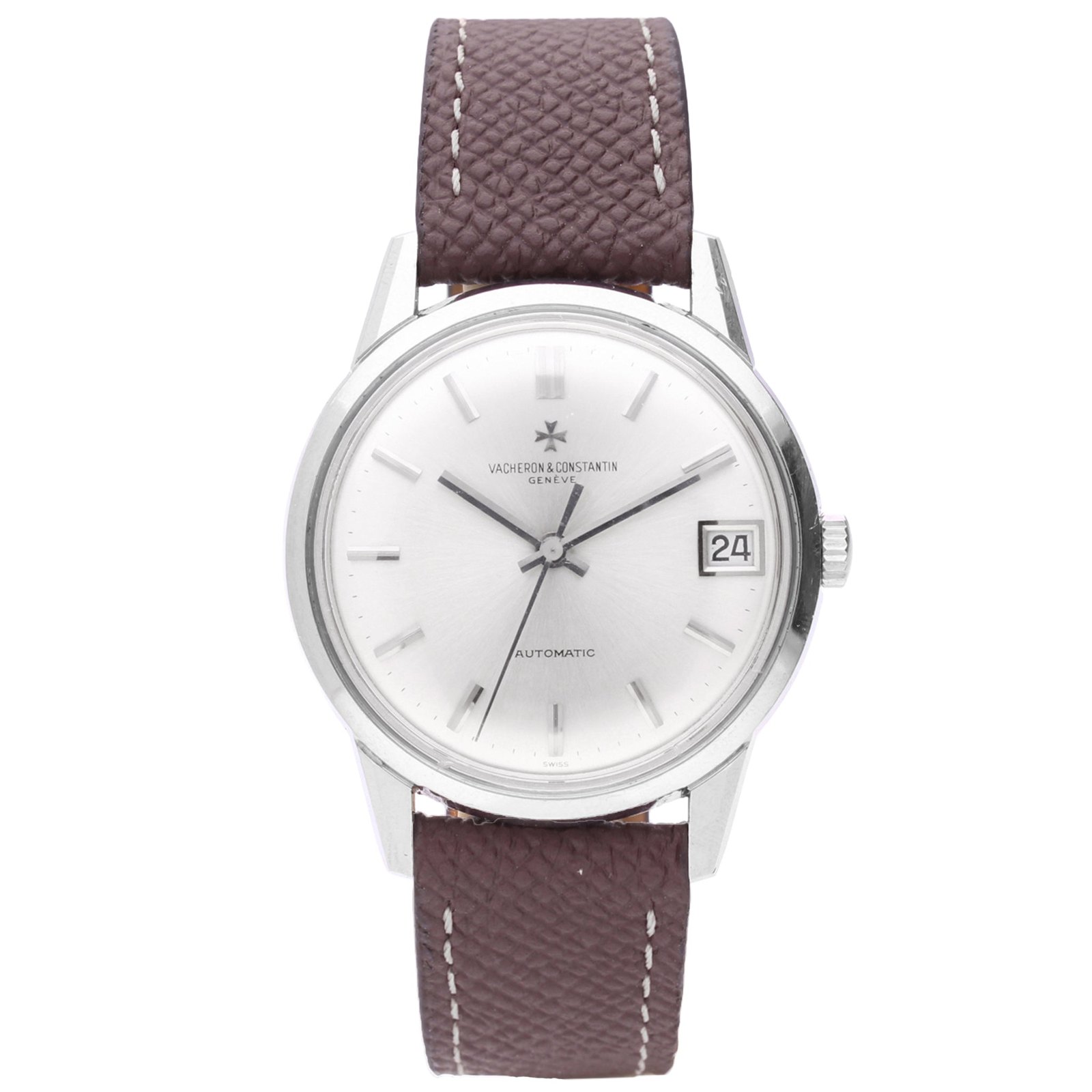
Stainless steel Vacheron & Constantin, ref. 6562 automatic wristwatch, 1970s
- Maker / attribution
- Vacheron & Constantin (maker)
- Date
- 1970s
- Historical period
- Quartz Revolution (1969 – 1990)
- Country of origin
- Switzerland
- Object type
- Wristwatch
- Materials / technique
- stainless steel
- Dimensions
- Case 35 mm
- Stock no.
- G3505
- Credit line
- Dealer listing, Somlo Antiques (G3505)
- Catalogue title (original)
- Stainless steel Vacheron & Constantin, ref. 6562 automatic wristwatch. Made 1970's (English)
View the source record (dealer listing) ↗ (opens another website in a new tab)Suggest a correction
Record summary
Catalogued by Somlo Antiques (dealer), London (stock number G3505), this is a wristwatch by Vacheron & Constantin, made in Switzerland, dated 1970s. The Atlas places it in the Quartz Revolution period (1969 – 1990) of its Wristwatches collection. Materials and techniques recorded by the source: stainless steel. Recorded dimensions: Case 35 mm. The record is illustrated with 2 photographs.
Assembled from the source record's structured fields. Dates and attributions are given as the source states them; where a field is missing the Atlas leaves it blank rather than estimating.
Catalogue description
Dealer description — Somlo Antiques
Vacheron Constantin is the oldest continuously operating watchmaker, with production extending all the way back to 1755. It is considered part of the "Holy Trinity" of Swiss watchmaking, with Audemars Piguet and Patek Philippe. The brand has always maintained its uncompromising pursuit of perfection on the inside and out of every timepiece to be released over the past 265 years. Vacheron & Constantin has established itself globally, becoming highly regarded in both watch collecting circles and high society. Acclaimed for their superior skill with design and quality they have created timepieces for such nobles as Empress Eugenie to whom they supplied a pendant watch, a pocket watch for Tsar Alexander II and several watches for Emperor Napoleon II that carried his portrait. Brand: Vacheron & Constantin Made: 1970 Model: Dress watch Reference: 6562 Calibre: K1072 Movement: Automatic Material: Stainless steel Features/complications: - Dial: Silvered dial featuring baton hands and applied baton hourmarkers Case dimensions: 35mm Bracelet/strap: Leather strap Accessories: N/A SKU: 3505
Historical context
Quartz Revolution (1969 – 1990)
Seiko's Astron begins mass quartz timekeeping; traditional industries contract sharply.
Quartz and digital watches transformed the market after 1969. Swiss employment collapsed, Japanese and Hong Kong production soared, and the Swatch (1983) helped the Swiss industry recover; mechanical watches survived as luxury goods.
Read the period in the timelineMore wristwatches from this periodEarlier: Modern Mechanical Horology
Atlas type guide
Automatic (self-winding) watches
Self-winding watches use the wearer's motion to wind the mainspring. Abraham-Louis Perrelet and Breguet made 'perpétuelle' pocket watches with oscillating weights in the late eighteenth century, but the principle only became practical in the wristwatch. John Harwood patented a bumper automatic in 1923; Rolex's Perpetual rotor (1931) winding in one direction, and later bidirectional rotors (Eterna, Felsa Bidynator), established the modern form. Micro-rotors (Universal Genève, Buren) and peripheral rotors made automatic watches thinner.
What to look for
- A semicircular rotor turning 360° over the movement, or a 'bumper' weight that rebounds between springs.
- 'Automatic', 'Perpetual' or 'Self-winding' on the dial.
- A sealed screw-back case, since automatic watches are wound less often by the crown.
Dating clues
- Bumper automatics: 1923–c. 1955.
- Full rotors: from 1931 (Rolex); widespread after c. 1950.
- Micro-rotors: from 1954–1958.
General guidance written by the Atlas editors about this kind of object. It is not a statement about this particular piece; for that, rely on the source record above and on physical examination.
Related records
Movements & Components · 1800–1899
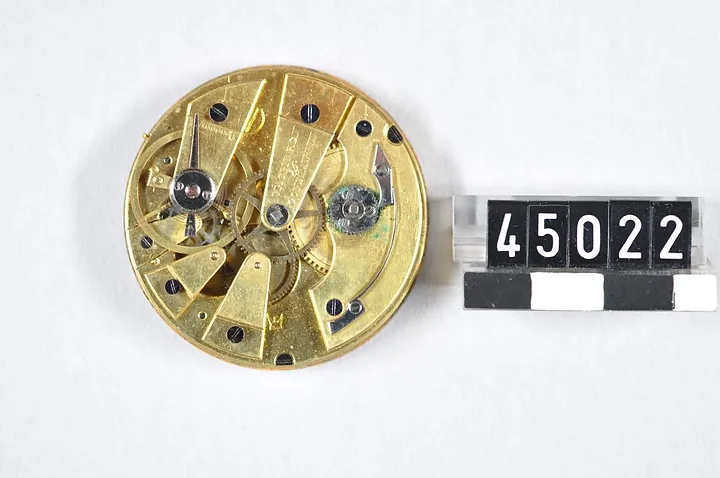
Watch movement by Vacheron & Constantin, 1800–1899
Swedish National Museum of Science and Technology
Instruments · c. 1940
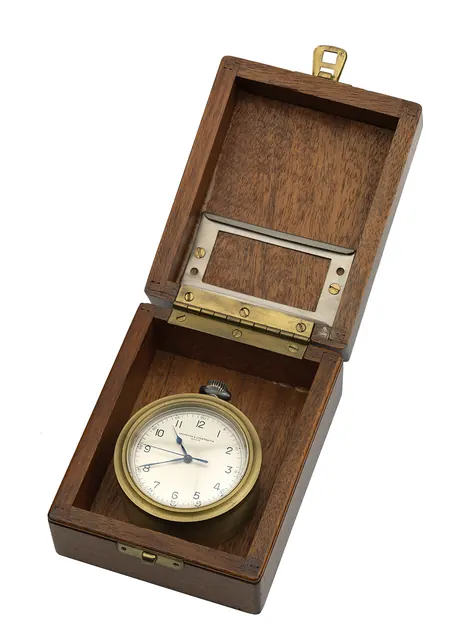
Deck watch no. 54965 by Vacheron & Constantin
Royal Museums Greenwich
Instruments · c. 1943
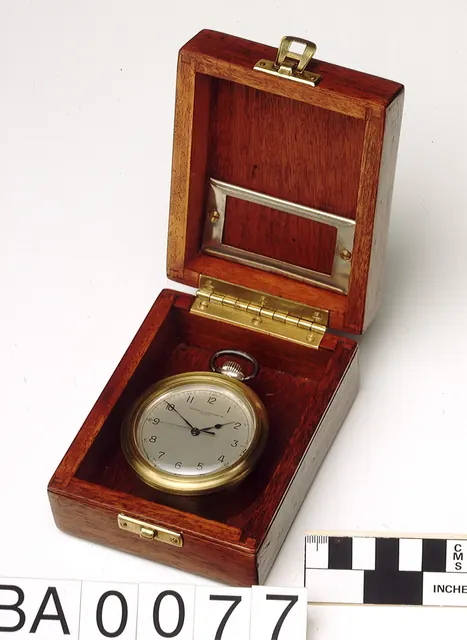
Deck watch no. 54847 by Vacheron & Constantin
Royal Museums Greenwich
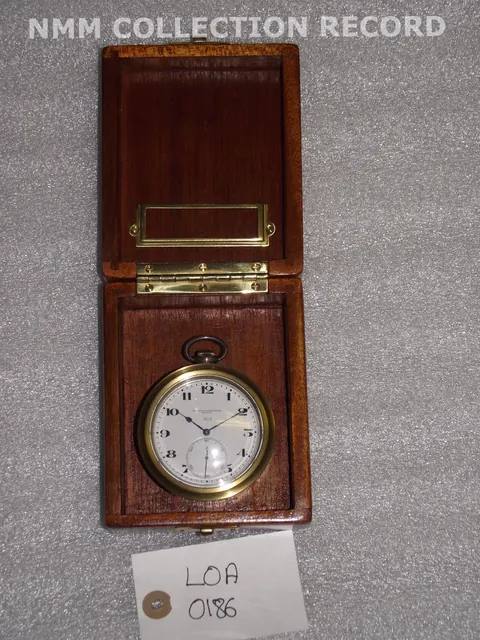
Instruments · 1930
Deck watch no. 9612 by Vacheron & Constantin
Royal Museums Greenwich

Wristwatches · 1970
Wristwatch by Heno, Switzerland, 1970
Museum Rotterdam

Wristwatches · 1960–1986
'Tri-Compax' calendar chronograph wristwatch in gold case, by Universal, Geneva, Switzerland, 1960–1986.
Science Museum Group, London

Wristwatches · 1969–1970
Beta 21 Quartz wristwatch movement, made in Switzerland, 1970.
Science Museum Group, London

Wristwatches · c. 1969
Omega Speedmaster Moonwatch, ref. 145022-69st, c. 1969
Antiquorum auction archive, Geneva