
Clocks · Aircraft clock
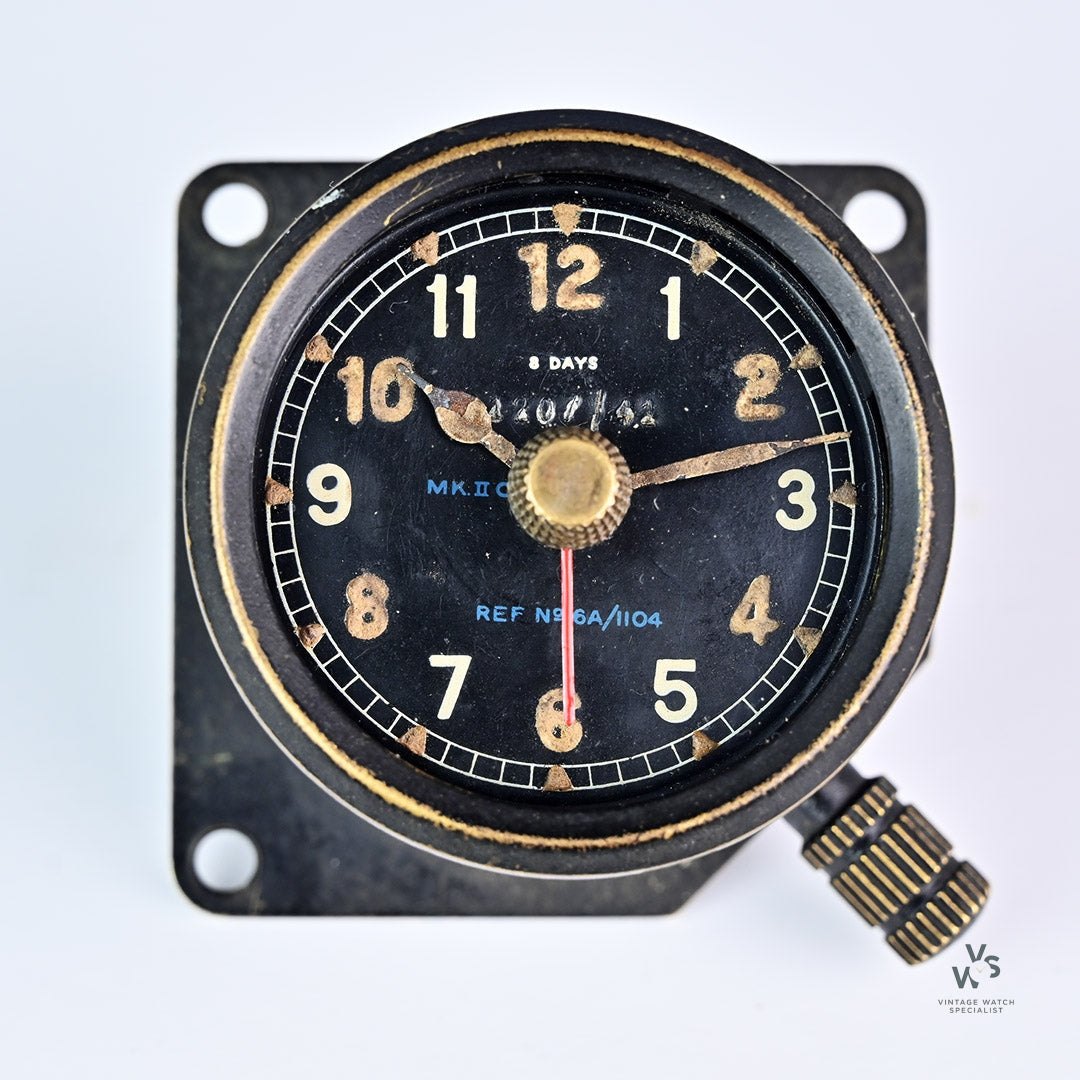
Smiths WW2 8 Day Aircraft Dashboard Clock, ref. 6A/1104, 1941
- Maker / attribution
- Smiths (maker)
- Date
- 1941
- Historical period
- Golden Age of Mechanical Watchmaking (1900 – 1945)
- Country of origin
- England
- Object type
- Aircraft clock
- Dimensions
- Case 54 mm
- Stock no.
- vws2064
- Credit line
- Dealer listing, Vintage Watch Specialist (vws2064)
- Catalogue title (original)
- Smiths WW2 8 Day Aircraft Dashboard Clock - Model ref: 6A/1104 - 1941 (English)
View the source record (dealer listing) ↗ (opens another website in a new tab)Suggest a correction
Record summary
Catalogued by Vintage Watch Specialist (dealer), United Kingdom (stock number vws2064), this is an aircraft clock by Smiths, made in England, dated 1941. The Atlas places it in the Golden Age of Mechanical Watchmaking period (1900 – 1945) of its Clocks collection. Recorded dimensions: Case 54 mm. The record is illustrated with 6 photographs.
Assembled from the source record's structured fields. Dates and attributions are given as the source states them; where a field is missing the Atlas leaves it blank rather than estimating.
Catalogue description
Dealer description — Vintage Watch Specialist
A Superb Smiths WW2 MKII Raf 8-Day Clock With MIlitary Markings, In working Order and Running Well After A Recent Service. 1941 Smiths Group has its origins in a jewellery shop, S Smith & Sons , which was founded by the watchmaker and businessman Samuel Smith . Supplying its precision watches to various clients, including the Admiralty, the business quickly grew and expanded into a major provider of timepieces and automotive instrumentation. Smiths later produced instruments for the expanding aviation industry supplying gauges and instruments for cockpits. Smiths was probably best known at the onset of the Second World War as a clockmaker - accounting for 50% of the UK clock market! What’s On Offer These clocks were produced and fitted to Mosquitos, Lancasters, Spitfires and Sunderland planes amongst others. The dial is marked 6A/1104 Mark IIC and 21207/41 indicating manufacture in 1941 - meaning it is almost sure to have seen live-action during the war. The dial is synonymous with military timepieces, stark black with large Arabic numbers and cathedral hands. The lume on the alternate Arabics has aged to nice chocolate colour along with the remaining lume on the hands which has deteriorated a little more. The dummy hand is in tact and is wound using the central pin on the dial. The time is set using the pin at the bottom right of the clock. The backplate is marked with the AM & crown stamp, denoting it as property of the MoD. Recently serviced, this is a really nice piece of military history and would make a unique desk clock or dash clock for military or classic car enthusiasts. A wonderful gift perhaps? Additional information Made from Case: Powder Coated Aluminium Dial: Black Crystal: Plexi Bracelet: Technical specifications Winding: Manual Movement Type: Mechanical Caliber: Jewels: 7 Waterproof: Power reserve: Purchase details Condition: Excellent Model Reference: 6A/1104 Date of issue: 1941 Dimensions Width (without crown): 54mm Lug width: n/a Lug height: (lug to lug) n/a Wrist size: n/a
Historical context
Golden Age of Mechanical Watchmaking (1900 – 1945)
The wristwatch displaces the pocket watch; waterproof cases, self-winding and grand complications.
Between 1900 and 1945 clocks were electrified: master-clock systems ran factories and offices, synchronous mains clocks entered homes, and the Shortt free-pendulum clock set new standards of accuracy before the first quartz clocks (1927). Art Deco design reshaped mantel and table clocks.
Read the period in the timelineMore clocks from this periodEarlier: Industrial Revolution
Atlas type guide
Domestic clocks
A clock combines four systems: a source of power (falling weight, coiled spring, or later electricity), a gear train that divides time, an escapement and oscillator that regulate it (foliot, pendulum or balance), and an indicating system of dial and hands or a bell. Its history runs from the large iron weight-driven clocks of the late thirteenth century to Renaissance spring-driven table clocks, the pendulum revolution of 1656, the factory clocks of the nineteenth century and electric and quartz clocks of the twentieth.
Domestic clocks also reflect regional furniture and decorative traditions — English longcase and bracket clocks, French pendules, Viennese regulators, Black Forest and American shelf clocks — and therefore record changing tastes as much as technical progress.
What to look for
- How the clock is powered: weights, spring barrel, fusee, electric coil.
- The oscillator: foliot, short pendulum, long seconds pendulum or balance.
- Whether it strikes: hour only (count wheel) or hours and quarters (rack striking).
- The maker or retailer's name on dial and movement, and any factory trademarks.
- Signs of alteration — replaced dials, converted escapements, 'married' cases.
Dating clues
- Before 1656 clocks used foliots or balances; after, most domestic clocks have pendulums.
- Anchor escapements spread after c. 1670; minute hands became common at the same time.
- Factory production in America and Germany transformed prices after c. 1840.
General guidance written by the Atlas editors about this kind of object. It is not a statement about this particular piece; for that, rely on the source record above and on physical examination.
Related records
Clocks · 1971–1979
Electric clock by Smiths, England, 1971–1979
Science Museum Group, London
Wristwatches · c. 1950s
Smiths wristwatch, ref. SS4, Military, circa 1950s
Antiquorum auction archive, Geneva
Wristwatches · 1955
Smiths "Deluxe" ref 6B/542 Military Watch for the British RAF, 1955
Bulang & Sons (dealer), Copenhagen
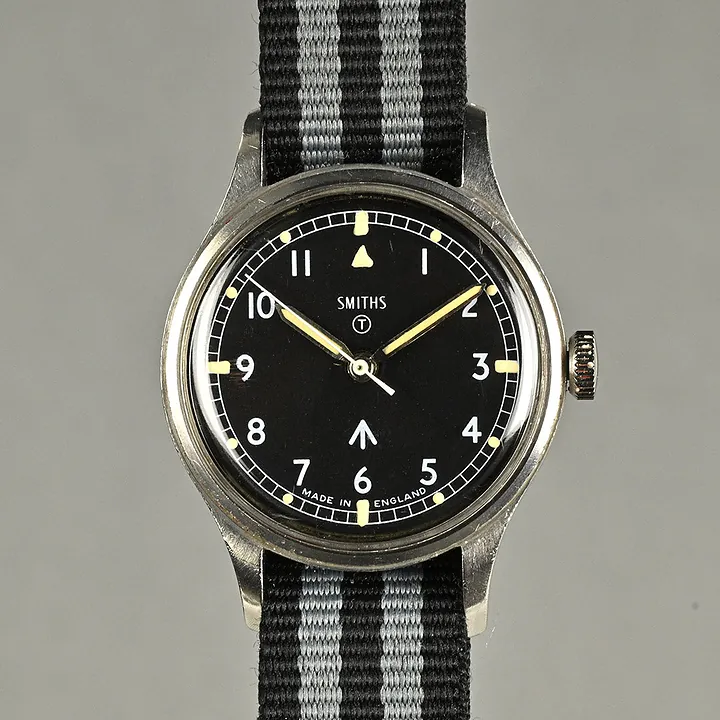
Wristwatches · 1968
Smiths W10 British Army Military Watch, ref. W10/6645-99-961-4045, 1968
Vintage Watch Specialist (dealer), United Kingdom
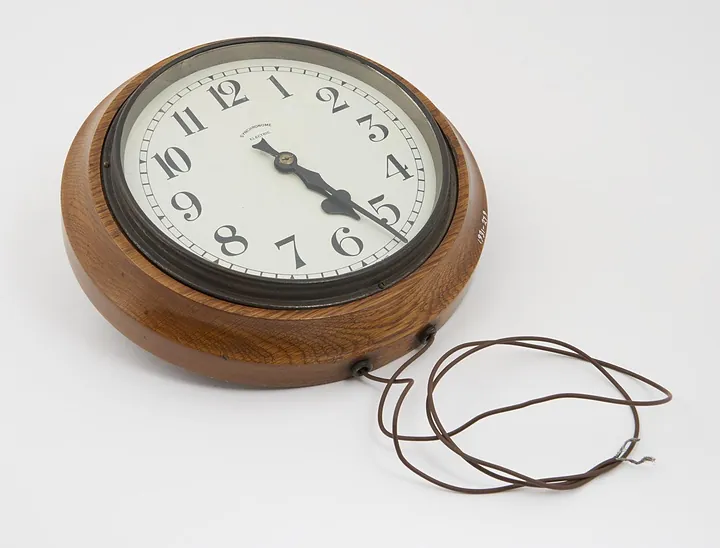
Clocks · 1890–1930
Clock with 8-inch impulse dial, by the Synchronome Company Limited, England, 1890–1930.
Science Museum Group, London
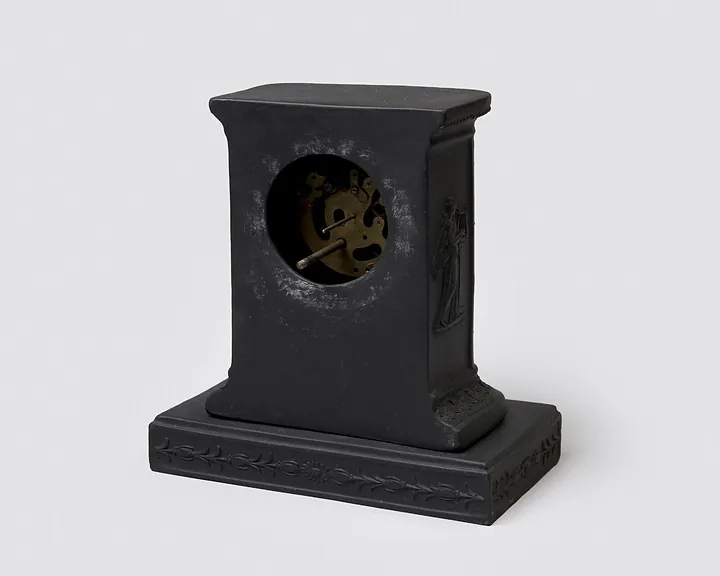
Clocks · c. 1900
Clock, black basalt, brass, Josiah Wedgwood and Sons, Etruria, c. 1900
Victoria and Albert Museum, London
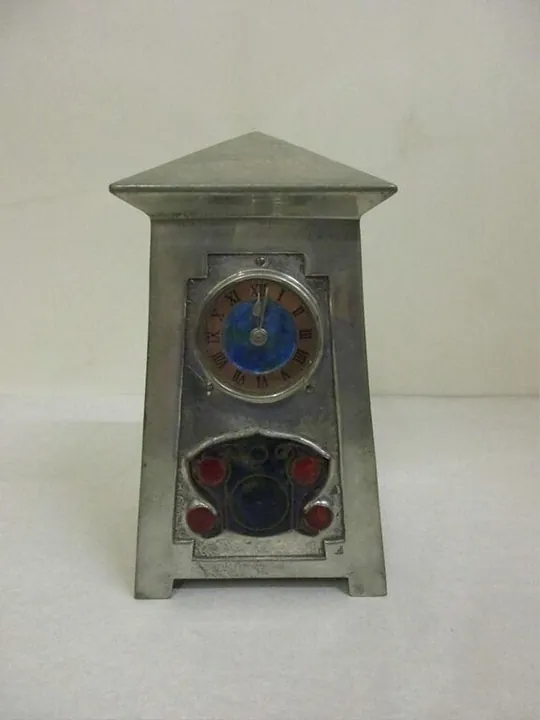
Clocks · c.1903-1904
Clock, pewter, made for Liberty& Co., England. 1903-4.
Victoria and Albert Museum, London
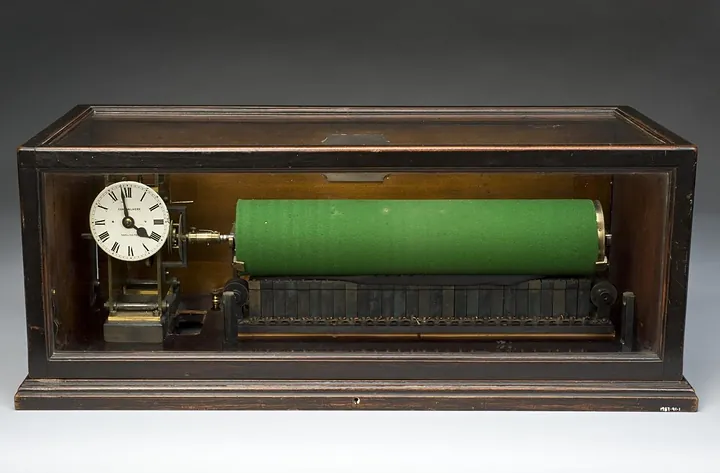
Clocks · 1900–1939
Clock by Cox-Walkers of Darlington, England, 1900–1939
Science Museum Group, London