
Wristwatches · Wristwatch
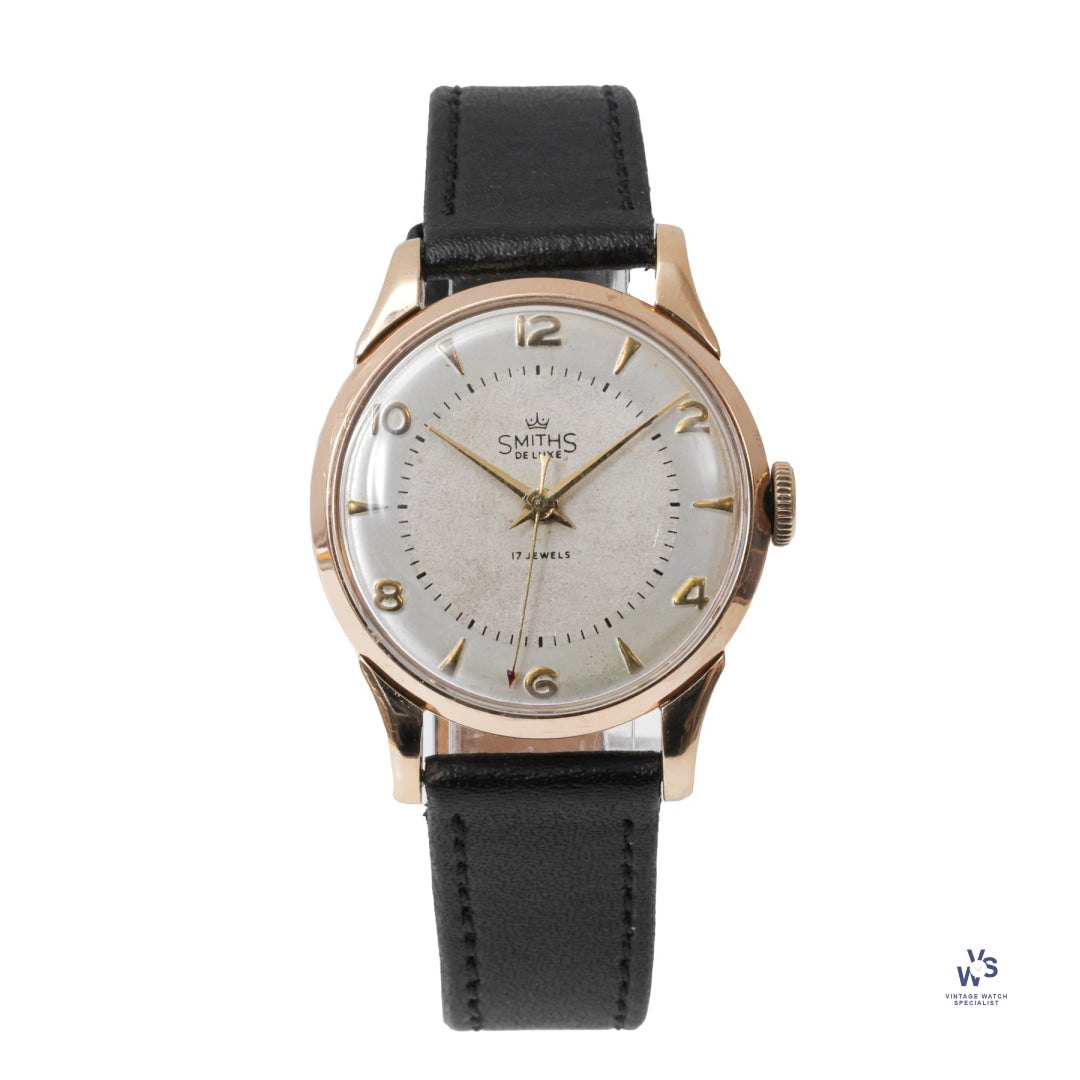
Smiths De Luxe, 9k Gold Case, White Dial, circa 1950s
- Maker / attribution
- Smiths (maker)
- Date
- c. 1950s
- Historical period
- Modern Mechanical Horology (1945 – 1969)
- Country of origin
- England
- Object type
- Wristwatch
- Materials / technique
- gold
- Dimensions
- Case 32 mm
- Stock no.
- vws3698cs
- Credit line
- Dealer listing, Vintage Watch Specialist (vws3698cs)
- Catalogue title (original)
- Smiths De Luxe - 9k Gold Case - White Dial - c.1950s (English)
View the source record (dealer listing) ↗ (opens another website in a new tab)Suggest a correction
Record summary
Catalogued by Vintage Watch Specialist (dealer), United Kingdom (stock number vws3698cs), this is a wristwatch by Smiths, made in England, dated c. 1950s. The Atlas places it in the Modern Mechanical Horology period (1945 – 1969) of its Wristwatches collection. Materials and techniques recorded by the source: gold. Recorded dimensions: Case 32 mm. The record is illustrated with 6 photographs.
Assembled from the source record's structured fields. Dates and attributions are given as the source states them; where a field is missing the Atlas leaves it blank rather than estimating.
Catalogue description
Dealer description — Vintage Watch Specialist
A Charming 1950s Smiths De Luxe in 9k Gold with a Beautiful White Dial Featuring Opulent Gilt Arabic Numerals and Stylish Dauphine Hands, Sold with Original Box Smiths Watches, a celebrated name in British horology, traces its origins to the early 20th century. Founded by Samuel Smith in 1851 as a clock and watch retailer, the company evolved into manufacturing by the 1930s. Its prominence grew during World War II when Smiths supplied reliable timepieces for the British military. This era marked a turning point, with Smiths producing highly sought-after military watches. In the post-war years, Smiths capitalized on its burgeoning reputation by introducing precision instruments and diving watches. Notably, in 1953, Sir Edmund Hillary wore a Smiths watch during his historic ascent of Mount Everest, showcasing its durability. The 1970s, however, saw a decline due to the quartz crisis, which led the company to cease watch production in 1979. Despite this, Smiths' legacy endures, with vintage models prized by collectors. Recently, there has been a revival of interest in the brand, as enthusiasts seek the timeless appeal of Smiths' craftsmanship. What's on Offer This elegant 1950s Smiths watch is a fine example of classic British watchmaking, housed in a beautifully preserved 9k gold case. The clean white dial is tastefully adorned with gilt Arabic numerals, offering a refined vintage aesthetic. Slim Dauphine hands add a touch of sophistication, while the central seconds hand, featuring a distinctive blood-red arrow tip, introduces a subtle but striking detail. Signed with the Smiths logo, the dial also bears a line indicating the presence of a 17-jewel mechanical movement, a mark of quality tucked beneath the original shatterproof Plexiglas crystal. The watch remains in excellent preowned condition, with only minimal signs of gentle use—just what one would expect from a well-cared-for piece of this age. The watch benefits from a recent service (Feb 2025) by our watchmaker who also replaced the glass at that time - restoring the watch to its former glory! Measuring 32mm in diameter, it’s a perfectly sized watch for both casual and formal wear, offering timeless appeal and quiet elegance on the wrist. A beautiful vintage piece that blends heritage charm with everyday versatility. This watch is sold with its original box as illustrated in our photos.
Historical context
Modern Mechanical Horology (1945 – 1969)
Tool watches for divers, pilots and astronauts; electric watches anticipate the electronic age.
The classic era of the mechanical wristwatch: dive watches, chronographs for motor racing and space flight, GMT watches for jet travel, slim dress watches, automatic calendars, and the rise of Japanese manufacturers alongside Swiss, American, German and Soviet industries.
Read the period in the timelineMore wristwatches from this periodEarlier: Golden Age of Mechanical Watchmaking
Atlas type guide
Wristwatches
Bracelet watches were worn by women from the early nineteenth century — Breguet made one for Caroline Murat, Queen of Naples, in 1810–12 — but the wristwatch only became a man's instrument with military use and aviation in the early twentieth century. Between the World Wars it overtook the pocket watch; the 1920s and 1930s brought rectangular Art Deco cases, water-resistant cases and the first automatic winding systems.
After 1945 the wristwatch became a carrier of identity — dress watches, sports and dive watches, chronographs, calendars — produced by Swiss, American, Japanese, German, Soviet and Chinese industries. The quartz revolution after 1969 and the mechanical renaissance since the 1990s, including the rise of independent watchmakers, complete the story.
What to look for
- The reference number (between the lugs or inside the case back) and serial number, the starting point for dating.
- The calibre: its maker and number are often stamped under the dial or on the bridge.
- Originality of dial, hands and crown — refinished ('redial') dials are common.
- Case material marks: 18K/750, 14K/585, stainless steel, gold-filled, plated.
Dating clues
- Wire-lug cases: before c. 1925.
- Water-resistant screw-down cases: from 1926.
- Quartz movements: from 1969; sapphire crystals widespread after c. 1980.
General guidance written by the Atlas editors about this kind of object. It is not a statement about this particular piece; for that, rely on the source record above and on physical examination.
Related records
Clocks · 1971–1979
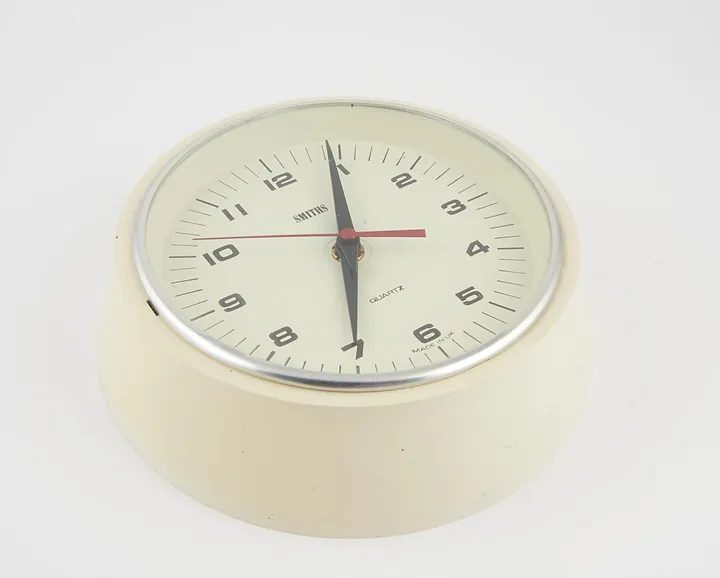
Electric clock by Smiths, England, 1971–1979
Science Museum Group, London
Wristwatches · c. 1950s
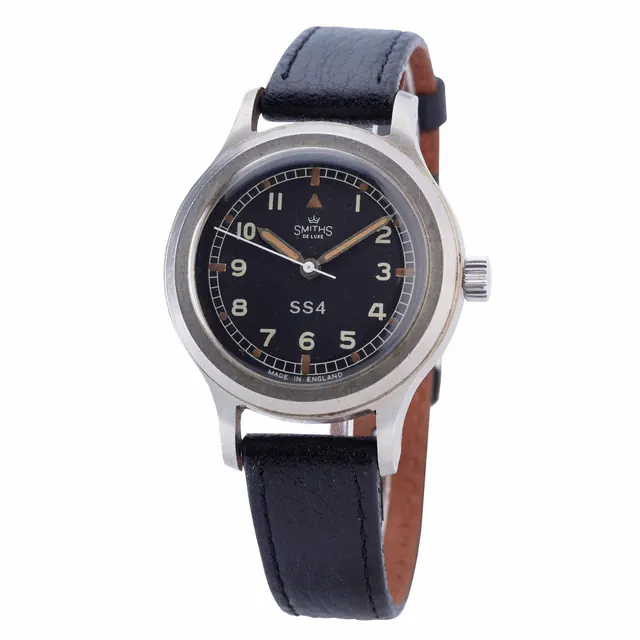
Smiths wristwatch, ref. SS4, Military, circa 1950s
Antiquorum auction archive, Geneva
Wristwatches · 1955
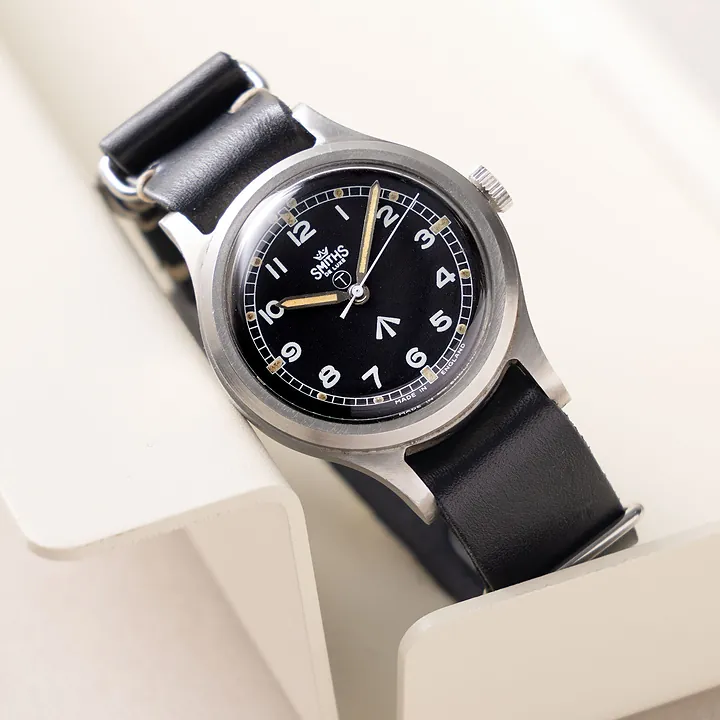
Smiths "Deluxe" ref 6B/542 Military Watch for the British RAF, 1955
Bulang & Sons (dealer), Copenhagen
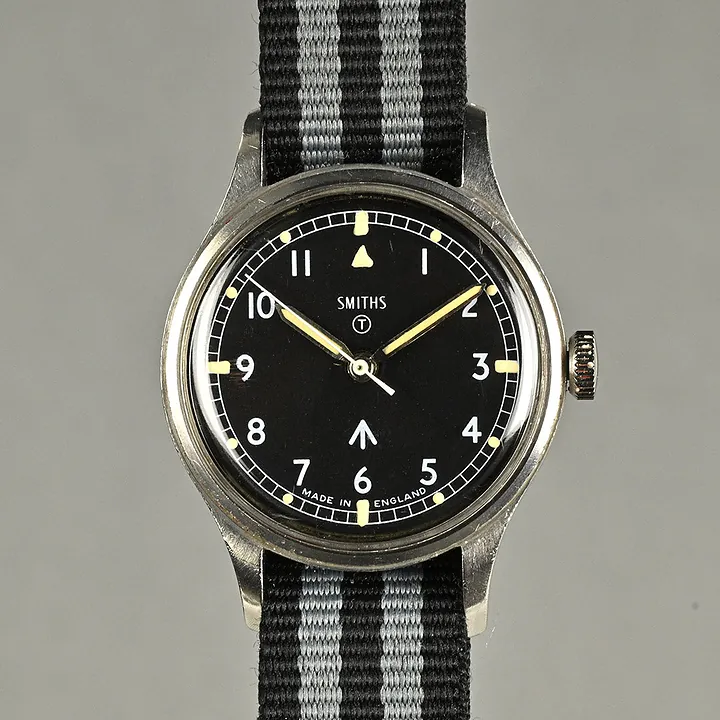
Wristwatches · 1968
Smiths W10 British Army Military Watch, ref. W10/6645-99-961-4045, 1968
Vintage Watch Specialist (dealer), United Kingdom
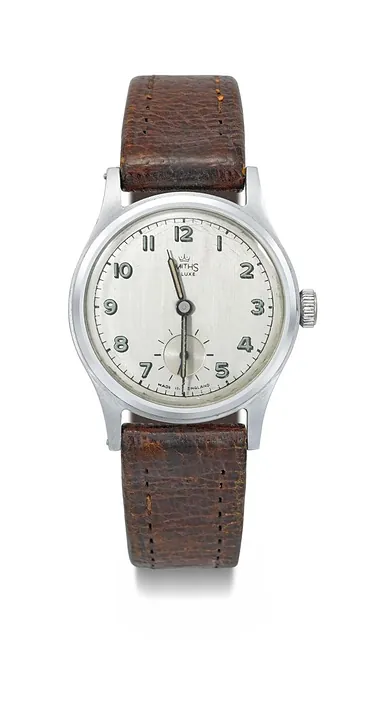
Wristwatches · 1953
Wristwatch by Smiths English Clocks Limited, England, 1953
Science Museum Group, London
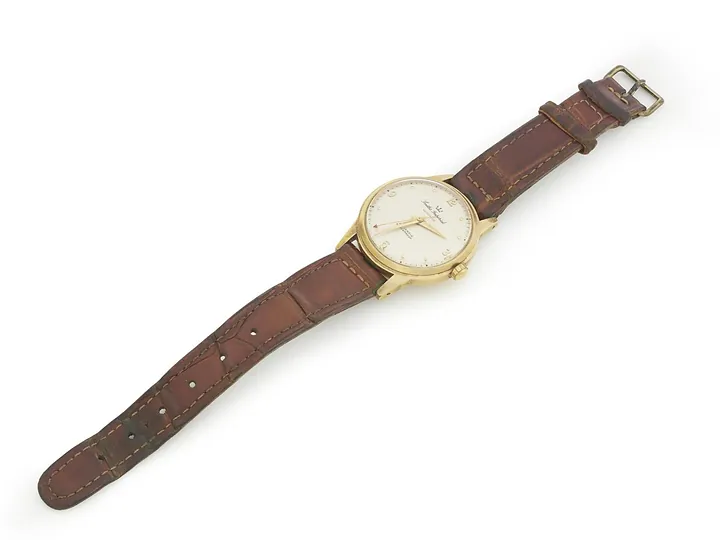
Wristwatches · 1959
Wristwatch by Smiths Clocks & Watches Ltd, England, 1959
Science Museum Group, London
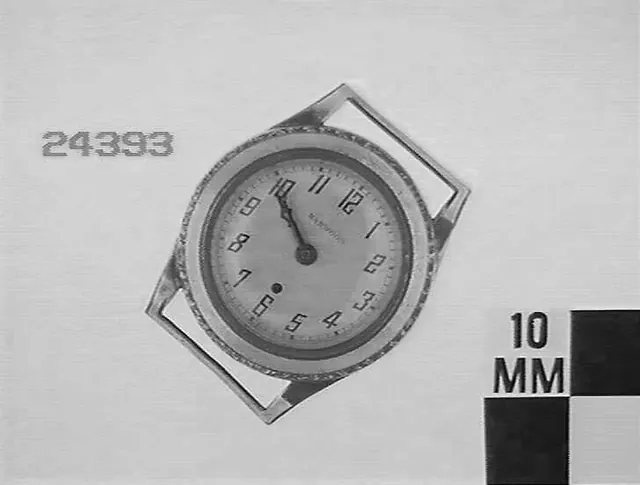
Wristwatches · 1958
Wrist Watch - Harwood, England, 1958
Museums Victoria, Melbourne
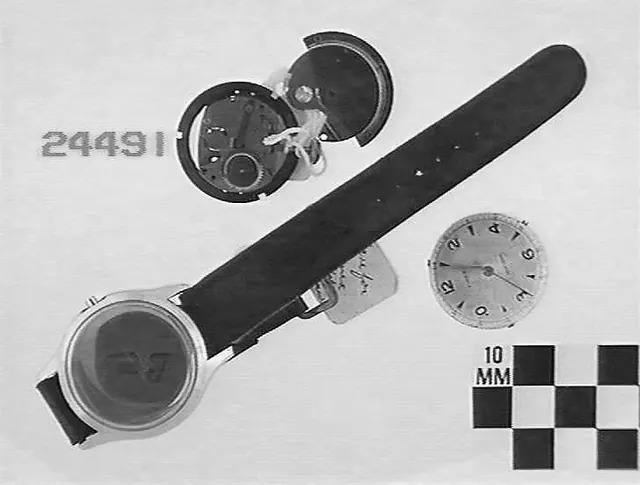
Wristwatches · c. 1957
Wrist Watch - Timex, Great Britain, c. 1957
Museums Victoria, Melbourne