
Pocket Watches · Pocket watch
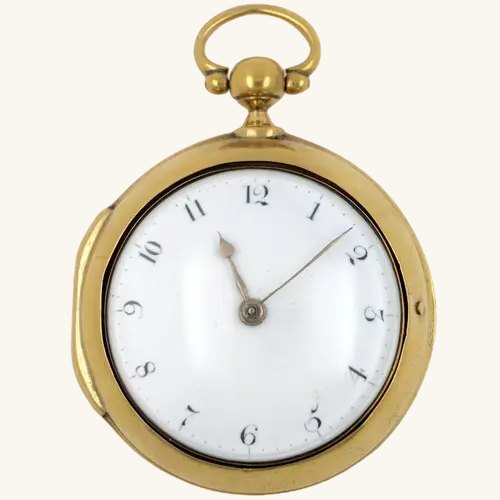
Silver gilt pair cased London verge, 1887
- Maker / attribution
- Unrecorded in source
- Date
- 1887
- Historical period
- Industrial Revolution (1850 – 1900)
- Country of origin
- England
- Object type
- Pocket watch
- Materials / technique
- silver, gilt
- Dealer
- WatchMuseum.org shop
- Stock no.
- Product 5932
- Credit line
- Dealer listing, WatchMuseum.org shop (product 5932)
- Catalogue title (original)
- Silver gilt pair cased London verge (English)
View the source record (dealer listing) ↗ (opens another website in a new tab)Suggest a correction
Record summary
Catalogued by WatchMuseum.org shop (stock number Product 5932), this is a pocket watch, made in England, dated 1887. The Atlas places it in the Industrial Revolution period (1850 – 1900) of its Pocket Watches collection. Materials and techniques recorded by the source: silver, gilt. The record is illustrated with 6 photographs.
Assembled from the source record's structured fields. Dates and attributions are given as the source states them; where a field is missing the Atlas leaves it blank rather than estimating.
Catalogue description
Dealer description — WatchMuseum.org shop
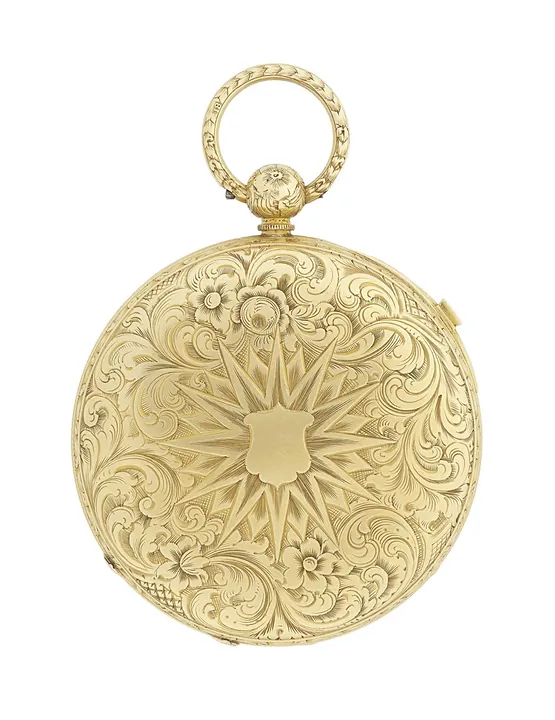
The “Silver gilt pair cased London verge – 1887” is a captivating timepiece that embodies the artistry and precision of late 18th-century London watchmaking. This exquisite watch is distinguished by its silver gilt pair case design, which not only enhances its visual appeal but also protects the intricate mechanics within. At its heart lies a gilt verge movement, characterized by an engraved and pierced balance cock, four round pillars, and a steel balance wheel, all meticulously crafted and signed by the renowned watchmaker Mathew Prior of London. The movement, numbered 7271, remains in good condition, with only minor scratches around the pillar tops, and continues to run smoothly. Complementing the movement is a pristine white enamel dial, adorned with gilt hands that add a touch of elegance to the timepiece. The inner case, marked with London hallmarks for 1787 and the maker’s mark IR, is well-preserved, showcasing minimal wear to the gilding and a high dome bull’s eye crystal that remains pristine. The outer case, also silver gilt, matches the inner case’s hallmarks, though it shows signs of wear with a worn catch button and a bezel that no longer snaps shut properly. Despite these minor imperfections, this watch stands as a testament to the craftsmanship of its era, with the case maker’s mark hinting at a possible creation by James Richards of Bridgewater Square, London. this timepiece is not just a functional object but a piece of history, reflecting the elegance and skill of 18th-century London horology. This late 18th century London verge watch showcases a beautiful silver gilt pair case design. The movement is a gilt verge movement with an engraved and pierced balance cock, four round pillars, and a steel balance wheel. It is signed by Mathew Prior of London and numbered 7271. The movement is in good condition, with only minor scratches around the pillar tops and is running well. The dial is a white enamel dial that is in good condition, with some light scratches and rubbing around the edges. It features gilt hands that accentuate the overall elegance of the timepiece. The inner case is made of silver gilt and bears London hallmarks for 1787, with the maker’s mark IR. It is in good condition with minimal wear to the gilding, only a few slight bruises on the back, and a reattached stem. The hinge is in good condition and the bezel snaps shut nicely. The high dome bull’s eye crystal remains pristine. The outer case is also silver gilt and has hallmarks matching those on the inner case. It is in reasonable condition, although the catch button has worn down and the bezel no longer snaps shut properly. Overall, this watch is a stunning example of late 18th century London craftsmanship, with its intricate movement and beautiful pair case design. The case maker’s mark suggests it may have been made by James Richards of Bridgewater Square, London. Creator: Mathew Prior Place of Origin: London Date of Manufacture: 1787 Silver gilt pair cases, 50 mm. Verge escapement Condition: Good
Historical context
Industrial Revolution (1850 – 1900)
American interchangeable-parts manufacture; railroad time standards; Swiss and German factory systems.
Machine production with interchangeable parts, pioneered by Waltham (1850s) and adopted by Elgin, Longines, Omega and others, made reliable lever watches widely affordable. Keyless winding became standard, railroad watch standards were introduced (1890s), and Swiss and American industries competed globally.
Read the period in the timelineMore pocket watches from this periodEarlier: Precision & Scientific Horology
Atlas type guide
Verge and pair-cased watches
After Christiaan Huygens and Robert Hooke applied the balance spring around 1675, the verge watch became a reasonably reliable timekeeper and the minute hand became standard. Through the eighteenth century the typical English watch was a pair-cased verge: a fusee movement with a pierced, engraved balance cock, housed in an inner case and a separate protective outer case, often of repoussé gold, shagreen, tortoiseshell or enamel.
French watches of the same period were thicker 'oignons', later replaced by elegant thinner watches following Jean-Antoine Lépine's bar-bridge calibre of c. 1770. Dutch, Swiss and German makers supplied international markets, and verge watches were made until the mid-nineteenth century as cheaper alternatives to the cylinder and lever.
What to look for
- The pierced balance cock on the backplate: winged (continental) or with a foot (English); its style dates the watch.
- Fusee and chain visible through the movement; key winding through the dial (early) or case back.
- Hallmarks inside English silver or gold cases, which give a date letter.
- Maker's name and serial number engraved on the backplate; watch papers inside outer cases.
- Enamel dials (after c. 1720) versus earlier champlevé metal dials.
Dating clues
- Champlevé dials: c. 1680–1730; white enamel dials thereafter.
- English case hallmarks give the year of assay to within a year.
- Verge watches persisted in cheap production until c. 1850.
General guidance written by the Atlas editors about this kind of object. It is not a statement about this particular piece; for that, rely on the source record above and on physical examination.
Related records
Pocket Watches · 1835–1875
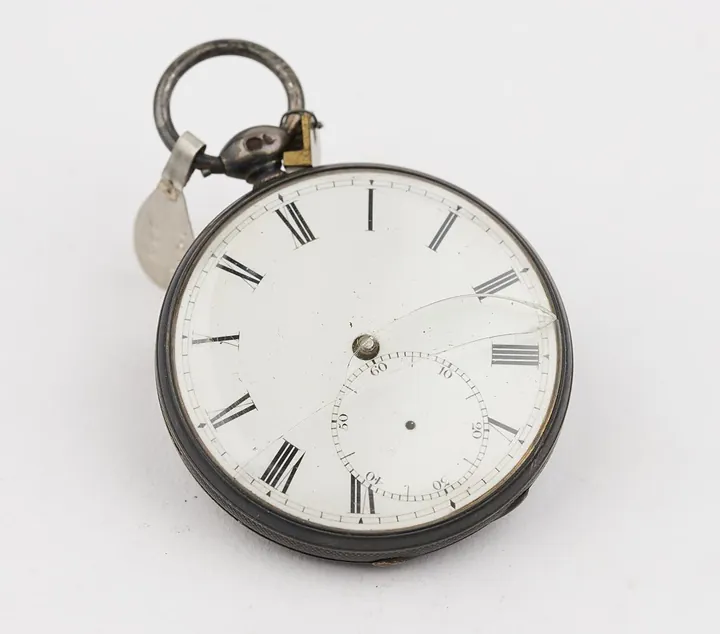
Pocket watch by Cornelius Brooks Holliday, England, 1835–1875
Science Museum Group, London
Pocket Watches · c. 1849–50
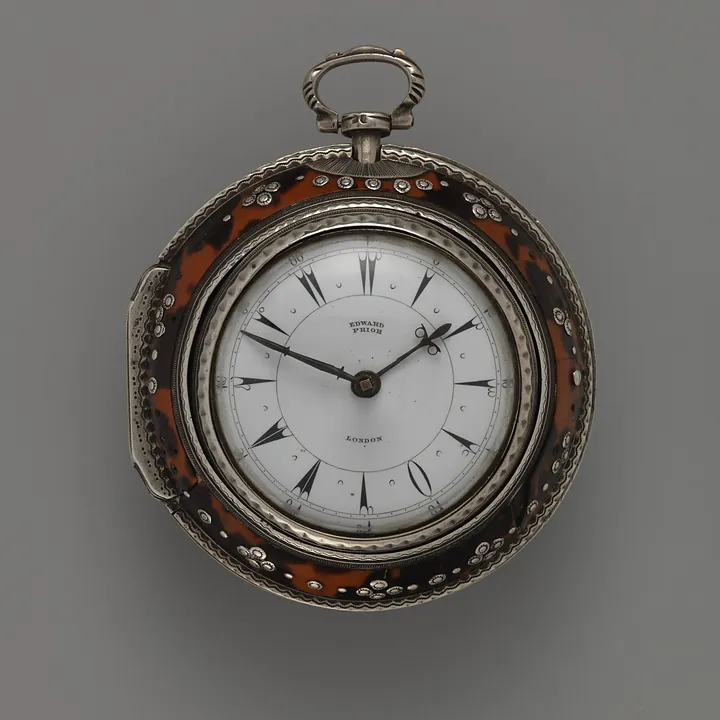
Watch by Edward Prior, England, c. 1849–50
The Metropolitan Museum of Art, New York
Pocket Watches · 1850-1862; hallmarked 1862
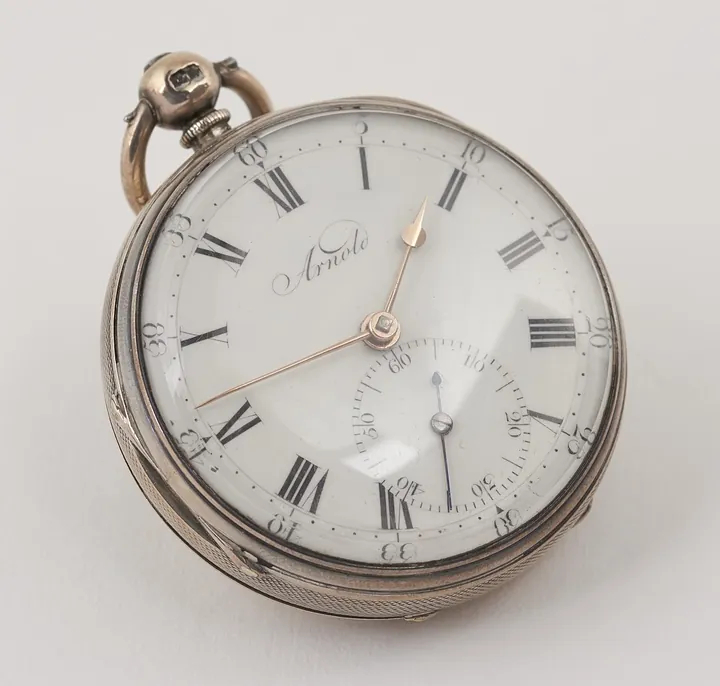
Cylinder watch in silver case by Jno. R. Arnold, London, no.3636, compensated curb, hall marked 1862
Science Museum Group, London
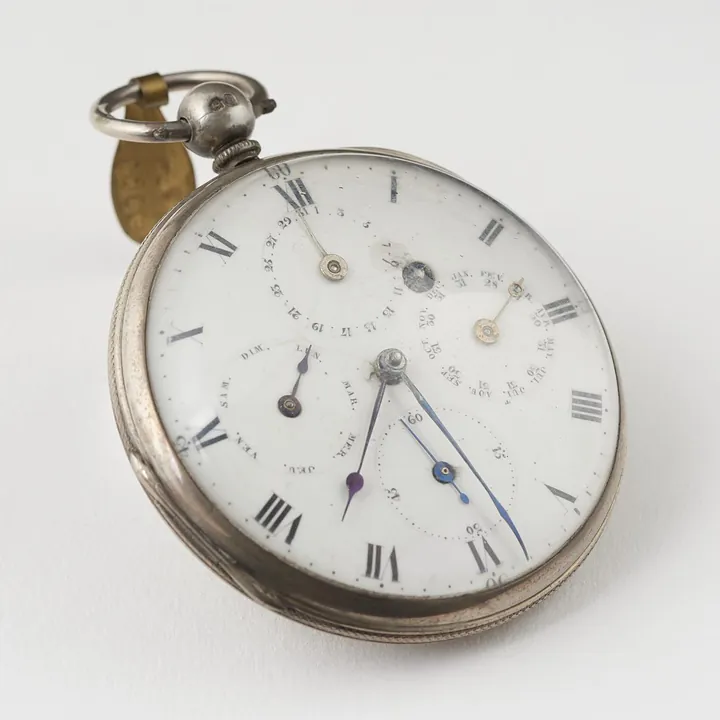
Pocket Watches · hallmarked 1860; 1850-1890
Cylinder watch in silver case, calendar, balance under dial, R.Q., in case. Hall marked 1860
Science Museum Group, London
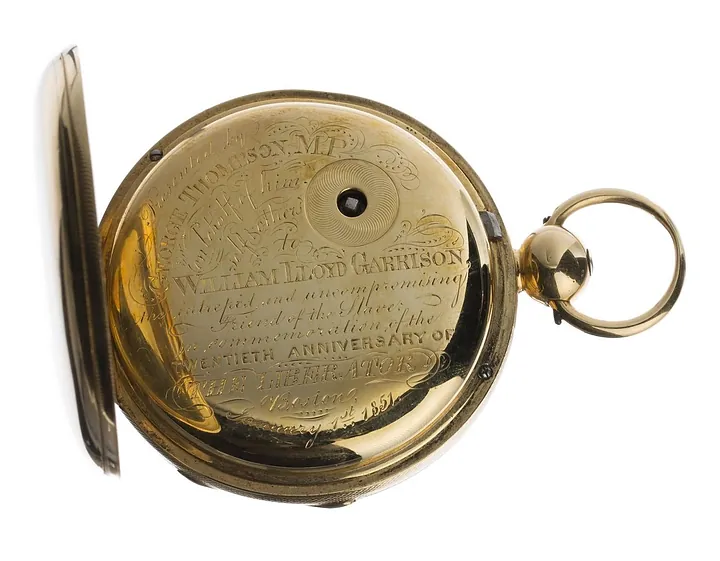
Pocket Watches · 1850
Gold half-hunter pocket watch presented to William Lloyd Garrison, England, 1850
National Museum of African American History and Culture, Smithsonian Institution, Washington DC
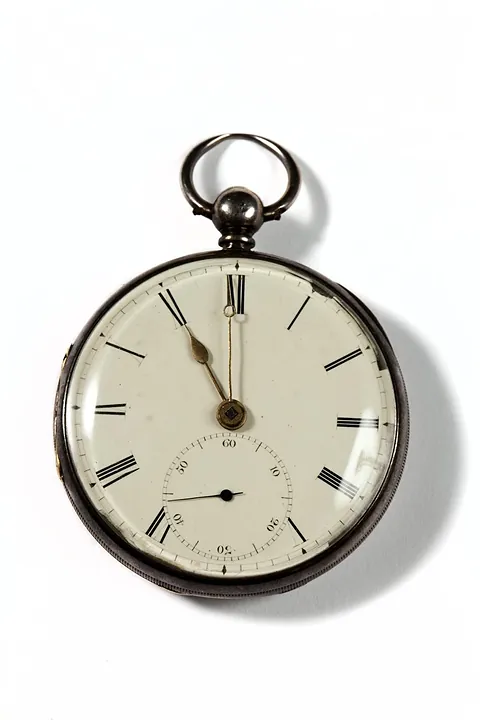
Pocket Watches · 1850–1860
Sterling silver lever pocket watch in original case, made by Thomas & John Ollivant, Manchester, around 1851.
Science Museum Group, London
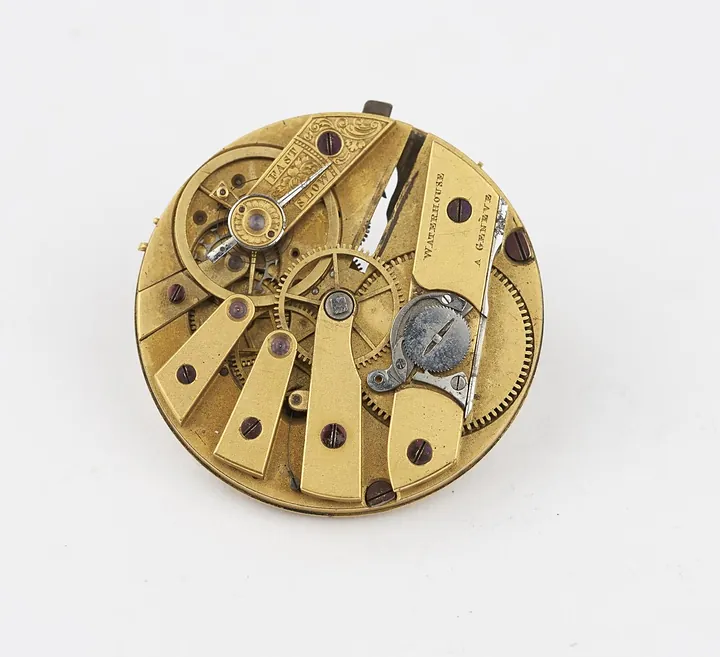
Pocket Watches · 1850
Watch movement with pumping keyless winding mechanism, by G. Waterhouse, London, England, 1845-1851.
Science Museum Group, London
Pocket Watches · 1851
Pocket watch by Alexander Watkins, England, 1851
Science Museum Group, London