
Wristwatches · Wristwatch
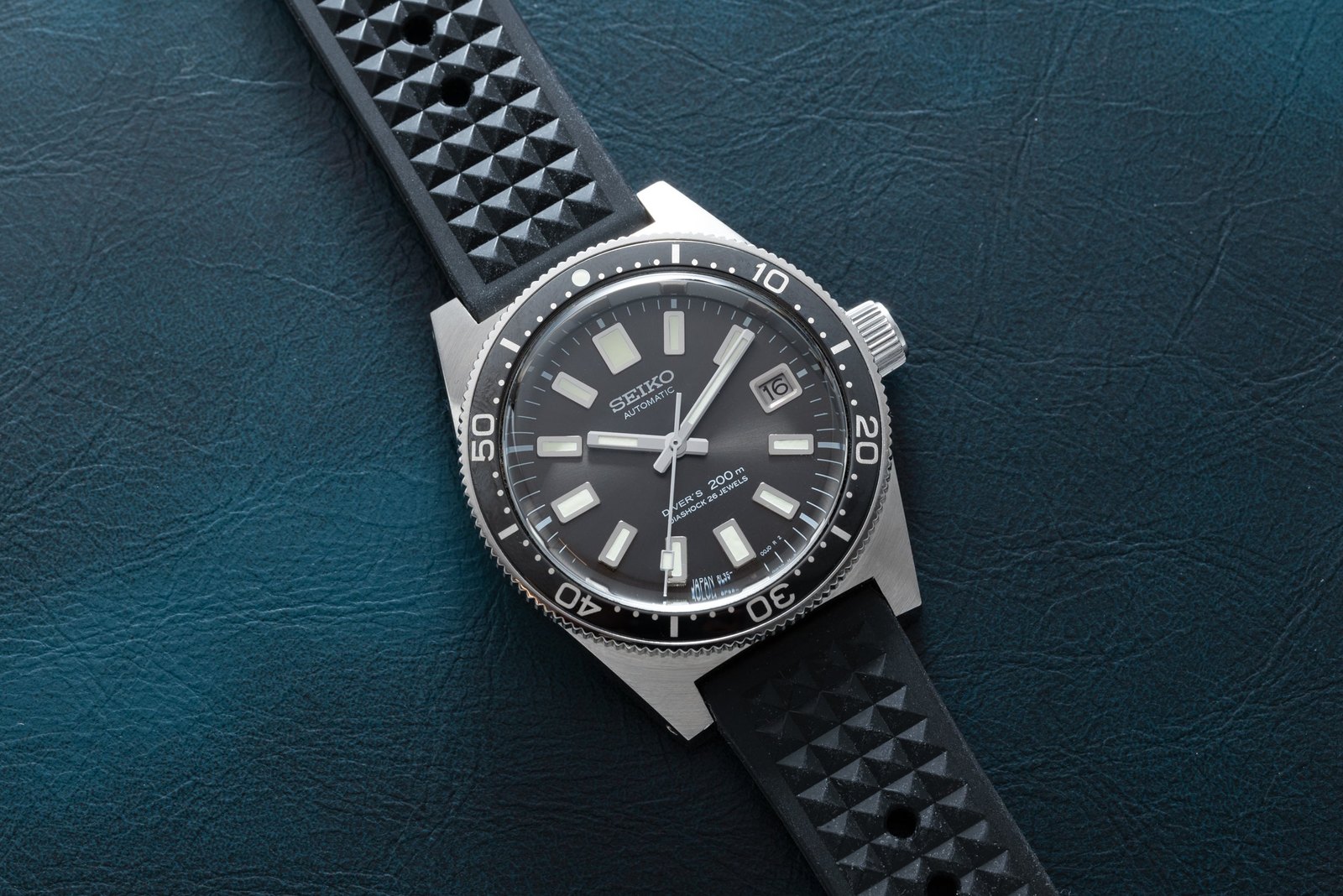
Seiko Prospex Diver Limited Edition, 2000
- Maker / attribution
- Seiko (maker)
- Date
- 2000
- Historical period
- Mechanical Renaissance (1990 – 2010)
- Country of origin
- Japan
- Object type
- Wristwatch
- Dimensions
- Case 37 mm
- Stock no.
- 40991859
- Credit line
- Dealer listing, Analog/Shift (40991859)
- Catalogue title (original)
- Seiko Prospex Diver Limited Edition (English)
View the source record (dealer listing) ↗ (opens another website in a new tab)Suggest a correction
Record summary
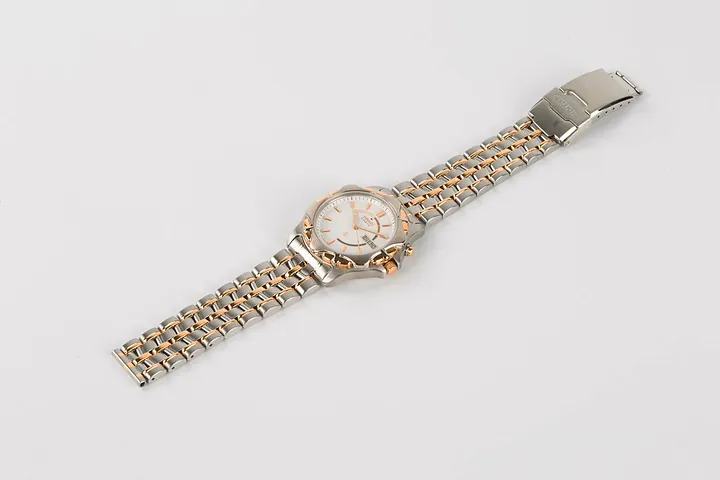
Catalogued by Analog/Shift (dealer), New York (stock number 40991859), this is a wristwatch by Seiko, made in Japan, dated 2000. The Atlas places it in the Mechanical Renaissance period (1990 – 2010) of its Wristwatches collection. Recorded dimensions: Case 37 mm. The record is illustrated with 6 photographs.
Assembled from the source record's structured fields. Dates and attributions are given as the source states them; where a field is missing the Atlas leaves it blank rather than estimating.
Catalogue description
Dealer description — Analog/Shift
Any proper watch collection must include at least one Seiko diver. And if we were the type to make bets on which version has the most significance, our money would be on Seiko’s very first — the 62MAS. Numerically known as the Reference 6217-8000, the 62MAS was designed to be a workhorse - an archetype for the category. At 37mm, the stainless steel case featured a set of sloping lugs and a low-profile ‘skin diver’ silhouette. Paired with bold dial elements that defined the design language that are still present in Seiko's offerings to this day, the 62MAS was and still is an absolute banger of a watch. Clean, honest examples of the Reference 6217 don’t surface all too often. So when Seiko announced the Reference SLA017, a faithful modern recreation of their iconic icon, it was no surprise that most enthusiasts fell head over heels for it. This example is one of the 2000 numbered pieces that were released in 2017 and features a sloightly-upscaled 39mm stainless steel case, a graduated 60-minute timing bezel, a sapphire crystal and a signed screw-down crown offering 200 meters of water resistance. Showcasing all the original hallmark design cues that we adore, its sunburst grey dial features applied luminous baton indices, a matching handset and a framed date window at 3 o’clock. Powered by an upgraded high-grade Calibre 8L35 self-winding movement, this piece is packed with 60 hours of power reserve. Factoring in the modern movement, uprated water resistance and hardened case coating with a 4,800Am magnetic resistance rating, we'd say this diver is well-equipped for any submarine adventure - or daily desk diving duty. In pristine, near-mint condition with its factory caseback sticker still intact, this example comes fitted to a signed rubber dive strap with ‘waffle’ texturing, and is accompanied by all of its factory collateral including its box set, books, hangtags, and a virtually unworn stainless steel bracelet. Can it get any better than a modern 62MAS? Probably not.
Historical context
Mechanical Renaissance (1990 – 2010)
Mechanical watches return as cultural objects; independent watchmaking flourishes.
Mechanical watches returned as cultural and luxury objects. Complications, tourbillons and new materials proliferated; independent watchmakers such as George Daniels, F.P. Journe and Philippe Dufour revived artisanal watchmaking; collecting vintage watches became a major field.
Read the period in the timelineMore wristwatches from this periodEarlier: Quartz Revolution
Atlas type guide
Dive and water-resistant watches
Keeping water and dust out of a wristwatch was a long-standing challenge. Rolex's screw-down Oyster case (1926) and Omega's Marine (1932) were landmarks; in the early 1950s Blancpain's Fifty Fathoms and Rolex's Submariner defined the professional dive watch with rotating bezels for timing dives, luminous dials and high water resistance. The ISO 6425 standard (1982) later codified what a 'diver's watch' must do.
Dive watches became icons of post-war design and exploration, and their evolution — helium escape valves, ceramic bezels, saturation-diving depth ratings — records the history of underwater work.
What to look for
- Unidirectional or bidirectional rotating bezel with minute markings.
- Screw-down crown and case back; depth rating printed on the dial.
- Luminous hands and markers (radium before c. 1960, tritium c. 1960–1998, then Super-LumiNova).
- Reference numbers on the case between the lugs or inside the back.
Dating clues
- Screw-down Oyster cases: from 1926.
- Professional dive watches: from 1953.
- Tritium 'T' marks on dials: c. 1960–1998.
General guidance written by the Atlas editors about this kind of object. It is not a statement about this particular piece; for that, rely on the source record above and on physical examination.
Related records
Wristwatches · 1967
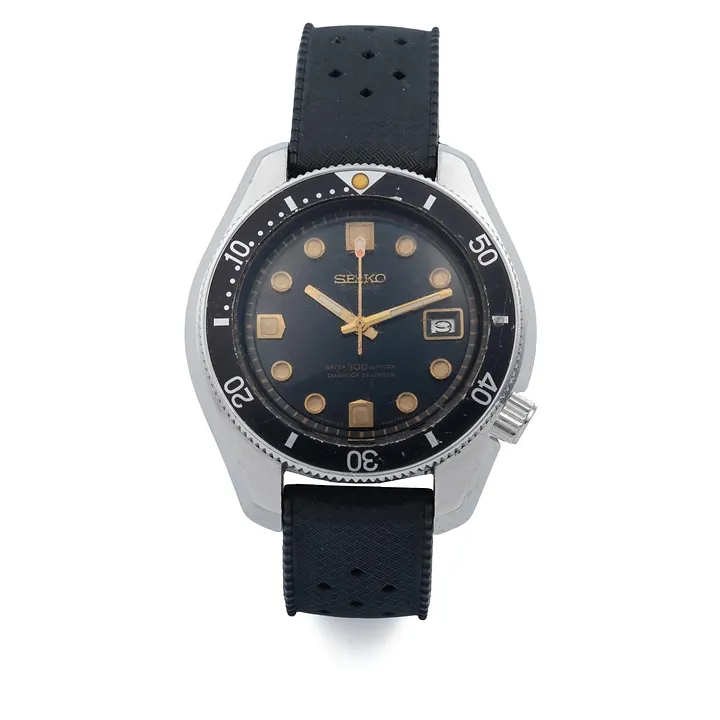
Seiko 300 M, ref. 6215-7000, 1967
Antiquorum auction archive, Geneva
Wristwatches · 1967
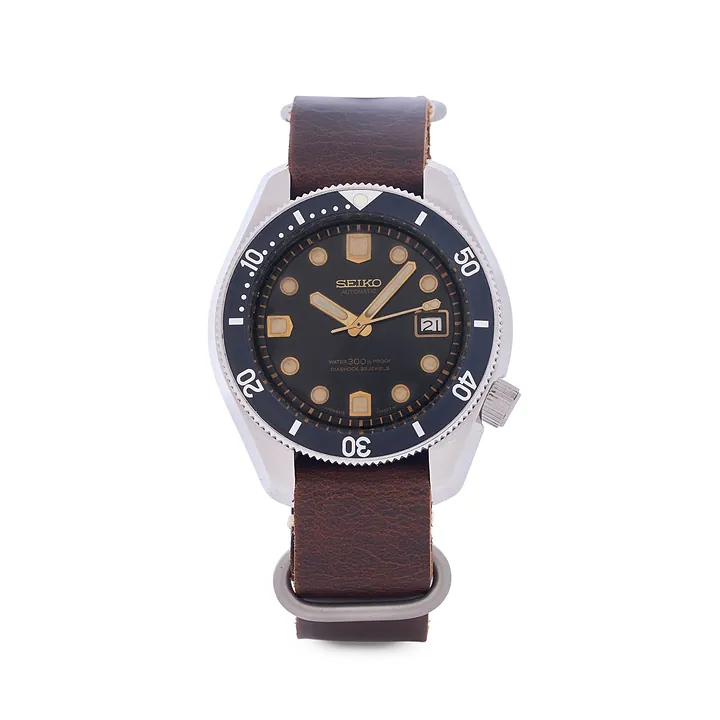
Seiko 300 Meter Diver, ref. 6215-7000, 1967
Antiquorum auction archive, Geneva
Wristwatches · c. 1968
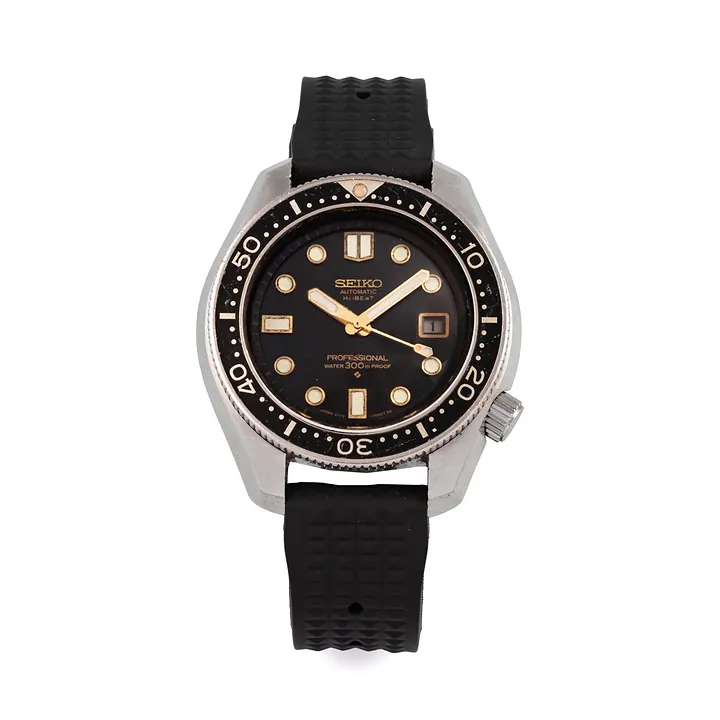
Seiko Hi-Beat, ref. 6159-7000, c. 1968
Antiquorum auction archive, Geneva
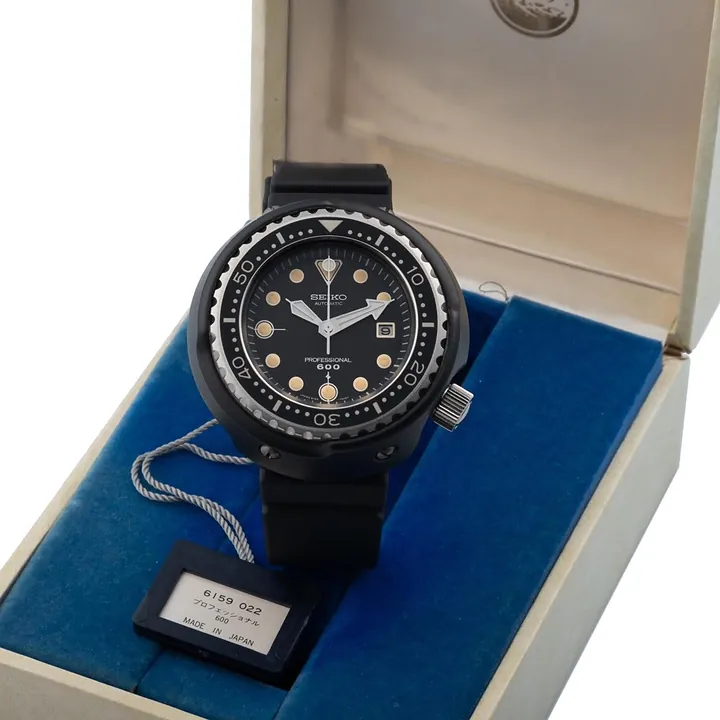
Wristwatches · 1975
Seiko Tuna Professional 600, ref. 6159-7010, 1975
Antiquorum auction archive, Geneva
Wristwatches · 1990–1996
Wristwatch by Ricoh Elemex Corporation, Japan, 1990–1996
Science Museum Group, London
Wristwatches · 1990
Wristwatch, Japan, 1990
Blekinge Museum
Wristwatches · 1995
Wristwatch, Japan, 1995 (no. 57932)
German Clock Museum
Wristwatches · 1995
Wristwatch, Japan, 1995 (no. 57933)
German Clock Museum