
Wristwatches · Wristwatch
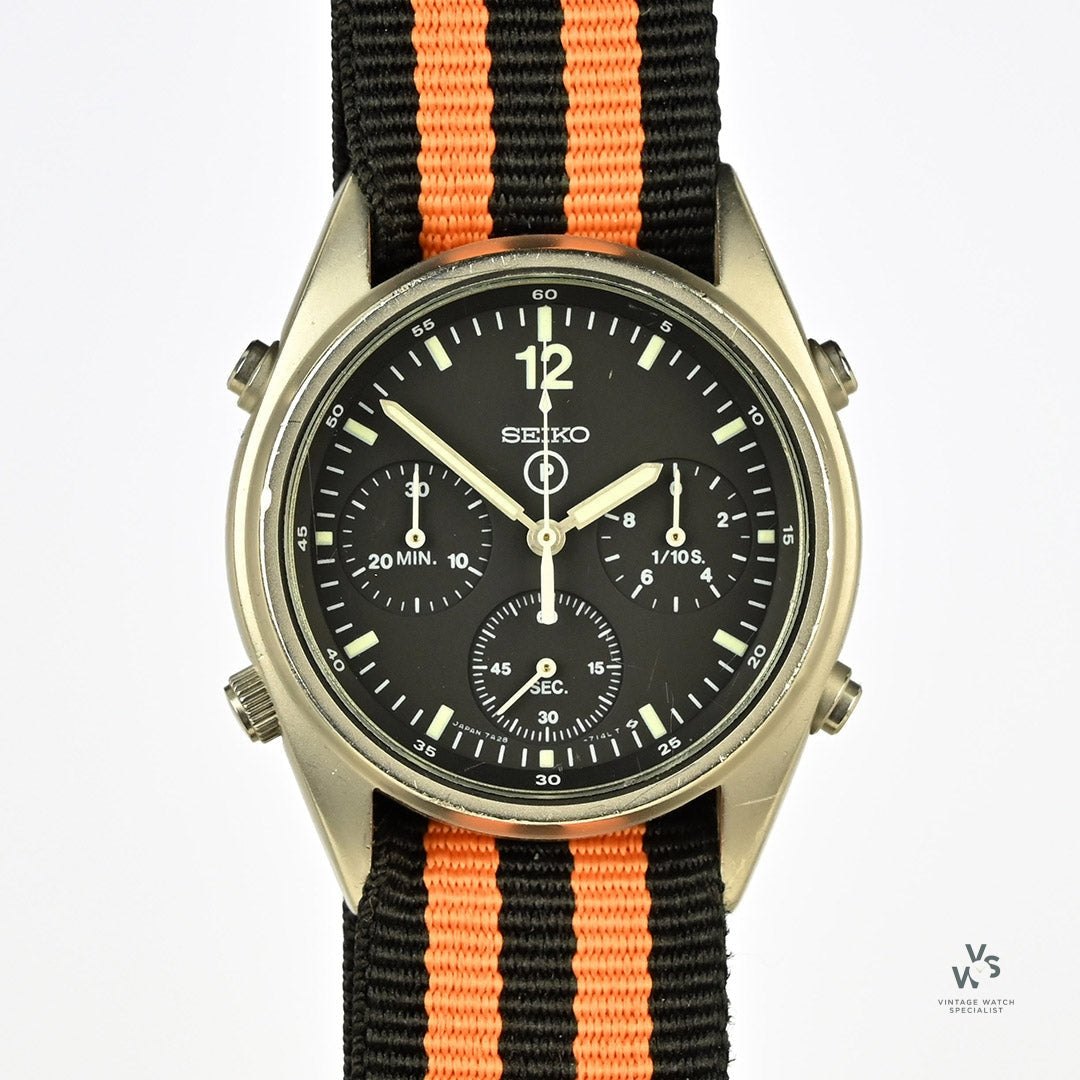
Seiko Chronograph, ref. 7A28, Generation 1, RAF Issued Watch, 1989
- Maker / attribution
- Seiko (maker)
- Date
- 1989
- Historical period
- Quartz Revolution (1969 – 1990)
- Country of origin
- Japan
- Object type
- Wristwatch
- Dimensions
- Case 20 mm
- Stock no.
- vws2196
- Credit line
- Dealer listing, Vintage Watch Specialist (vws2196)
- Catalogue title (original)
- Seiko Chronograph - Reference 7A28 - Generation 1 - RAF Issued Watch - 1989 (English)
View the source record (dealer listing) ↗ (opens another website in a new tab)Suggest a correction
Record summary
Catalogued by Vintage Watch Specialist (dealer), United Kingdom (stock number vws2196), this is a wristwatch by Seiko, made in Japan, dated 1989. The Atlas places it in the Quartz Revolution period (1969 – 1990) of its Wristwatches collection. Recorded dimensions: Case 20 mm. The record is illustrated with 6 photographs.
Assembled from the source record's structured fields. Dates and attributions are given as the source states them; where a field is missing the Atlas leaves it blank rather than estimating.
Catalogue description
Dealer description — Vintage Watch Specialist
1989, Royal Air Force Issued, Seiko 7A28 Gen 1 Pilots Quartz Analogue Chronograph Watch with Black Dial in Super Condition. Seiko 7A28-7120 is a series of watches that introduced the first analogue display quartz chronograph movement to the world. Seiko launched the series in the early 1980s, and the movement went on to appear in many notable watches. The series incorporates more than 40 variations including military watches which were issued to the United Kingdom’s Ministry of Defence (MoD) and the South African Air Force (SAAF). Seiko has been supplying military-grade watches to the UK’s Ministry of Defence (MoD) for more than three decades, and this relationship started with the 7A28 movement. In the mid-1980s Seiko released its 7A28-7120 variant with NATO Stock Number 6645-99-768-3056 to be used by the ministry’s British, Royal Air Force (RAF). Gen. 1 RAF-issued Seiko watches were on the wrists of British Air Force pilots and navigators from October 1984 until November 1990. The 7A28 movement was replaced by the Seiko 7T27 calibre in 1993. In total there were just over 11,000 produced and stamped with MoD numbers so of course, as the number out there dwindles, this watch is becoming more and more sought after. What’s On Offer This watch is in great original and honest condition, with a blemish-free black dial, three recessed sub-dials, luminous pencil hands, and hour plot markers. The stainless steel case is in superb condition with very legible military back engravings; 6645 = Time Measuring Instruments, 99 = United Kingdom, 768-3056 = individual part number. This particular watch was issued in 1989 and given it is over 30 years old, it is in remarkable shape. This would make a great entry-level watch for any budding military collector - it is working well and keeping good time, having recently been serviced and a new battery fitted, making it a perfectly appropriate everyday wearer. Additional information Made from Case: Stainless Steel Dial: Black Crystal: Plexiglass Bracelet: NATO Style Technical specifications Winding: N/A Movement Type: Seiko Quartz Chronograph Caliber: 7A28A Jewels: 15j Waterproof: When New Power reserve: N/A Purchase details Condition: Excellent Model Reference : 7A28A Date of issue: 1989 Guarantee: 12 Months by VWS Dimensions Width (without crown): 36.5 Lug width: 20mm Lug height: (lug to lug) 44mm Wrist size: Adjustable
Historical context
Quartz Revolution (1969 – 1990)
Seiko's Astron begins mass quartz timekeeping; traditional industries contract sharply.
Quartz and digital watches transformed the market after 1969. Swiss employment collapsed, Japanese and Hong Kong production soared, and the Swatch (1983) helped the Swiss industry recover; mechanical watches survived as luxury goods.
Read the period in the timelineMore wristwatches from this periodEarlier: Modern Mechanical Horology
Atlas type guide
Chronographs and split-seconds watches
A chronograph is a watch with an additional seconds hand that can be started, stopped and returned to zero independently of the timekeeping. Louis Moinet built an early example in 1816 and Nicolas Rieussec a recording 'chronographe' in 1821; Adolphe Nicole's heart-shaped reset cam (patented 1862) made the modern return-to-zero possible. Split-seconds (rattrapante) chronographs add a second hand that can be stopped for intermediate times; flyback chronographs restart instantly.
Chronographs were essential tools for doctors (pulsometer scales), artillery (telemeter), engineers and sport. In wristwatches, Valjoux, Venus, Lemania and later the automatic chronographs of 1969 (Zenith El Primero, the Chronomatic Calibre 11 group and Seiko 6139) are milestones.
What to look for
- Push-pieces on the case band or a single button in the crown (monopusher).
- Subsidiary registers for minutes and hours; tachymeter, telemeter or pulsometer scales.
- Column wheel versus cam control visible in the movement.
- Calibre markings of specialist makers (Valjoux, Lemania, Venus, Landeron).
Dating clues
- Pocket chronographs with heart cam reset: after 1862.
- Wrist chronographs: from c. 1910; two-button designs from the 1930s.
- Automatic chronographs: from 1969.
General guidance written by the Atlas editors about this kind of object. It is not a statement about this particular piece; for that, rely on the source record above and on physical examination.
Read next:Flyback chronographChronograph
Related records
Wristwatches · 1967
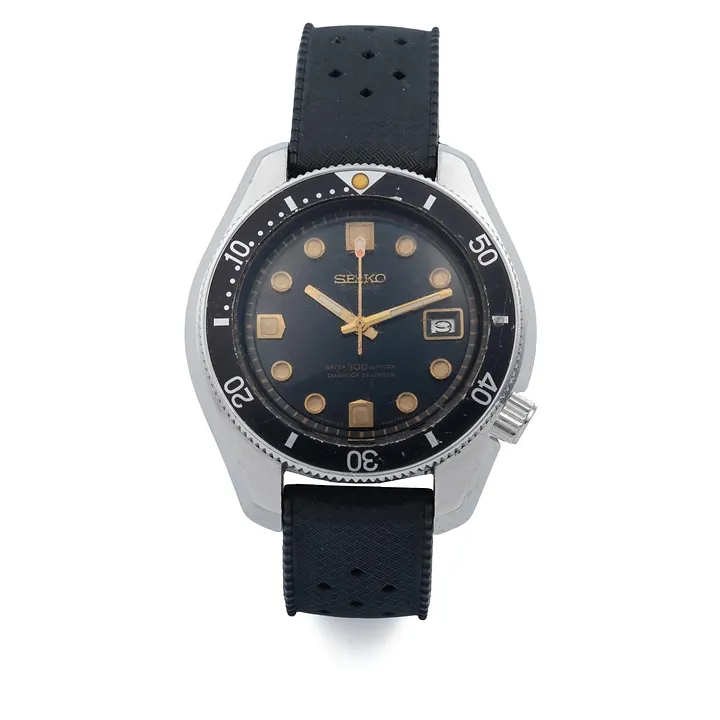
Seiko 300 M, ref. 6215-7000, 1967
Antiquorum auction archive, Geneva
Wristwatches · 1967
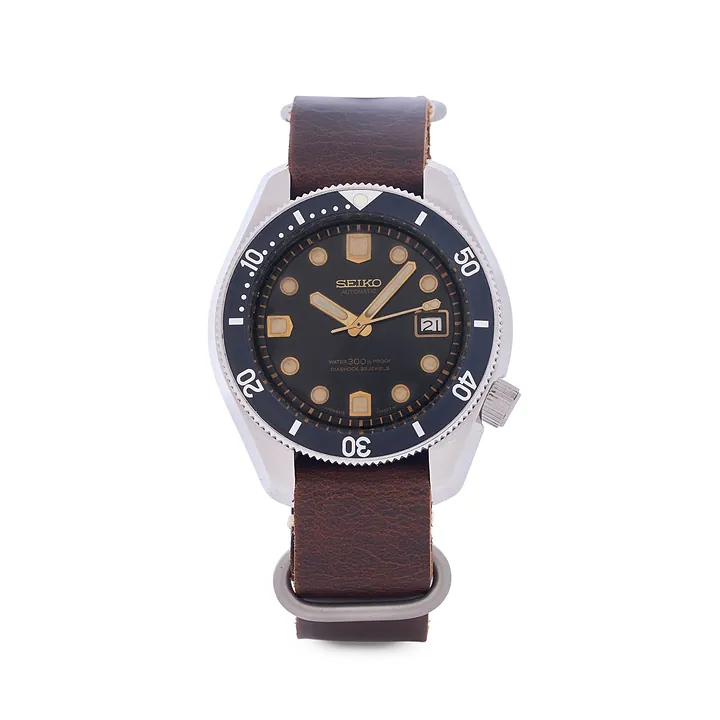
Seiko 300 Meter Diver, ref. 6215-7000, 1967
Antiquorum auction archive, Geneva
Wristwatches · c. 1968
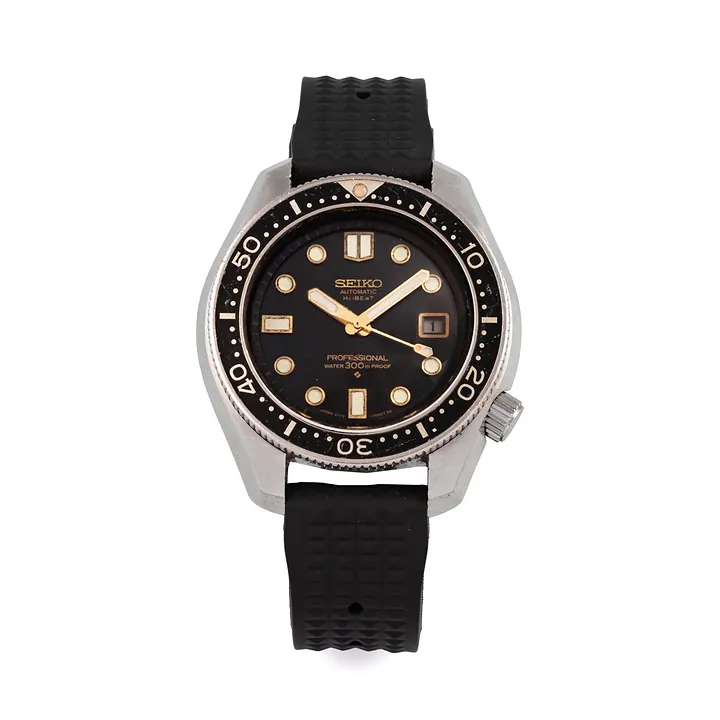
Seiko Hi-Beat, ref. 6159-7000, c. 1968
Antiquorum auction archive, Geneva
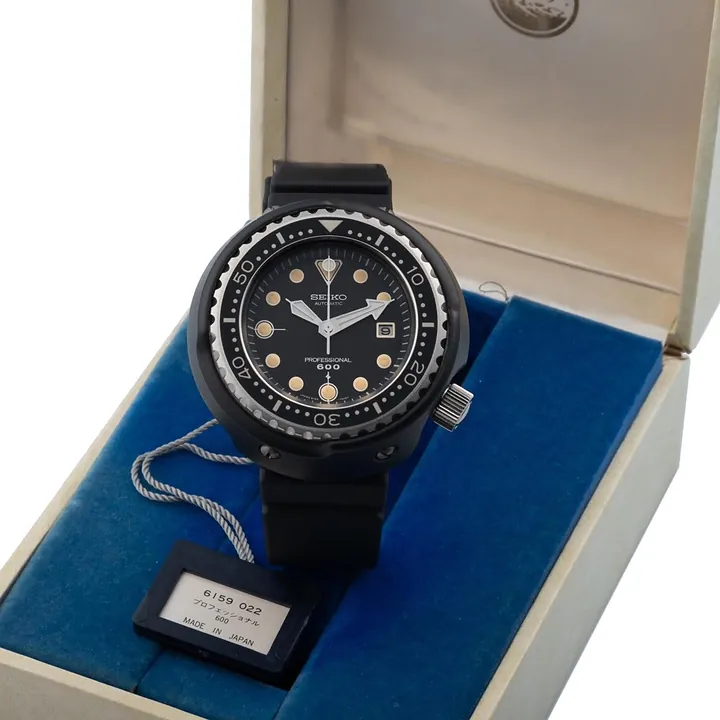
Wristwatches · 1975
Seiko Tuna Professional 600, ref. 6159-7010, 1975
Antiquorum auction archive, Geneva
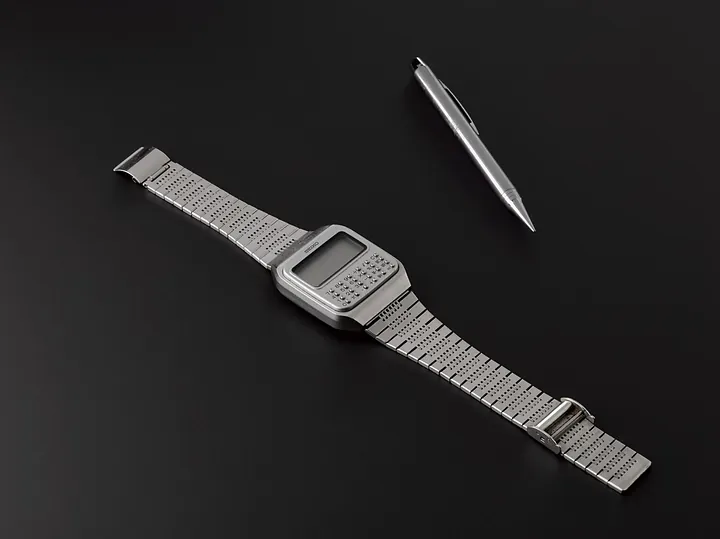
Wristwatches · 1978
Calculator wristwatch by Suwa Seikosha Co. Limited, Japan, 1978
Science Museum Group, London
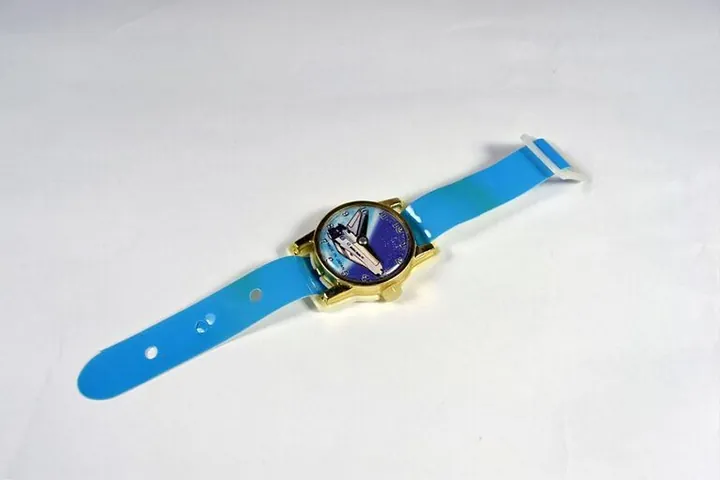
Wristwatches · 1980–1982
Wristwatch, Space Shuttle; plastic, Japan, 1970-1979?
Victoria and Albert Museum, London
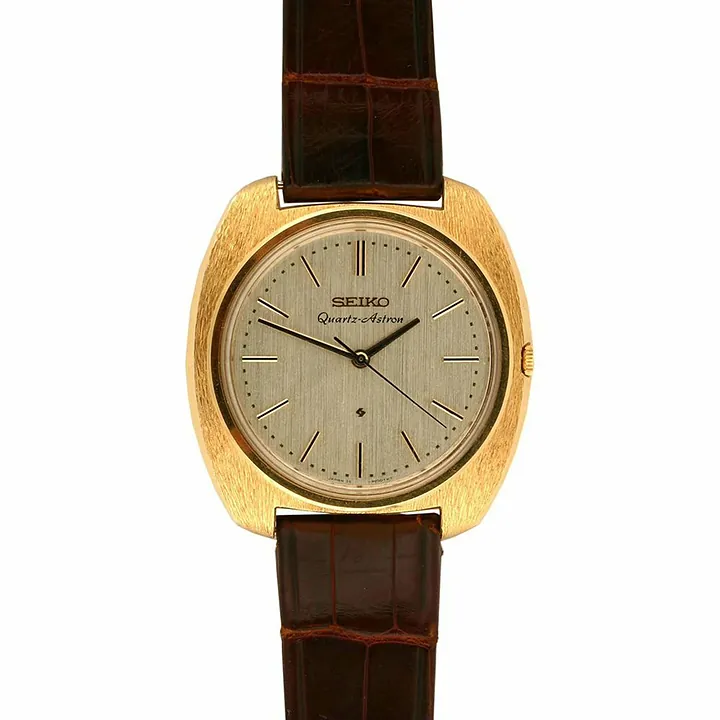
Wristwatches · 1969
Wristwatch, Japan, 1969 (no. 29912)
German Clock Museum
Wristwatches · c. 1972
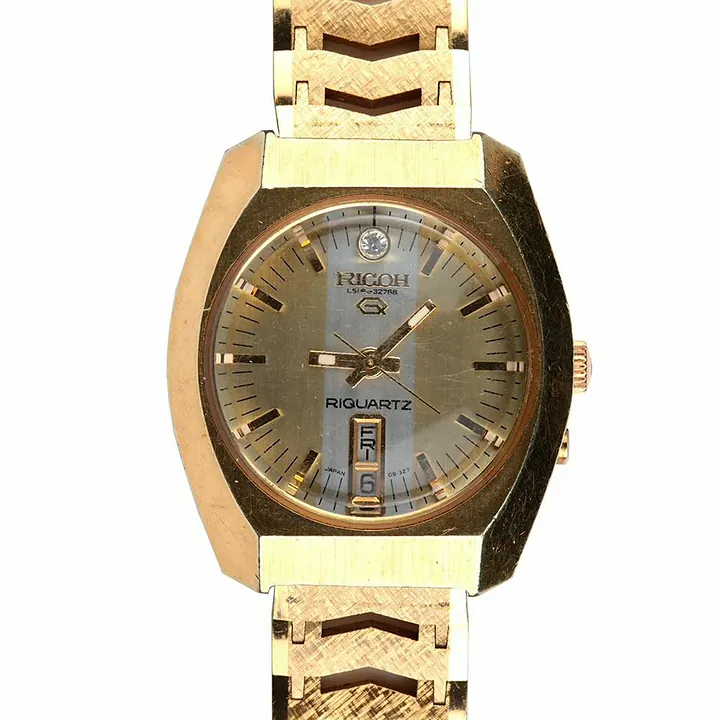
Wristwatch, Japan, c. 1972
German Clock Museum